
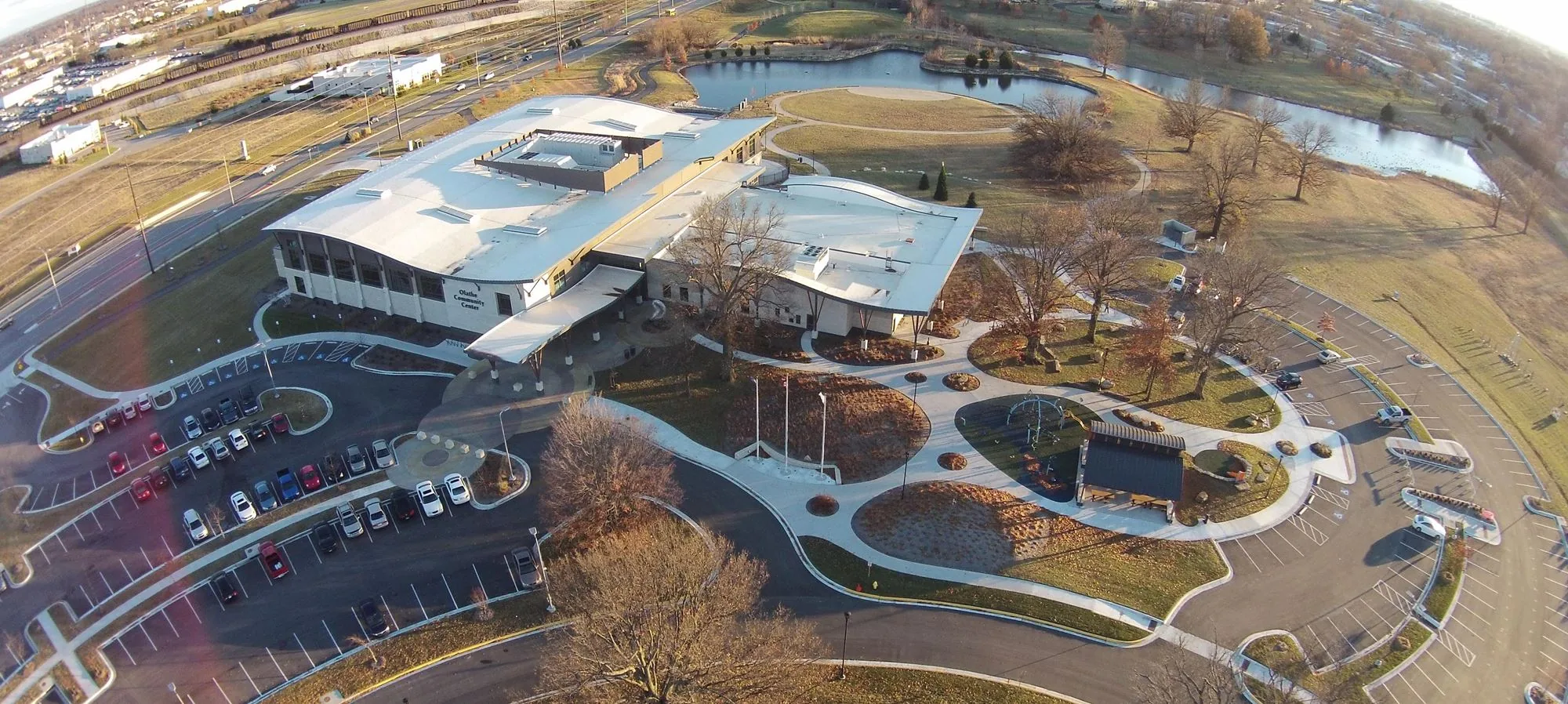
Heat and UV Roof Damage Repair in Olathe, KS
Sunlight does its damage on a roof without an event, a date or a claim, which is why heat and UV deterioration so often arrives in a capital plan as a surprise. In Olathe, KS the NOAA normals put the July mean at 78.8°F with average daily highs of 89.4°F, and the surface of a dark membrane on a still afternoon runs well above the air. Season after season, that heat and ultraviolet light break down the top layer of a roof, shrink its sheets and harden its sealants. We measure how far that has gone, restore what can be restored, and tell the owner when the remaining life is shorter than the register assumed.
Send the roof ages and the last condition report
Share the property list, the roof-area register, installation or last-coating years where known, and any earlier inspection photographs. We will test the surface, rate the remaining life of each roof and give you a restoration or replacement scope for your capital year.
A wide annual range, not just a hot summer
The January mean at the same station is 29.8°F, so the annual swing in mean temperature is about 49 degrees before individual days are considered. A roof experiences that as thermal cycling: expansion in summer, contraction in winter, and a daily rhythm in between. Heat and UV weaken the surface, then cold pulls on a surface that has already lost flexibility, and cracks appear at the weakest points: seams, corners and fasteners.
The 109.6 freeze days a year in the same normal set mean that a heat-aged roof does not get to rest in winter. A manager whose properties sit along the K-10 corridor through De Soto, Lenexa and Olathe, or in Overland Park and Gardner, can use these figures to explain why roofs of the same type may age at different rates depending on color, exposure and surface treatment, and why a dated field record is better than a calendar estimate.
Signs of heat and UV aging by material
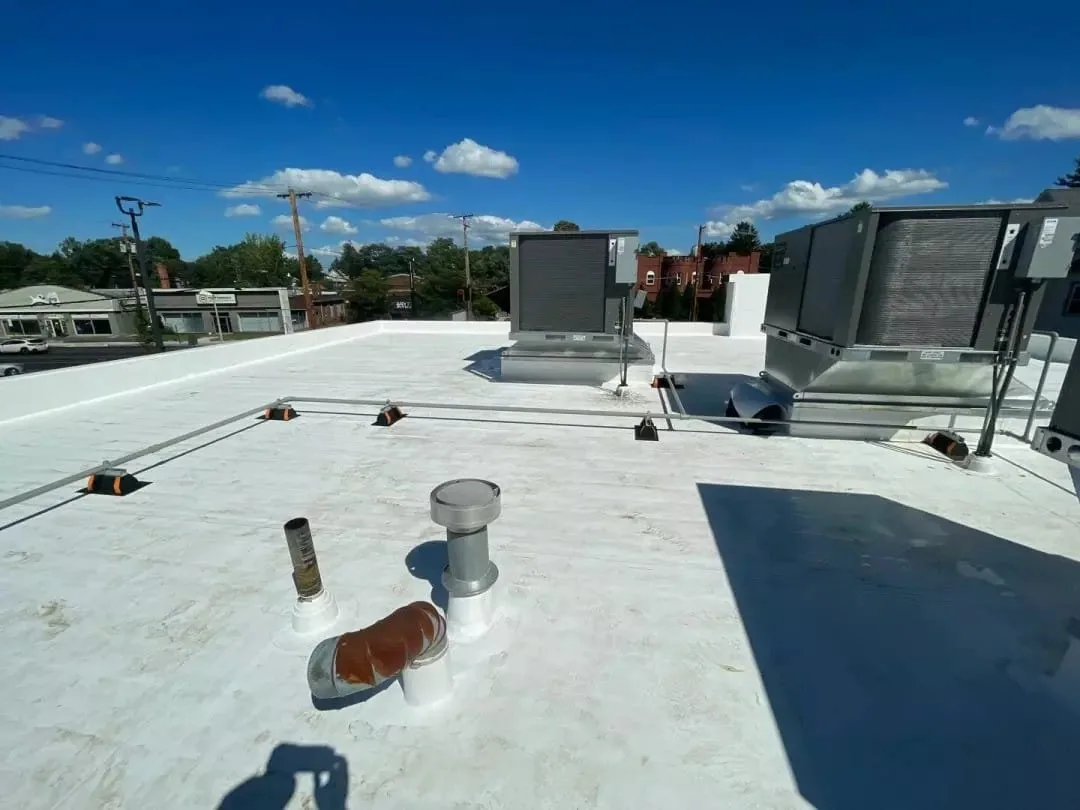
On thermoplastic roofs such as TPO and PVC, aging appears as surface chalking, fine crazing, reduced flexibility, shrinkage at walls and corners, and in some cases lost plasticizer that leaves the sheet stiff. EPDM can chalk, crack at folds and shrink away from flashing and terminations. Modified bitumen and built-up roofs lose granules or the reflective coating, expose the asphalt, blister and alligator in the surface. Metal roofs fade, lose coating, and show failed sealant at laps and fasteners.
We test where we can. Surface cracks that stay shallow and do not reach the reinforcing scrim are different from cracks that expose it. Shrinkage that pulls a membrane off a wall base, or leaves tension on a fastener row, is a mechanical problem, and a flashing failure often follows. We photograph the worst areas next to areas in better shape, so the owner sees the range of condition across a single roof.

Restoring, coating or replacing a sun-aged roof
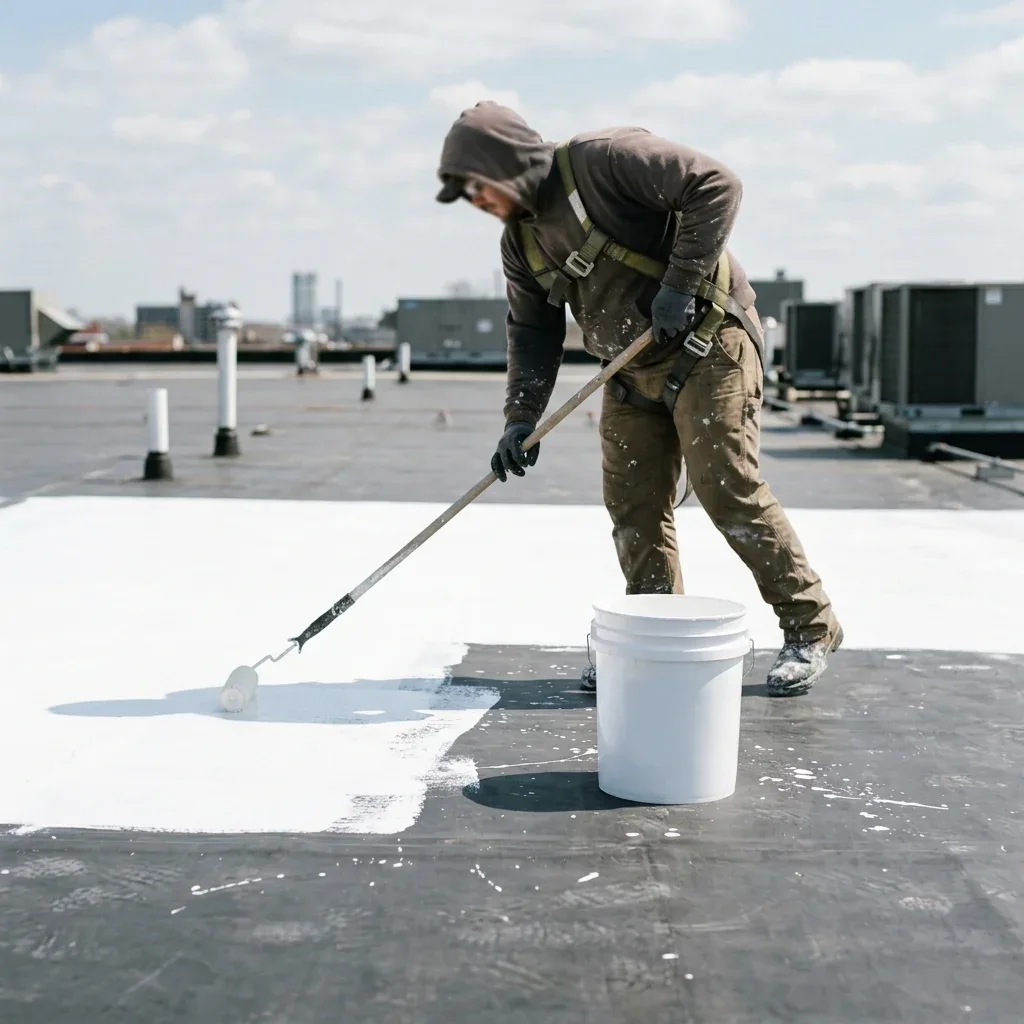
If the membrane is still flexible, dry and well bonded, a restoration may extend its life. Cleaning, repairing seams and flashing, and applying a reflective acrylic coating or a silicone coating can add a new weathering surface over the old one. Both depend on adhesion testing and a moisture check, because a coating over wet insulation or a poorly bonded surface will fail early.
When the sheet has shrunk badly, crazed deeply or lost its seam strength, coating only hides the problem. A roof coating restoration would not correct a membrane that has lost its mechanical properties, and the owner is better served by a recover or replacement planned on the owner's schedule. A cool roof surface can also reduce heat on the membrane and cooling load on the building, a benefit that matters most where rooftop units work hard in July, and our cool roof installation work addresses that choice.
Surface preparation and weather windows
Heat and UV repairs depend on a clean surface. Dirt, chalk, oxidation and biological growth must be removed, usually by pressure washing and a cleaner suited to the membrane, before coatings, adhesives or sealants will bond. Weather matters: coatings need dry surfaces and temperature ranges set by the manufacturer, and application during the hottest part of a summer day can lead to blistering or poor cure.
We plan the sequence so seams and flashings are repaired first, then the field is cleaned and primed if required, and the coating or repair is applied in stages that can be closed against weather. On an occupied building, we coordinate with the tenants about odors, access and rooftop equipment so the work does not interfere with operations, and we leave the roof with a dated photograph set.
Equipment shadows, ponded areas and the south and west exposures often age differently from the rest of the surface, so a restoration scope names those zones and prices them separately. Edges and corners, where thermal movement concentrates, receive reinforcement before the field coat goes on. At the end of the visit, the owner holds a record of what was cleaned, repaired and coated, with the product systems and application dates, which is what a later inspection will compare against.
More About Heat and UV Roof Damage Repair in Olathe, KS
Tracking UV aging in the reserve plan
Aging that proceeds slowly is the easiest to track and the easiest to ignore. A condition report that photographs the same test areas each year and records surface hardness, cracking and shrinkage builds a trend that tells the owner when a roof moves from restoration to replacement. Without that trend, the first signal is often a leak, and by then the repair line has grown. Dated photographs also help separate sun aging from hail bruising on roofs that have had both.
Property managers in Overland Park, Shawnee and Olathe can use a shared roof asset management record so each building is rated the same way, and a capital plan then orders the work by condition. For the roofs where the chance of restoration is real, a seam probe is the first inexpensive step, and it often shows whether shrinkage has already loaded the laps.
Commercial Roofing Questions
How do we know whether a coating can still go on our roof?
Testing settles it: adhesion on a cleaned sample area, a moisture scan of the insulation, and a check that the membrane is not shrinking or losing seam strength. If the roof passes, restoration can be a sound use of capital. If it fails any of the three, the money belongs in repair or replacement.
Is chalking a sign that the roof is failing?
Chalking means the surface is weathering, and that is expected over time on many membranes. It becomes a concern when it comes with cracking, shrinkage, brittleness or seam problems. We record its extent and compare it year to year, because a stable chalked surface is a different case from one that is progressing.
Do light-colored roofs last longer in sun?
A reflective surface runs cooler, which reduces thermal stress, though other factors such as the material, thickness, installation quality and maintenance also drive service life. We describe what we find on each roof and avoid promising a lifespan from color alone.
What happens if we delay a restoration by a year?
Surface wear continues and the number of required repairs rises, which can move the roof from restoration to replacement. The effect depends on the roof's current condition, so we recommend a dated inspection before deciding. A delay with an inspection record is a managed choice; a delay without one is a guess.
Can heat damage reduce a manufacturer warranty?
Warranty documents typically address normal weathering differently from defects or damage, and terms vary by manufacturer and system. Read your document and keep the maintenance record the terms require. We can describe the condition, with photographs, in language that matches what the warranty asks for.
Send the roof ages and the last condition report
Share the property list, the roof-area register, installation or last-coating years where known, and any earlier inspection photographs. We will test the surface, rate the remaining life of each roof and give you a restoration or replacement scope for your capital year.
