Manufacturing Plant Roofing in Olathe, KS
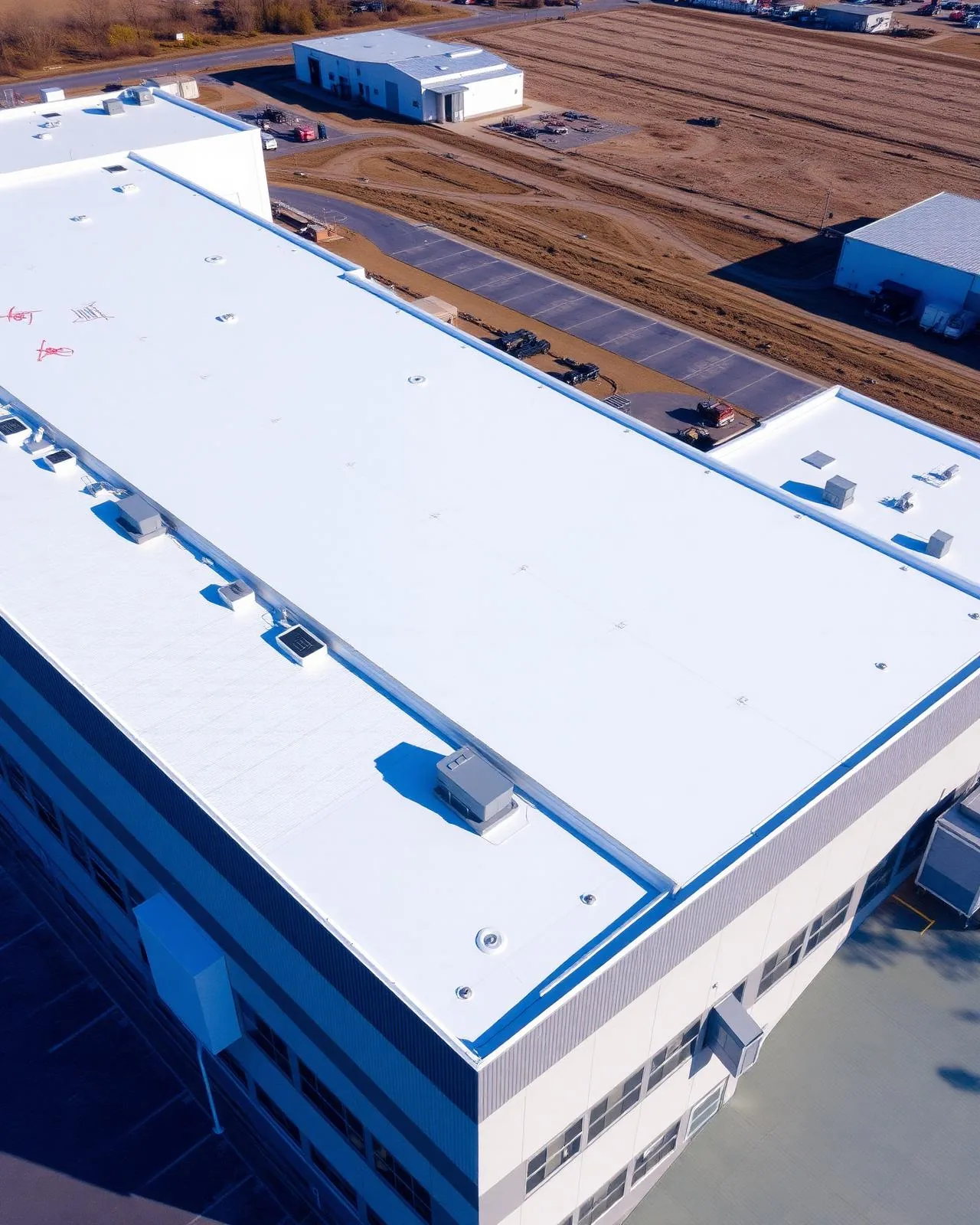
A plant manager sets the capital year for a roof the way a maintenance planner sets a line shutdown: around the one stretch of the calendar when the work does the least harm. KDOT sets the K-10 corridor at 16.5 miles between the Douglas/Johnson County line and I-435, and it names industrial and high-tech uses among the neighbors along it. A plant along that corridor sits in a busy setting, and its roof carries exhaust stacks, make-up air units, piping and conduit that a warehouse roof never sees. We start by learning what is on the roof and what happens beneath it.
From there, the plan is an inspection record, a drainage record and a scope version that fits a production calendar.
Share the plant roof plan and shutdown calendar
Send the roof plan, equipment list, shutdown dates, prior reports and a safety contact. We will inspect, record each finding and return a written scope that separates urgent repairs from the plant's capital planning assumptions.
Process penetrations and the field condition around them
Manufacturing roofs collect penetrations over the years as equipment is added, moved and retired. Each one is a flashing detail that can fail, and abandoned openings that were capped in a hurry are common sources of recurring leaks. We map every penetration on the roof-area register, record whether it is active, and note the flashing type, sealant condition and any signs of movement.
Exhaust discharge deserves its own look. Hot, humid or chemically loaded air from a stack can degrade nearby membrane, soften sealants and stain the surface in a fan-shaped pattern. When we see that pattern, the finding goes into the report with the likely cause and a recommended membrane or PVC detail better suited to the exposure. Interior moisture from process areas can also condense under a roof deck, which is why a leak report always asks about conditions inside as well as above.
Freeze-day exposure above a heated plant
A heated manufacturing building has a particular winter problem. Warm interior air rises toward the deck, and the normals count 109.6 days a year with lows at or below 32°F, so the temperature difference across the roof assembly is steep for a long season. Where insulation has settled, gaps open at board joints and fasteners, and condensation can form on cold surfaces inside the assembly. Over time that moisture shows up as wet insulation, corroded fasteners and membrane blisters.
Annual precipitation of 37.54 inches adds the water side of the equation, and an average January temperature of 29.8°F and an average July temperature of 78.8°F give the membrane a wide seasonal range to absorb. We pair those local normals with insulation and cover board choices so the replacement assembly handles the plant's winter load rather than a generic one.
Shutdown windows and work above live production
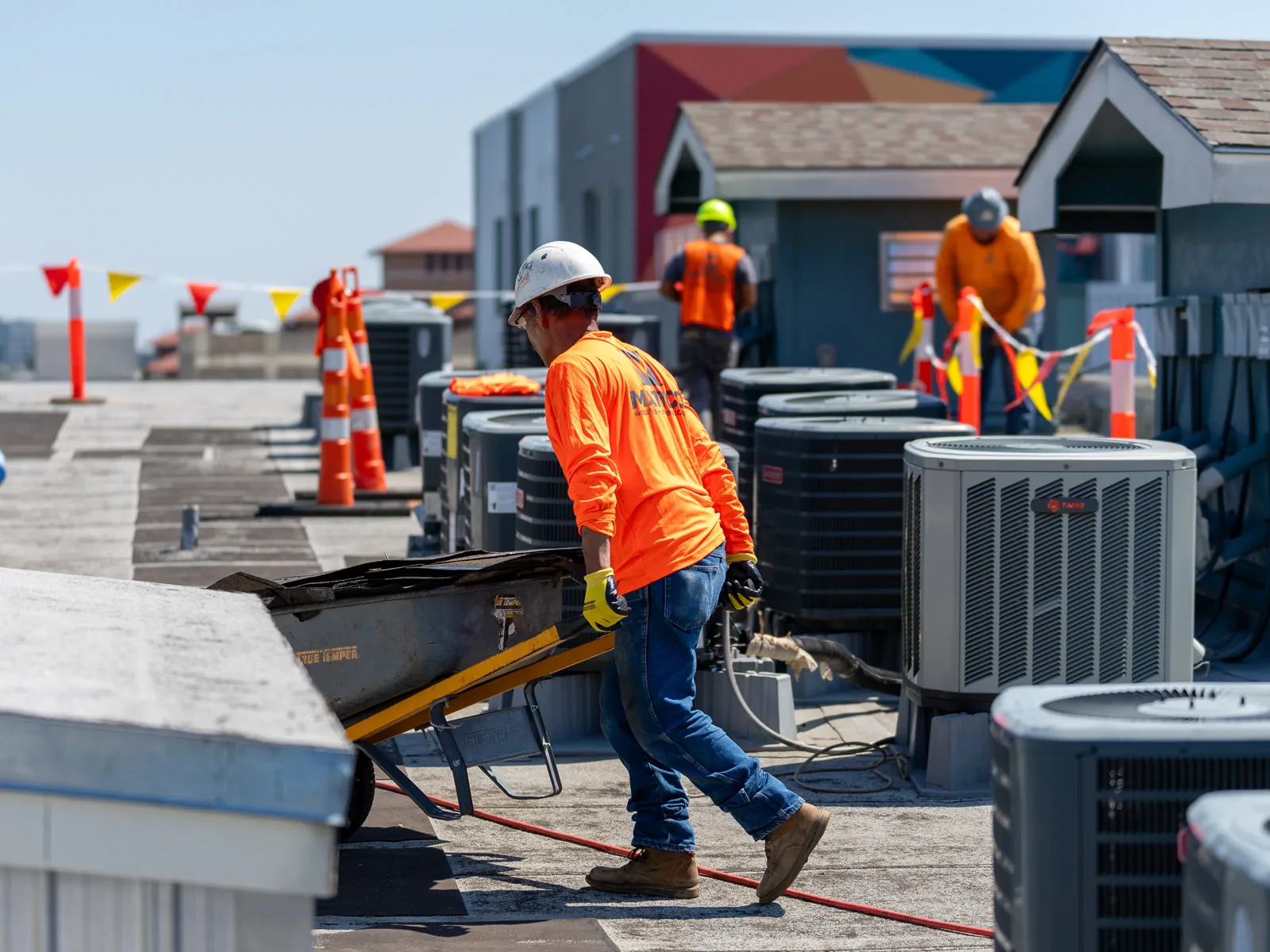
Many plants cannot stop for a roof. The practical answer is to plan work in phases: one bay at a time, with interior protection, a clear-out of the space below, and a crew that stays away from the loading area at shift change. Where a plant has an annual shutdown, a larger tear-off can be scheduled in it, and we build the scope version so it shows what finishes inside the window and what continues after.
Noise, dust and vibration all matter inside a precision environment. Mechanical fasteners rattle racks and fixtures, so adhesive or ballasted systems are sometimes preferred above sensitive work. Our occupied-building reroofing approach puts these constraints on paper before material is ordered, because a good plan is cheaper than a stopped line.
Renewal triggers for an industrial roof
The signs that point toward renewal are rarely dramatic. Repair invoices that repeat at the same locations, patches that fail within a season, saturated insulation mapped by moisture survey, and seams that no longer take a bond all count. So does the point where the roof's age and the plant's investment horizon meet. A roof with service life left does not need replacement ahead of a planned expansion or a lease decision, but it does need a repair program that matches the time the owner expects to hold the plant.
If a restoration makes sense, a coating system over a sound, dry membrane can extend service life without a tear-off. When the insulation is wet or the system is past restoring, replacement is the sounder use of capital, and the report says so with the evidence attached.
More About Manufacturing Plant Roofing in Olathe, KS
Records worth pulling before the first visit
Many plants keep good maintenance files, and a few of them shorten the first inspection considerably. The equipment schedule for the roof, the leak log kept by facilities staff, any roof drawings with section boundaries, and past repair invoices all help us read the field condition against what has already happened. Information about interior processes under each bay matters as well, since humidity, heat or dust inside the building changes how the roof assembly behaves.
When a plant has no roof records, we start the register ourselves. The first visit produces dated photographs, a plan with each penetration marked and a short list of items that need attention before the next season. That record becomes the baseline the next inspection interval is measured from.
Several plants, one capital plan
Companies that run more than one facility in the metro compare roofs across sites. A manufacturing client with a plant in Olathe and another in Lenexa can use one roof-area register and one report format for both, so the capital committee sees condition and cost side by side. A flex industrial building in the same family of properties follows the same format, as does a warehouse that supports the plant.
We recommend the order of work by risk to production first, remaining service life second and access constraints third. That sequence is set out in the written plan, along with the inspection interval for sections that are not scheduled for work.
Commercial Roofing Questions
Who decides which roof sections can be worked on during production?
Operations and safety leads set the limits, and we adapt to what they permit. Our scope version lists each work area, the protection needed below it and the hours the crew can use. If a section cannot be touched during production, we propose a temporary measure and place the permanent work in a shutdown.
What happens if exhaust damage has already stained the membrane?
We identify the discharge point, test the membrane for softening or cracking, and a patch, a protective pad or a different membrane near the stack. A stained surface is not always a failed surface, so the test result drives the decision.
Does a plant's position on the K-10 corridor change roof planning?
The corridor's mix of industrial, office and commercial neighbors matters mostly for access: truck routes, crane placement and staging space on the site. The roof assembly is chosen from the building's own conditions, so we settle hoisting and delivery locations first and then fit the schedule around neighboring traffic.
How are abandoned penetrations handled?
Each one is confirmed as unused, then either removed and patched with matching material or capped with a proper flashing. Hasty fixes with sealant alone tend to reopen, so we aim for a detail that matches the roof system.
Can a plant roof be inspected without stopping equipment on the roof?
Yes, in most cases. We stay clear of operating units, coordinate with maintenance staff, and use drone imagery for areas that are hard to reach safely. Anything that requires a unit shutdown is flagged for the plant to schedule.
Why does a roof over a heated plant condense moisture in winter?
Warm, humid interior air reaches the cold underside of the deck and the lower layers of insulation, where it cools below its dew point. If the vapor retarder or the insulation joints leak, that moisture collects and wets the assembly. A moisture survey locates it, and the replacement design addresses air and vapor movement as well as the membrane.
Share the plant roof plan and shutdown calendar
Send the roof plan, equipment list, shutdown dates, prior reports and a safety contact. We will inspect, record each finding and return a written scope that separates urgent repairs from the plant's capital planning assumptions.