Roofing for Manufacturers in Olathe, KS
The annual shutdown is often the most dependable roofing window in a plant, and the replacement decision has to be made months before the lines go quiet if the work is to be bid, ordered and staged in time. For a manufacturer in Olathe, KS the winter adds its own pressure, since Olathe logs 109.6 freezing-low days a year and a 29.8°F January average, so a defect found in December can wait for spring only if it is contained. We help plant managers write the roof into the capital calendar with a roof-area register that lists each production building, its assembly, its drainage record and the equipment that penetrates it. The register is built with the plant engineer, whose knowledge of which corner of which roof has been wet for years and which unit was added without a roofer on site goes straight into it.
Send the plant list and the shutdown calendar
Share the roof-area register, equipment layout, prior reports, shutdown dates and access contact. Expect an assessment that keeps current repairs and capital planning assumptions on separate lists.
Industrial corridors and where the plants sit
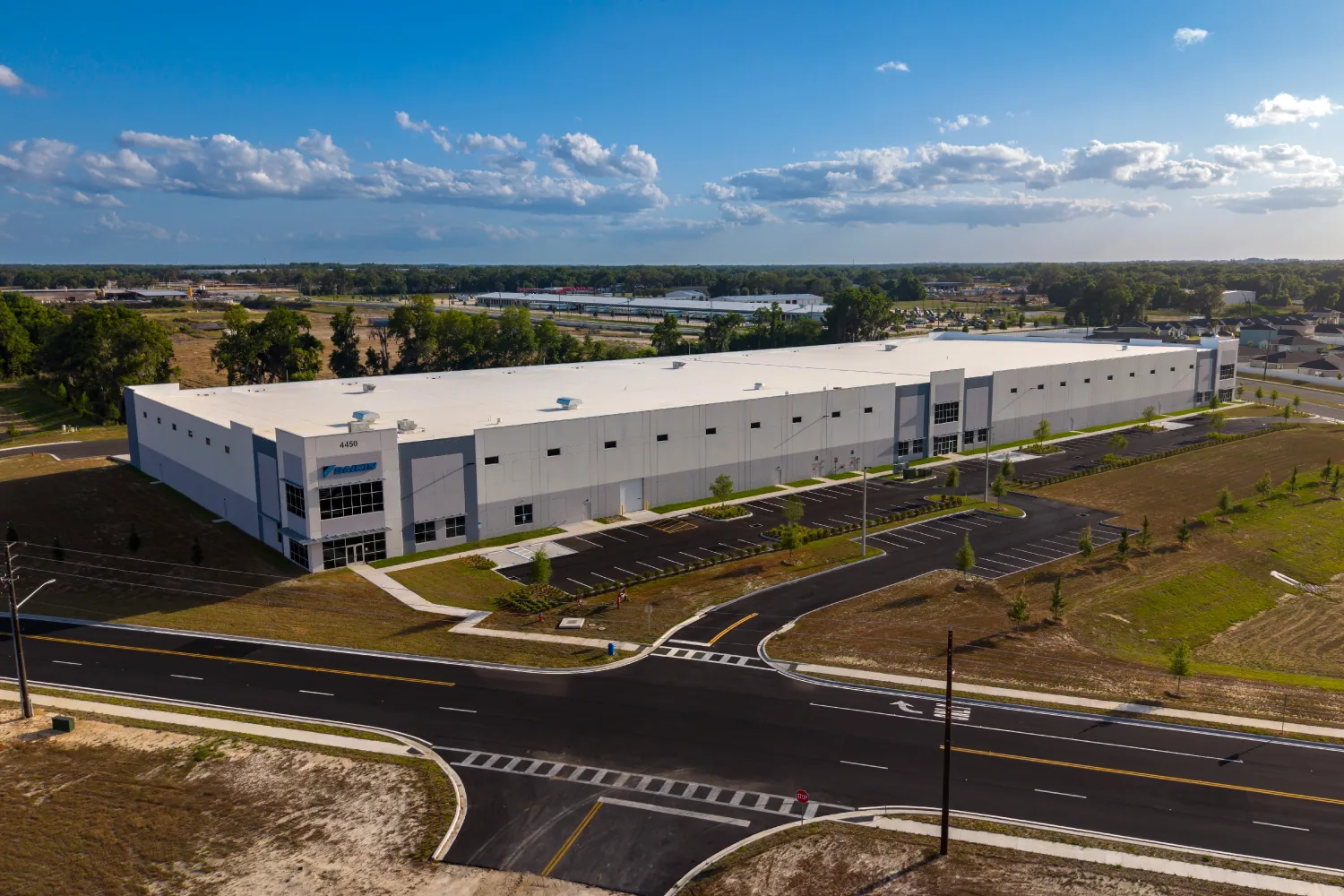
K-10 is a 16.5-mile KDOT corridor that carries De Soto, Lenexa and Olathe traffic toward I-435, with industrial, high-tech, office, commercial, education and residential uses beside it. In the city's economic-development plan, southern Olathe carries the large industrial developments, with Lone Elm Commerce Center and FedEx among the names.
A manufacturer with a building on one of these corridors gets its own survey. Hail belongs to this metro's storm record, and plants within the path surveyed after the May 19, 2024 squall line, which ran between Gardner and Olathe, estimated at about 80 mph, have a dated reason to inspect edge metal, equipment screens and rooftop units.
What process equipment does to a roof
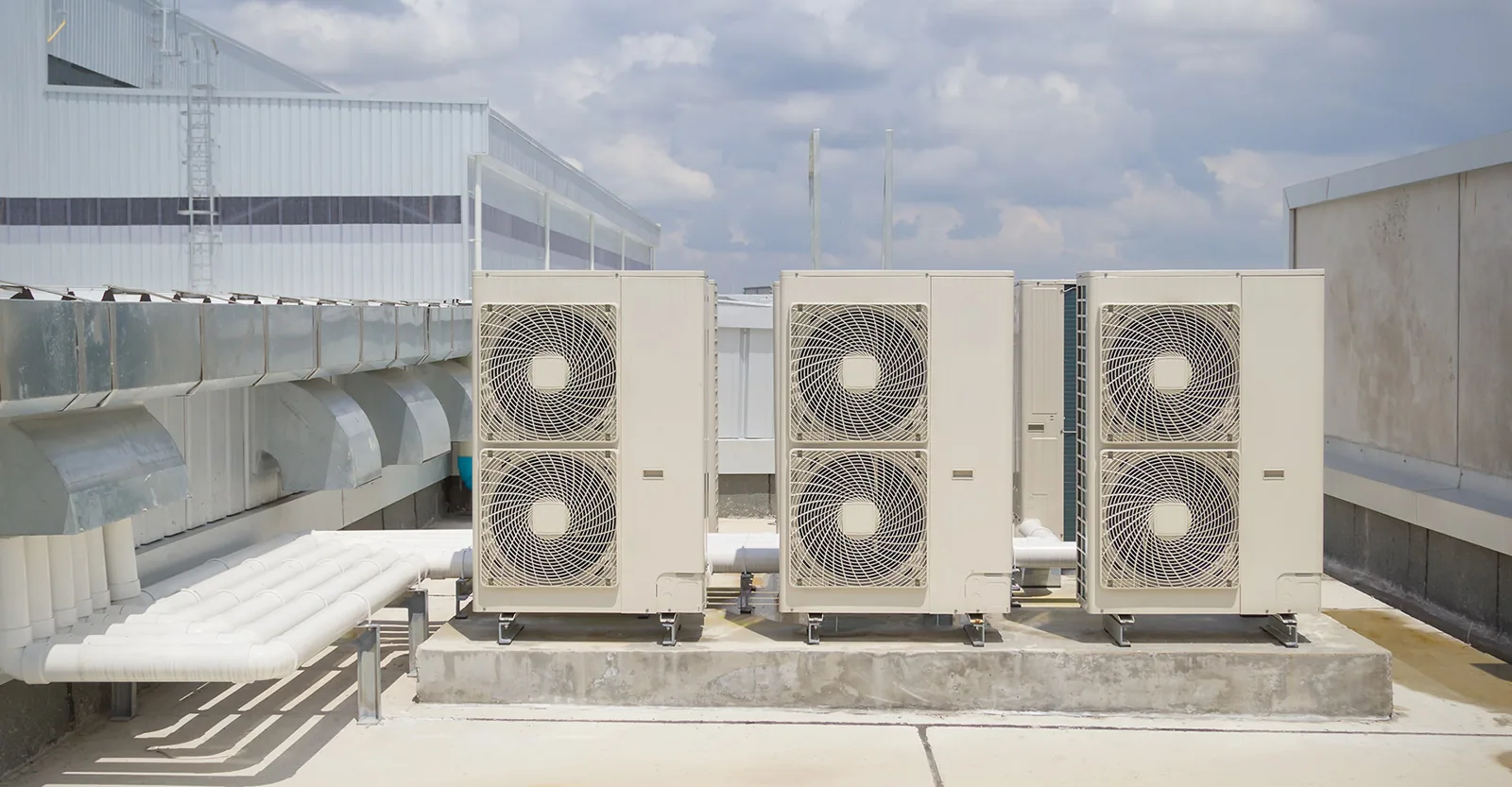
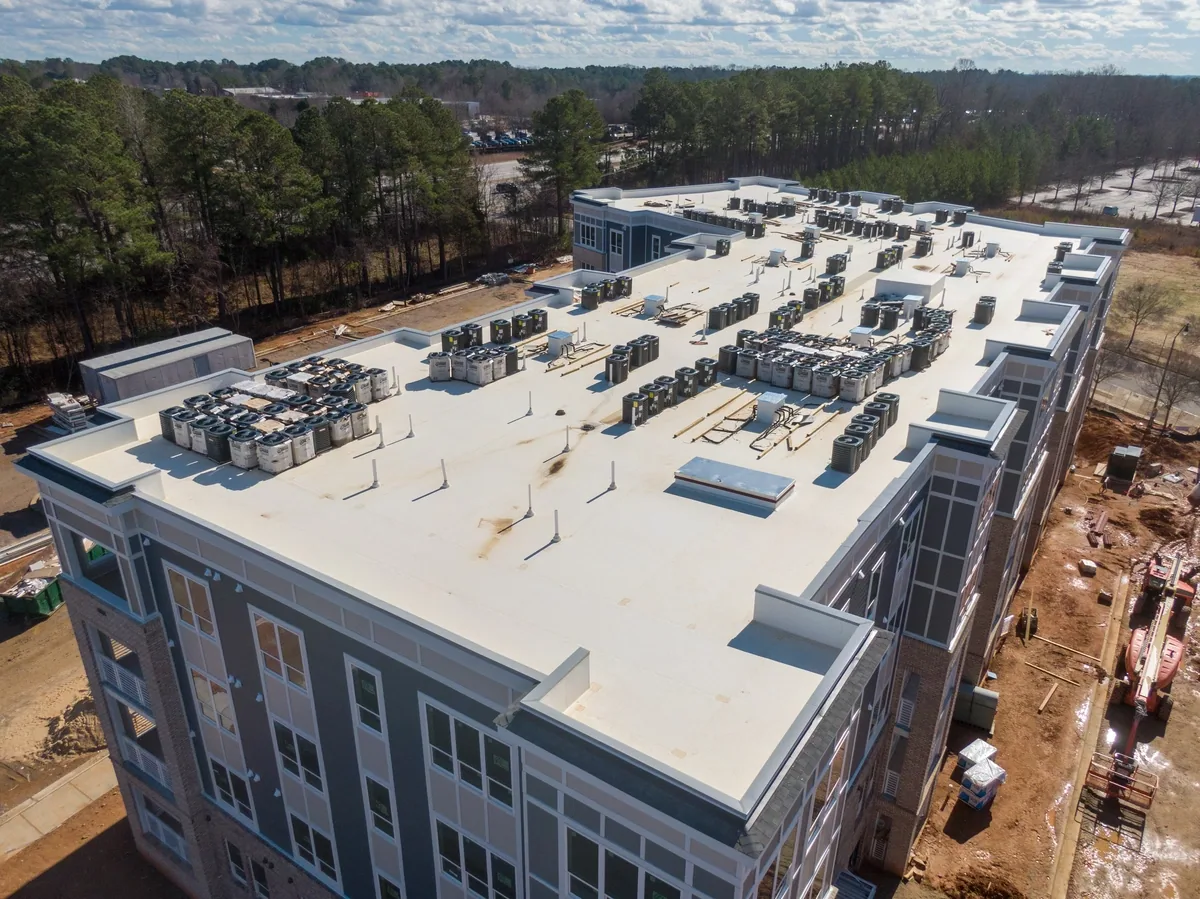
A manufacturing roof carries more than weather. Process exhaust, make-up air units, dust collectors, cooling towers and vent stacks all penetrate the roof, and some deposit residue or emit heat, vapor or chemicals that age membranes faster than sun and rain do. We examine the roof in the zones around each emission point, checking for blistering, softening, staining and corrosion of metal flashings.
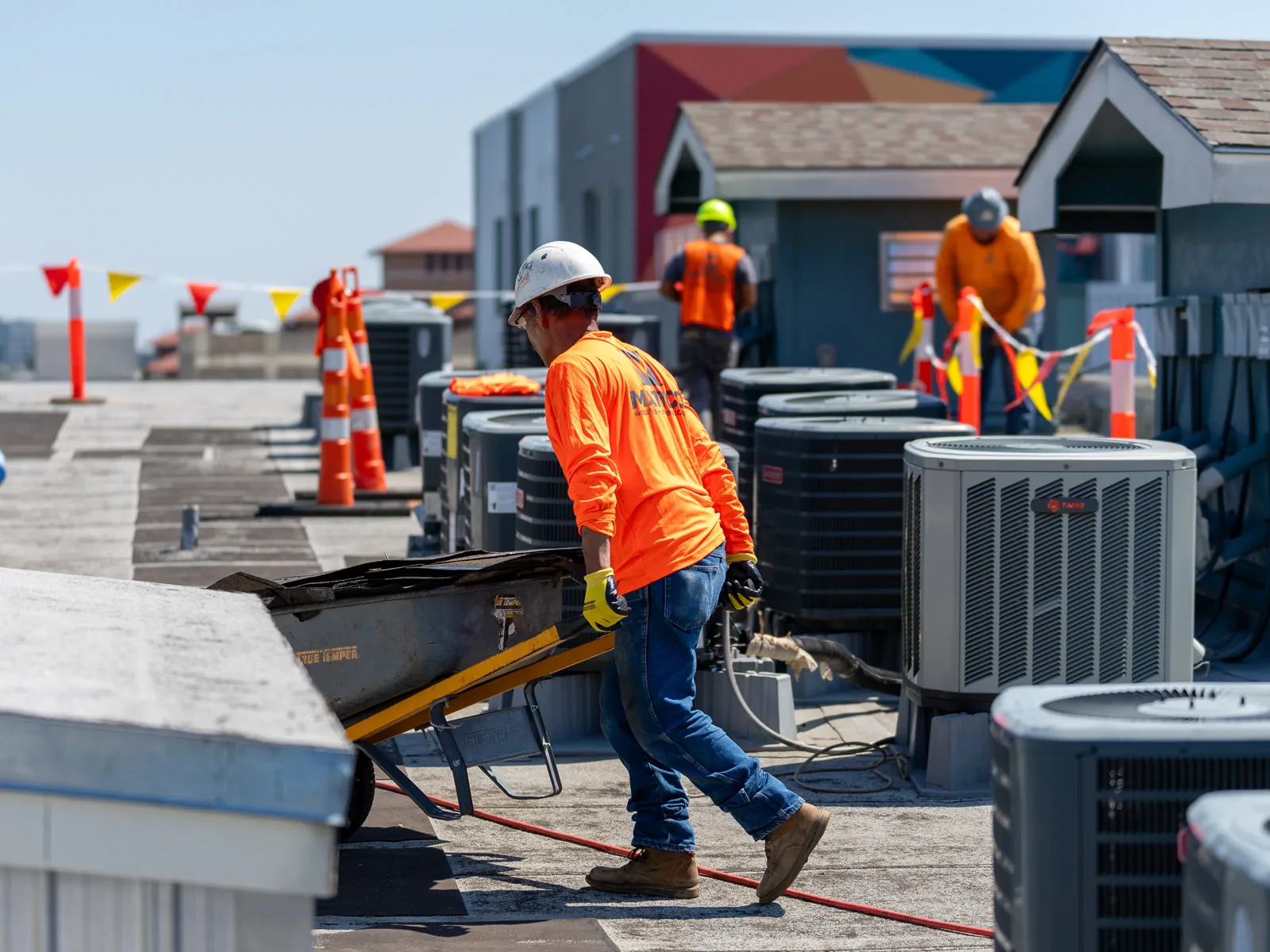
Roof loads matter too. New equipment added over the years may sit on curbs and supports that were not designed with the original roof in mind. Our rooftop equipment curbs and supports review looks at how each unit is set, whether its flashing remains sealed and whether water drains around it or collects at its base. Where a unit has been replaced with a larger one, we check that the curb height, the counterflashing and the support framing still suit the new footprint, because a mismatch there is a common source of repeat leaks that patching never cures.
Choosing the shutdown that carries the roof
The plant calendar sets the roofing calendar. Many plants take one or two shutdowns a year, and a roof of any size cannot be completed in a single week unless it is sectioned in advance and crewed accordingly. The register therefore marks which roof sections can be done in the shutdown, which can proceed while the plant runs, and which need production to stop or to relocate.
We work with the plant manager to match each roof area to a window. Sections above sensitive process equipment are generally scheduled for the shutdown, and sections above storage or offices proceed while production continues. The decision date for each window is set early enough for bids, material lead times and any required permit. Insulation and membrane orders can run weeks, and a shutdown that begins on a fixed date will not wait for a late purchase order, so the register carries a procurement date as well as a work date. If the shutdown falls in the cold season, the choice of adhesives, seam methods and weather protection is made at the scope stage, not on the roof.
Renewal triggers for a production roof
A plant has a repair line and a capital line, and a roof moves from one to the other when repairs recur, insulation is wet or the membrane has split. Because production equipment sits beneath the roof, the cost of a leak is measured in downtime and product risk, so the trigger should be set conservatively over critical lines. A plant that tracks unplanned downtime can compare the cost of a leak-related stoppage with the cost of renewing that roof area early, and putting the two numbers side by side clarifies the choice. The roof file supplies the other half of that comparison: the repair count, the extent of wet insulation and the remaining service life as judged from the field condition.
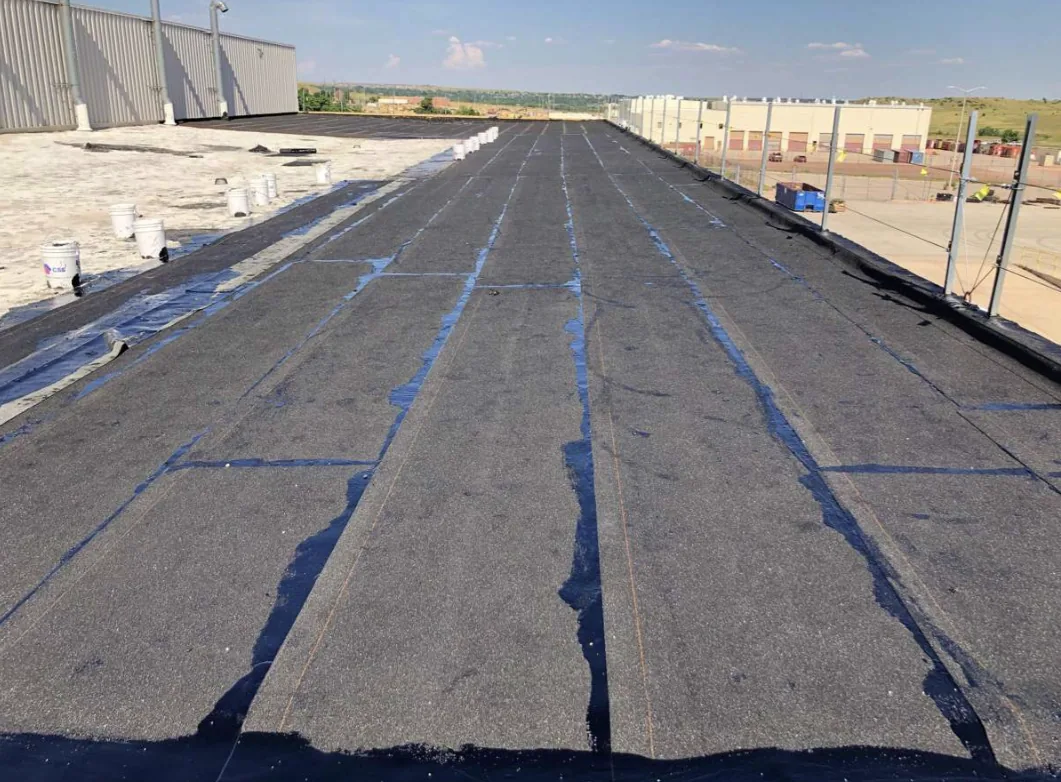
Replacement options include TPO roofing, modified bitumen roofing and metal retrofit, chosen according to chemical exposure, foot traffic and drainage design. Since September 1, 2019 Olathe has worked from the 2018 building and energy code family, and each permit confirms the edition, since insulation and fire provisions can shift the scope. Cost drivers include roof size, penetrations, access for cranes and lifts, and the protection of equipment below.
More About Roofing for Manufacturers in Olathe, KS
Protecting equipment during tear-off
Every open roof section is a risk to the floor below, so protection is part of the plan: temporary covers over critical equipment, a clear rain contingency, and work sequenced so that no section is left open overnight. Debris control matters in clean areas, and we agree on what must be shielded and what can tolerate dust. Plants that make food, electronics or other sensitive products may need tighter controls on roof dust and fastener drift, and those requirements are written into the work plan before the first section is opened.
Safety coordination is also essential. The crew follows the plant's contractor orientation, lockout rules and hot work permits, and staging avoids truck routes, loading docks and fire lanes. Our work on occupied building reroofing follows the same sequence of phases, drying in each section. Storm calls are answered around the clock, holidays included.
Multi-plant records and shared standards
A manufacturer with several buildings or sites benefits from one register and one inspection standard. Each building's line shows system type, age if known, repair count, drainage condition and next inspection interval. That allows a corporate facilities group to rank plants by condition and consequence and to fund the order that makes sense, not the order of requests.
Roofs range from clear-span production halls to manufacturing plants with heavy process equipment, and each is surveyed the same way. Plants in Olathe and the surrounding cities share the register format with logistics and 3PL operators and investors who own industrial property.
Commercial Roofing Questions
What decides whether a plant roof is replaced in one shutdown or in phases?
Roof size, what lies below it and how long the shutdown lasts. A roof that can be completed in the window should be bid that way. A larger roof is sectioned over two shutdowns, with the worst sections and those over critical lines first.
How do process exhaust and chemicals affect membrane choice?
They narrow the field. If emissions are expected to reach the roof, membrane and flashing materials are chosen for resistance, and walkway pads or splash protection are added near the outlets.
Can roof work proceed while production continues?
In many buildings, yes, if protection is installed over critical equipment and the plant's safety rules are followed. Sections above sensitive lines may be reserved for the shutdown.
Does the 2024 wind event matter for plants outside Gardner and Olathe?
Weather Service surveyors traced the wind damage between Gardner and Olathe, peaking at an estimated 80 mph. Plants inside that path should log a check of edge metal and equipment, and plants elsewhere keep to the usual interval.
Send the plant list and the shutdown calendar
Share the roof-area register, equipment layout, prior reports, shutdown dates and access contact. Expect an assessment that keeps current repairs and capital planning assumptions on separate lists.