
Commercial Roof Inspection in Olathe, KS
A dated inspection record gives an owner a way to compare field condition with the next capital year. In Olathe, seasonal temperature movement and freeze exposure make the inspection date useful context for seams, drainage, and edge details. We walk accessible roof areas, identify the assembly where possible, photograph conditions, and mark where follow-up testing may be needed. The report separates observed defects from assumptions and groups work by urgency, area, and operational consequence. That lets a property manager decide what to repair now, what to monitor, and what evidence is needed before building a replacement scope.
Turn the next visit into a decision record
Share the roof-area register, prior reports, leak history, inspection date, and access contact. We can map current findings, identify open questions, and separate immediate repairs from capital planning assumptions.
Set the inspection date beside the exposure record
The NOAA normal set for the Olathe Johnson County Airport station records 109.6 days each year at or below freezing. That figure informs the inspection interval and the questions asked about drainage and detail movement. We note the visit date, weather observations, and any recent leak or repair history, then compare those details with the assembly in the field. A condition report should show what was visible and what remains concealed rather than assigning a cause from seasonal context alone.
KDOT describes K-10 as a corridor spanning Olathe, Lenexa, and De Soto. For an owner with properties across those communities, common report fields make the portfolio easier to review without flattening the differences between buildings. A medical office may have distinct access and interior sensitivity from an industrial property, even if both are scheduled in the same week. We record the roof area, contact, access limits, and operating concerns for each site so the recommendation can be compared without assuming identical work.
Map the roof areas and critical details
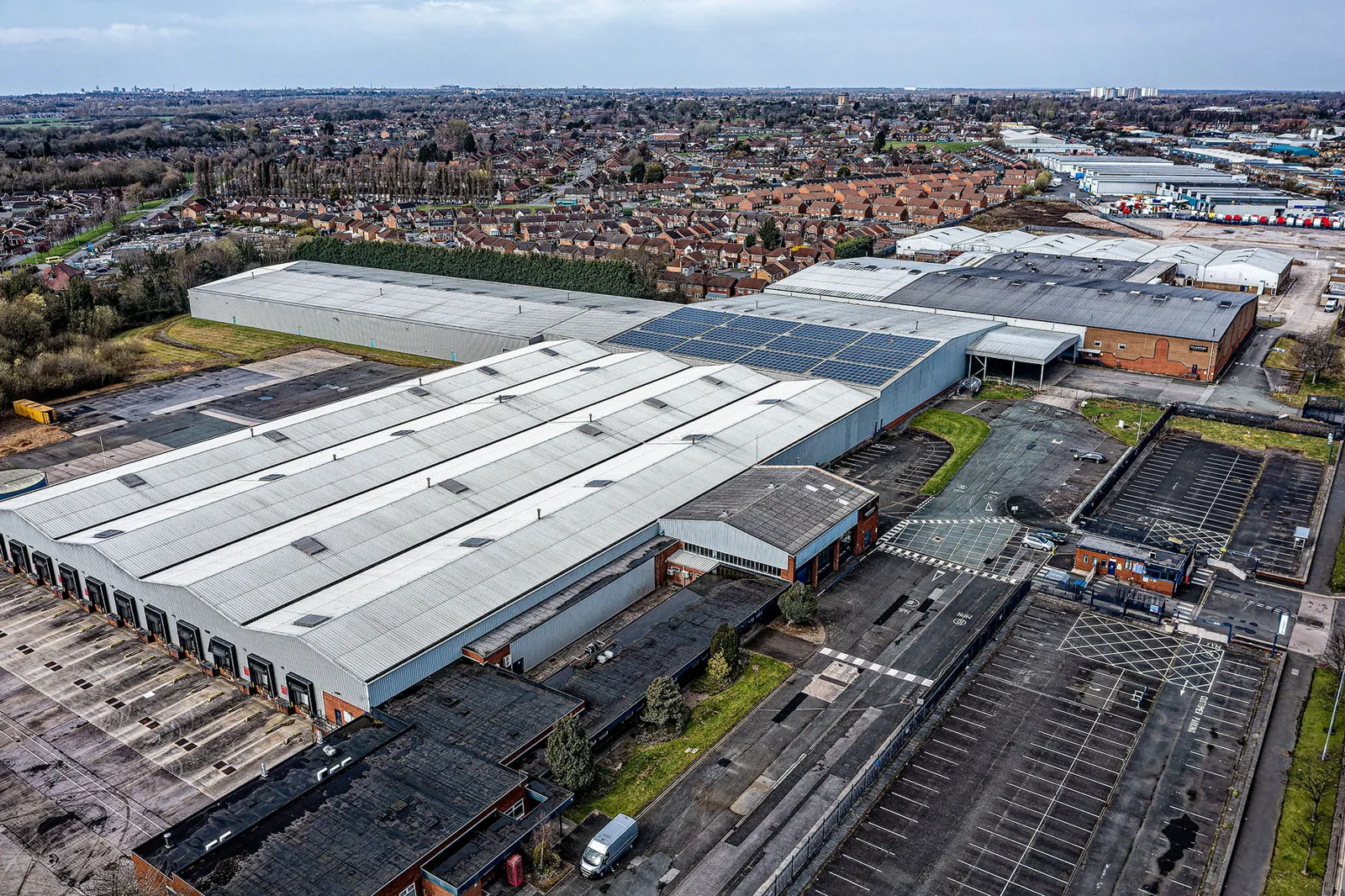
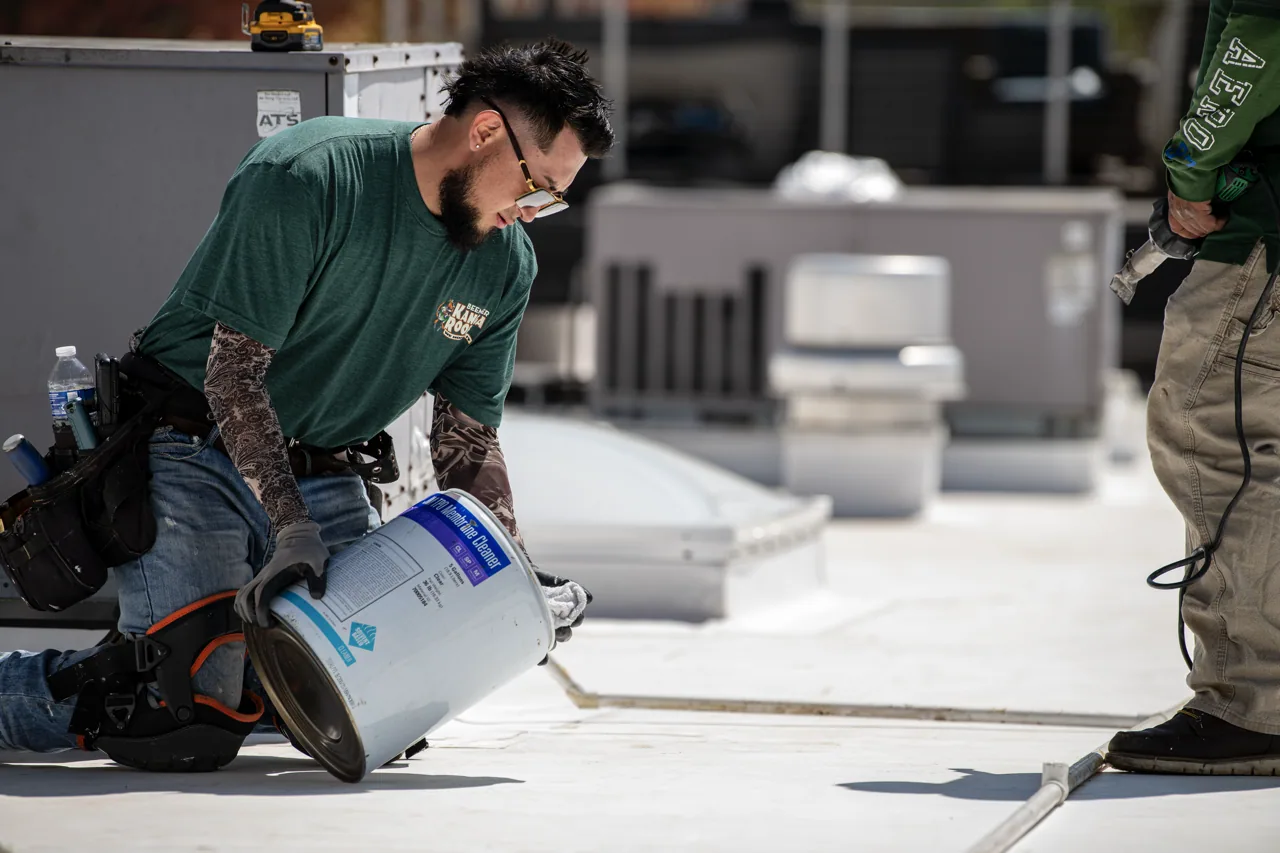
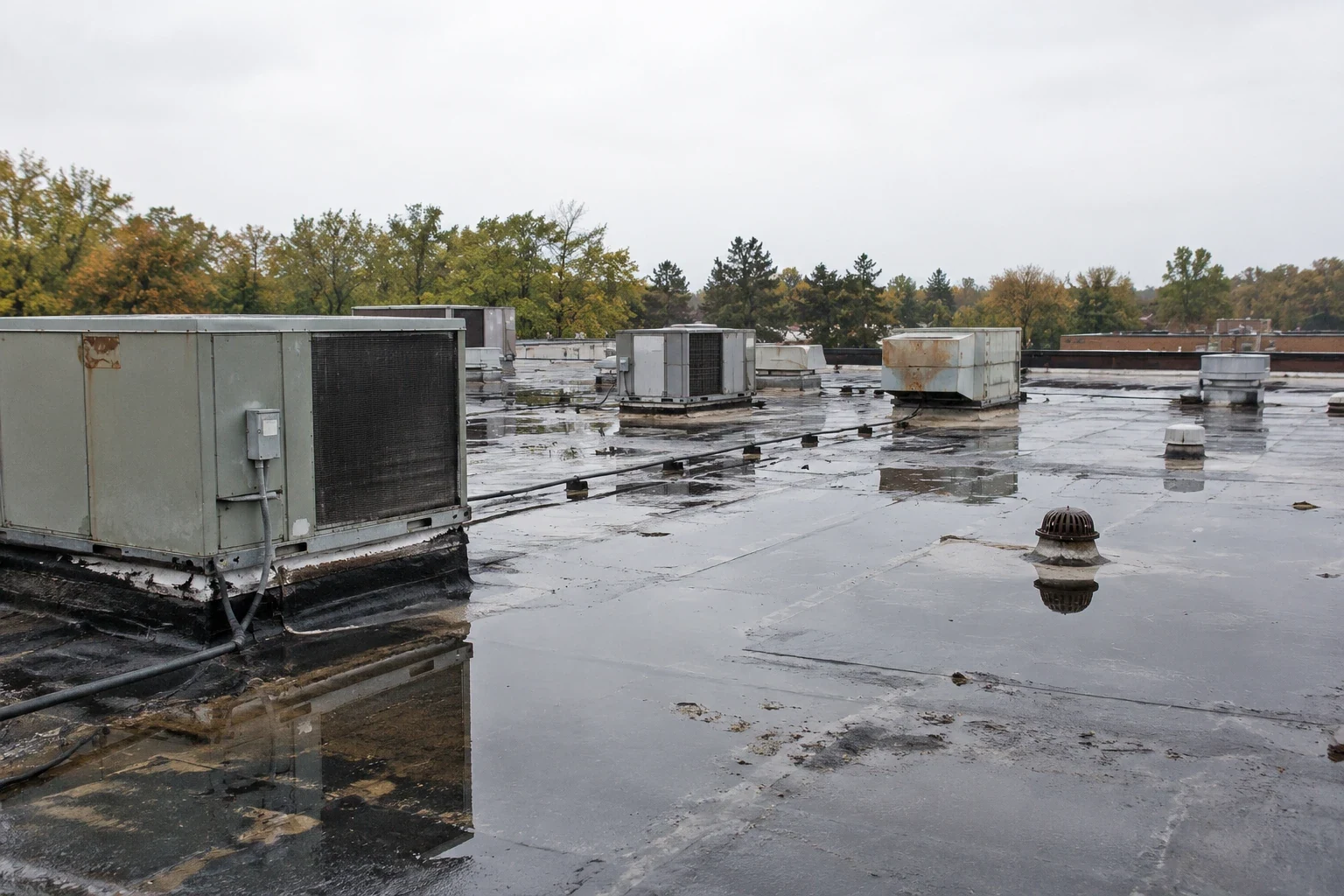
The inspection begins with the roof plan or a field sketch that identifies separate areas, elevations, and drainage paths. We review membrane or metal condition, seams, penetrations, flashings, perimeter details, drains, scuppers, and rooftop equipment transitions. Where accessible, we look for loose material, open laps, surface wear, displaced components, ponding evidence, and prior repair lines. Photographs are tied to locations so the owner can find the finding later and compare it with another visit.
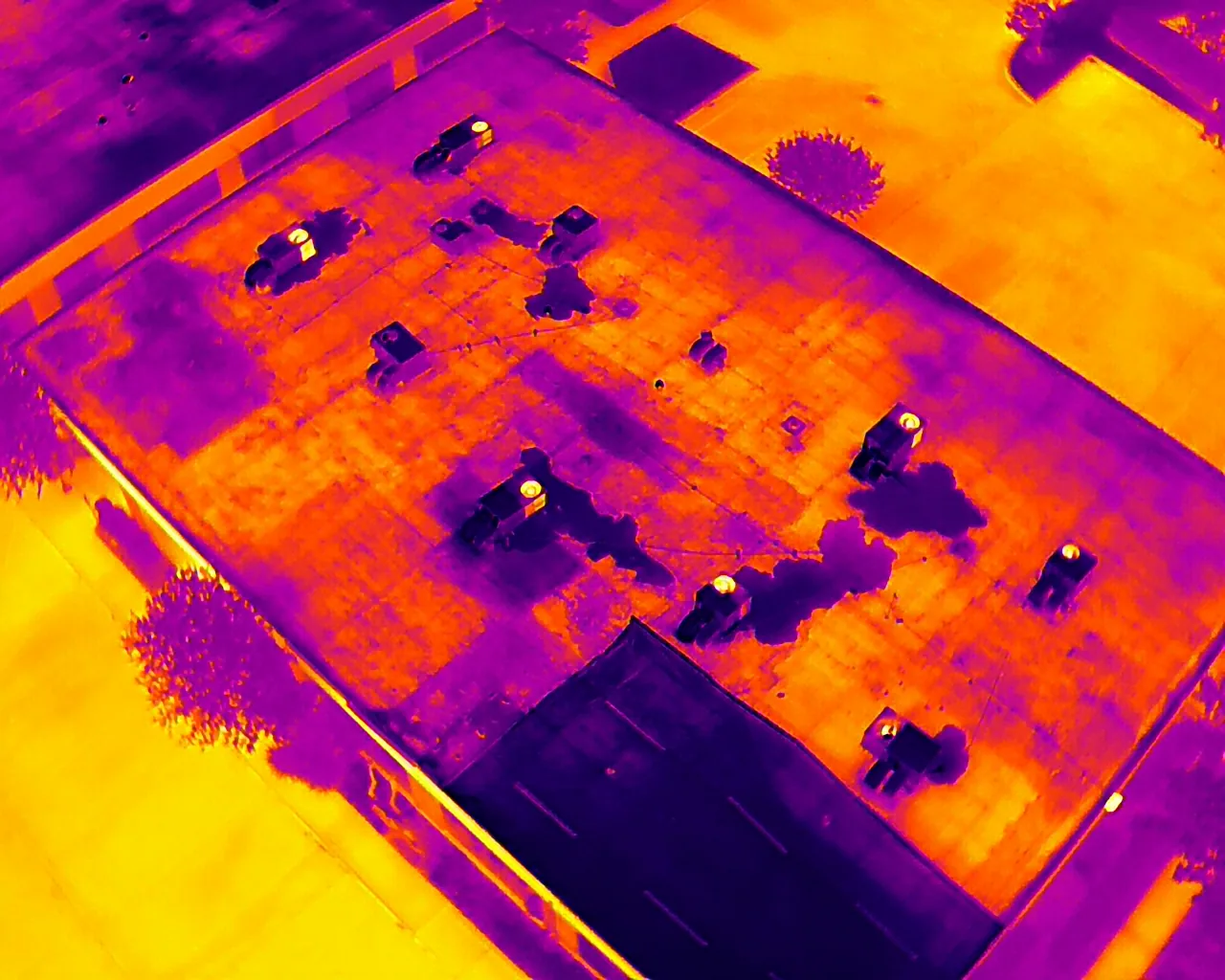
A drone roof survey can help document broad or difficult-to-access areas, while hands-on checks remain important for adhesion, fastening, and material condition. When moisture is suspected, an infrared survey may help identify locations for direct verification under suitable conditions. We state which methods were used and their limits. The inspection is useful when a future reader can tell what was actually checked, what could not be reached, and which findings need a separate test.
Separate urgent defects from capital signals
Not every observation carries the same consequence. Active water entry, loose edge metal, open flashing, and blocked drainage may need prompt attention, while surface wear or a stable old repair may call for monitoring. We describe the evidence, affected area, and likely next action without treating a visual observation as a precise measure of remaining life. If a finding could affect occupied space, equipment, or stored inventory, the report notes that impact so the owner can set a practical response order.
A repair assessment can address a defined defect, and a ponding-water review can investigate persistent water conditions. Broader deterioration may call for a replacement evaluation instead of repeated small scopes. The report shows the evidence that separates those choices and identifies testing that could alter them. This gives a manager a defensible way to plan work instead of treating every photo as an equal budget priority.
Build a record that survives staff changes
Prior inspections, leak logs, invoices, warranty documents, and roof plans help explain why a defect matters. We compare current observations with those records when available, noting repaired areas and issues that have returned. If records are missing, the report establishes a baseline rather than inventing a history. The owner can attach approvals and completed work to the same roof-area reference, making the next inspection more than a fresh set of unconnected photographs.
A photo-backed condition report can organize observations and open questions, while a roof-area register helps track inspection dates and repair outcomes across locations. For Olathe and Lenexa portfolios, consistent records support comparison while preserving each site's assembly and access notes. This is especially useful when a new manager inherits an existing reserve plan and needs to understand which line items came from a field observation and which remained provisional.
More About Commercial Roof Inspection in Olathe, KS
Plan roof access around active operations
Before arrival, confirm roof access, escorts if required, equipment shutdown needs, and areas that cannot be photographed or entered. We coordinate with the building contact, respect loading and tenant schedules, and record access limits that affect the findings. If rain, ice, or another condition makes a surface unsafe, the report can identify deferred areas and schedule a return rather than imply the full roof was inspected.
For a multi-building schedule along K-10, a shared contact list can reduce handoff delays, but each site needs a person who can answer access questions. We can prepare the route around operating windows and group related buildings when useful. The report preserves time, area, and deferred work for each property without treating the corridor as a single facility.
Set the next inspection interval from findings
The interval after an inspection should follow the condition and unresolved risk. A roof with active repairs, uncertain moisture, or recurring detail failures may need an earlier revisit than a stable assembly with clear records. We identify which areas merit attention and what evidence to capture next time, such as repair performance, drain condition, or a previously inaccessible transition. This turns the report into a sequence of decisions rather than a one-time snapshot.
An owner with buildings in Olathe and in neighboring Lenexa can have both walked in the same stretch of days. We can coordinate dates across sites while keeping each observation tied to its building. If the findings support capital work, a capital planning review can separate immediate repair needs from longer-term allowances. The owner retains a clear path from inspection to approved work and back to the next condition check.
Commercial Roofing Questions
What does a useful commercial roof inspection report include?
It identifies roof areas, accessible details, observed conditions, photographs, access limits, and recommended next actions. It should separate visible findings from conclusions that need testing and connect each item to a location the building team can revisit. The owner can then compare the report with leak history and prior repairs, set a work order, or carry an open question into capital planning without losing its evidence.
Can a visual inspection determine whether insulation is wet?
A surface walk can identify signs that merit investigation, but it may not confirm concealed moisture. Infrared imaging or direct testing may help when conditions and access support those methods. The report should state what was used, where the suspect area lies, and whether it was verified. That distinction prevents an uncertain observation from being treated as a measured quantity in the repair or replacement budget.
How should inspection findings be prioritized across several buildings?
Compare the evidence, water or safety exposure, interior impact, recurrence, and access needs for each roof area. Keep urgent corrections separate from routine monitoring and capital questions. A shared format helps an owner review the portfolio, but each recommendation remains tied to its building and assembly. If a finding could change the scope, identify the test or follow-up that would make the decision clearer.
Does an inspection confirm remaining roof life?
An inspection documents observable condition and maintenance needs; a visual visit cannot assign an exact remaining service period. Material, installation, exposure, repairs, and concealed conditions all matter. We describe what is visible and where more review is warranted, then help the owner use that evidence to plan repairs or replacement. The reserve estimate should retain its assumptions rather than presenting an observation as certainty.
What access details should a manager arrange before the visit?
Provide the roof access method, building contact, operating windows, equipment restrictions, and any area that requires an escort or special handling. Share available plans and prior reports so the inspector can connect findings with known roof areas. If a surface is unsafe or an area cannot be reached, the report should list that limitation and the return step required to complete the review.
Turn the next visit into a decision record
Share the roof-area register, prior reports, leak history, inspection date, and access contact. We can map current findings, identify open questions, and separate immediate repairs from capital planning assumptions.