
Flashing Failure Repair in Olathe, KS
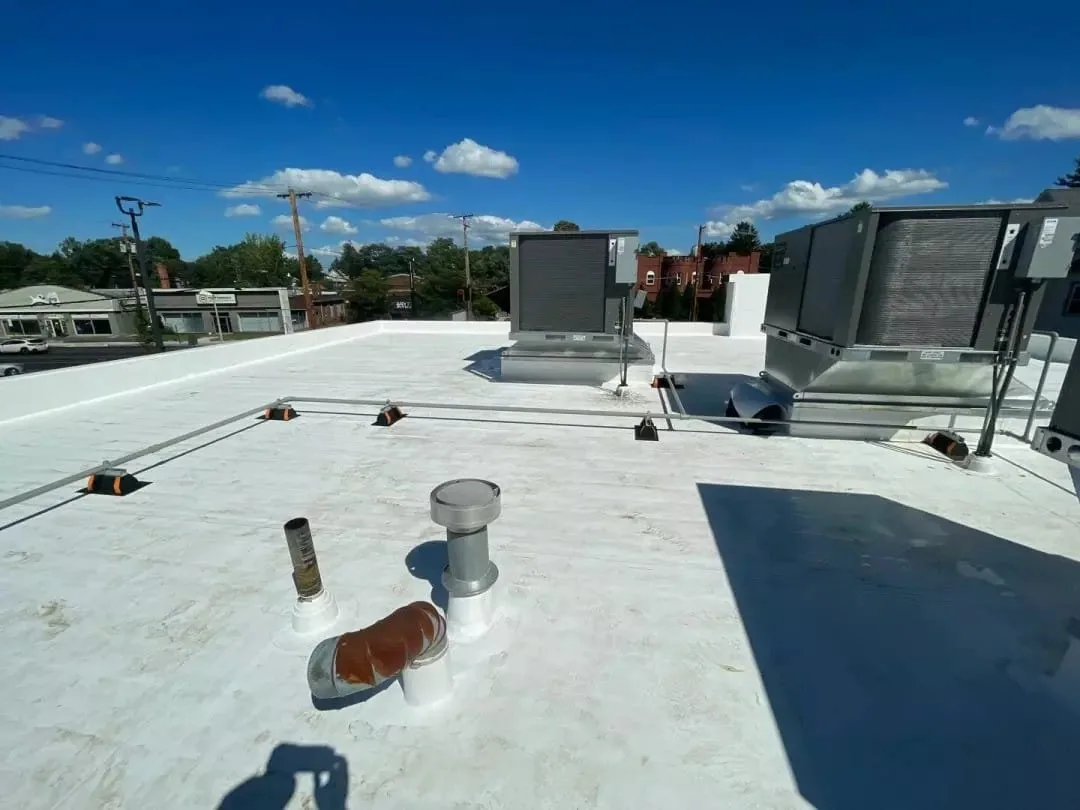
Flashing is where a roof meets everything that is not roof: parapet walls, rooftop units, pipes, skylight curbs, expansion joints and the edge of the building itself. In Olathe, KS, those junctions ride a swing from 29.8°F in an average January to 78.8°F in July, and the metal, sealant and membrane at each one expands and contracts at a different rate. When a termination separates, water enters at a point that looks small from the roof and large from the ceiling below. We find which junctions have opened, decide whether the cause is movement, workmanship or age, and repair them in a way that holds up through the next freeze season.
Send the detail list and the leak locations
Share the property list, the roof-area register, interior leak reports, and any photographs of curbs, wall bases or pipe penetrations. We will inspect the details, separate repairs from rebuilds, and return a record you can set beside your reserve plan.
Temperature swing and storm exposure at the details
Average daily highs of 89.4°F in July and 39.4°F in January describe only the monthly middle; individual days swing further, and a dark membrane or a metal counterflashing on a south-facing wall can run well above air temperature. Each cycle works the fasteners, the sealant bead and the lap where membrane turns up a wall. Over several capital years, a termination bar that was tight when installed can back out, and a sealant joint that was pliable can harden and split.
The May 19, 2024 squall line that cut from Gardner into Olathe is a separate kind of stress. Wind lifts counterflashing and edge metal, and a roof that shows new gaps at curbs or parapet caps after that date should be inspected as a storm finding, with the earlier condition as the comparison. A property schedule that includes Overland Park or Shawnee alongside Olathe can group visits by how recently each roof has been walked.
Where flashing fails and how it looks from the roof
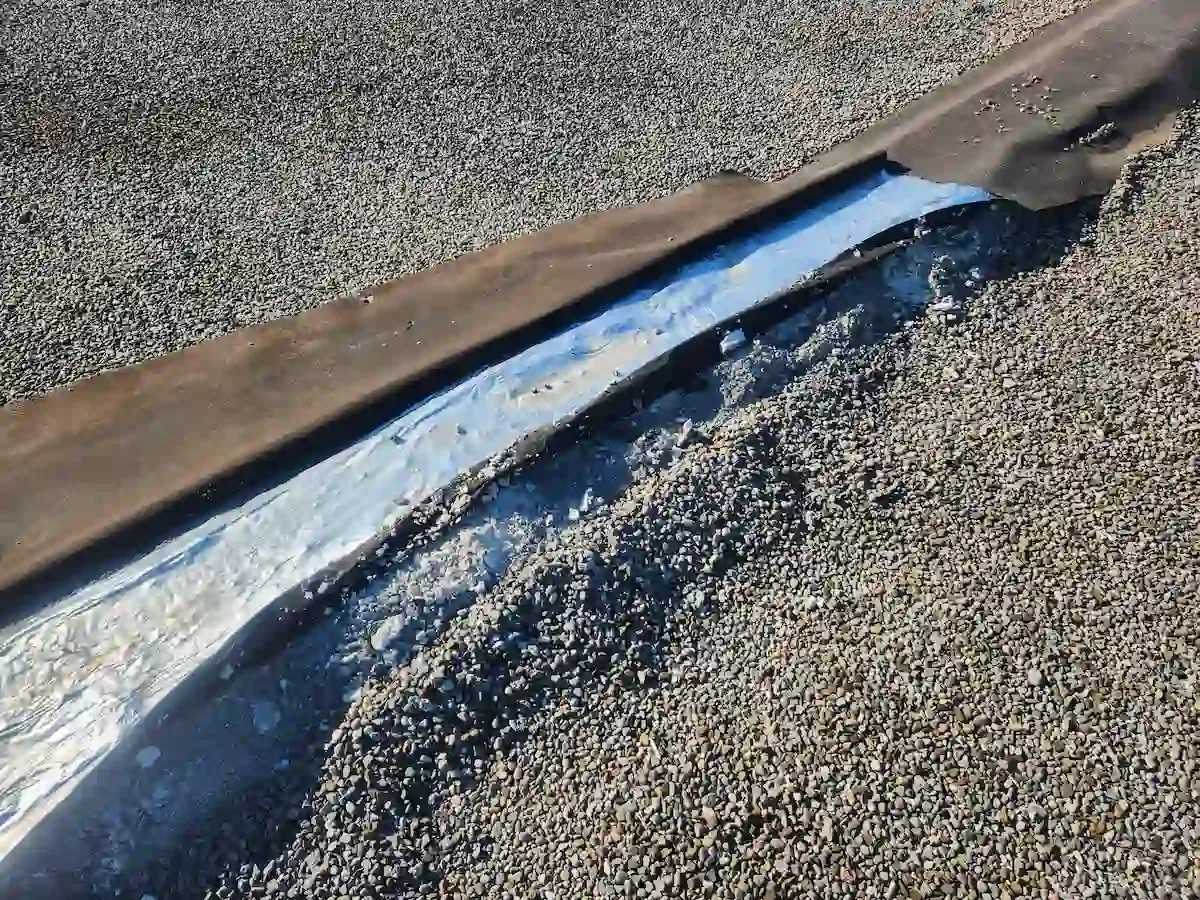
Wall bases fail when the membrane pulls down off the vertical surface (often alongside an open seam failure at the turn-up), leaving a gap behind the termination bar or an open reglet. Curb flashing around rooftop equipment fails at corners, where the membrane has to fold, and at the top where counterflashing no longer covers the edge. Pipe boots crack as the rubber ages and, like a membrane puncture, let water reach the deck and the clamp loosens. Pitch pans dry out and shrink away from the pipe they were meant to seal.
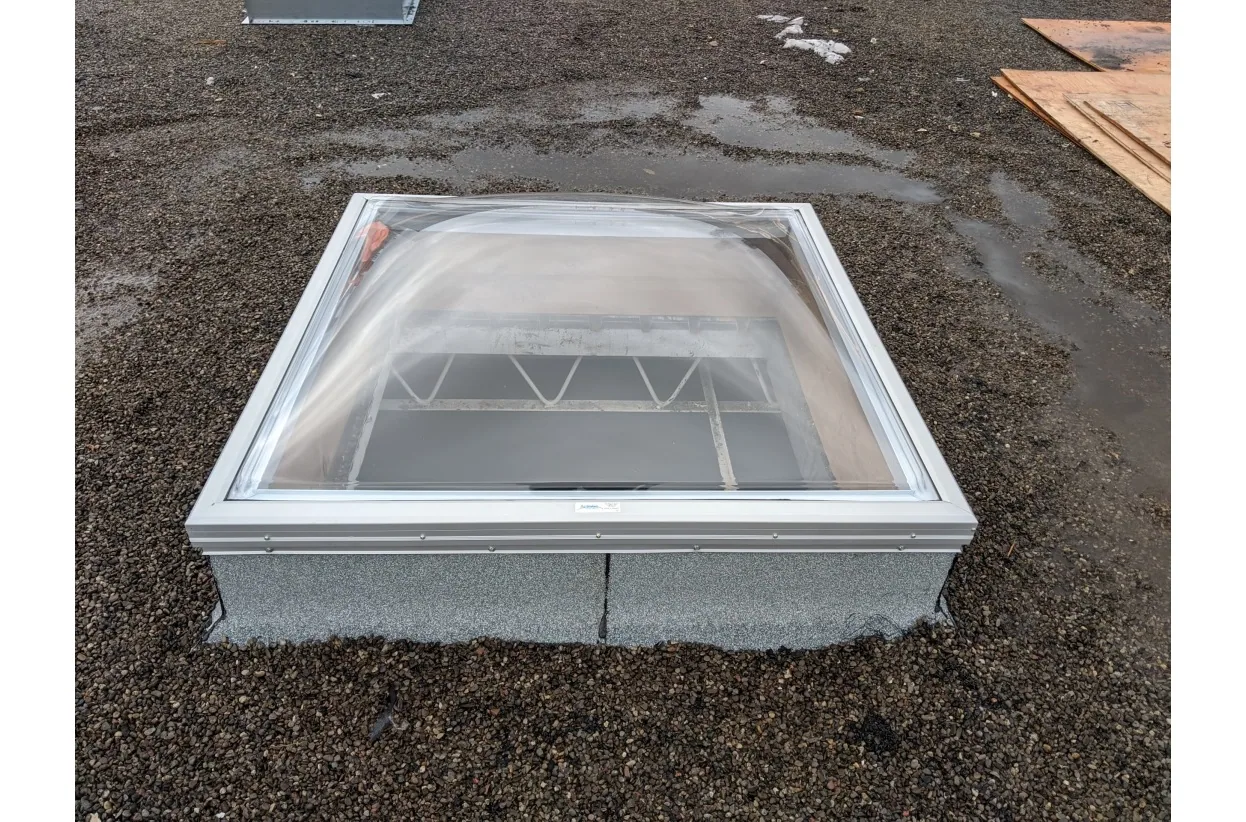
We look for cracked or hardened sealant, fasteners that have lifted, bridged membrane that no longer follows the corner, rust staining on metal and water marks on the wall below the flashing. We also look for repair history: layers of mastic piled onto a corner tell us a detail has been patched repeatedly, which is a recurrence signal that belongs in the file even if each patch held for a time. Our skylight and penetration flashing work follows the same steps at those details.

Resealing, re-flashing and rebuilding the detail
A resealed termination is the right answer when the membrane is sound, the substrate is dry and the only failure is aged sealant or a loose bar. Re-flashing, meaning new membrane or flashing material tied into the field, is needed when the existing turn-up has torn, shrunk or cracked. Rebuilding the detail, with new curb framing, a raised base or revised counterflashing, becomes the scope when the geometry itself is wrong, for example a curb too short to give the required height above the membrane.
Edge conditions need their own attention. A loose coping cap or drip edge is often a coping and edge metal repair, not a membrane repair, and mixing the two can leave a mismatch that opens again. When a detail on a rooftop unit is failing because the equipment has moved, the support also needs correction, which is where equipment curbs and supports work comes in.
Sequencing detail work with the field of the roof
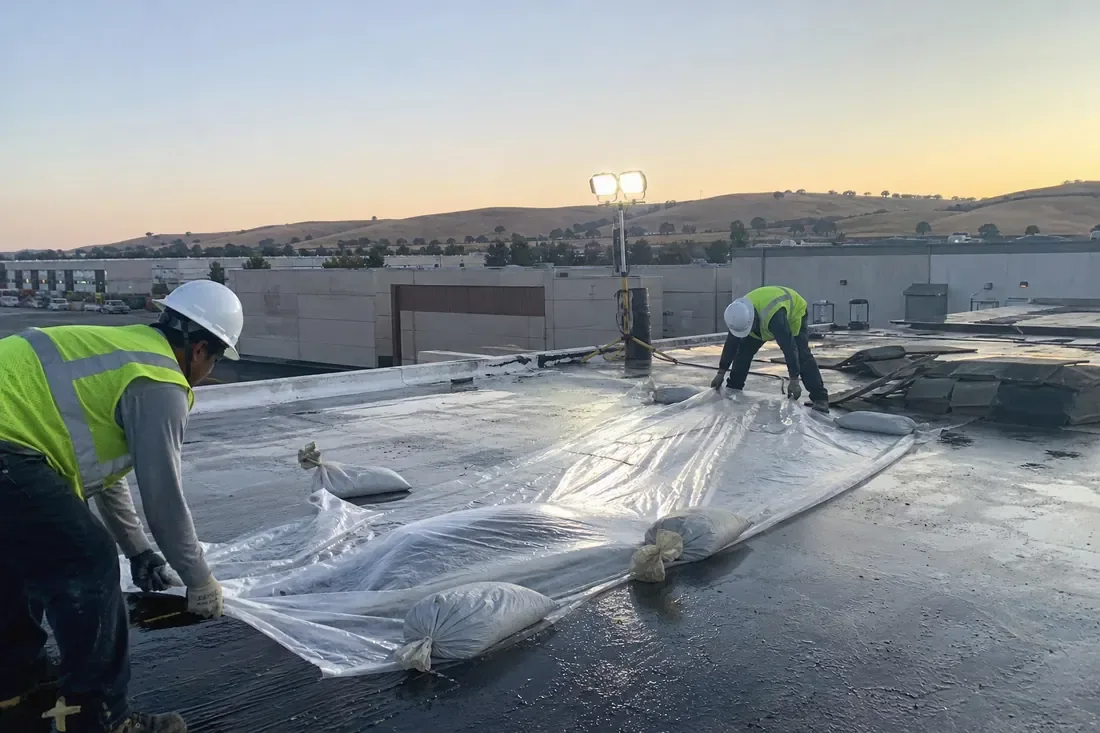
Flashing repairs are small in area but exacting in preparation. Surfaces must be cleaned, dried and primed where the product requires it, and the temperature window is narrower for some adhesives and sealants than for the membrane itself. In Olathe, with 109.6 days a year at or below freezing, we schedule the most temperature-sensitive materials for warmer weeks and use temporary protection when a leak cannot wait.
If a failing detail is leaking now, the first visit is stabilization, and a leak repair record should say which interior location corresponds to which detail. The permanent work follows once the surrounding membrane and insulation have been checked for wetness, because a flashing that was bad for a long time may have wet the substrate behind it. In that case the repair boundary extends beyond the visible gap. Access matters too: a wall-base repair along a loading dock or a curb repair beside a running air handler needs clearances, a fall-protection plan and a named contact who can approve a change if hidden damage appears behind the old termination.
More About Flashing Failure Repair in Olathe, KS
Detail inventory as a capital tool
Every penetration and curb is a chance for a detail to fail, and an inventory that lists each one with a condition rating gives the owner something to budget against. Recording the type of flashing, its approximate condition and its last repair turns what looks like random leaks into a pattern. If most failures cluster at one kind of detail, a fleet-wide correction may cost less than responding to each leak.
The K-10 corridor through Lenexa, De Soto and Olathe combines industrial, high-tech, office and commercial uses, and a portfolio there can span several roof systems with different flashing methods. The condition report we prepare names each system and its details, so buildings in Lenexa and Olathe can share a common repair format.
Commercial Roofing Questions
Can failed flashing be sealed with roof cement?
Roof cement can close a gap for a short time, but it does not move with the roof and tends to crack in the next freeze cycle. We use it only as temporary protection, and we record it that way. A lasting repair replaces or re-bonds the flashing with material compatible with the membrane and prepares the substrate first.
Why do the same corners keep leaking after patching?
Corners are where flat membrane has to fold into three dimensions, so they carry the most stress and the least margin for error. Repeated leaks at one corner usually mean the corner geometry, the fastening or the substrate is wrong, not that the patch was thin. Rebuilding the corner with a prefabricated or properly formed piece often ends the cycle.
How do we tell a flashing leak from a membrane leak?
By tracing. We compare where water shows inside with the nearest details, then test with controlled water or a moisture scan when the path is unclear. Details are the most common entry point on a roof in service, but a split seam or puncture can look identical from below. The record should name the confirmed source.
Does flashing repair affect the manufacturer warranty?
Warranty terms vary, and some require that repairs use approved materials or an authorized method. Check your document before authorizing work. We can describe exactly what was done, with photographs and material descriptions, so the record is ready if the manufacturer asks.
Should rooftop equipment replacement include new flashing?
Yes, when a unit is replaced or moved, the curb flashing around it should be inspected and usually renewed, since reusing a decade-old flashing around new equipment leaves the oldest part of the assembly in the most exposed position. Coordinate the roofing and mechanical work so the curb height and access are settled before the unit is set.
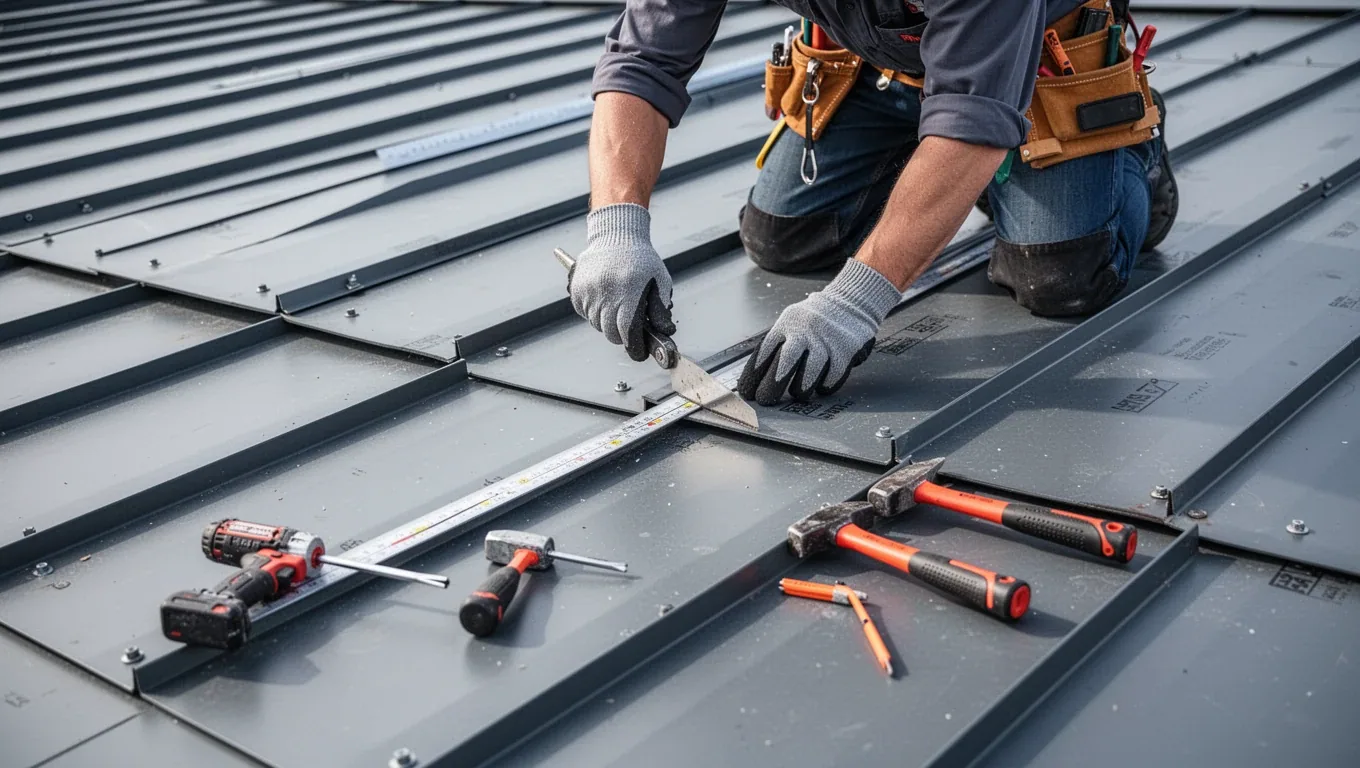
Send the detail list and the leak locations
Share the property list, the roof-area register, interior leak reports, and any photographs of curbs, wall bases or pipe penetrations. We will inspect the details, separate repairs from rebuilds, and return a record you can set beside your reserve plan.