Commercial Roofing in Kansas City, MO
Kansas City, MO counted 508,090 residents in the 2020 Census and reported $13.706 billion in 2022 retail sales alongside $2.478 billion in transportation-and-warehousing receipts, the largest figures among the cities around Olathe. A city of that scale can hold commercial buildings of many roofing types, so the first job is sorting them by system and condition. We repair, recover, replace, coat, inspect and maintain low-slope and metal roofs here, and emergency response runs every hour of every day. Seasonal timing comes from the Olathe airport station, 109.6 freeze days a year, labeled as Olathe data.
Send the portfolio and the sequence you have in mind
Send the full building list, with the roof-area register, decision date, available reports and a contact for each site. Our inspectors log the condition of every roof and return an assessment that separates current repairs from capital planning assumptions.
Sorting a large property list by system and condition
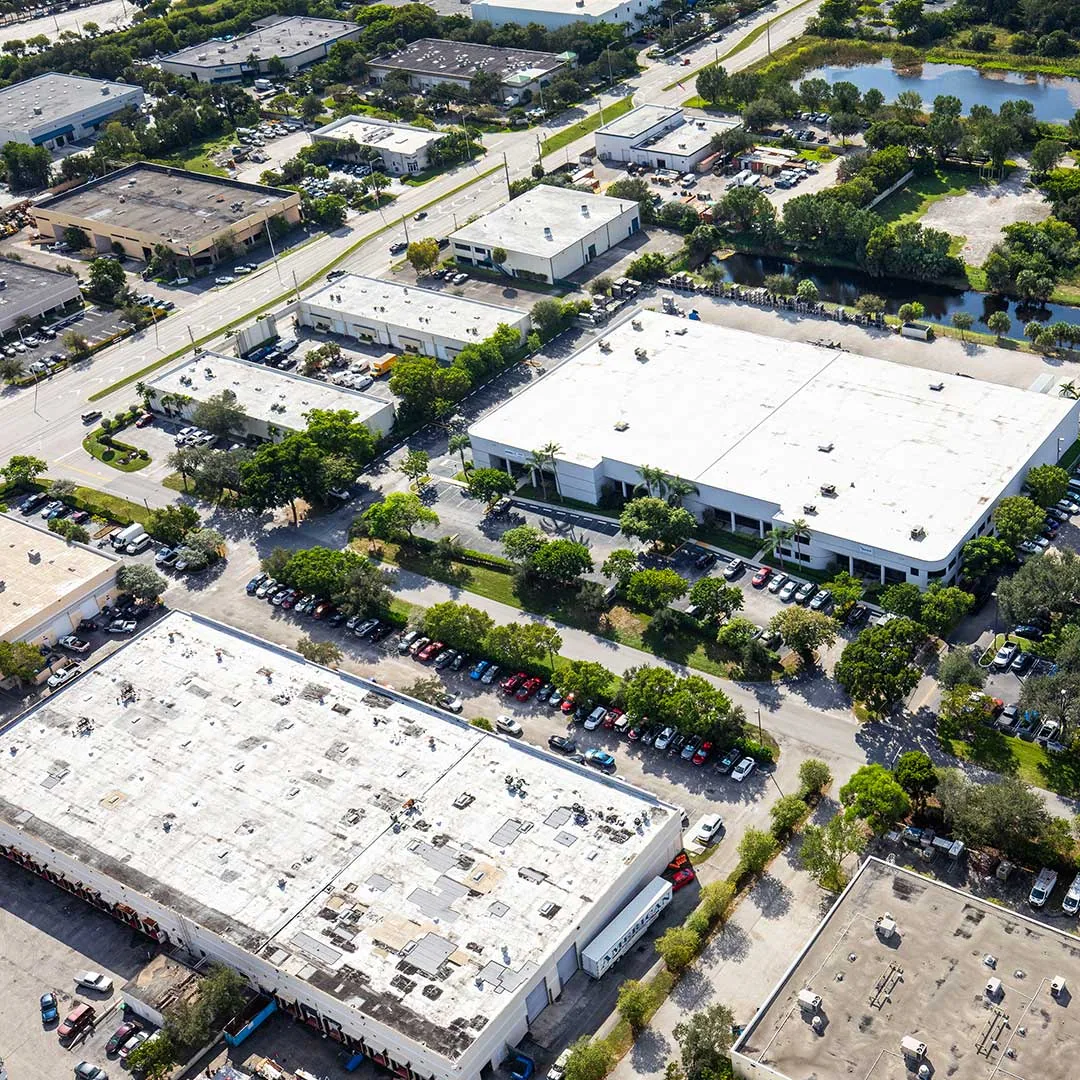
An owner with many Kansas City, MO buildings needs a way to compare roofs on equal terms. The register gives each roof area a system label, an inspection date, a condition rating, a drainage note and a renewal trigger. Roofs with the same label can share a repair method; roofs with the same trigger can be bundled in a capital year. The sort turns a long list into a few groups, each with a sequence.
Our multi-site roof programs are built on that structure. A program gives a property manager one calendar of inspections, one format for reports and one way to see which buildings have moved from watch to repair to renewal.
Retail and freight roofs
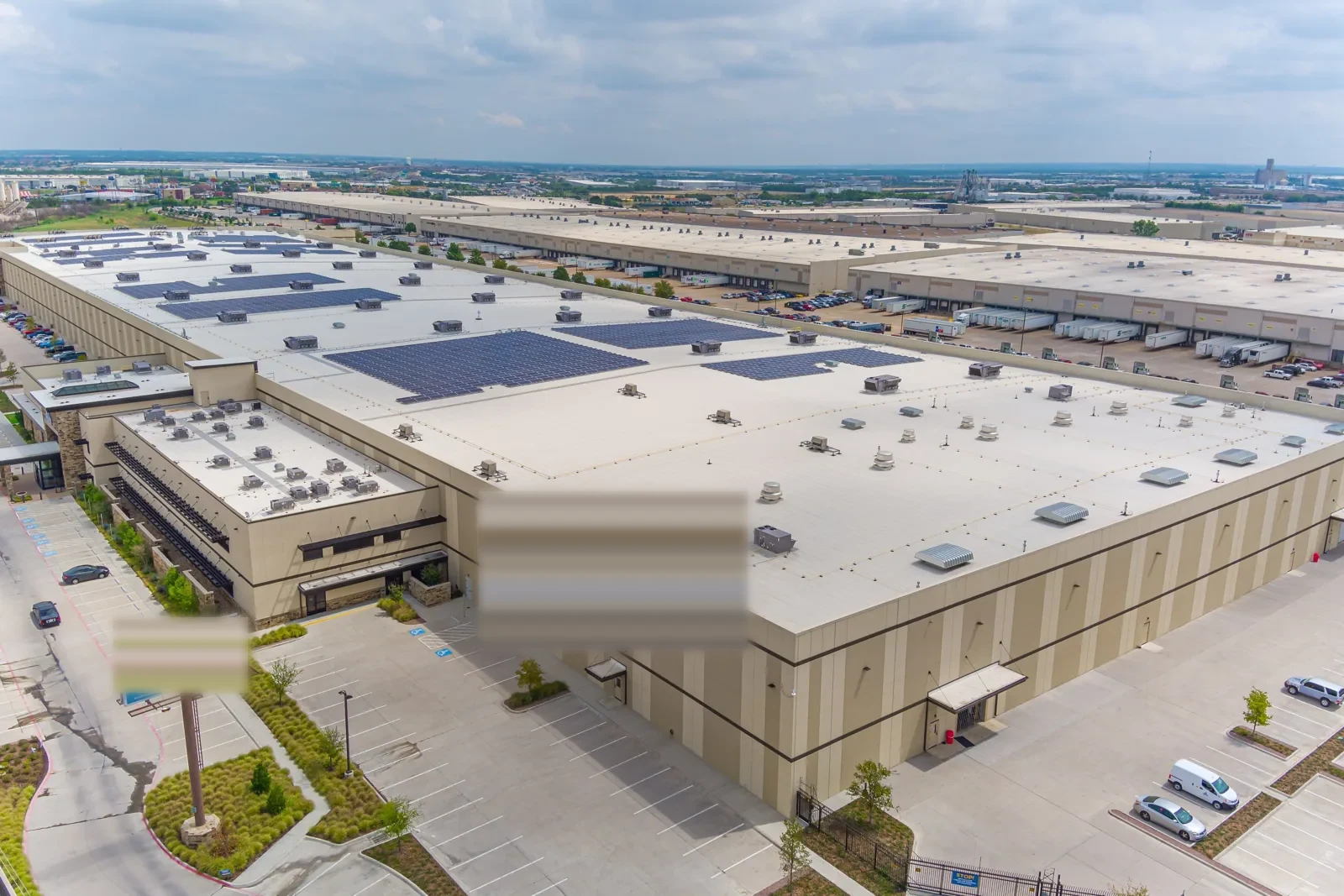
With retail sales above $13.7 billion and transportation-and-warehousing receipts above $2.4 billion, the city's commercial mix includes both customer-facing and storage buildings. For a big box store, the roof questions are drainage across a wide span, perimeter attachment and the flashing around rooftop units. For a distribution center, they are dock-side details, seam condition across long runs, and moisture in the insulation.
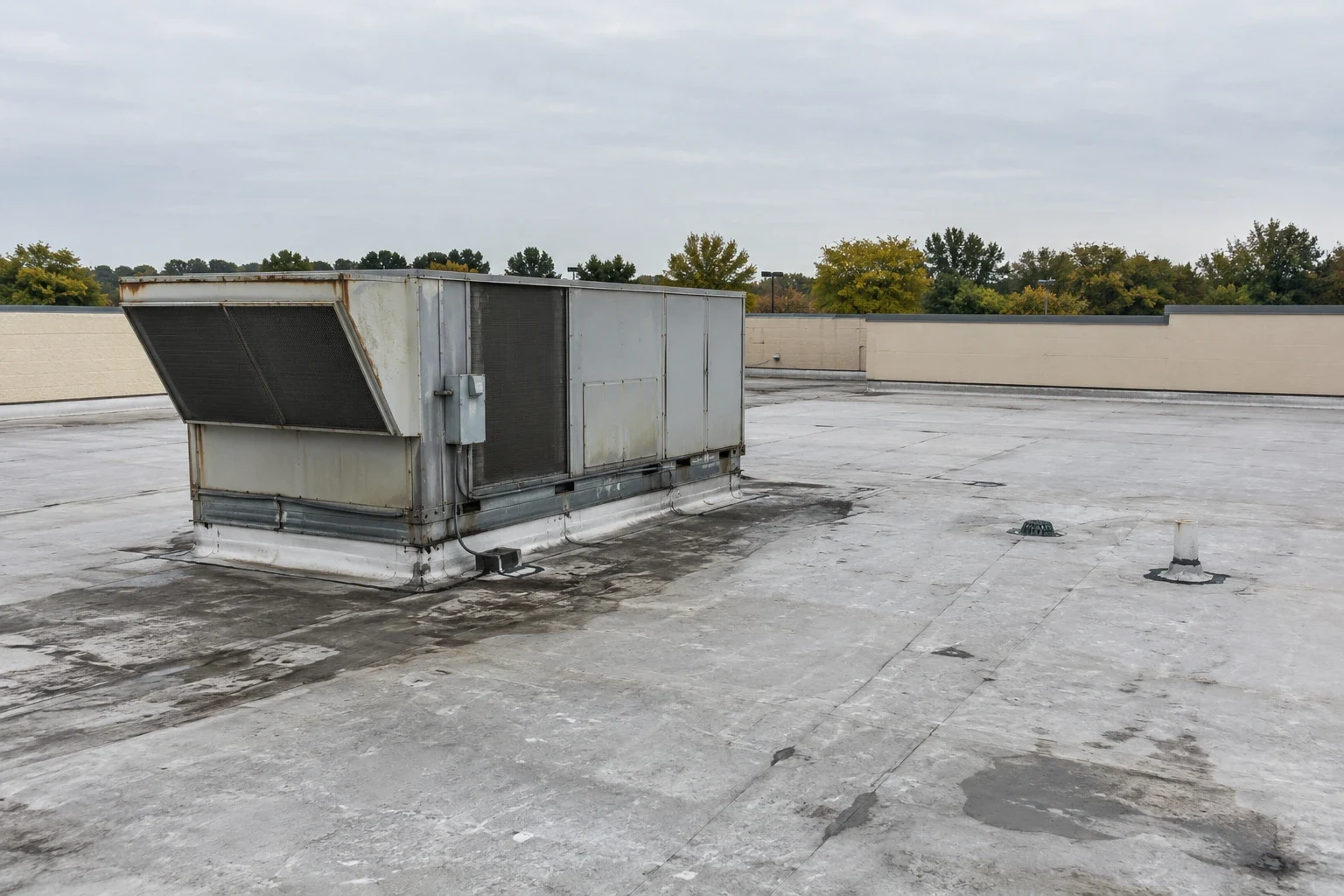
The first visit sets the facts: membrane, attachment, insulation, penetrations and the water path.
Health-care buildings and the VA medical center context
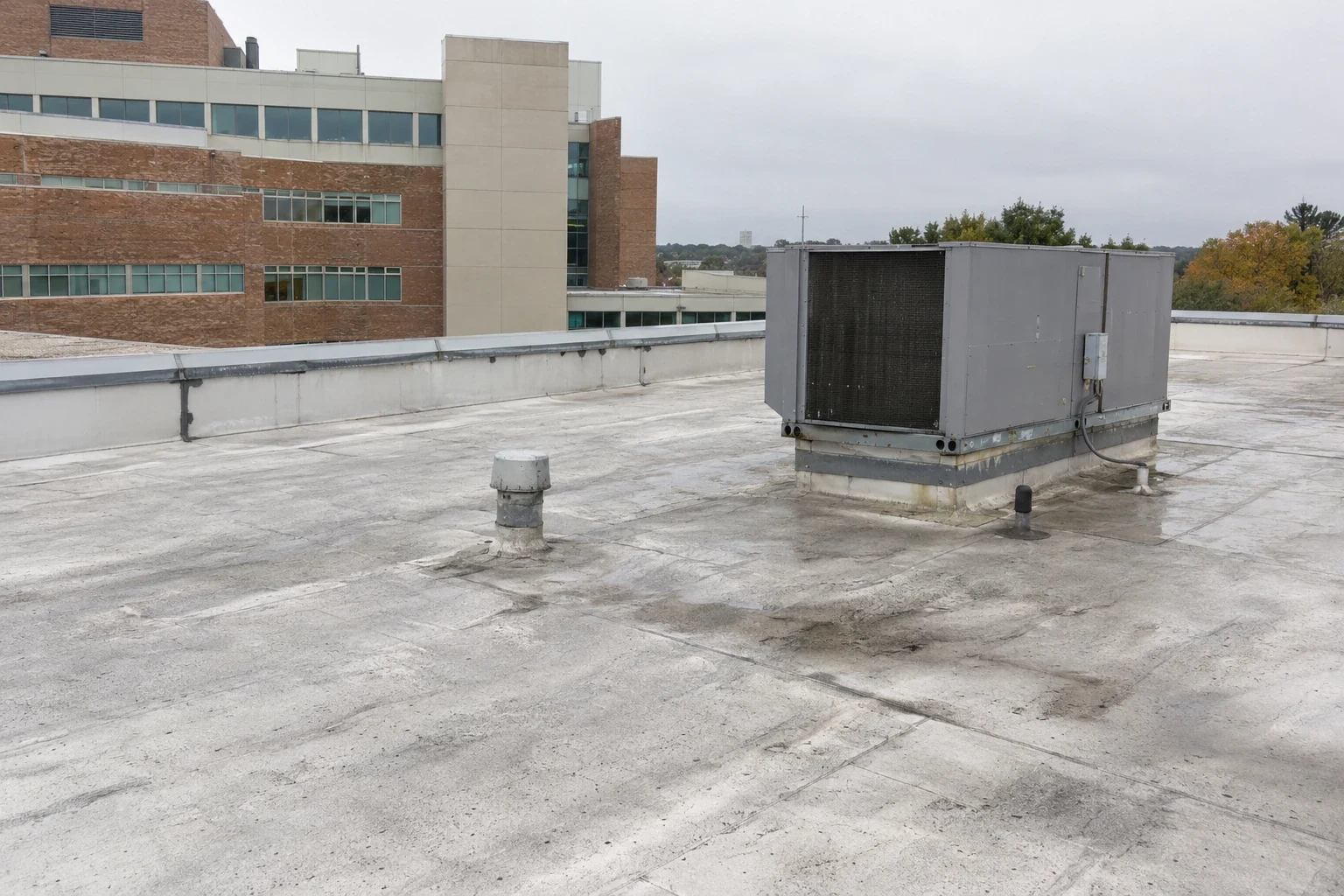
The VA's Kansas City Medical Center sits on a 40-acre campus in eastern Kansas City and serves veterans across western Missouri and eastern Kansas. Health-care buildings of that kind are part of the city's institutional picture, and they point to a roof discipline: no leak tolerance over clinical space, careful infection-control planning, and tight access rules.
On a hospital roof or a clinic, we plan around patient flow, air intakes, noise limits and emergency access. Rooftop air handlers and exhaust must stay running, so work zones are sized to keep them clear, and interior protection is agreed with facilities staff before the crew arrives.
Olathe normals as a planning reference
At the Olathe airport the 1991-2020 normals show 29.8°F in January, 78.8°F in July and 37.54 inches of precipitation a year, a regional reference for the metro area. For a Kansas City, MO building we use them to time inspections, one after the thaw and one before the hottest weeks, while judging each roof by its own drainage and exposure.
A drainage record built from post-rain photographs shows whether ponding is recurring. A seam probe on a sample line shows whether edge and lap defects are isolated. Together they decide whether a commercial roof repair is enough or whether the reserve plan should move the roof to an earlier year.
More About Commercial Roofing in Kansas City, MO
Storm review across the metro
A squall line on May 19, 2024, produced surveyed wind damage between Gardner and Olathe, estimated at 80 mph, plus brief tornadoes in other Johnson County locations. That survey does not list Kansas City, MO, but a single squall line can cross the metro, which is a reason for owners to keep post-storm inspections on the schedule. Kansas City-area thunderstorm climatology also includes hail, and a hail claim belongs on observed damage.
We record dents, bruised board, lifted edges and displaced equipment with dated photographs. A wind damage repair scope and a hail scope are kept apart from ordinary wear.
Options, timing and what moves the price
Sound seams over dry material may need only repair or coating. A tired sheet over dry insulation may accept a recover. Wet board or a brittle sheet means replacement. Cost depends on insulation thickness, penetration count, deck repairs found after opening, disposal, crane or hoist access and protection of the space below. Timing follows the weather, since welds and adhesives need dry surfaces and workable temperatures.
For owners facing a bid, we price each option against one scope version, which keeps comparison honest. A phased approach, with the worst areas first and the rest in later capital years, is often practical when the property list is long, and it lets early results inform later bids.
Early scoping saves money on every option. A test cut shows the layers and their condition before bids go out, an infrared scan marks wet insulation, and a review of the deck at drains and edges flags steel or wood that will need repair. When those items are known up front, bidders price the same work and the owner avoids change orders that would otherwise surface once the roof is open. On a large property list, the savings repeat on every building.
Adjacent cities
Kansas City, MO owners often hold buildings across the state line in Kansas City, Kansas and in Olathe. One register for the whole list keeps dates and capital years aligned across the metro, and it lets a property manager compare the cost per roof area of different buildings on the same terms.
Large owners often ask how to begin without disrupting operations. The answer is a pilot: choose two or three representative buildings, complete the first walk and register for each, and use the results to size the larger program. The pilot gives finance a real cost basis, gives operations a feel for access and scheduling, and surfaces any records that need to be collected before the rest of the list is scoped.
A pilot also tests the reporting format with the people who will use it. Property managers, asset managers and lenders often want the same facts arranged differently, and adjusting the summary page after the first three buildings is far easier than changing it after fifty. Once the format is settled, the register can grow building by building without changing how findings are written or ranked.
Commercial Roofing Questions
How should a long property list be grouped for a roof program?
By system type first, then by condition and renewal trigger. Roofs that share a membrane and a failure pattern can be repaired by one method and bid together. The grouping also shows which buildings belong in this capital year and which can wait.
What changes when the roof sits over clinical space?
Leak tolerance drops to near zero, so work zones are small, protection is generous and air intakes and exhaust stay clear. Access, noise and infection-control rules come from facilities staff and go into the schedule before work begins.
Does the Olathe climate record fit a Kansas City, MO roof?
It is a regional reference for timing, drawn from the Olathe station. Each Kansas City, MO roof is judged by its own drainage, exposure and condition, and we record those separately.
Why phase renewals across a long list instead of bidding all at once?
Phasing spreads capital spending, lets the worst roofs go first and allows lessons from early projects to improve later ones. The register keeps each roof's trigger visible so the order can change when a field finding moves a roof up the list. A sudden leak on a roof planned for a later year is handled as a repair first, and the register is updated so the renewal date reflects what was found.
Can storm records from another city support a claim here?
A claim needs observed damage on the roof in question, with dated photographs and measurements. A metro storm survey explains the weather, and the damage file is built from the building.
Send the portfolio and the sequence you have in mind
Send the full building list, with the roof-area register, decision date, available reports and a contact for each site. Our inspectors log the condition of every roof and return an assessment that separates current repairs from capital planning assumptions.