

Roof Asset Management in Olathe, KS
The year a roof will need to be replaced is a budget line long before it is a leak, and the line is only as good as the records behind it. Across Olathe, KS, a normal year means 109.6 days of freezing lows and 37.54 inches of precipitation, and each roof section works through the same seasons in its own way, depending on slope, drainage, exposure and age. Roof asset management is the practice of recording that individual story: a register of every roof area, what it is made of, what has been done to it, what condition it was in on which date, and what the owner decided next. We build and keep that register with the owner, so the capital year is chosen from evidence.
Send the property list and whatever records exist
Share the property list, any existing roof-area register, roof plans, warranty files and the decision dates you are working toward. We will field-check the records, rate each area and return a register that separates current repairs from capital planning assumptions.
Why the register has to be local
A roof-area record without a climate in it is only a list. Those same normals put January near 29.8°F and July near 78.8°F, and the freeze-day count means seams, flashings and drains are tested for roughly a third of the year. Recording the drainage state, ponded areas and seam condition on each visit shows which assemblies are moving, which is the kind of observation a calendar age cannot supply.
The squall line of May 19, 2024, which the National Weather Service surveyed from Gardner into Olathe, is a dated entry for any property in the reported path. Where it applies, the entry should say what edge metal, flashing and membrane looked like before and after. Portfolios stretching along K-10 through De Soto, Lenexa and Olathe, or across Overland Park and Shawnee, benefit from entries made to one format, so a difference between two roofs reflects the roofs and not the record-keeping.
What goes into a roof-area register
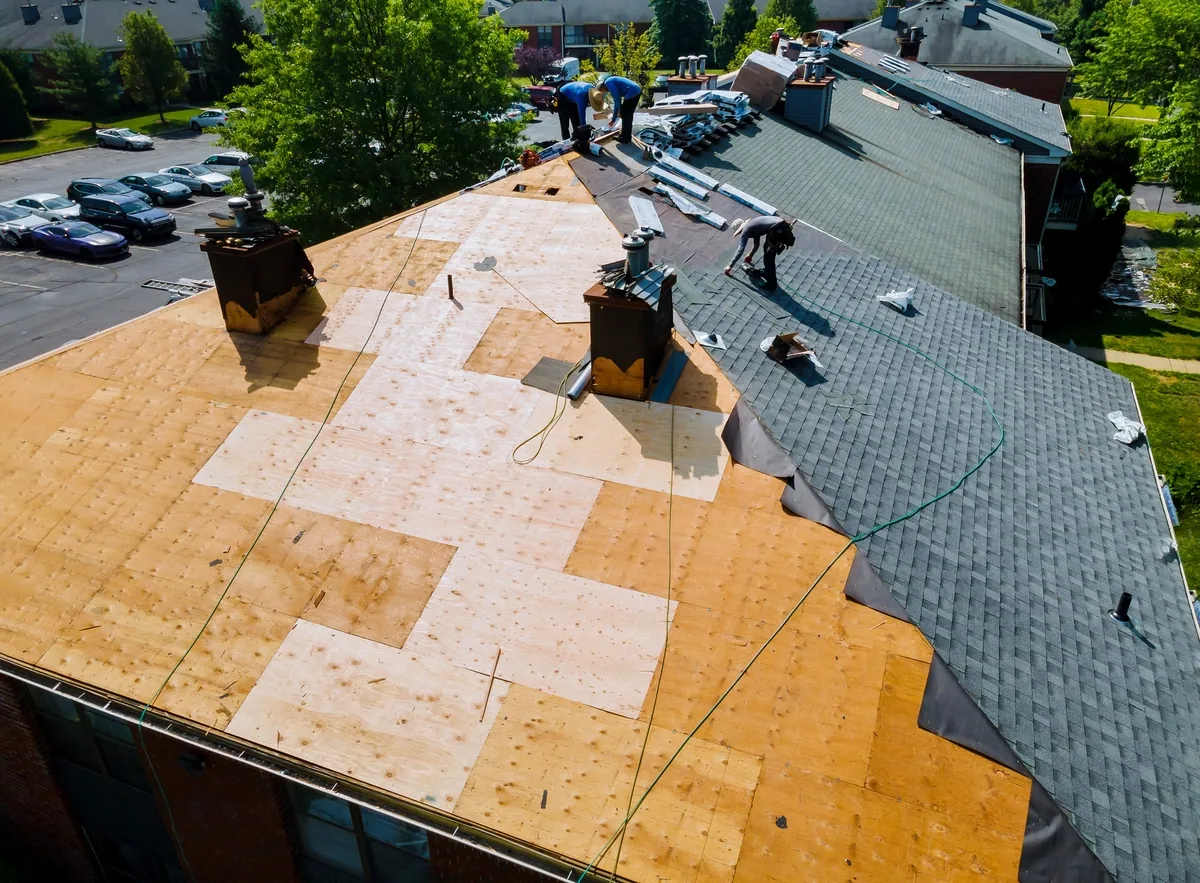
Each roof area gets its own record, defined by what is physically continuous: a section separated by an expansion joint, a change in system, a different elevation or a different installation year. For each area the register holds the system type, approximate size, install or last-replacement year where known, attachment method, insulation type and cover board if recorded, drain locations, penetrations and rooftop equipment, and the manufacturer warranty status.
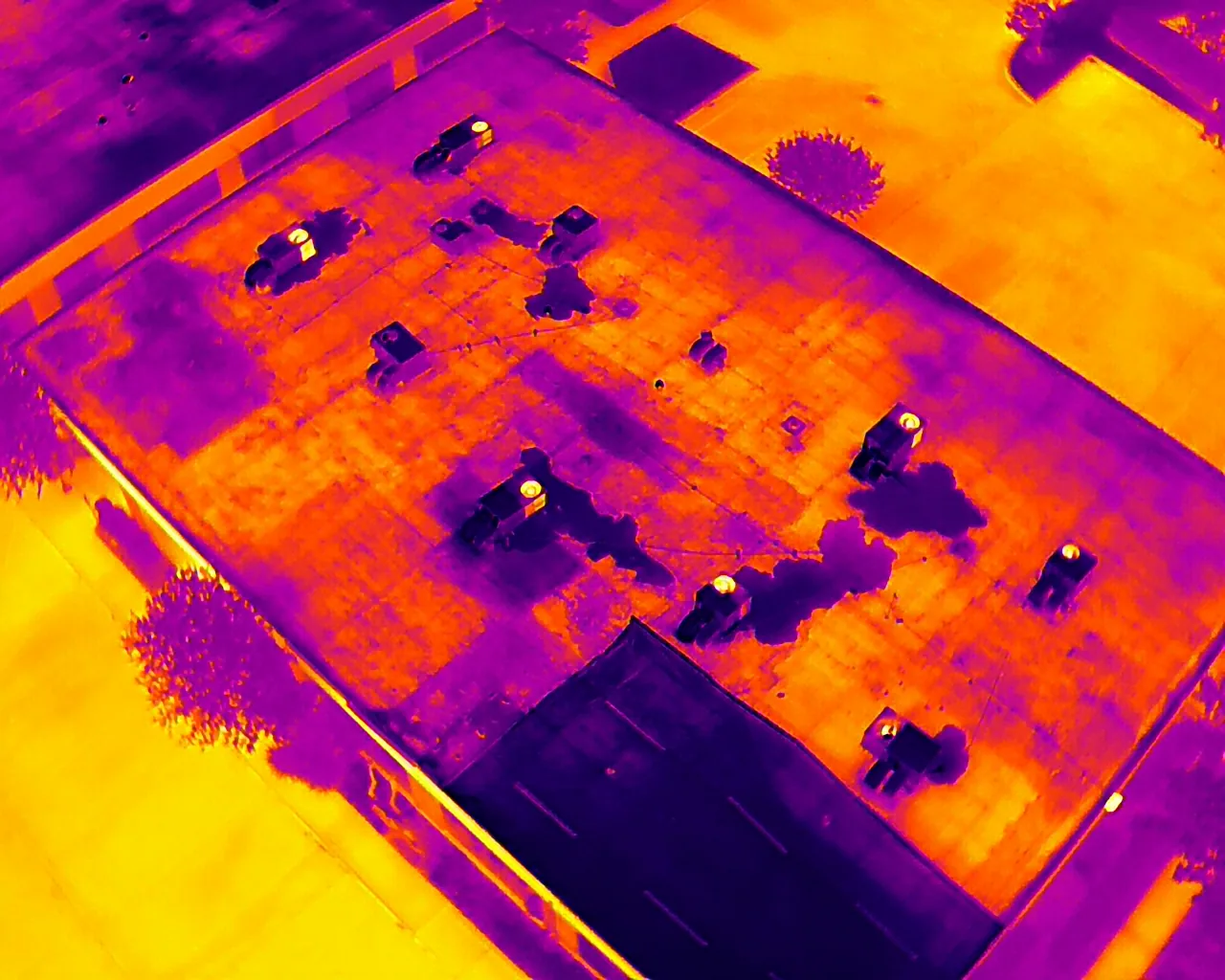
The register also holds history: repair dates and locations, photographs, moisture scan results, inspection findings and the interval chosen for the next visit. Where documents are missing, the register says so, and field work fills the gap in time. An inspection establishes the baseline, and an infrared survey adds the moisture map where the budget question depends on it.
Access belongs in the register as well. Which roof hatch or ladder reaches each area, what equipment must be shut down before a crew can work near it, who holds the keys, and what hours the tenants will allow are facts that change the price and the date of every later visit. Recording them once, with a named contact, keeps a routine inspection from turning into a scheduling problem.

Rating condition so the numbers can be compared
A rating system matters only if the next inspector uses it the same way. We rate each area on a short, fixed scale that covers membrane surface, seams, flashing, drainage and moisture, and we define each rating by what the roof shows. A rating of poor means water is entering or the membrane has lost key properties, not that someone had a bad feeling. Photographs from fixed positions support the rating, and each new visit repeats them.
Repairs are tracked by cause, not just location. Three separate leaks at pipe boots tell a different story than three leaks at three kinds of detail, and the first suggests a single correction. A repair line that grows from visit to visit is a signal for the capital plan, and the written condition reports carry those entries back to the owner with photographs.
Turning records into a renewal trigger
The point of the register is to name the conditions that will move a roof from repair to replacement. Typical triggers are a rising repair count in the same assembly, wet insulation found by scan, seams that no longer accept repair, or a membrane with documented loss of flexibility. Setting the trigger in advance keeps the decision from being made in a leak emergency.
When a trigger is reached, the register supports the next step: a replacement or recover scope drawn from the actual roof, a maintenance program that stretches a sound roof to its next window, or a coating where the roof qualifies. The owner sees the field data alongside the cost drivers and chooses with both in front of them.
More About Roof Asset Management in Olathe, KS
Registers across several buildings and corridors
For a portfolio, the register becomes a ranking tool. Roofs in the same city, on the same corridor, or in the same business park can be sorted by condition, age and exposure, and the capital year is allocated from the top of the list. Southern Olathe has the large industrial developments the city's economic-development plan describes, and the corridors it plans around include Woodland, K-7, Cedar Creek and I-35/Santa Fe, so a manager with buildings in several of these areas has natural groupings for visits and scope packages.
For owners with many sites, the multi-site roof program keeps the register consistent, and the capital planning work converts it to a reserve schedule. Property groups in Lenexa and Overland Park can be added to the same register without changing its format. When a building changes hands, the register travels with it, and a buyer or lender can read the roof history in the same terms the seller used, which shortens due diligence and reduces disputes about what condition the roof was in on the closing date.
One further field earns a place in the register: the name of the person who last approved work on each roof area. When a question arises years later about why a repair was made a certain way, that name and date point to the decision, and the register stops being only a list of conditions and becomes a record of choices.
Commercial Roofing Questions
What is the smallest portfolio that benefits from a register?
One building with several roof sections already qualifies, since each section ages separately. A register is simple to start and gains value with each visit, because the comparison between dates is what makes it useful. Owners with a single roof use it mainly to document warranty compliance and to time replacement.
Can an existing spreadsheet be used as the starting point?
Yes, as long as the entries can be tied to specific roof areas and dates. We read what exists, field-check it against the roofs, and correct the gaps. A spreadsheet that mixes roofs and sections is common, and the first job is splitting it into physical areas that can be inspected.
How often should each roof area be reviewed?
The interval follows the risk: younger roofs in good condition can go longer between visits than older ones with repeated repairs, and a storm or leak sets a special visit regardless. Spring and autumn visits suit Olathe's freeze-day exposure, and the register should record why each interval was chosen.
Who owns the register and the photographs?
The owner. We deliver the records in a format the owner can keep, share with lenders, insurers or buyers, and carry to another contractor if the relationship changes. A register that only one vendor can open fails the purpose it was built for.
How does a register help when a storm hits?
It gives the adjuster and the owner a before picture. When a roof is inspected after wind or hail, the dated entries show what existed before the event, which separates storm damage from prior wear and shortens the claim discussion.


Send the property list and whatever records exist
Share the property list, any existing roof-area register, roof plans, warranty files and the decision dates you are working toward. We will field-check the records, rate each area and return a register that separates current repairs from capital planning assumptions.
