
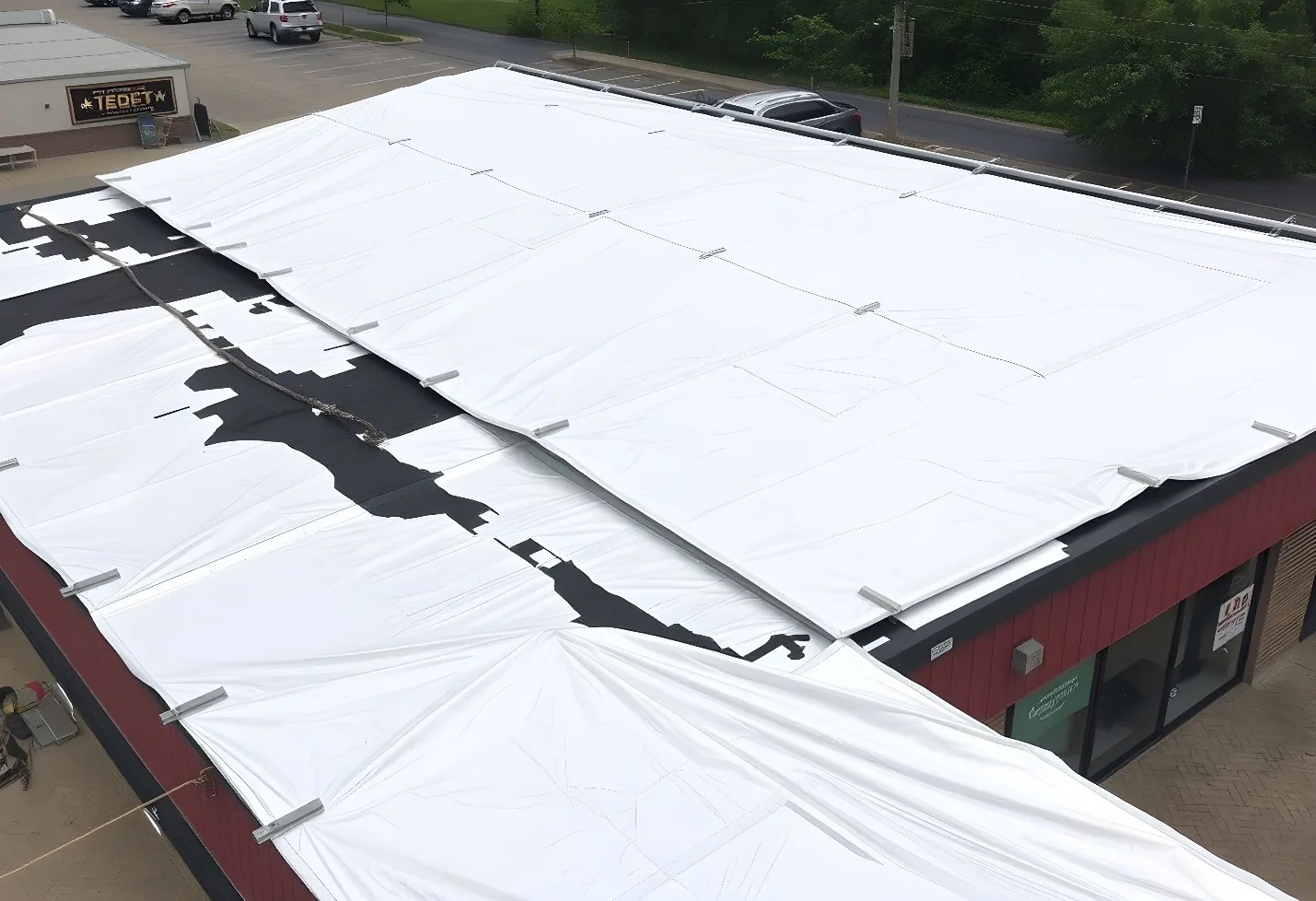
Emergency Commercial Roof Repair in Olathe, KS
A call after hours needs a clear first decision: protect people, limit interior exposure, and get a qualified roof assessment moving. Commercial roof response is available around the clock, every day of the week, including holidays. We record the building contact, affected area, access conditions, and what is known before dispatch so the first visit can focus on stabilization and diagnosis. Temporary dry-in may be necessary, but it is tracked separately from the permanent repair. The owner receives a response record that states what was done, what remains exposed, and who owns the next action.
Start with the building and the exposure
Share the address, access contact, interior impact, available roof plan, and any immediate safety concern. We can coordinate around-the-clock response, document stabilization, and set out the permanent repair steps that remain.
Put the event date beside the roof evidence
For the May 19, 2024 metro storm line, NWS surveyed straight-line wind damage along the route between Gardner and Olathe and estimated a peak wind of 80 mph. That dated report gives a call about a new leak or displaced detail a place to start when the property lies in or near the path. We inspect the building and document visible conditions before assigning a cause, and the roof-area record sets the response scope.
KDOT's K-7 study reaches from Miami County to Leavenworth and includes Olathe among its participating communities. An owner may coordinate response across nearby buildings, yet access, loading activity, interior sensitivity, and roof assemblies differ by property. We confirm who can open the building, which areas need protection, and whether a lift or other access arrangement is available. A shared contact path can improve portfolio handoffs without assuming the same sequence or repair material fits every roof.
Stabilize the building before expanding the scope
At arrival, we confirm safe access and locate the interior impact, then assess the roof area reachable under current conditions. The first objective is to limit water entry and protect vulnerable spaces. Temporary covers, sealants, or other dry-in measures depend on the surface, wind, water, and access. We photograph and describe the stabilization so the owner understands its limits and can distinguish it from a permanent repair.
Tell the responder about electrical concerns, tenant areas, equipment rooms, loading schedules, and roof access restrictions. A leak assessment can trace water paths after conditions are safe, while a storm-damage review can document visible changes after an event. We identify who can approve added work if opened material reveals concealed damage. Clear authority reduces delay without turning an emergency visit into an unbounded scope.

Keep temporary protection distinct from correction
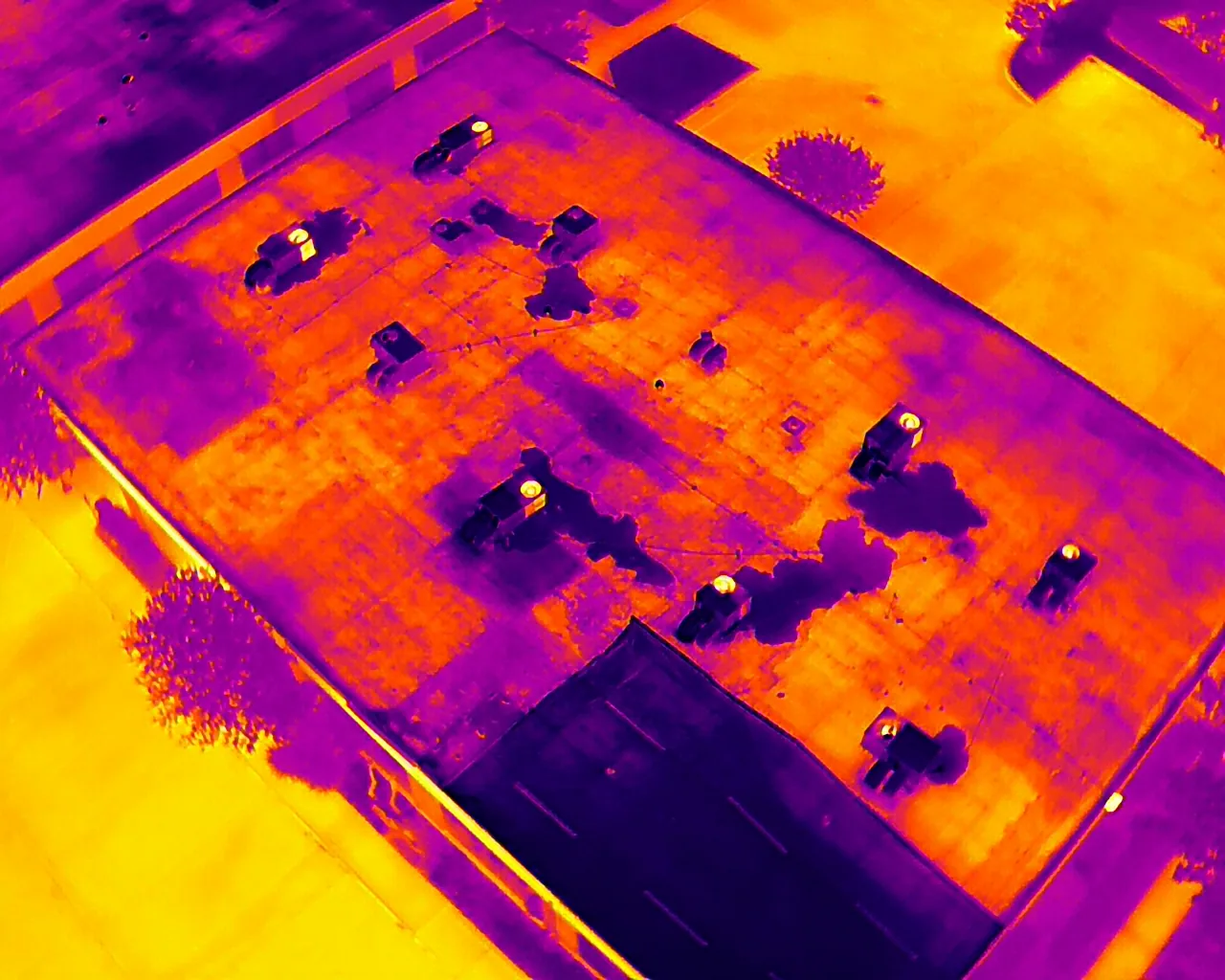
Water may travel from the roof opening along a deck, insulation joint, curb, or framing before appearing inside. The visible ceiling area is therefore one part of the diagnosis. We inspect nearby penetrations, seams, drains, wall transitions, and perimeter details, then compare those findings with interior observations. If the source cannot be confirmed during an emergency visit, the report names the likely paths and the next inspection or test instead of recording a guess as a finding.
A roof inspection can establish the permanent repair boundary, and moisture investigation may help when surface and weather conditions support that method. Direct testing may still be needed to confirm substrate conditions. The record notes photographs, access limitations, weather at the visit, and whether interior monitoring is pending. That gives the owner a better basis for approving follow-up work than a short note that says only that a leak was patched.
Return with a compatible repair scope
Once the roof is stable, the permanent repair should match the membrane or metal assembly and the detail that failed. Preparation, material compatibility, edge termination, and drainage paths determine whether the correction can be completed in place. We identify any deteriorated surrounding material and state whether it must be removed before the repair. If the area is too wet, unstable, or extensive for a discrete repair, the owner receives a broader assessment rather than a patch that conceals the unresolved condition.
A commercial repair scope can address a contained failure, while a wind-damage assessment can document lifted edges or displaced details. If water collects at an outlet, a drain review may be part of the correction. We describe what is permanent, what remains provisional, and how the repair will be checked, keeping every step tied to the affected roof area.
More About Emergency Commercial Roof Repair in Olathe, KS
Coordinate access with the people inside
Emergency work can happen while a building remains occupied or managers arrange a return to normal operations. We coordinate entry, interior protection, loading areas, and sensitive equipment or rooms affected by the leak. The owner needs a contact for schedule changes and concealed-condition decisions, especially if weather pauses permanent work. Notes identify which spaces were inspected, which could not be reached, and any occupant instruction that remains active.
For properties in Olathe and Lenexa, a common portfolio intake can route calls and preserve consistent records while each site retains its own access contact and roof plan. A property-management response plan can clarify those roles before a storm. When the crew leaves, the manager should know whether the roof is dry-in only, permanently repaired, or awaiting further work, and how to report a change in interior conditions.
Close the emergency with a next step
Closeout records the arrival and completion times, observed roof areas, temporary materials, permanent work completed, photographs, and any limitation on diagnosis. List remaining exposure and the follow-up date, then name the person responsible for arranging access or approving testing. If a later inspection changes the scope, keep that decision linked to the emergency record. This allows a facilities manager to see what was stabilized and why a second visit is still required.
Response covers Olathe and nearby communities when the owner's property list calls for them. Shared dispatch helps coordinate the call, and the cause and repair remain tied to each building. A photo-backed condition report can carry the findings into the maintenance record and reserve plan. That file helps the next inspection separate a new defect from an issue already addressed during the emergency response.
Commercial Roofing Questions
What information should I provide during an after-hours call?
Give the building address, access contact, interior location of water, whether it is actively entering, known roof access limits, and any electrical or occupant concern. Mention recent work or a weather event if relevant, but leave the cause open until the roof is inspected. If you can share a roof plan or photos safely, they may help prepare the visit. The responder should confirm what is known, what is needed for entry, and who can approve follow-up work.
Does emergency service mean the permanent repair happens on the first visit?
Not always. The first visit may focus on safe access, temporary dry-in, and documenting the affected area. Weather, surface conditions, materials, or concealed damage can require a separate permanent repair. The work record should state whether protection is temporary, what remains unresolved, and when the next step is planned. That keeps the owner from treating a stabilized roof as a completed correction when additional work is still required.
Does the May 2024 wind survey matter for a roof call today?
It gives a date for reviewing a reported change, and for a property in Olathe or in Gardner, where the survey path began, the storm belongs in the record. The inspection identifies the roof area, visible condition, and any repair evidence that supports a finding, and current field observations decide the scope and whether testing is needed.
How do we protect building operations during an urgent repair?
Identify occupied rooms, loading activity, sensitive equipment, roof access, and a contact authorized to make field decisions. The work plan can then set interior protection, staging, access controls, and communication for schedule changes. If a temporary dry-in remains, tell staff what areas to monitor and how to report renewed water entry. The closeout should also record any spaces or roof areas that could not be inspected during the visit.
What should the manager retain after the crew leaves?
Keep the response time, photographs, areas inspected, temporary measures, permanent work, access limits, approvals, and follow-up plan together. Mark any unresolved exposure and identify who owns the next action. These details help a later technician understand whether a new call concerns the same location or a separate defect. A dated record also gives the owner a basis for maintenance and capital planning without overstating what the emergency visit confirmed.

Start with the building and the exposure
Share the address, access contact, interior impact, available roof plan, and any immediate safety concern. We can coordinate around-the-clock response, document stabilization, and set out the permanent repair steps that remain.
