
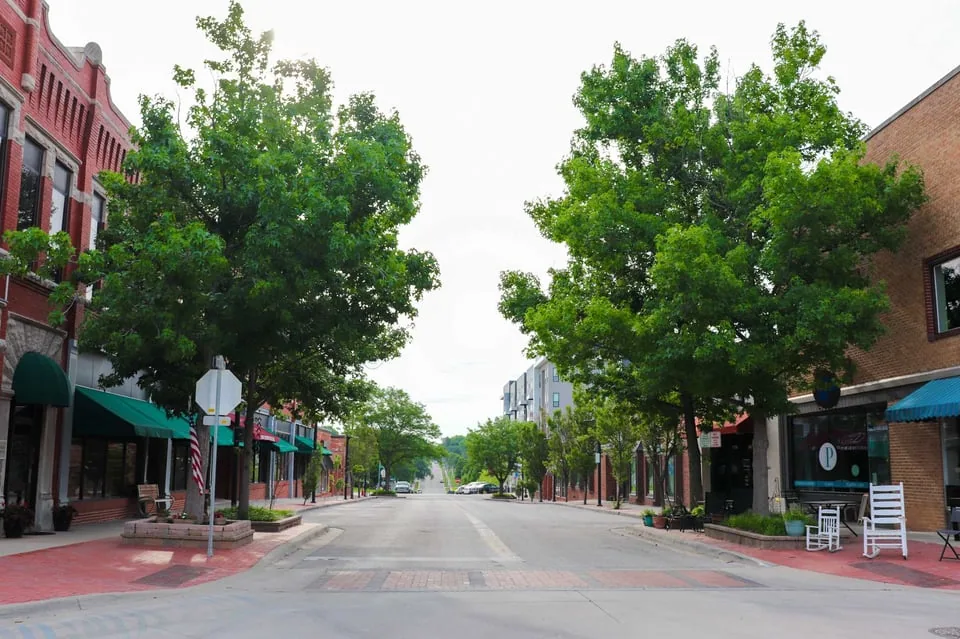
Commercial Roofing in Kansas City, KS
Kansas City, KS posted $1.299 billion in 2022 transportation-and-warehousing receipts, more than half the size of its $2.546 billion in retail sales, and the 2025 population estimate is 157,805. That balance tells a roofing planner that storage, freight and distribution buildings sit alongside retail in the commercial mix, so large low-slope roofs and multi-tenant strips both belong on the first list of roofs to inspect. We repair, recover, replace, coat, inspect and maintain commercial roofs here, with emergency response around the clock, holidays included. Timing references come from the Olathe airport station, which logs 109.6 days a year at or below freezing, and we label them as Olathe readings.
Hand us the building list
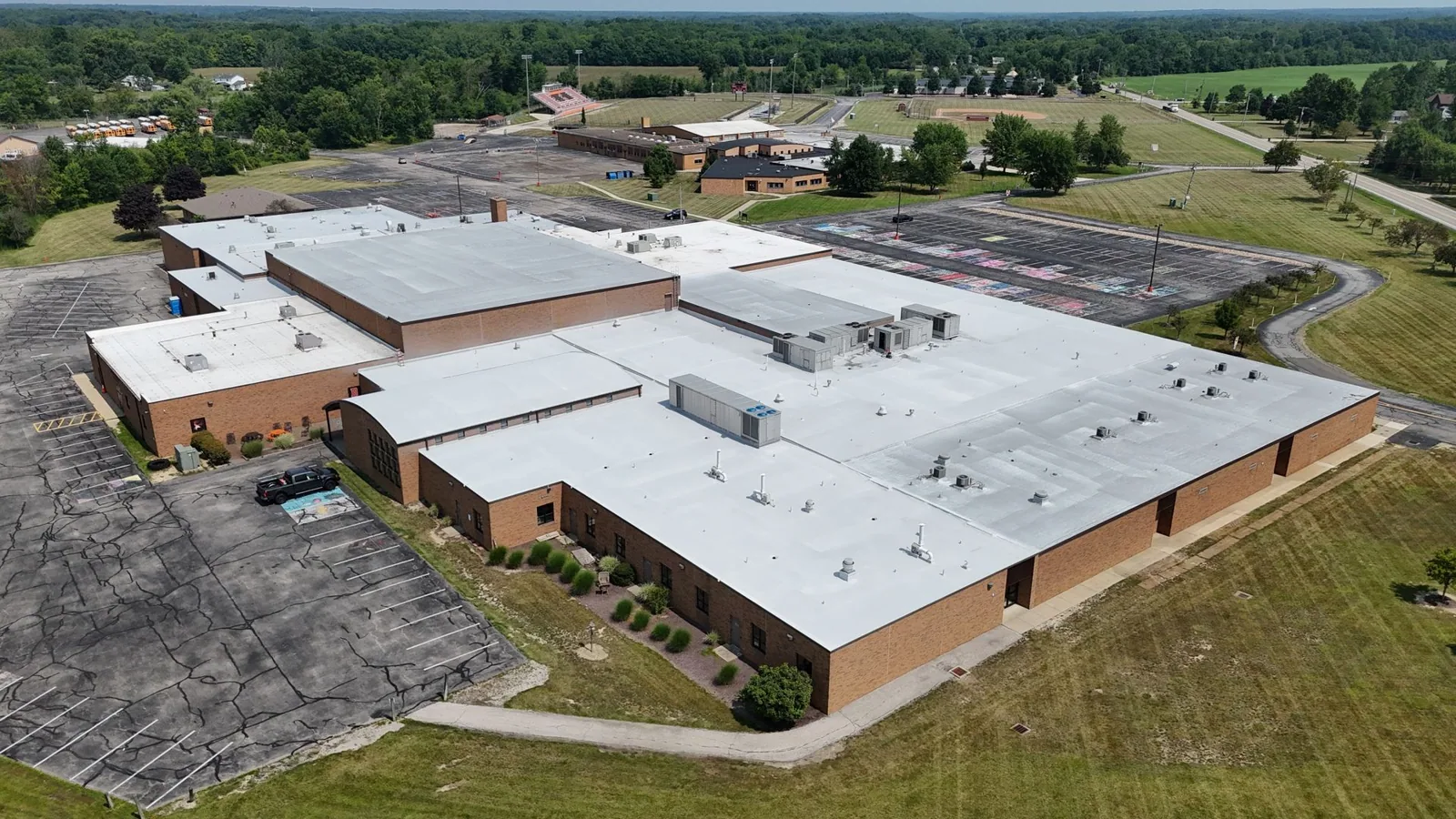
Hand over the property list, roof-area register, decision date, available reports and an access contact. We examine each roof, record condition by area, and send back an assessment that distinguishes current repairs from capital planning assumptions.
Large low-slope roofs on freight and storage buildings
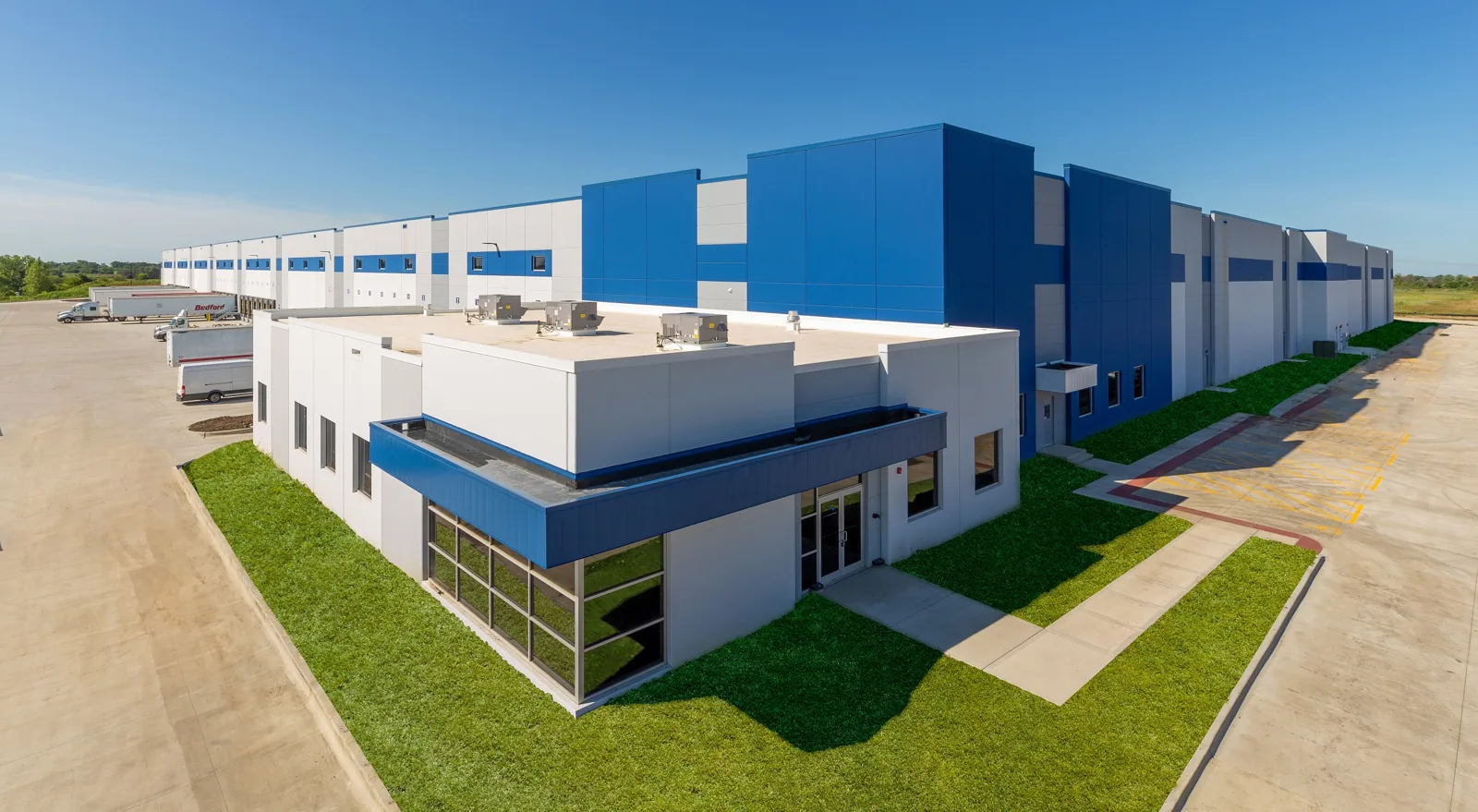
The warehousing and transportation receipts reported for Kansas City, KS point to a freight-heavy local economy. What we bring to a warehouse roof is a method: perimeter and edge details first, drains and scuppers next, then seams across the field, penetrations, skylights and dock-side flashing. On a big roof, repair cost often hides in the number of drains that are slow, and in the length of seam that must be probed to know whether a defect is isolated or systemic.
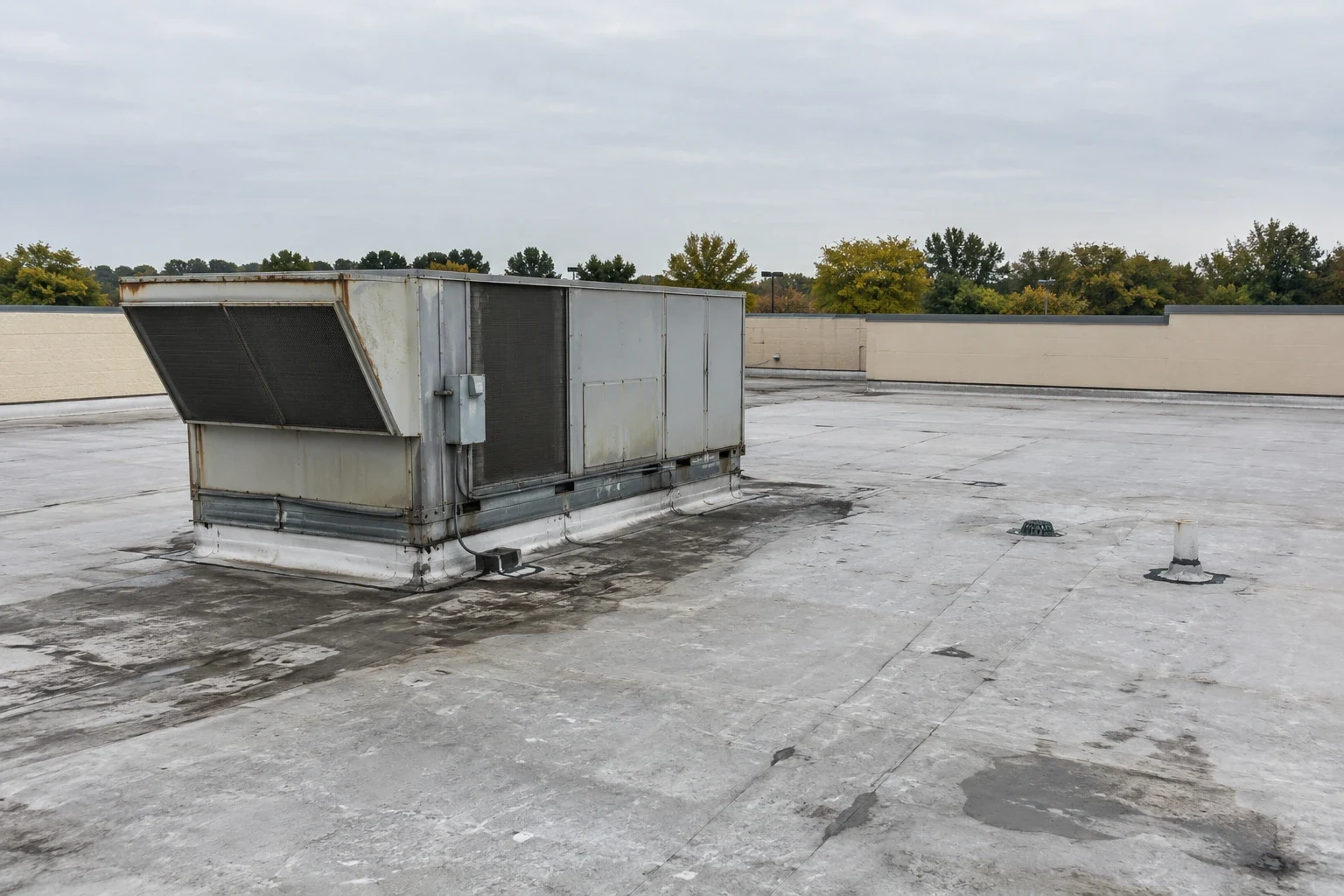
Infrared scans and core samples then locate wet insulation. Without them, an owner might replace more than needed or patch a membrane that sits on saturated board. With them, the scope can name the area to remove and the area to keep.
Perimeter work deserves its own line in the register. Edge metal, coping joints, parapet caps and wall flashings take the first load in a windstorm, and they are also where freeze cycles open small gaps that let water behind the sheet. A loose coping stone or a gap in a drip edge looks minor from the ground. On the roof it is often the cheapest repair on the list and the one that prevents the most expensive leak.
Retail strips and service buildings
Retail sales of that scale mean shopping and service buildings are a real share of the roofing picture. Their roofs concentrate rooftop units, exhaust fans and drains along each bay, and tenants feel a leak immediately. We chart leak reports to roof areas and separate shared drains and parapets from unit-specific penetrations. For a big box store or a strip center, the roof's life is often decided at its flashings, not its field.
Where a lease cycle gives interior access, we use the vacancy to inspect deck undersides and equipment supports, since problems visible from below match findings on the roof and speed the diagnosis.
Parapets and shared walls are the other recurring source. Where a retail roof meets a taller neighbor, a wall flashing or counterflashing that has pulled loose lets water run behind the termination, and the stain appears inside a bay that has no roof opening above it. We trace such leaks along the wall before touching the field of the roof, and the repair record states which transition was corrected.

Applying the Olathe record to Kansas City, KS
Normals from the airport station at Olathe list a 29.8°F January, a 78.8°F July and 37.54 inches of rain and melt a year. That is the nearest published reference on our schedule, so we use them to set inspection timing while judging each Kansas City, KS building by its own drainage, orientation and exposure.
The pattern we plan around is simple: freeze cycles stress seams and flashings, and heat softens sealants and expands membranes. A post-thaw visit finds the first group and a pre-summer visit finds the second. Dated photographs of drains after rain complete the drainage record that decides whether ponding is recurring.
Reading storm records without overreaching
Straight-line wind damage was surveyed on May 19, 2024, from Gardner into Olathe, at about 80 mph, with brief tornadoes elsewhere in Johnson County. Kansas City, KS is not named, so the survey matters here as a reason to keep a post-storm walk on the calendar after any significant event.
Our hail damage and wind assessments rest on what is observed: bruised board, lifted edges, torn terminations and displaced equipment. Each item is dated and photographed, and kept apart from long-term wear.
More About Commercial Roofing in Kansas City, KS
Choosing among repair, coating, recover and replacement
The field record narrows the choice. Dry insulation with sound seams keeps coating and recover available. Wet board or a brittle sheet calls for replacing the affected area. Price moves with insulation thickness, the number of penetrations, deck repairs uncovered once the roof is open, disposal and access. For occupied buildings it also follows the protection needed below the work.
A roof coating restoration can extend the life of a sound sheet at lower cost than tear-off, while replacement resets the assembly and can fix slope and drainage. We price the options against one scope version so the owner compares like with like.
Working around operations
Freight tenants work in shifts and retail tenants work in open hours, so roof work has to be sequenced. We stage material away from dock courts and customer entrances, close each work zone daily, and keep temporary protection ready for sudden rain. The written schedule names a contact who can approve a stop if hidden conditions appear. This is the occupied building approach, and it is planned before the crew arrives.
Weather planning belongs in the same document. Because a membrane cannot be left open overnight, each day's work ends with edges sealed, drains protected and loose material secured. The crew checks the forecast before opening an area, and the schedule has room for a rain day. Owners who see that discipline in the plan can hold tenants to a predictable calendar.
Neighboring cities
Owners with buildings in Kansas City, KS often hold others in Kansas City, Missouri, Shawnee or Overland Park. A single register for the list keeps inspection dates and capital years comparable, and it shows which buildings share a failure pattern. When the same flashing detail opens on several roofs of similar age, the finding supports moving a capital year forward in a way that one leak call cannot.
Commercial Roofing Questions
How do freight receipts shape roof planning priorities?
They point to freight and storage space where downtime would hurt most, so we put roofs over dock and storage space on a tighter inspection interval and favor planned renewals over emergency calls. The roof-area register ranks them accordingly.
What is the quickest way to find where a large roof is leaking?
Follow the water from the interior stain across the deck and insulation to likely openings, then confirm with an infrared scan or a controlled water test. A stain often sits far from the opening, so a map is more reliable than a guess.
Do retail tenants change how a re-roof is phased?
Yes, since customer entrances, deliveries and noise limits shape the work zones. We divide the roof by tenant bay when that helps, close each zone daily, and keep temporary protection ready.
Can Olathe weather readings be used for a Kansas City, KS building?
They are a regional reference for planning inspection timing, not a measurement of the building. The building's own drainage, exposure and condition decide the repair, and we record them separately.
When does a coating make sense on a flat roof?
When the substrate is dry and sound, seams hold and the surface can be cleaned and primed. Moisture mapping and an adhesion test come first, since coating over wet insulation fails early.
Hand us the building list
Hand over the property list, roof-area register, decision date, available reports and an access contact. We examine each roof, record condition by area, and send back an assessment that distinguishes current repairs from capital planning assumptions.
