Built-Up Roofing in Olathe, KS
A built-up roof usually enters a capital plan with a long repair history and no obvious date of failure, because several plies of felt and asphalt hide a slow loss of waterproofing behind a gravel or coated surface. In Olathe, KS the airport station normals show 37.54 inches of annual precipitation and 109.6 freezing days, and a roof with many layers has to shed water through that whole cycle while the asphalt expands and contracts. The useful decision for an owner is whether the plies are still doing their job, because that answer decides between maintaining the roof, restoring it and replacing it. We build the roof-area register from the surface down, test the layers, and give the owner a record that separates current repairs from reserve assumptions.
Send the core results, the repair history and the decision date
Share prior surveys, leak locations and the capital year under review. We will test the plies and drainage and separate current repairs from reserve planning assumptions.
Plies, bitumen and surfacing
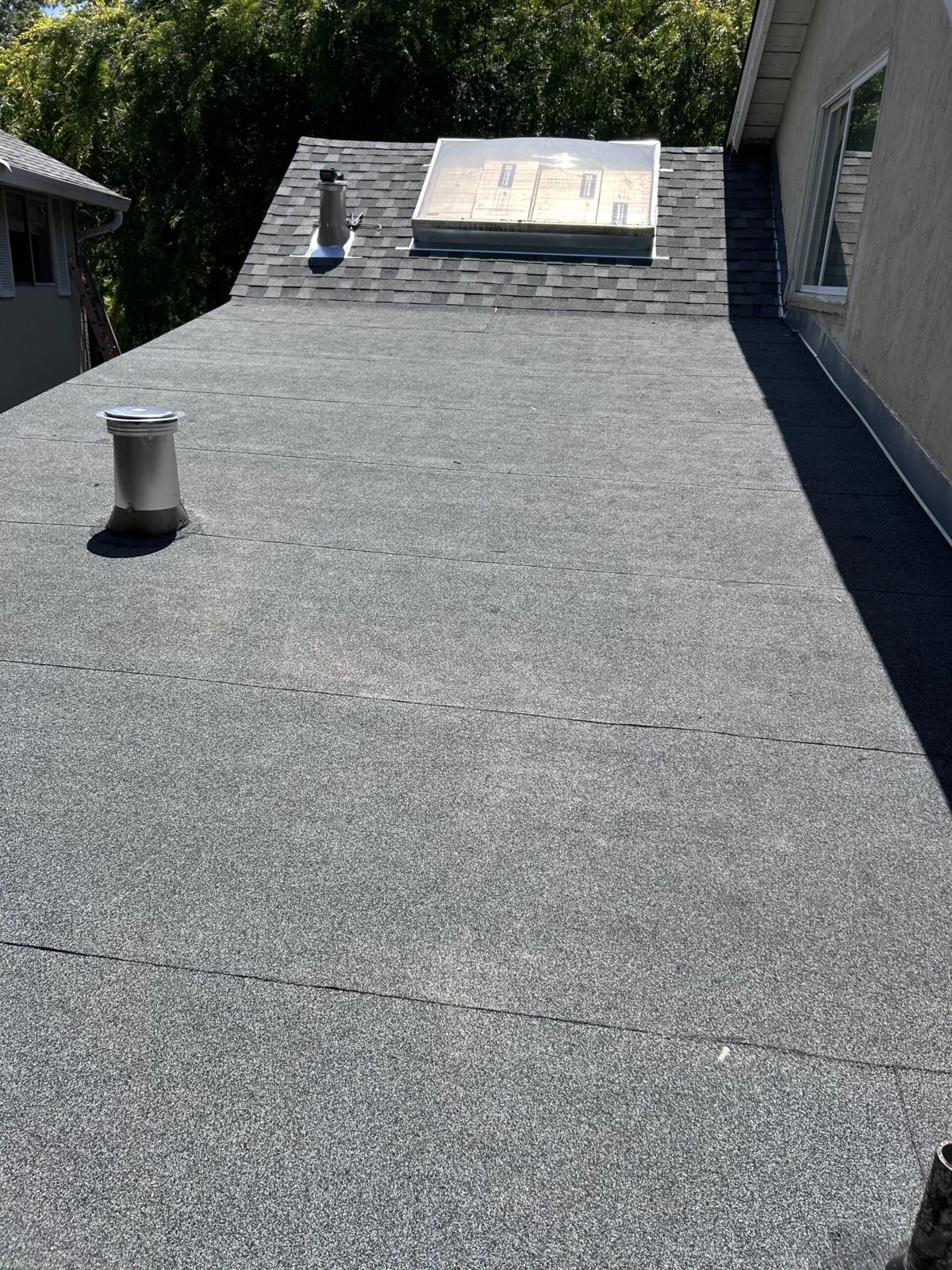
A built-up roof is assembled on site from alternating layers of reinforcing felt or fabric and bitumen, finished with a surface that protects the top layer from sunlight and weather. The bitumen is asphalt, and in some older roofs coal tar. The surface may be gravel embedded in a flood coat, a mineral-surfaced cap sheet or a reflective coating. Because the layers are lapped and staggered, a puncture in one ply is covered by the next, which gives the system a redundancy that thinner membranes lack.
That redundancy has a limit. Over time, asphalt oxidizes and loses its flexibility, plies split along the felt edges, and gravel moves toward drains. The weight of a gravel-surfaced assembly also matters whenever a replacement or a rooftop equipment addition is discussed, because the deck and structure carry it. We note the surface type, the apparent number of plies and the condition of the flood coat for every section, since they determine which repairs are even possible.
What Olathe's climate asks of a multi-ply roof
January averages 29.8°F with highs near 39.4°F, while July averages 78.8°F with highs near 89.4°F at the airport station. The asphalt in a built-up roof is stiffest in the cold, when splits form along ply edges and flashing terminations, and softest in July heat, when surface bitumen can creep and gravel may sink. Spring and fall bring the freeze-thaw cycle that pries at cracks.
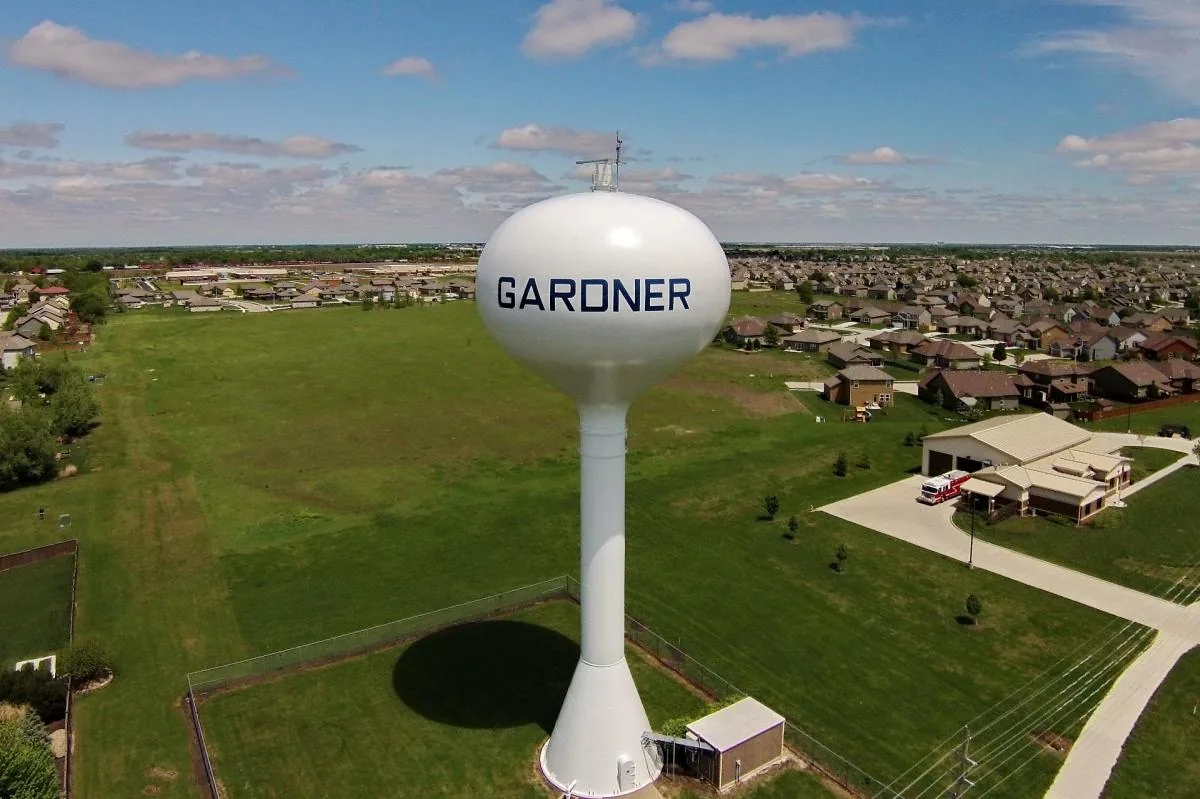
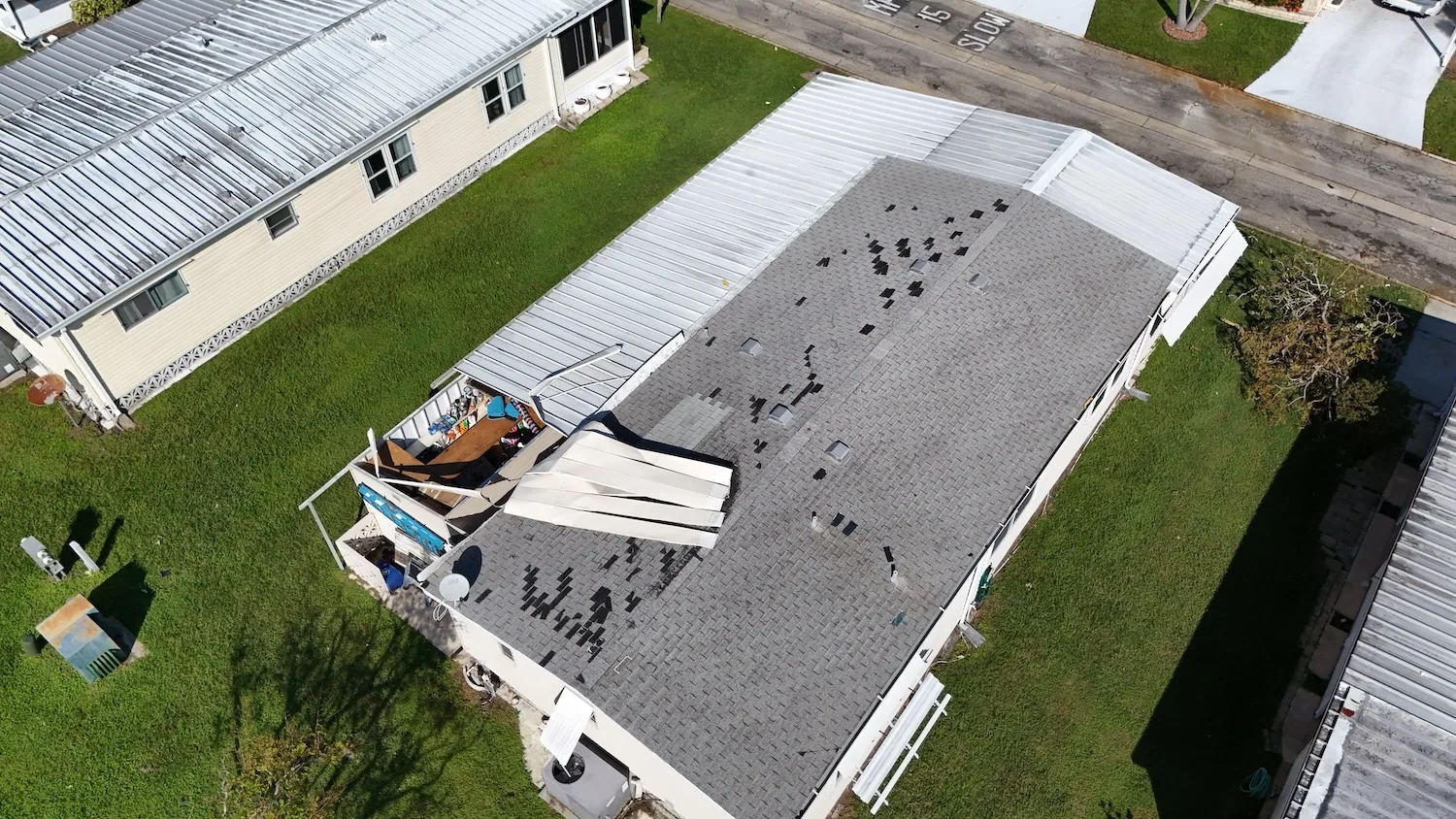
Kansas City-area thunderstorms can bring hail, and gravel-surfaced roofs generally shield the plies from impact better than smooth ones, though only an inspection after a reported event can say whether a given roof was struck. Peak gusts near 80 mph were estimated along the Gardner-to-Olathe path of the May 19, 2024 straight-line wind event, so a gravel roof inside that corridor gets an inspection for scattered stone, damaged edge metal and lifted flashings. Gravel blown off an edge becomes a safety issue for people below, so the perimeter check comes first. Edge repair follows under wind damage repair.
Blisters, ridges, alligatoring and wet felts
The review starts with the surface. Blisters mark pockets of trapped moisture or air between plies. Ridges form over insulation joints. Alligatoring, a pattern of surface cracks in the asphalt, shows that the top coat has lost its flexibility. Bare spots in gravel expose the flood coat to sunlight, and the asphalt there ages faster than the covered areas.
We cut test squares, count plies and examine the felts for moisture. A commercial roof inspection pairs those cores with a drainage record and a flashing survey, and an infrared moisture survey helps locate wet insulation without cutting the entire roof. The field findings go into the register with photos and a label: monitor, repair or plan for renewal. A roof with several wet cores in different areas is a replacement candidate, while a roof with one wet corner near a failed drain may be repaired.
Flashings on a multi-ply roof are layered as well, and the felts that turn up a wall are the first to fail because they stretch every time the roof moves. We look for open laps on the vertical, cracked mastic, missing counterflashing and loose termination bars. Drain sumps are checked for the ring of ponded water that marks an outlet set too high, because a ring of standing water speeds oxidation of the asphalt around it.
Restore, recover or replace in the capital year
Repair is realistic when moisture is localized, when the felts are dry and when the problem lies at a single flashing or penetration. Restoration with a fluid-applied coating suits a roof whose surface is aged but whose plies are sound, and it requires careful cleaning and priming, which is why our roof coating restoration process begins with testing. Gravel often has to be removed or bonded before a coating can be applied.
When the plies are wet or when many layers are stacked on the deck, replacement is the sound option. A new built-up roof, a modified bitumen system or a single-ply such as EPDM can follow, and the choice depends on traffic, ownership horizon and weight limits. A tear-off also lets the owner correct drainage and add insulation to meet the code that applies at permit; Olathe moved to the 2018 International code set on September 1, 2019, and the local edition is confirmed for each project.
More About Built-Up Roofing in Olathe, KS
Kettles, odors and working around tenants
Hot-applied built-up work uses a kettle or a mobile tanker, and it creates heat, fumes and a fire watch obligation. On an occupied building, we locate every air intake before work starts, agree on set-up positions with the property contact and plan shutdowns of affected air handlers for the shortest possible time. Cold-applied adhesives and self-adhered base sheets reduce the odor but have temperature limits and need dry substrates.
Tear-off adds dust, debris chutes and truck traffic. In the industrial developments of southern Olathe, where the economic plan lists sites such as 56 Commerce Center and Lone Elm, the tenant schedule and the laydown yard would control the sequence of any tear-off. We write the sequence, the protection plan and the daily closeout into the scope version, so the owner can compare bids that cover the same work.
Weather limits are real on a hot-applied system. Asphalt must be placed at the right temperature on a dry surface, and cold wind can cool it before it bonds. Crews stage kettles away from intakes and keep fire watches in place after the last application, and the roof is closed in each evening so a storm overnight meets a finished edge and not an open tie-in.
Commercial Roofing Questions
What age should trigger a built-up roof review?
Age by itself does not. The trigger is a pattern of repair lines, visible alligatoring, blisters or interior stains. A roof with few repairs can run longer than a younger roof with recurring leaks.
Can gravel stay on during a restoration?
Usually it must be swept or removed, because a coating needs a clean, bonded surface. Some roofs are scraped to the flood coat; others are covered with a new cap sheet before coating.
How do you decide between coal tar and asphalt repairs?
We identify the bitumen type from the field sample. Mixing the two causes compatibility trouble, so repair materials are chosen to match what is on the roof.
Does the May 2024 wind event matter for gravel roofs?
For roofs in the reported Gardner-to-Olathe path, a quick check of the perimeter stone, the edge metal and flashings is a priority. Outside that path, the standard inspection interval applies.
What does a roof-area register add to a built-up roof?
A dated record of cores, repairs and drains. When the same area appears in three successive visits, the register shows the owner it is time to replace that section rather than patch it again.

Send the core results, the repair history and the decision date
Share prior surveys, leak locations and the capital year under review. We will test the plies and drainage and separate current repairs from reserve planning assumptions.