Commercial Roof Replacement in Olathe, KS
A capital year becomes easier to defend when the roof-area register shows why a building has reached its replacement window. In Olathe, winter freeze exposure, seasonal temperature movement, and regular precipitation make inspection timing and drainage records part of that decision. A replacement scope connects observed membrane, flashing, insulation, and edge conditions to proposed work while keeping assumptions visible. We compare repairable defects with system-wide wear, document what tear-off may expose, and build a bid basis the owner can review before scheduling. The record supports a property decision rather than a blanket recommendation across a portfolio.
Set a documented replacement basis
Share the property list, roof-area register, decision date, available reports, and access contact. We can assess current conditions, separate repair needs from capital assumptions, and prepare a replacement scope with phasing suited to building operations.
The replacement window in Olathe
NOAA normals for the Olathe Johnson County Airport station record 109.6 days a year with minimum temperatures at or below freezing. That context frames the review of seams, flashing transitions, and drainage history. The survey identifies the assembly, recurring water entry or movement, and differences from earlier reports. We separate visible deterioration from conditions that need testing before the replacement scope is set.
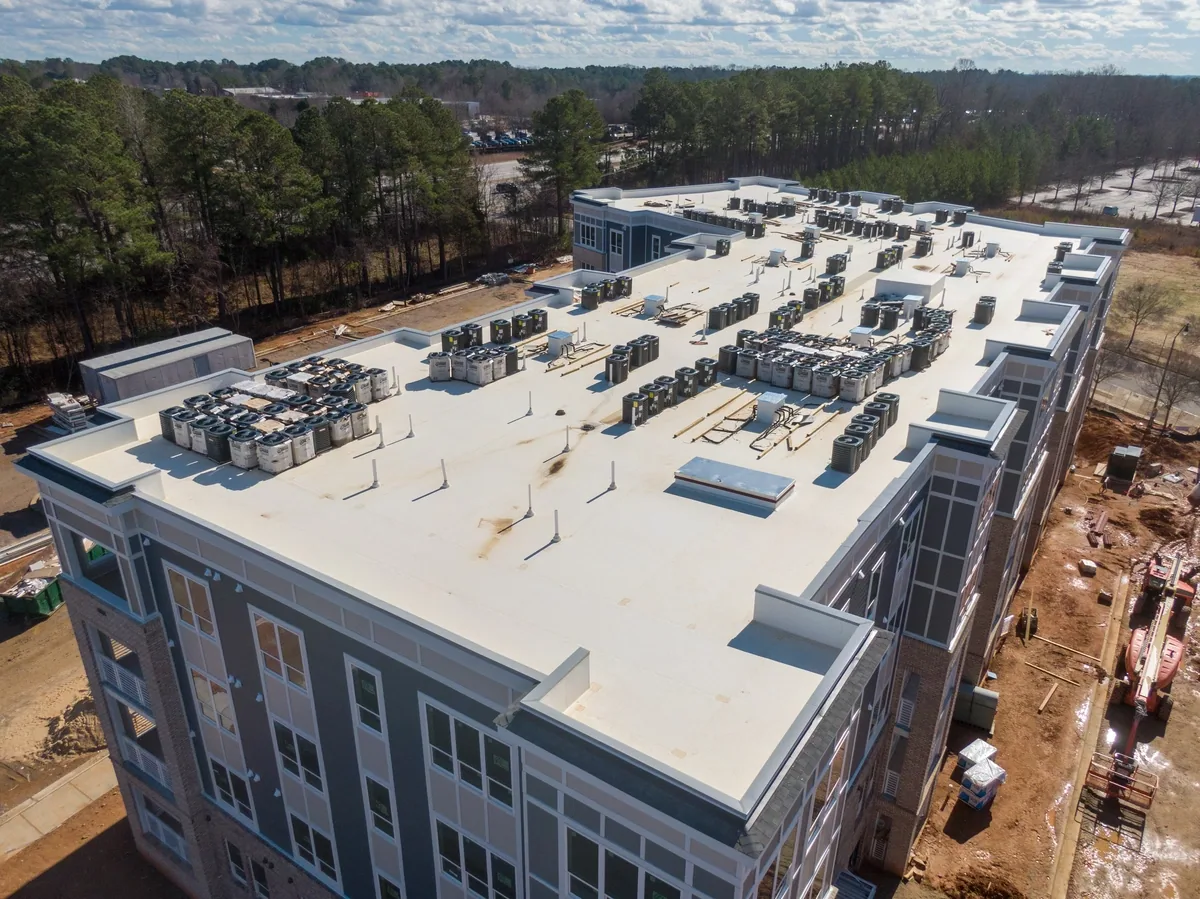
Nearby properties along the K-10 corridor through Olathe, Lenexa and De Soto can have very different access limits, rooftop equipment, and interior consequences if work is phased poorly. A distribution building, office, and manufacturing space each need a plan tied to field condition and occupant schedule. For a portfolio across Olathe and Lenexa, consistent inspection notes make bids easier to compare without assuming that the same system or scope fits every building.
What the field review needs to settle
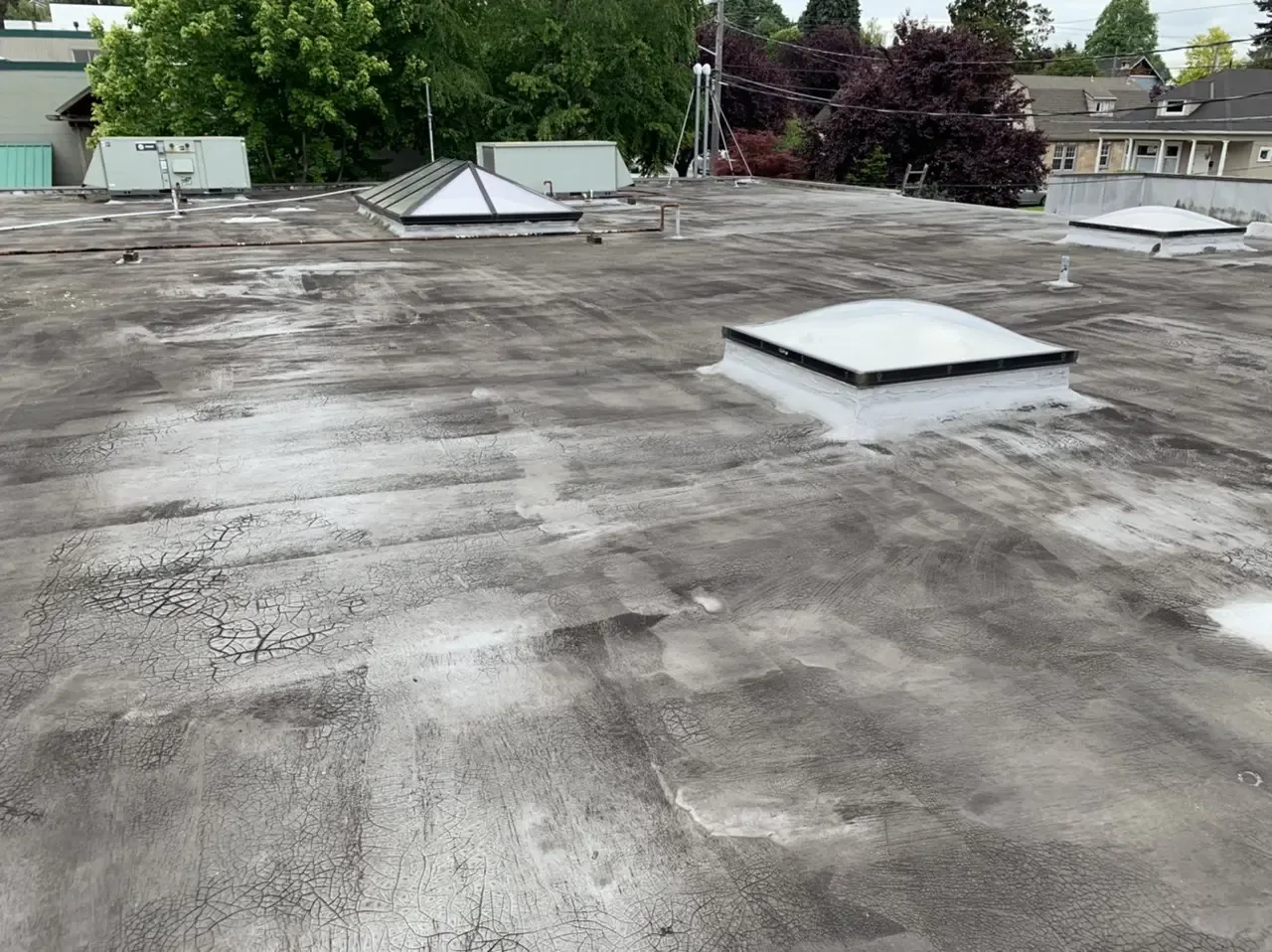
Before recommending tear-off, we map roof areas and inspect seams, penetrations, drains, scuppers, perimeter metal, and transitions. Active leaks are recorded separately from older repairs. We note whether insulation feels firm, moves underfoot, or needs a core sample to confirm moisture. A membrane defect may be localized while wet insulation extends beyond the visible symptom. When the record is incomplete, the proposal names the open question and a test that could resolve it rather than treating uncertainty as a measured quantity.
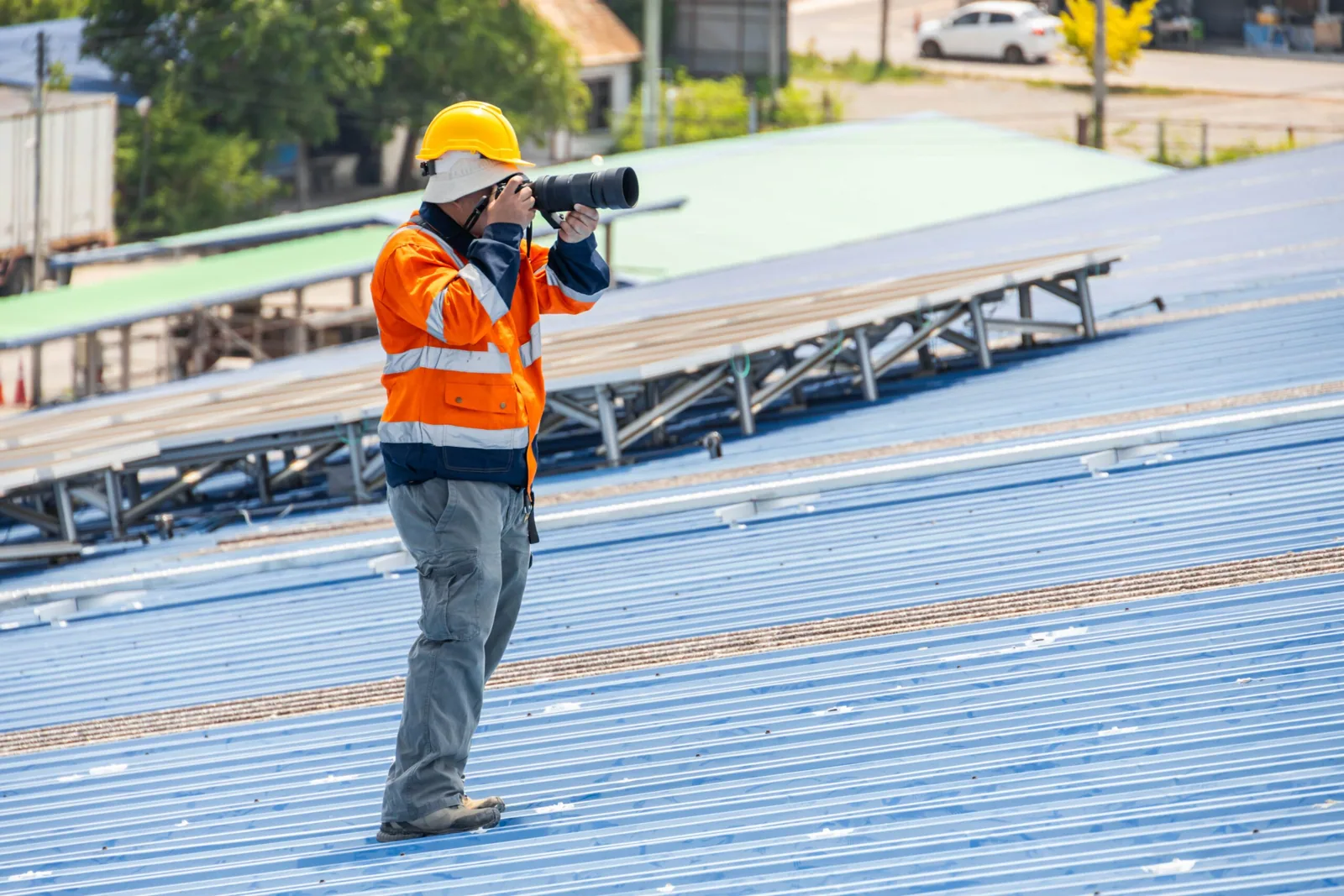
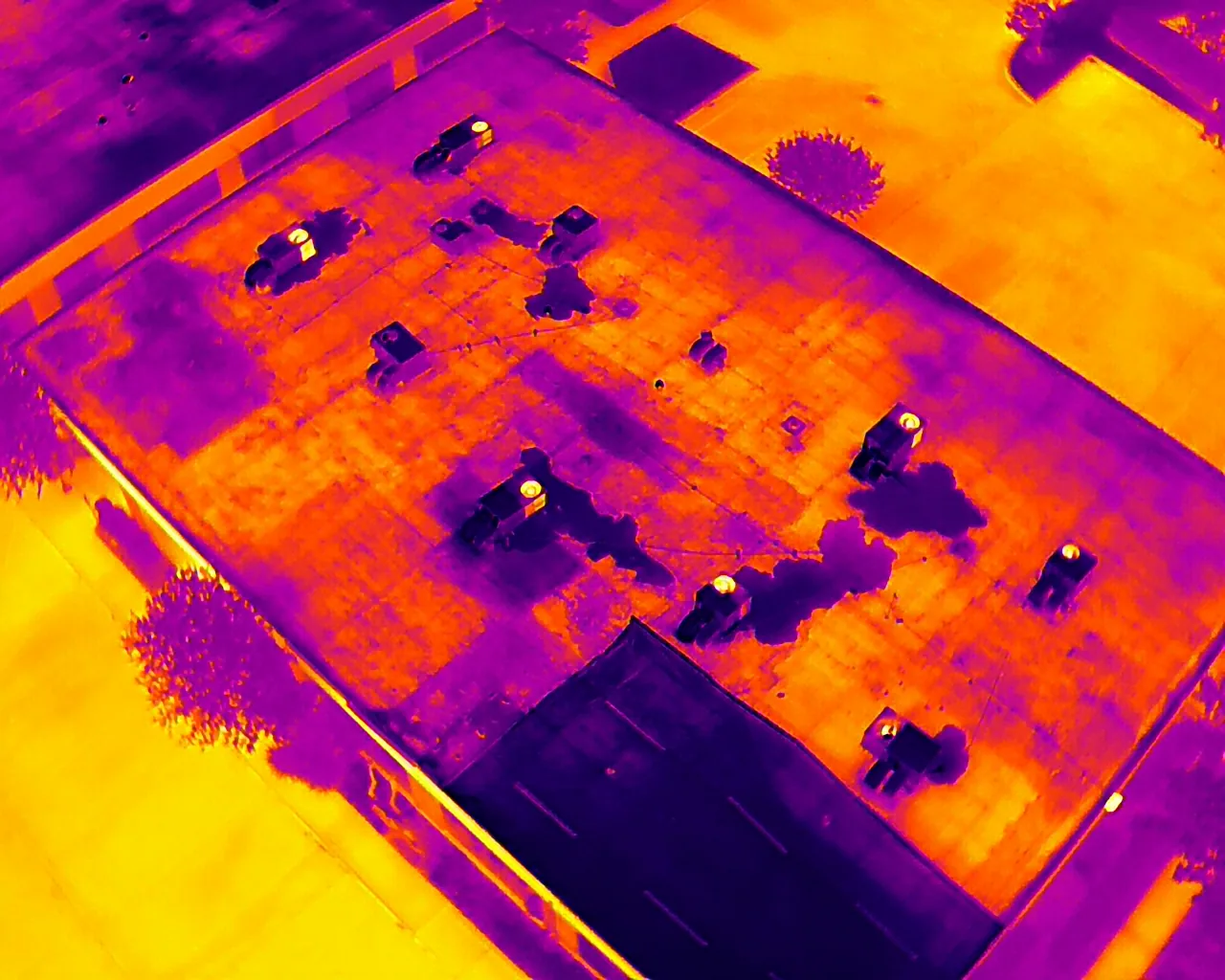
A written commercial roof inspection gives the owner a condition baseline before design and bidding. Drone imagery can document broad roof areas or difficult access, while hands-on checks confirm adhesion, fastening, and material condition at details. We can pair the survey with an infrared moisture survey when conditions support that method, then verify suspect areas with follow-up. Each observation states its location, evidence, and consequence for the proposed scope.
Records that make bids comparable
Gather proposals, repair invoices, leak logs, warranty documents, roof plans, and photographs before the bid walk. Note where repairs occurred, when issues returned, and whether earlier access was limited. A drainage record can help distinguish a blocked outlet from slope, deck, or design concerns. We reconcile those files with current Diligence Notes so bidders price the same areas and state comparable exclusions.
Bids diverge when one assumes a recover while another includes tear-off, deck repairs, or insulation. The recover and overlay assessment should test whether existing layers and moisture conditions permit that option. A TPO system may suit some low-slope applications; other assemblies may call for another membrane or surface. Compare compatible systems against building use, substrate, drainage, and maintenance needs.
When recurring repair gives way to replacement
Repair remains reasonable when defects are limited, nearby material is serviceable, and the same failure is not returning across separate roof areas. Replacement is a stronger candidate when deterioration is widespread, wet insulation is confirmed in multiple locations, or recurring detail failures consume another maintenance cycle without improving the record. State each finding with its area and evidence. We can price discrete repairs beside replacement so an owner compares near-term stabilization with a capital project on the same assumptions.
Core cuts, adhesion checks, and deck review can change the scope, so identify where testing is expected and how concealed conditions will be handled. If only part of the roof is failing, separate that area from sound sections and explain the transition detail. A seam repair assessment or drain and scupper correction may address a defined defect, but neither substitutes for replacement when the wider assembly has reached its service limit.
More About Commercial Roof Replacement in Olathe, KS
A scope that protects building operations
The sequence identifies roof sections, removal limits, temporary dry-in, material staging, lift needs, debris paths, and access controls. On an occupied property, we coordinate loading windows, entrances, sensitive rooms, and tenant notices. The schedule includes weather contingencies because an opened roof must be protected before work shifts areas. It also names who can approve concealed-condition work and how a field change will be recorded, connecting each adjustment to its location and reason.
Phasing can reduce disruption, but it must preserve tie-ins between completed and active areas. We sequence by roof geometry, drainage, access, and the interior risk of a temporary opening rather than dividing the plan into equal squares. A property in Olathe and another in Lenexa may share a system type but have different tenant schedules. One coordinator can align notices, access dates, and daily progress records with the actual sequence.
Connect the project to the reserve plan
Place the defined project in the reserve plan beside other capital needs and remaining repair exposure. A capital-planning review can separate a funded replacement from provisional allowances for deck work or testing. A photo-backed condition report preserves pre-removal observations and gives the owner a baseline for future inspections. Keep the estimate, approved scope, field changes, and closeout records under one scope version so the next manager can follow the decision.
For owners with properties in Olathe, Lenexa, and nearby Kansas City metro communities, one roof may need replacement while another calls for targeted repair and monitoring. A portfolio sequence reflects condition, access, recurring defects, and operating consequences at each property, and that record sets the inspection intervals that follow.
Commercial Roofing Questions
What evidence should support a full replacement instead of another repair cycle?
A sound decision combines mapped deterioration, recurring leak history, confirmed moisture or substrate findings, and seam and detail condition across roof areas. We identify observations and open questions, then compare repair with replacement. One stain or failed detail does not establish that an entire assembly needs removal. When testing could change the recommendation, the proposal names the test and explains how its result would affect the bid basis.
Can an overlay be priced beside tear-off for the same building?
Yes, when the existing assembly can be evaluated well enough to establish whether another layer is appropriate. Review roof layers, moisture, attachment, deck condition, drainage, and applicable code requirements. If those conditions are unknown, identify testing or exploratory work rather than assuming a recover is acceptable. Side-by-side pricing helps when both options cover the same areas and disclose differences in preparation, insulation, details, and concealed-condition allowances.
How should replacement work be phased while tenants remain in the building?
Start with occupied areas, loading patterns, access restrictions, and interior uses affected by noise, lifts, staging, or temporary openings. Divide the roof into practical sections with a daily dry-in plan and a contact for access changes. Set a communication path for weather delays and concealed repairs before work begins. Phasing works when transitions can be protected and documented without leaving an exposed edge or disrupting essential building routines.
Which Olathe records should be ready before contractors walk the roof?
Bring the roof plan, inspection reports, leak and repair logs, warranty paperwork, bids, and access contacts. Mark known leaks and equipment changes, but keep those notes separate from confirmed field conditions. For a schedule that spans Olathe and Lenexa along K-10, each building still needs its own access and condition record. Clear files help bidders price the same work and expose assumptions early.
What should the closeout package contain after the new roof is installed?
Keep the approved scope, assembly details, dated photographs, field-change approvals, inspection observations, maintenance instructions, and available warranty documents together. Record completed areas and deferred items or allowances. The owner can compare finished work with the bid basis and set an inspection interval suited to the assembly and observed condition. A consistent file helps the next manager see which details need attention before a leak becomes a recurring repair line.
Set a documented replacement basis
Share the property list, roof-area register, decision date, available reports, and access contact. We can assess current conditions, separate repair needs from capital assumptions, and prepare a replacement scope with phasing suited to building operations.