Commercial Roof Leak Repair in Olathe, KS
A leak report is most useful when it preserves the time, location, and conditions that led to the call. On May 19, 2024, the National Weather Service documented straight-line wind damage from Gardner into Olathe, including an estimated 80-mph peak-wind survey path. That dated event gives a building owner a window for reviewing any new opening or displaced detail. We compare the interior evidence with the roof condition, stabilize active exposure when needed, and record what remains to be verified before closing the work order.
Document the leak before the next visit
Share the leak date, interior location, roof-area register, previous repair notes, available photos, and access contact. We can inspect the affected area, separate temporary protection from permanent work, and state the next action clearly.
Use a storm date as a review trigger
A reported storm can help set the inspection window, especially when leak calls begin after a known event. The NWS survey from Gardner into Olathe marks one date to ask about. We ask when water first appeared, whether the condition changed, and what roof areas or interior rooms were exposed. The roof itself sets the repair boundary and the material that needs attention.
KDOT's K-10 corridor connects Olathe with Lenexa and De Soto, which may help an owner coordinate response across a nearby portfolio. Leak diagnosis stays building-specific. A warehouse and an office can have different deck paths, rooftop equipment, ceiling access, and operating constraints. We record the building contact, roof area, interior observation, and access limit so a second visit begins with useful context rather than a general storm note.
Stabilize exposure and preserve the evidence
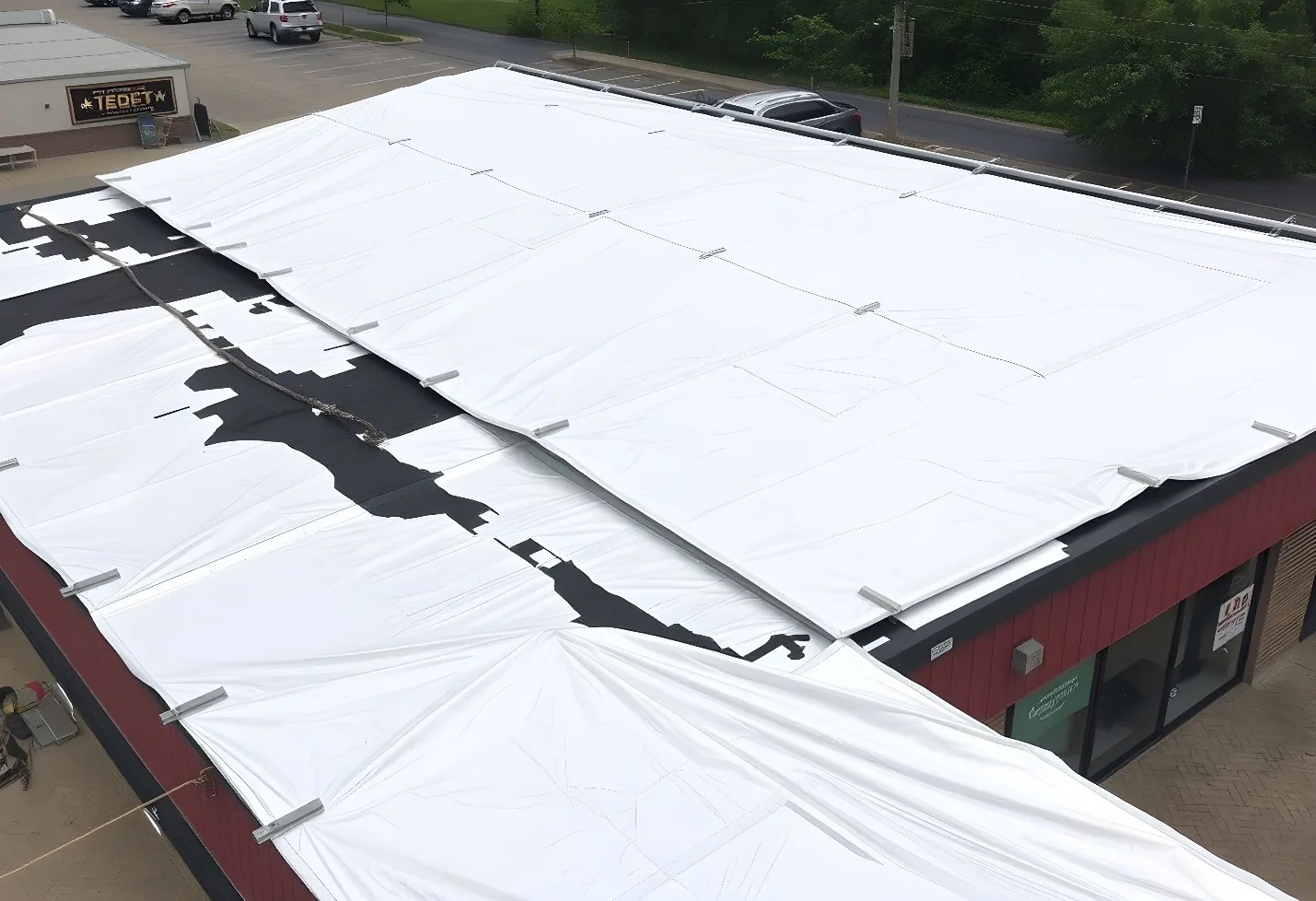
When water is actively entering, temporary protection may be needed before the source is fully isolated. We document any dry-in or temporary patch as stabilization, protect affected interior areas where practical, and set a follow-up for the permanent repair. The owner should know which spaces remain at risk and who to contact if water returns. This record separates the immediate response from the corrective work and prevents a temporary measure from being mistaken for a completed repair.
Before roof access, we confirm safe entry, equipment clearances, and an operations contact who can approve a changed scope. An emergency response visit may be appropriate when exposure threatens interior operations, while a scheduled repair visit can address a contained defect. We mark the roof area and photograph the temporary condition so the next technician can compare it with the permanent work and close the loop with the building manager.
Trace the path before choosing a repair
Water can move along a deck, insulation joint, curb, conduit, or framing member before appearing inside. The visible stain is a useful clue, but it may not align with the roof opening. We inspect nearby penetrations, seams, wall transitions, drains, and edge details, then compare the field condition with interior observations and prior leak notes. If the source is not confirmed, the report identifies the likely paths and the next test or observation rather than claiming certainty.
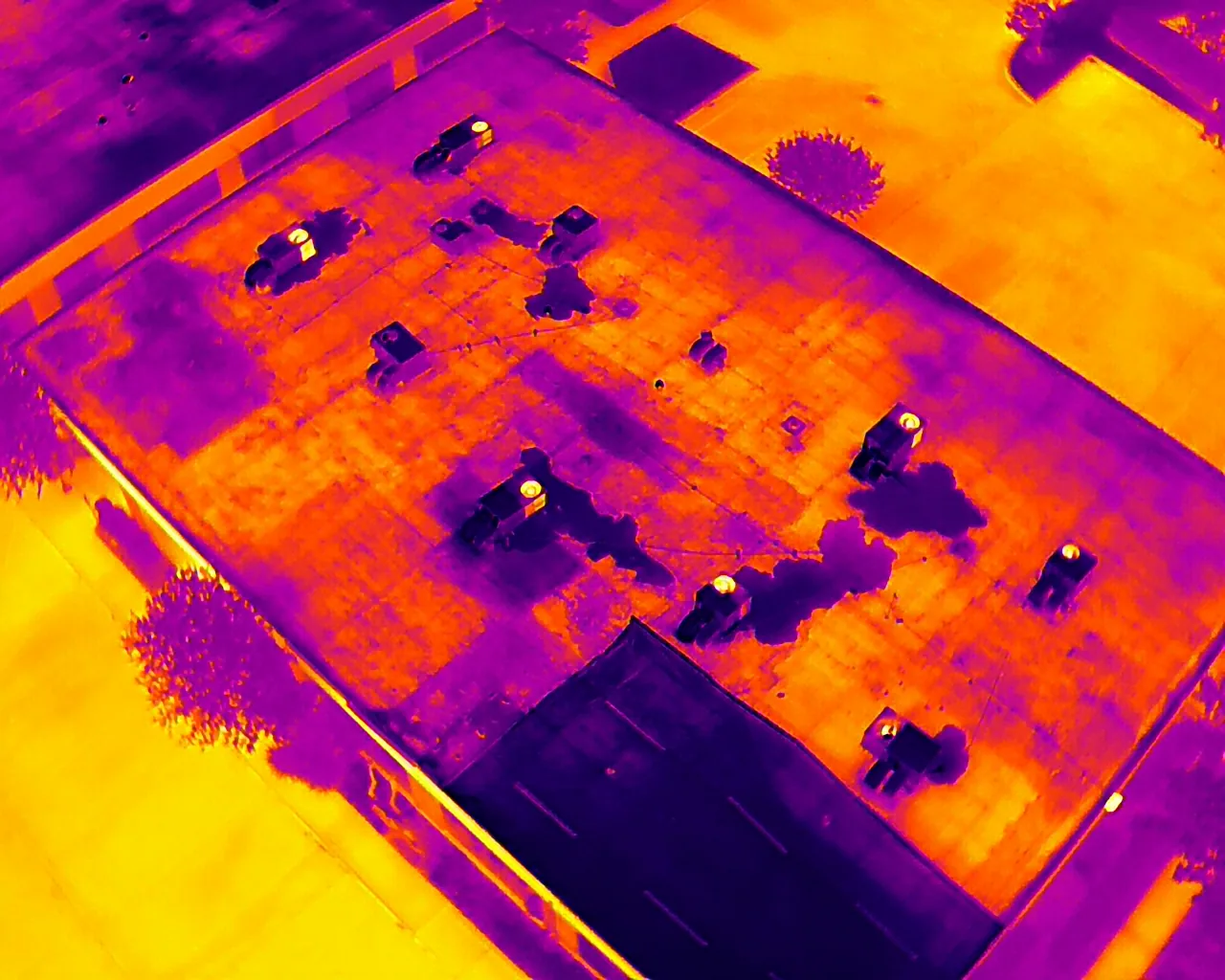
A commercial roof inspection can document the wider area, and an infrared moisture survey may help identify locations for follow-up when conditions support the method. Direct checks may still be needed to confirm wet insulation or a concealed opening. We note scan limits, inaccessible equipment, and any weather or surface condition that affects interpretation. A useful diagnosis states what was observed, what was tested, and what remains open.
Choose a repair compatible with the roof
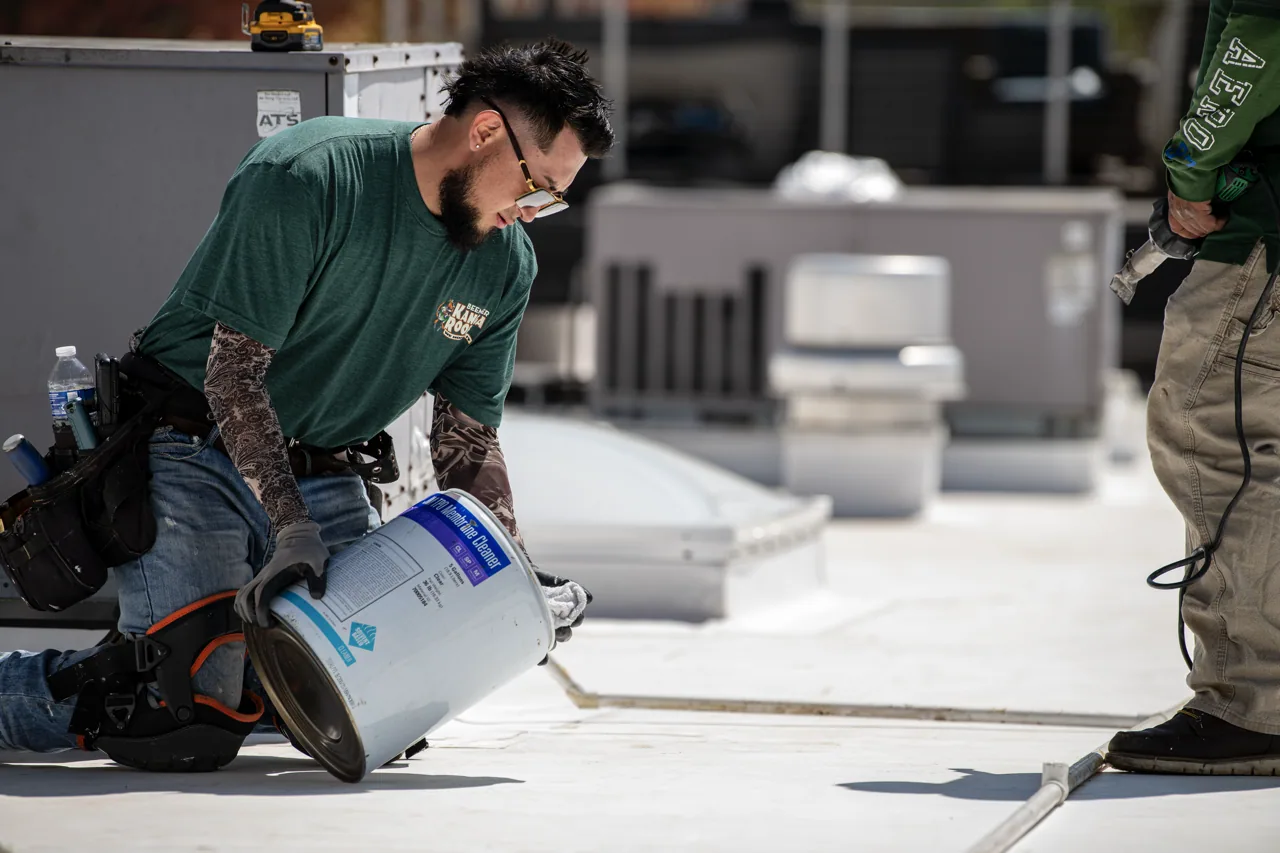
The repair method follows the assembly and the failure point. A membrane patch, seam treatment, flashing reset, or drain correction each requires suitable preparation and compatible materials. We remove loose or contaminated material as needed, prepare the substrate, and detail the transition to sound surrounding roof. Edge terminations and water paths are checked after the work because a patch can be secure at its center and still leave a weak boundary.
When a leak follows a penetration or wall transition, a penetration and flashing repair may address the detail rather than the broad roof field. A drain and scupper inspection can check whether an outlet or connection contributes to the condition. If the system is a PVC roof, the repair approach should suit that membrane rather than borrowing an incompatible product from another assembly. The closeout records preparation and materials used.
More About Commercial Roof Leak Repair in Olathe, KS
Make the follow-up measurable
After the repair, record the date, roof area, material, photographs, and any limits on the visit. Ask the building contact to report whether water returns after the next relevant weather event, and note which interior locations to recheck. If recurrence appears, compare the location and pattern with the first visit before expanding the scope. Repeated calls may point to a larger seam, drainage, or substrate concern, but the record should show what changed before a broader recommendation is made.
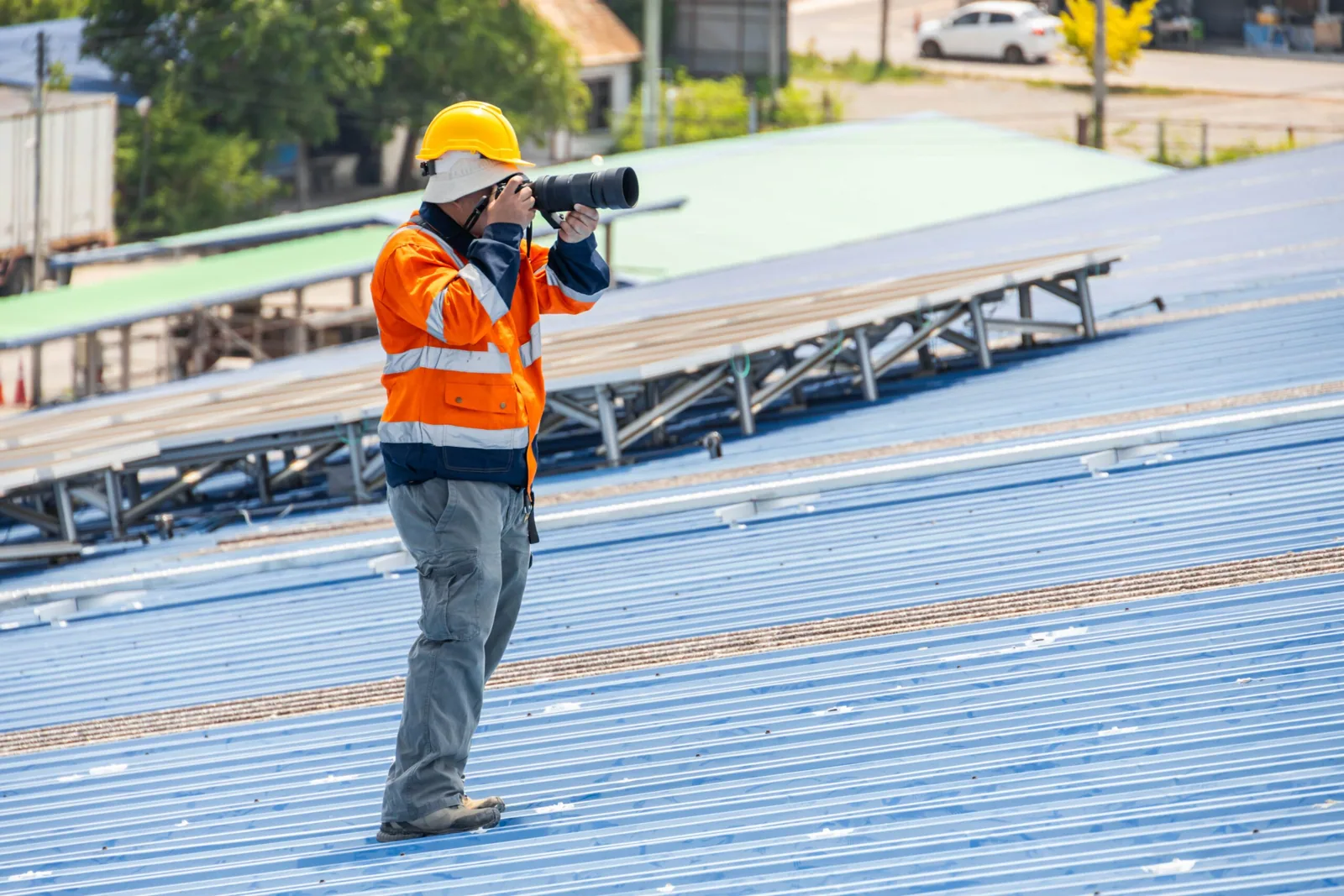
A photo-backed condition report can preserve the finding beside other roof-area notes. Owners managing Olathe and Lenexa properties can use the same fields for each building while keeping the diagnosis specific to its system and access. That consistency makes repeated defects visible in the reserve plan and helps the next technician distinguish a new leak from the return of a known condition.
Coordinate response across nearby properties
Response reaches Olathe and nearby municipalities when the owner's property list and dispatch needs call for them. Scheduling between Olathe and Lenexa can be shared, while each building still gets its own diagnosis. Each call needs an access contact, interior location, roof-area reference, and record of temporary measures. For managed portfolios, one shared intake format can shorten handoffs while preserving the facts and photos that belong to each building.
Close the work order only when the owner can tell whether the leak was permanently repaired, temporarily stabilized, or left for additional investigation. State the next action and the person responsible, then carry unresolved findings into the next inspection interval. That level of detail supports a defensible maintenance record and prevents a storm date, a stain, or a prior patch from becoming a substitute for current field evidence.
Commercial Roofing Questions
What should staff note when a leak first appears?
Record the time, interior location, weather conditions, changes in water flow, and any equipment or ceiling work nearby. Take photos if it is safe, and keep occupants away from electrical or slip hazards. Those details help us compare the report with roof areas and likely water paths, and the field assessment then confirms the cause or states what remains unknown.
How does the May 2024 wind survey help when a leak call comes in?
The NWS documented a wind-damage path from Gardner into Olathe on May 19, 2024, so a leak that first appeared after that date, at a property in or near the path, gets a closer look at edge metal, flashing and displaced details. The inspection then records the building's own roof condition, affected area and evidence before a repair scope is set.
When is a temporary dry-in different from a completed repair?
Temporary protection limits exposure while the source, materials, or access conditions are being resolved. A completed repair addresses the identified failure with a compatible method and documents the finished detail. The work order should label each step clearly, include a follow-up date when needed, and state whether interior confirmation is pending. That distinction helps the owner understand what is safe to close and what still needs attention.
Can a drone find the exact roof opening?
Drone imagery can document roof areas, access barriers, and visible surface conditions, but it does not confirm every seam, concealed moisture condition, or attachment detail. Hands-on inspection and direct testing may be required. We use imagery as part of the record when helpful, then state what was visually observed and what needs physical verification. The owner receives a diagnosis based on evidence rather than an image alone.
How should a manager handle repeat leak calls at buildings in Olathe and Lenexa?
Use one intake format for date, interior location, roof area, prior repairs, photographs, and access contact, then keep the records separate by property. K-10 links the two communities in the metro, but roof systems and operating schedules still differ. A consistent file makes recurrence visible across the portfolio without assuming that one diagnosis or repair applies to another building.
Document the leak before the next visit
Share the leak date, interior location, roof-area register, previous repair notes, available photos, and access contact. We can inspect the affected area, separate temporary protection from permanent work, and state the next action clearly.