Commercial Roofing in Shawnee, KS
Shawnee, KS reported $1.089 billion in 2022 retail sales and $412.1 million in transportation-and-warehousing receipts, and its 2025 population estimate is 69,848, a commercial base of shopping, service and storage buildings. Shawnee owners get repair, recovery, replacement, coating, inspection and maintenance on low-slope and metal roofs, and storm calls are answered every day of the year. Timing leans on the nearest climate record, the Olathe airport station, which logs a 78.8°F July mean and 109.6 freeze days a year.
A first walk produces what a budget needs: the roof-area register, the drainage record and a defect list that separates immediate water control from lasting correction.
Start with the property list
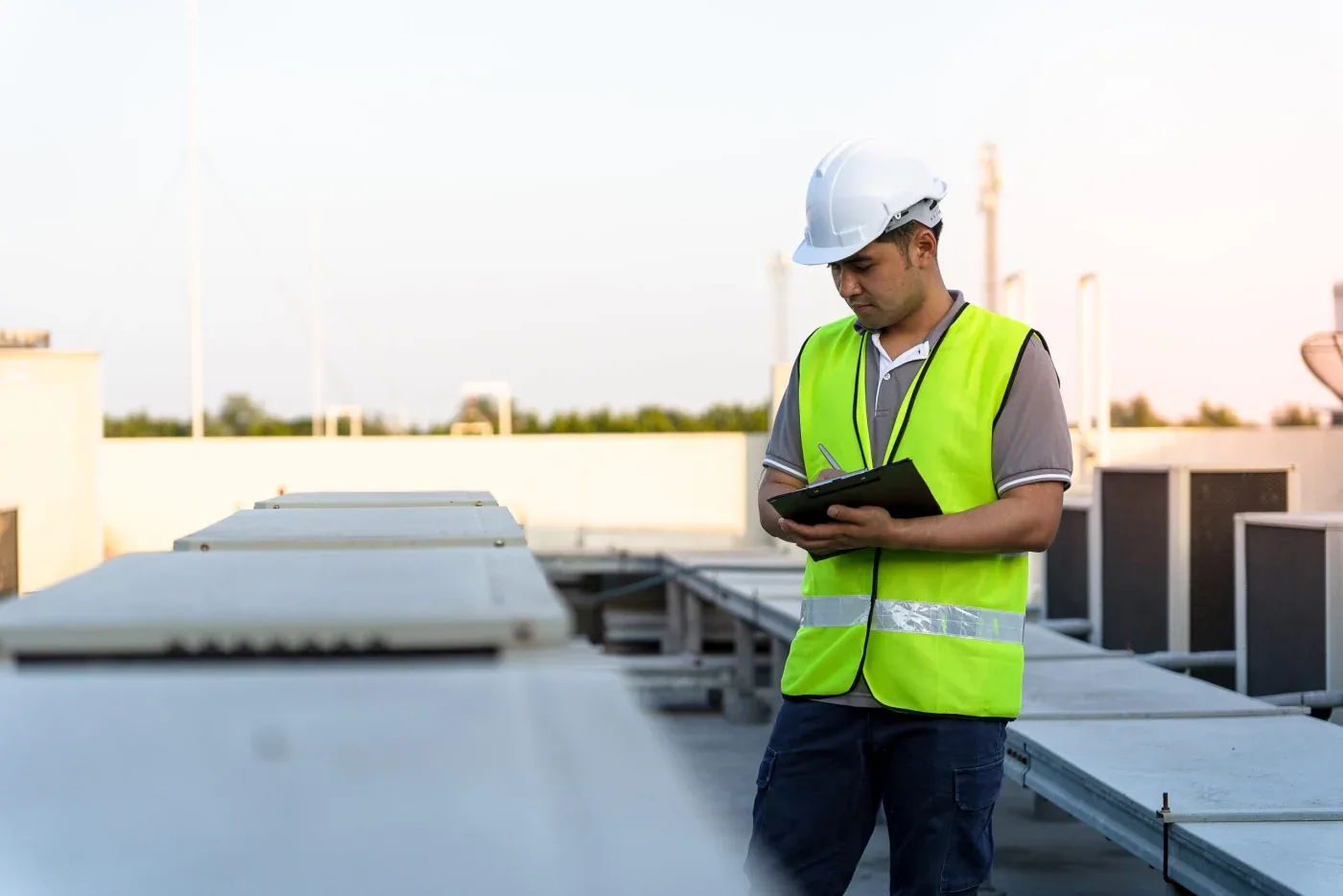
Start with the property list, roof-area register, decision date, available reports and an access contact. We walk each roof, rate its condition by area, and produce an assessment that keeps current repairs distinct from capital planning assumptions.
What the first walk looks for on a Shawnee roof
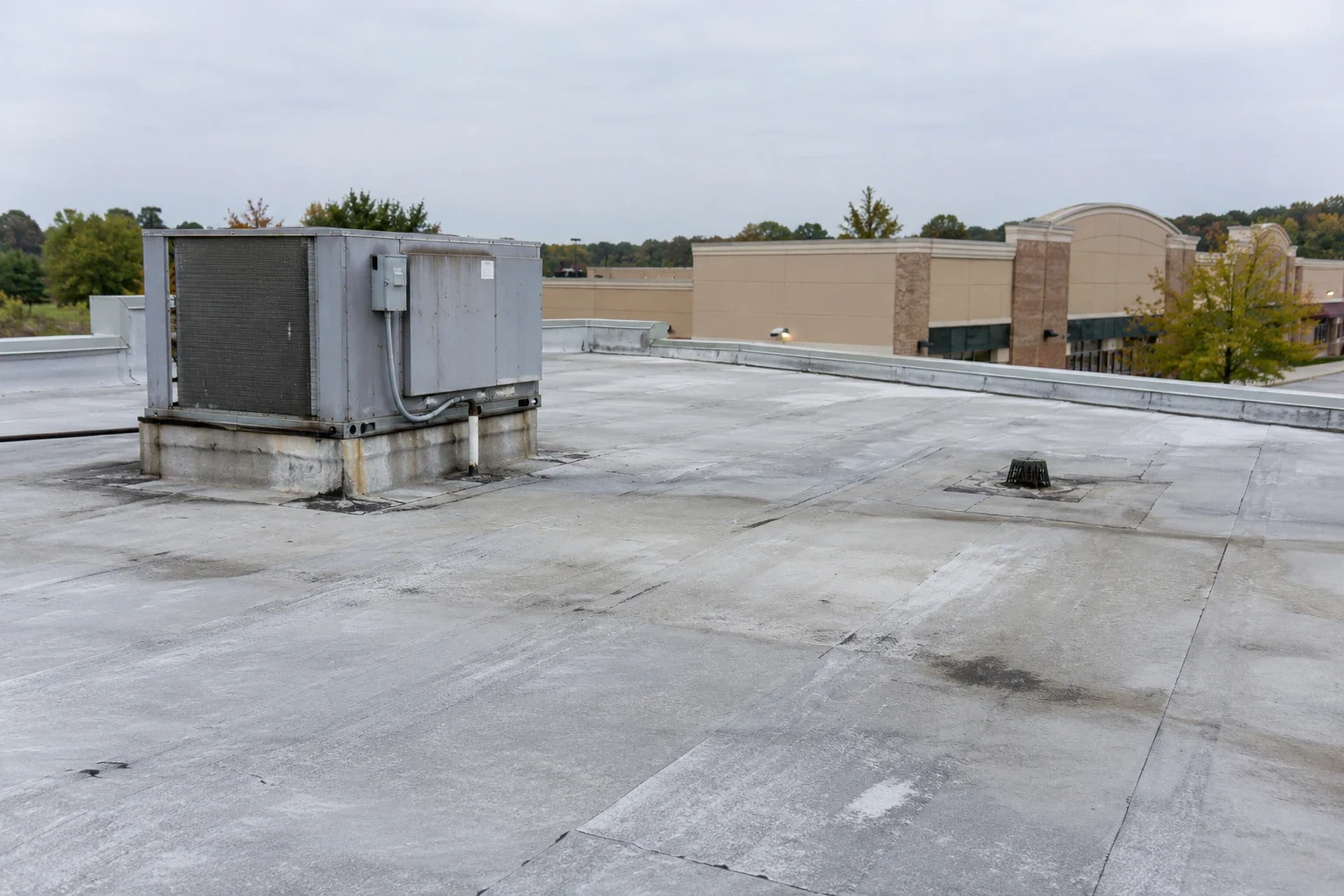
The walk identifies the membrane or metal panel, the insulation if it can be read, the attachment, and the state of every penetration. Then it follows the water: where drains sit, whether scuppers are clear, whether any area holds water more than a day after rain. A seam test on a sample line and a look at edge metal complete the picture.
With that data, the owner has the starting point for a photo-backed condition report that rates each area and names a renewal trigger. Without it, bids are priced on assumptions and the first change order arrives when the crew opens the roof.
Drainage deserves its own paragraph in that report. A roof that holds water stresses seams, collects debris and ices over in winter, so we photograph low areas after rain, measure depth where we can, and check whether drains and scuppers are open, correctly placed and fitted with strainers. When the structure leaves no slope to work with, tapered insulation or an added drain during replacement is the lasting answer, and the report says so with the evidence next to it.
Retail and service roofs
Retail sales of that size mean shopping and service buildings are part of the local roof mix. Their roofs commonly carry rooftop units, exhaust, vents and drains for each unit, which makes the number of penetrations the main risk factor. Each penetration needs sound flashing, and each flashing needs to be inspected after a freeze. On a shopping center roof we count them, chart them by bay and mark those that look aged, split or sealed with surface caulk only.
Repairs done without a record are hard to evaluate later. We log the material used, the date and the location, so that a repeat leak at the same detail can be recognized and addressed as a pattern.
Storage and freight roofs
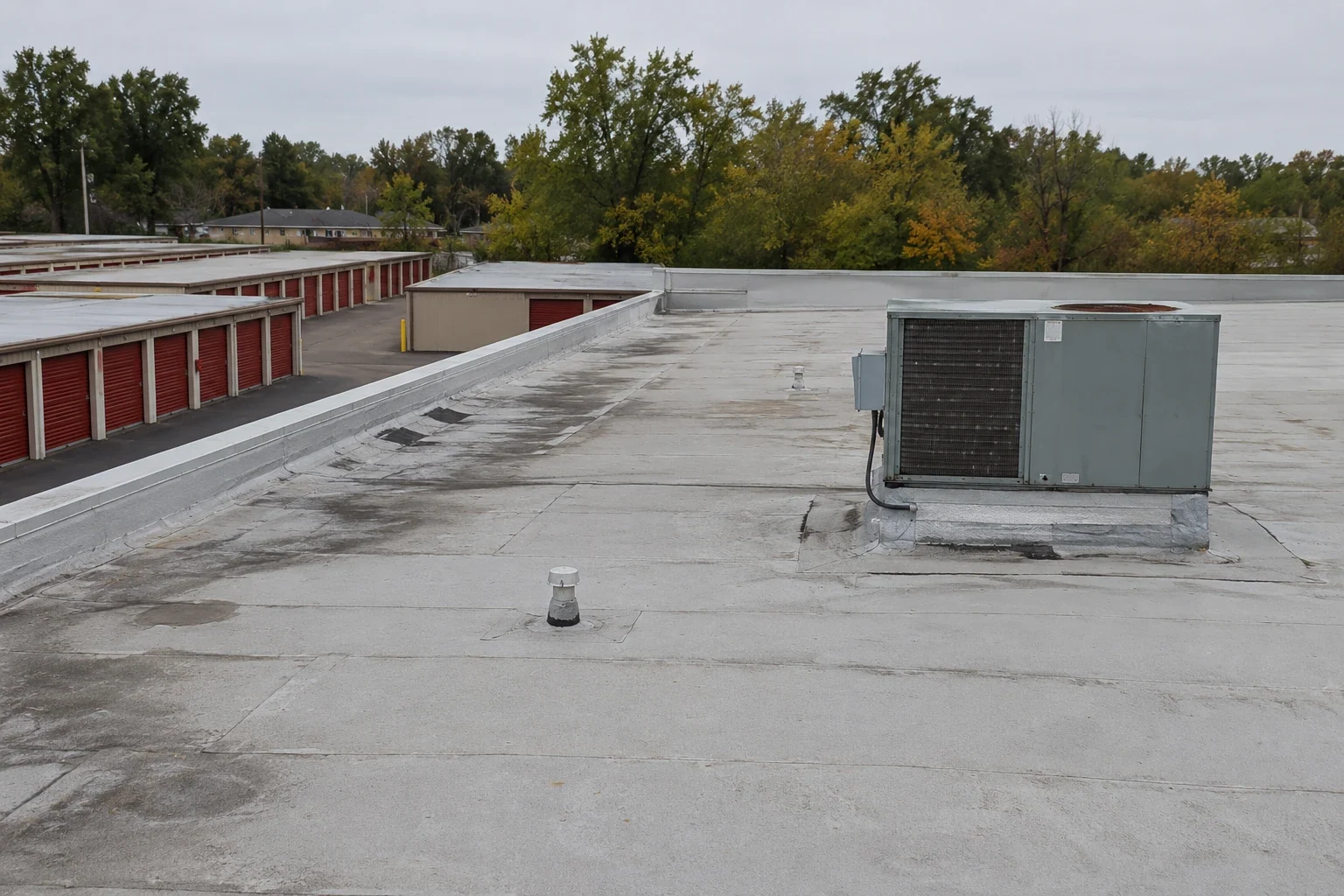
The warehousing side of the local economy calls for a different checklist. Long roof runs put weight on drainage and on perimeter attachment. Dock canopies, loading-area flashing, smoke hatches and skylights are details where water often finds a path. For a self-storage roof or a similar low-rise, metal panels may sit on a shallow pitch, and the fasteners, laps and sealants that hold them become the inspection focus.
We check panel fasteners for back-out, laps for gaps, and ridge and eave details for lift. Metal roofs expand and contract with temperature, and Olathe's thermal range, 39.4°F average January highs to 89.4°F average July highs, gives that movement plenty of cycles.
Setting inspection and repair timing
With 37.54 inches of annual precipitation recorded at the Olathe station, water is a constant presence, and the freeze record means it often arrives as ice. We time inspections for just after the thaw and ahead of the hottest weeks. Repairs need dry surfaces and workable temperatures, so cold-season work is mostly temporary dry-in, with the lasting repair held for milder weather.
That split should be written into the scope. A winter patch recorded as a final fix invites a second leak call in spring. The owner who knows which items are temporary can budget for the permanent step, and the preventive maintenance calendar can place it in the right season.
More About Commercial Roofing in Shawnee, KS
Storm review for Johnson County owners
Wind damage from the May 19, 2024 storm line was surveyed across Gardner and Olathe at roughly 80 mph, with brief tornadoes in other parts of Johnson County. Shawnee is not named, so the survey is a dated prompt for owners to confirm that edge metal, copings and rooftop equipment are secure, and it is a reason to keep post-storm walks on the calendar.
Where damage turns up, we document it by date and location, and a storm damage repair scope stays separate from wear. That keeps any claim file clean and makes the permanent repair easier to price.
Repair, recover or replace, and what moves the price
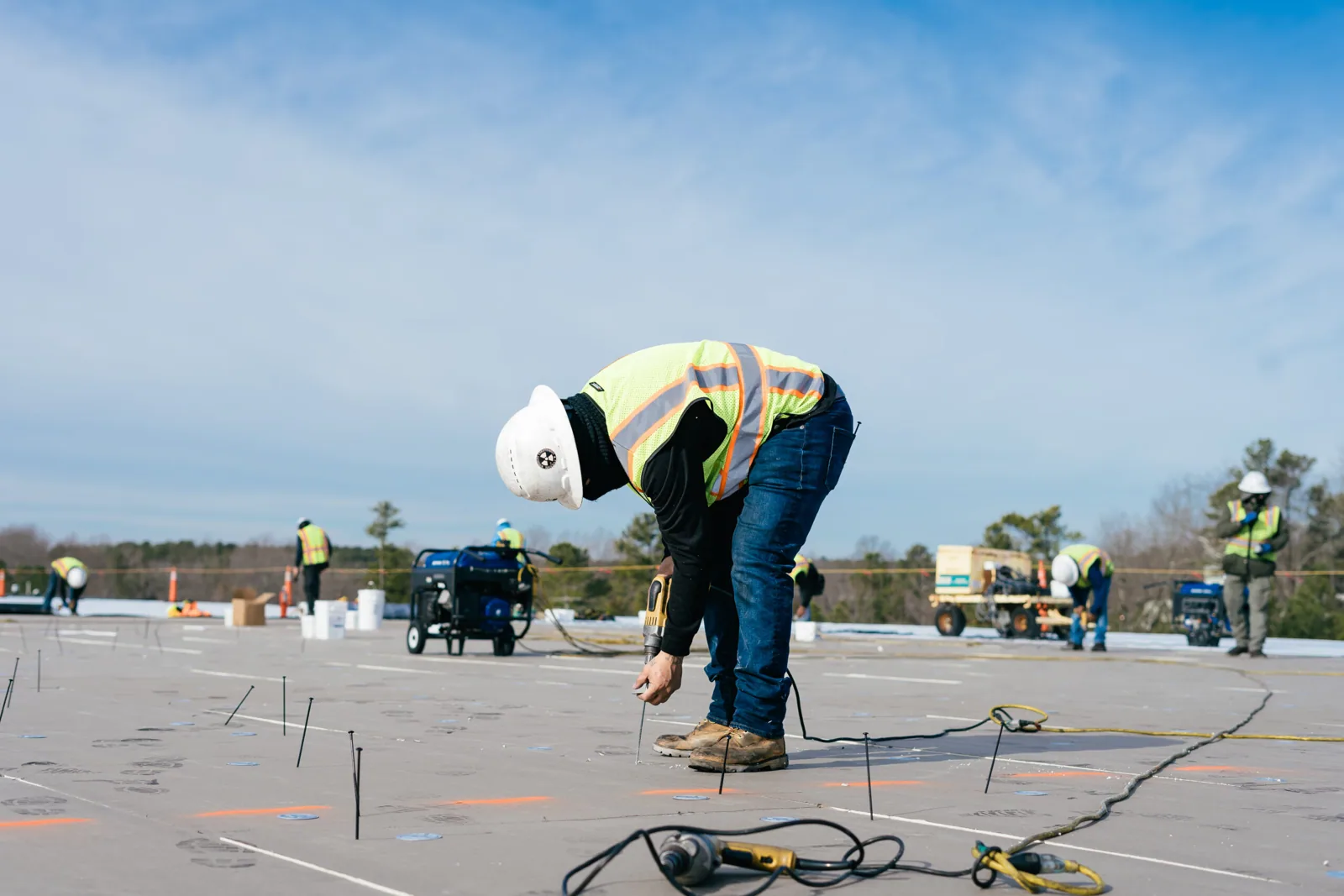
A dry assembly with sound seams may only need targeted repair or a coating. A dry insulation layer under an aged sheet may accept a recover. Wet board or a brittle sheet means replacing the affected area or the whole roof. The price is moved by insulation thickness, penetration count, deck condition found on opening, access, disposal and the amount of protection the building needs below.
We lay out the options against the same scope version, which lets the owner weigh condition and cost on equal terms. A coating restoration can extend an interval when the substrate is sound, though it does not rescue a wet assembly.
Timing matters as much as scope. A roof that is clearly failing in the register but has no funding line can be stabilized for a season with targeted repairs while the capital request is prepared. A roof with a funded year can be bid early, so material is ordered and the crew is scheduled for the first dry stretch of spring, not the last scramble of fall. Either way, the work order should record what was done, what remains and when the next visit falls.
Properties around Shawnee
Owners with Shawnee roofs often hold others in Lenexa, Overland Park and Kansas City, Kansas. A shared register keeps their inspection dates and capital years in line.
Commercial Roofing Questions
Why does penetration count drive leak risk on a retail roof?
Every pipe, curb and fan base is a flashing, and flashings fail before membranes do. More penetrations mean more places for movement and sealant aging to open a path. A chart by bay shows where repairs are clustering and whether renewal of a section is warranted.
How are metal roof laps checked on a storage building?
We look for gaps, backed-out fasteners, dried sealant and corrosion at cut edges. Panels are walked only where the roof can carry load safely, and we use photographs from the edge and a drone where footing is poor. Findings go into the register by panel run.
Is a winter patch ever a lasting repair?
Sometimes, on a dry surface with a compatible material, but cold limits adhesion and welding. The scope should state whether the work is temporary. We revisit temporary repairs once the weather moderates.
What separates storm damage from wear in a claim file?
Dated photographs, measurements and a written walk that ties each item to the event. A roof with a prior baseline makes the comparison simple. Without one, the file relies on the observed pattern, such as fresh creases or fresh debris marks.
When should a coating be preferred over a recover?
When the existing sheet is sound, the insulation is dry and the surface can be cleaned and primed. A recover suits a roof that needs added insulation or has widespread surface wear but sound board. Moisture mapping and adhesion tests decide between them.
Start with the property list
Start with the property list, roof-area register, decision date, available reports and an access contact. We walk each roof, rate its condition by area, and produce an assessment that keeps current repairs distinct from capital planning assumptions.