
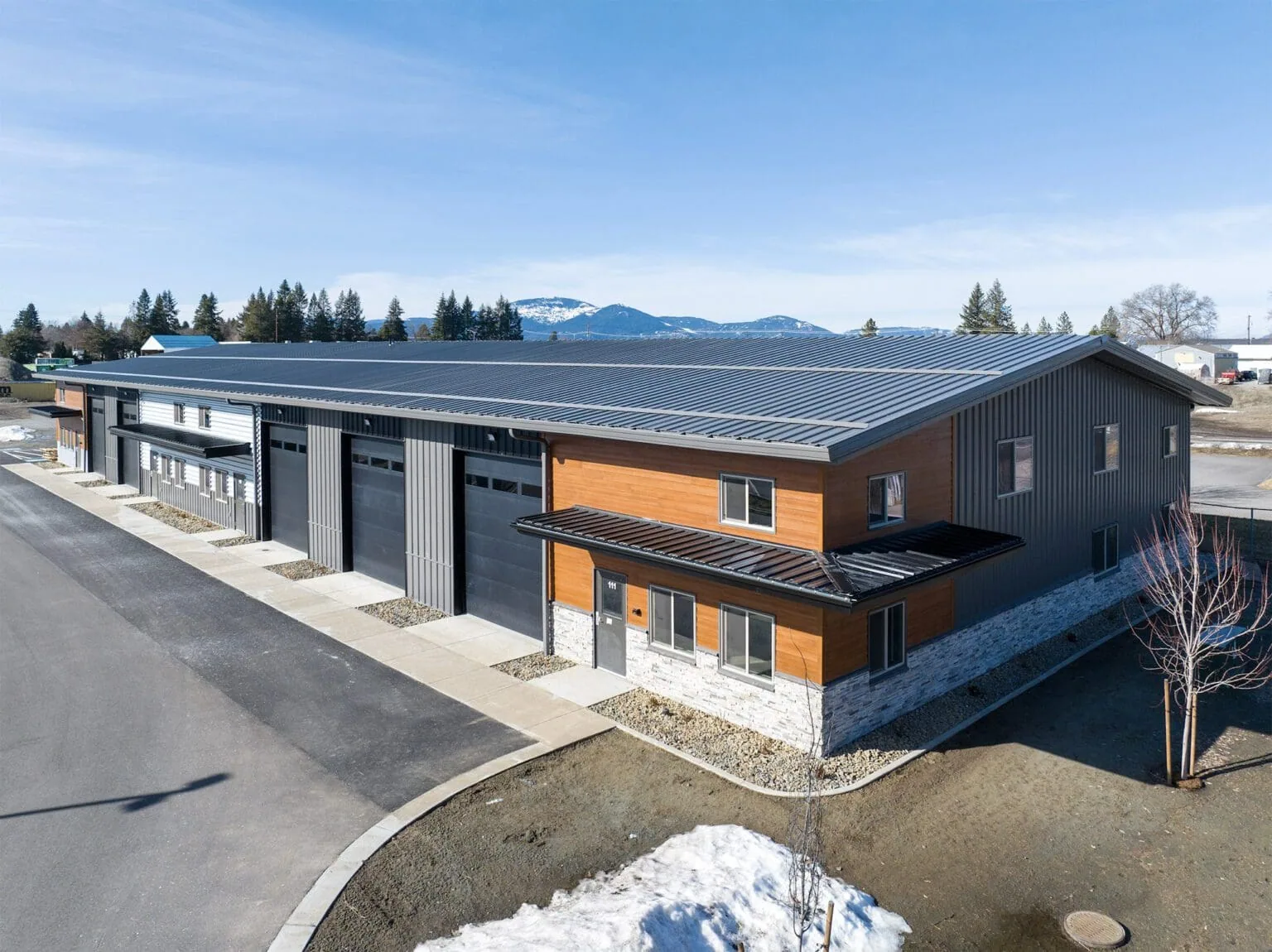
Roofing for Property Management Companies in Olathe, KS
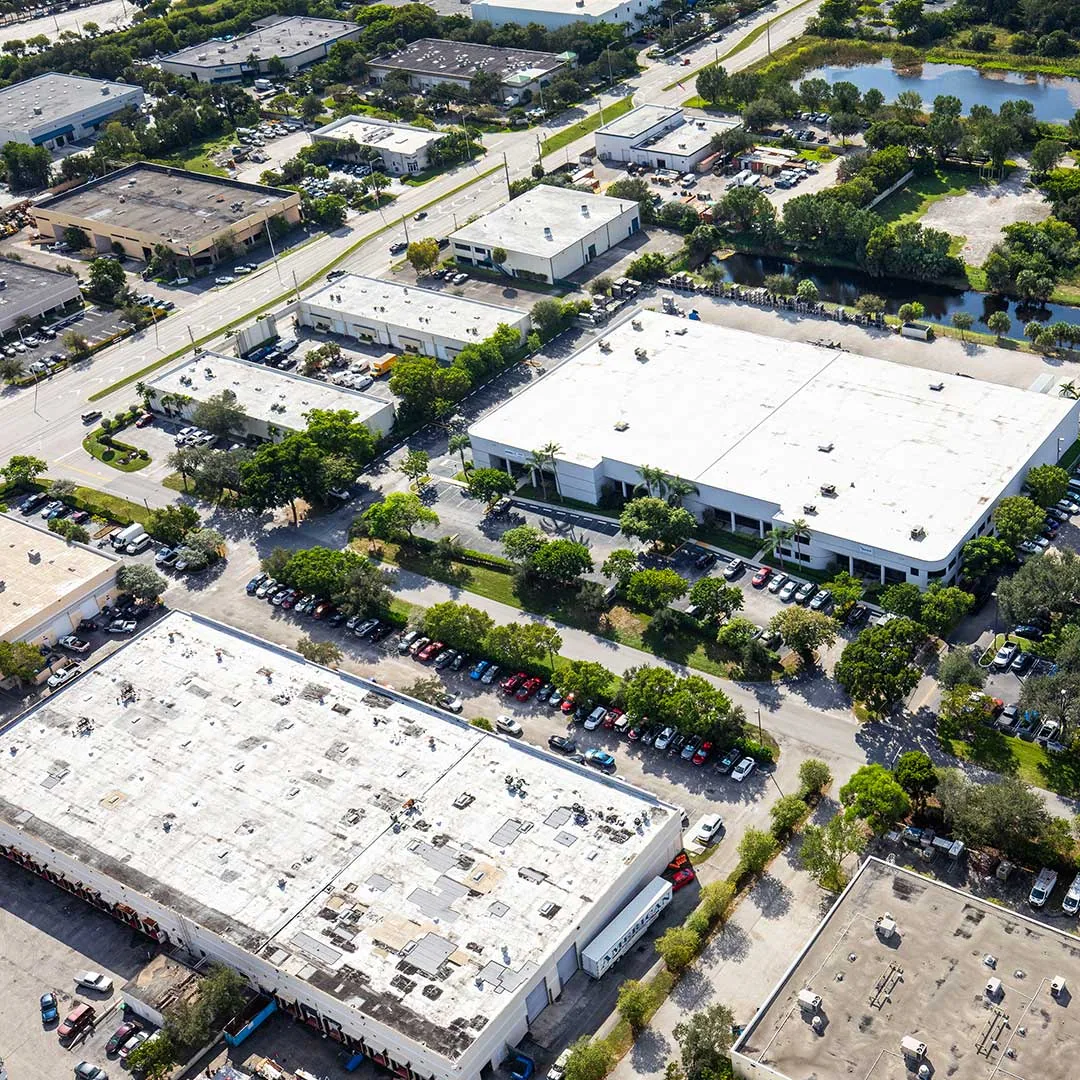
A property manager with a dozen buildings does not have a roof problem so much as a sequencing problem, because the owners want a reserve plan, the tenants want dry ceilings, and the calendar only has so many warm months. In Olathe, KS every building in a portfolio takes the same winter, with freezing lows on 109.6 days and 37.54 inches of precipitation, and each shows its weak points on a different date. A roof-area register that gives each building one line, with its assembly, drainage record, repair count and next inspection interval, turns those scattered dates into a portfolio sequence that an owner can approve.
Send the building list and the owner reporting format
Share the property list, roof-area register, reports on file, decision dates and access contacts. The assessment we send back keeps current repairs and capital planning assumptions on separate lists.
What an owner report needs to say
Managers report to owners who may never see the roof, so the page they read has to be short, dated and specific. For each building it should say what was observed, what is urgent, what can wait and what the next decision date is. Photographs help, but the sentence beside the photograph matters more: the location, the condition and the consequence if nothing is done.
We write findings in that shape. Observed condition is kept apart from the reserve estimate, repairs that restore watertightness are separated from improvements, and open questions such as suspected wet insulation are listed as items to test. A manager can then forward the report to an owner without rewriting it, and the owner can compare it with last year's. Where a management agreement requires owner approval above a set spending level, the report states which items sit under that level and can proceed as maintenance and which need a signed scope, so approvals are requested once and not item by item.
Weather exposure across a portfolio
Membranes, flashings and edge metal move each year through the span between January near 29.8°F and July near 78.8°F. Buildings of different ages respond differently: an older built-up roof may crack at seams, a single-ply roof may show shrinkage at parapet flashings, and a metal roof may loosen at fasteners. Kansas City-area storms bring hail, and a building under the squall line of May 19, 2024, which crossed from Gardner on into Olathe, surveyed near 80 mph, has a dated reason for a roof walk.
A manager's buildings may sit along any of the corridors the city plans around, such as Woodland, K-7, Cedar Creek or I-35 and Santa Fe. The manager can sort buildings by corridor for routing purposes, but condition should drive the capital order. Retail and office buildings near those corridors share the same weather as industrial space in the south of the city, and the wind and hail record does not respect a property boundary, so one storm can leave findings on several buildings in a single week. A standing storm checklist, with the order in which buildings are walked, saves days when an event hits.
Condition findings that travel between buildings
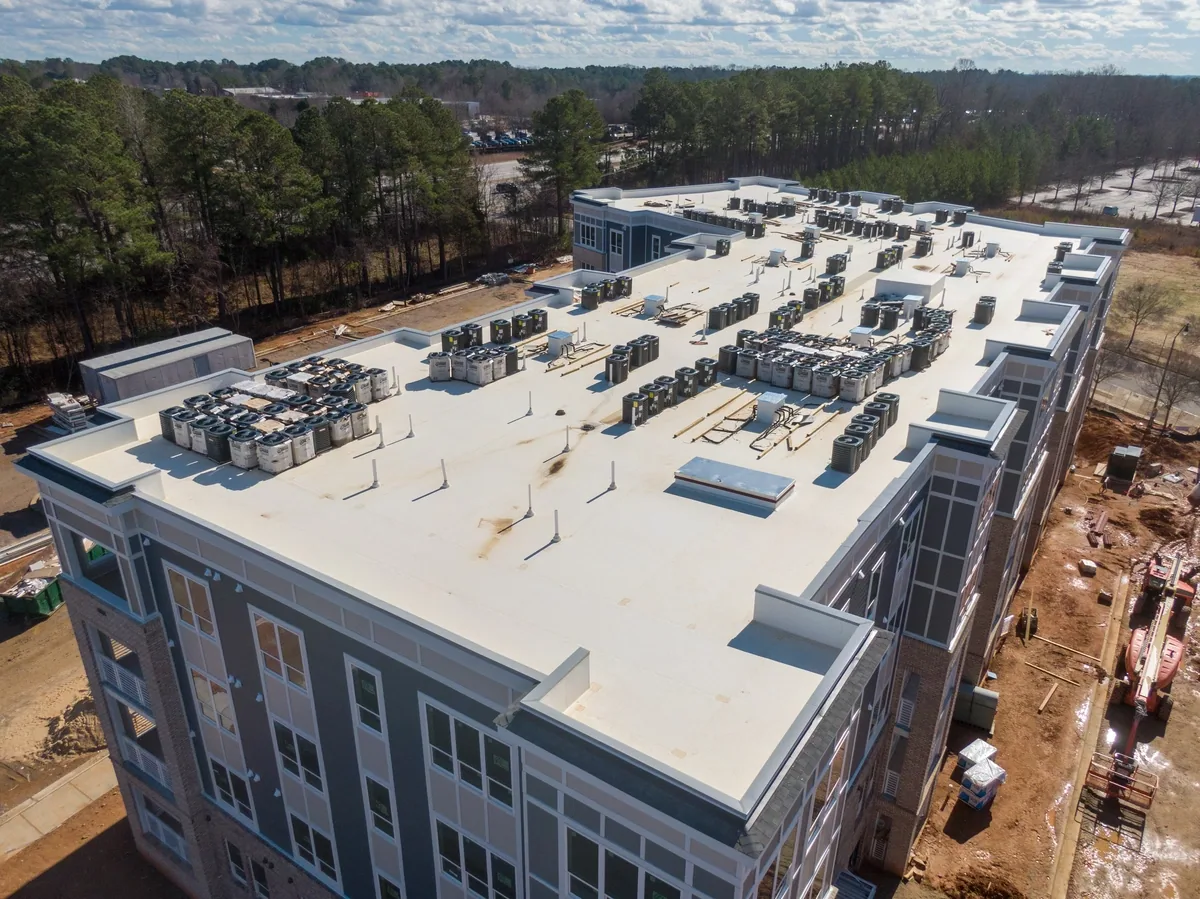
A single inspection standard keeps findings comparable. We record system type, visible layers, drains, penetrations, flashings, rooftop equipment and the traces of earlier repairs on each building, using the same fields every time. A commercial roof inspection on one building then reads like the inspection on the next, which lets the manager spot a pattern, such as the same curb detail failing on several buildings built by one developer.
Where a building has a history of patching, an infrared scan helps determine whether the insulation is wet. Findings are dated and kept in the register, so when a property changes hands or a manager leaves, the history stays with the building. Rooftop equipment owned by tenants is flagged separately, because a tenant unit with a failed curb flashing is a lease question as well as a roofing one, and the manager needs the photograph to start that conversation.
Repair line versus renewal trigger
A manager typically carries an annual repair budget, and the practical question is when a building's repair spending should convert into a replacement. Recurring repairs at the same drain or curb, expanding wet insulation and failing seams are signs the repair line is propping up a roof that has reached the end of its life. Counting those repairs by building turns an intuition into a decision record.
When replacement is justified, the choice of system depends on the building. A TPO roofing system suits many low-slope buildings, a coating may suit a sound membrane, and a metal retrofit may fit a standing seam or exposed-fastener roof. Permit paperwork runs on whichever code edition the building department confirms for the job; the city has used the 2018 IBC and IEBC since September 1, 2019.
More About Roofing for Property Management Companies in Olathe, KS
Tenant schedules and access plans
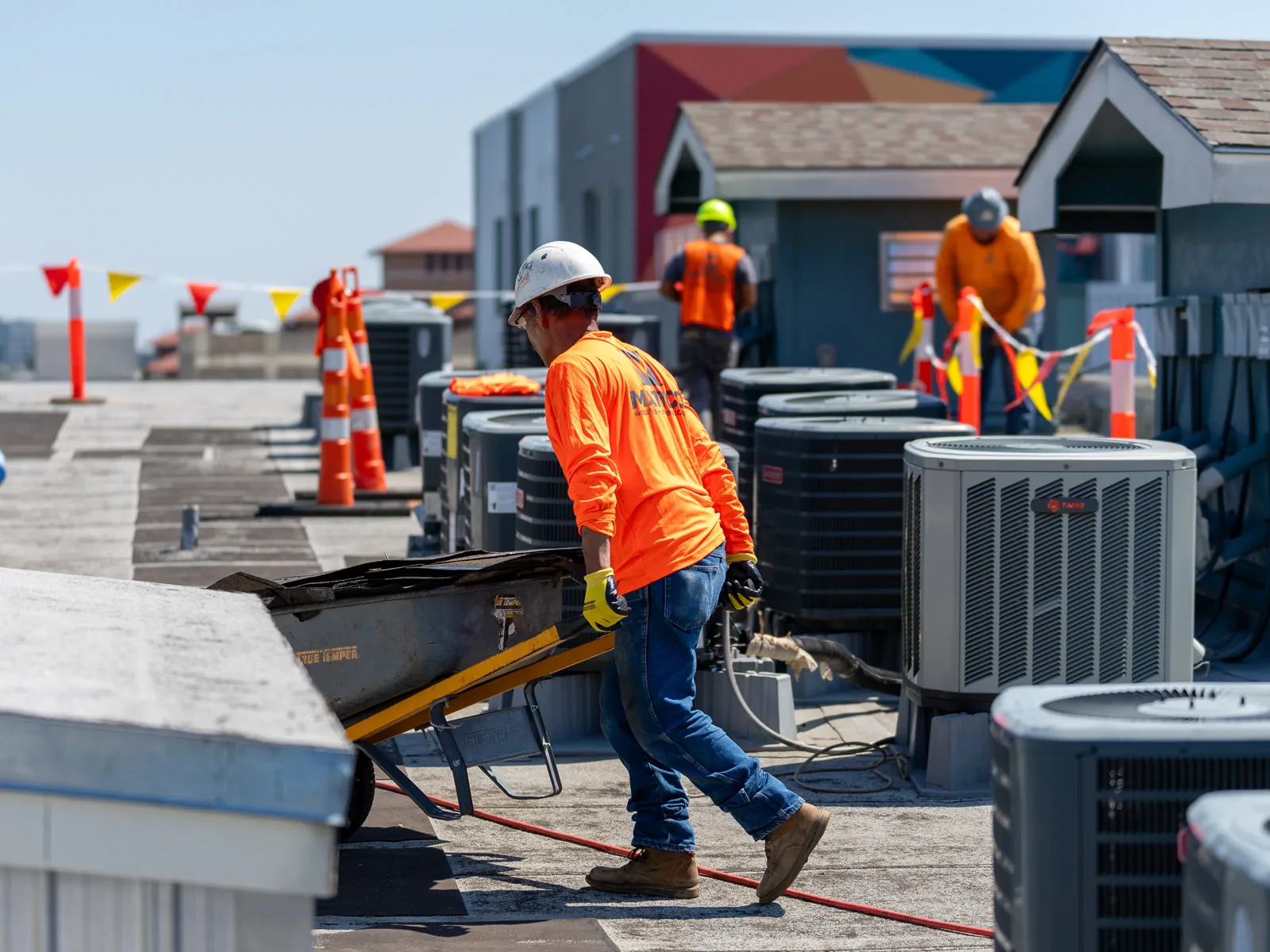
Every tenant has an operating schedule, and a roof job that ignores it will draw complaints. We plan work with the manager and each tenant contact, agreeing on staging areas, noise windows, entrance routing and the places where a lift cannot park. Tenants with sensitive stock or equipment are told what protection is planned and what happens if rain arrives mid-project. For multi-tenant retail, the plan keeps customer entrances and fire lanes clear and sets the hours when overhead work is paused for deliveries.
On an occupied property the work follows occupied building reroofing practice: phases, with each section dried in before the crew leaves. An overnight leak gets an answer at any hour, holidays included, and goes into the register with its date, location and temporary repair.
A multi-year sequence owners can fund
The sequence that works best ranks buildings by consequence and condition: active leaks over occupied space first, recurring defects second, aging but stable roofs last. Each building's line shows the cost drivers, such as roof area, access, insulation and penetrations, without assuming a figure that has not been bid. Owners who hold buildings through different entities can receive a separate report for each, drawn from the same register, which keeps the accounting clean while the field data stays consistent.
For mixed holdings, a multi-site roof program keeps records consistent, and capital planning produces the multi-year schedule. The same register serves a manager reporting to real estate investors, one coordinating with general contractors, and one whose office buildings and apartment communities sit in Olathe and the surrounding cities. Reserve contributions are easier to defend when the register shows each building's repair count by year, because an owner can see the repair line rising toward the point where renewal costs less than another round of patching.
Commercial Roofing Questions
What belongs in a roof report meant for a building owner who never visits?
The building, the date, the condition by roof area, the urgent items, the items that can wait and the next decision date. A few labeled photographs and a plain description of consequences give the owner enough to approve or defer.
How does a manager decide which of ten buildings goes first?
By what is underneath and how often it has leaked. Active leaks over occupied tenants lead, repeated repairs at the same detail come next, and stable roofs are scheduled with an inspection interval.
Should one crew handle every building in the portfolio?
One register and one inspection standard make findings comparable, which is the real benefit. Whether one crew or several do the work is a scheduling matter, decided building by building.
Does the 2024 wind event reach every building in Olathe?
Only those along the path surveyed from Gardner into Olathe, with its estimated 80-mph peak. Buildings inside it get a dated check of edge metal, coping and rooftop units.

Send the building list and the owner reporting format
Share the property list, roof-area register, reports on file, decision dates and access contacts. The assessment we send back keeps current repairs and capital planning assumptions on separate lists.