Cool Roof Installation in Olathe, KS
A capital-year decision for a reflective roof should begin with the existing assembly, not a color sample. NOAA's long-range normals for the Olathe Johnson County Airport station show a clear winter-to-summer temperature swing, which makes the roof area's condition and drainage record relevant to any coating or replacement choice. We identify what is sound, what has recurring defects, and where a reflective surface could fit before assigning the work to a budget year.
Set the comparison before the capital year
Share the roof-area register, available inspection reports, utility context, decision date, and access contact. We can document the existing assembly and compare coating, recover, and replacement scopes with repairs and exclusions shown separately.
Start with the assembly that is already there
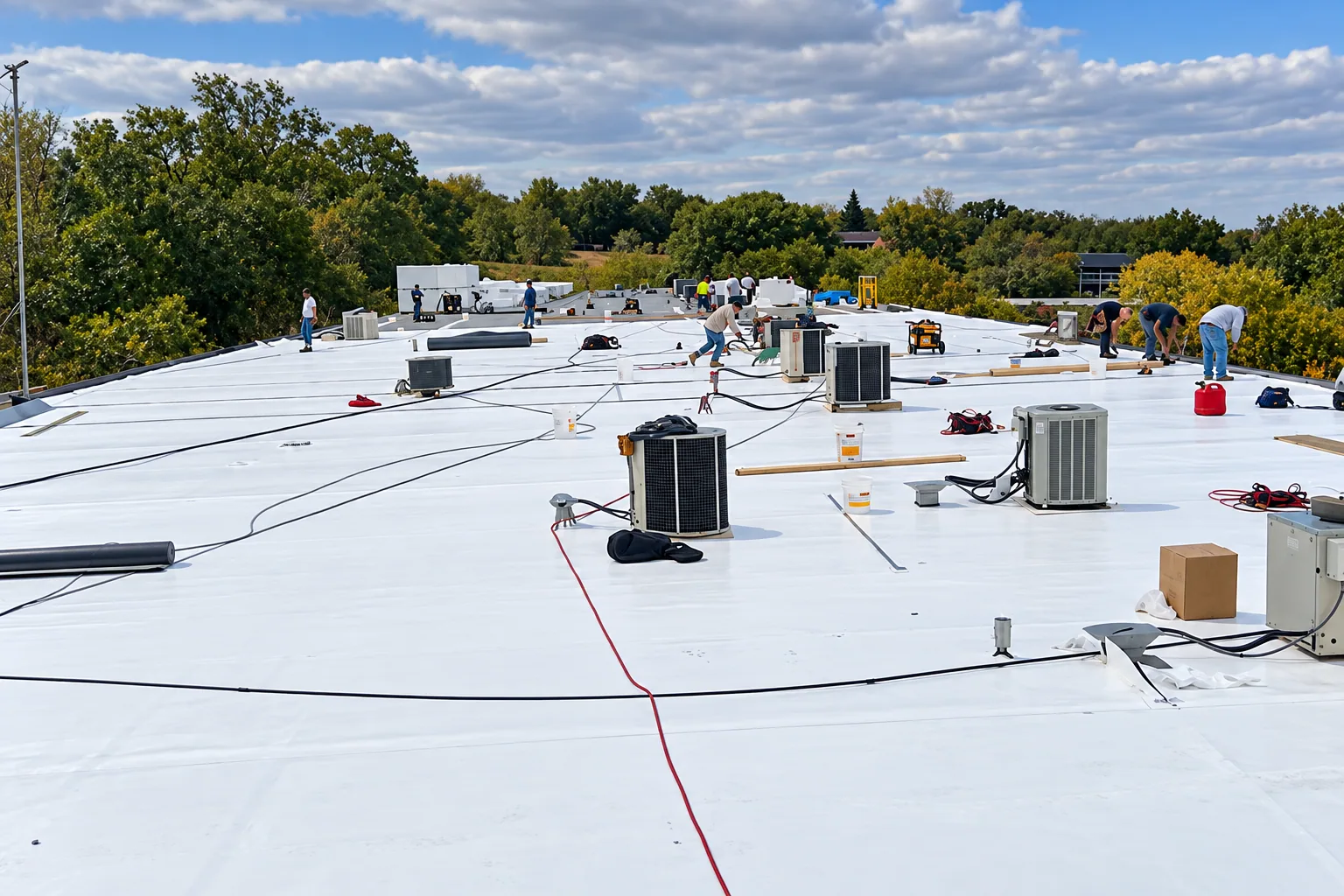
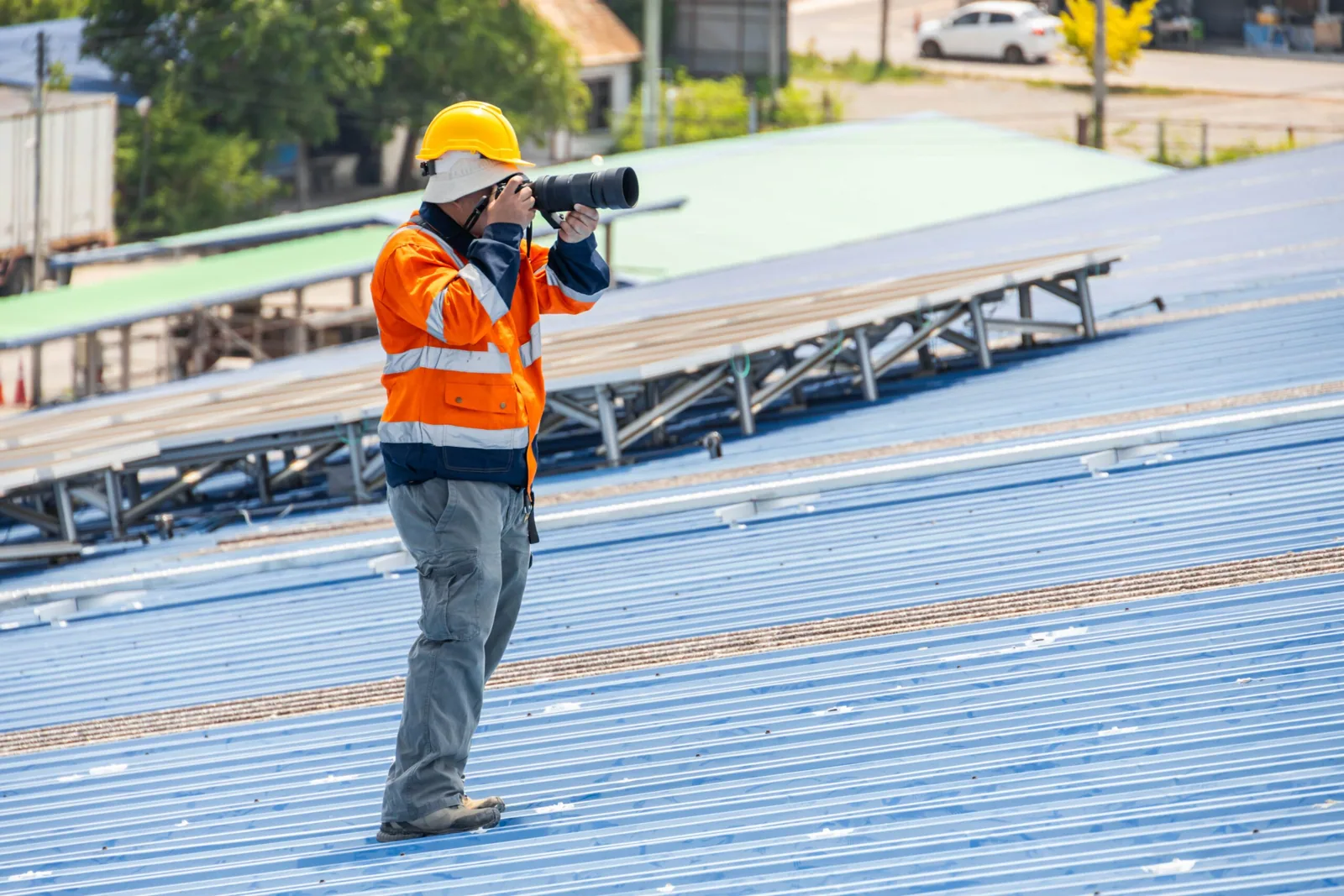
A white or reflective finish cannot correct wet insulation, open seams, weak attachment, or a drain that sits above the surrounding low point. We map the membrane type, repair history, edge details, penetrations, and visible surface wear, then note where moisture or movement needs a closer look. The field record separates a coating candidate from a roof that needs localized repair, a recover assembly, or removal to the deck. That distinction keeps the bid basis tied to the condition observed rather than the finish proposed.
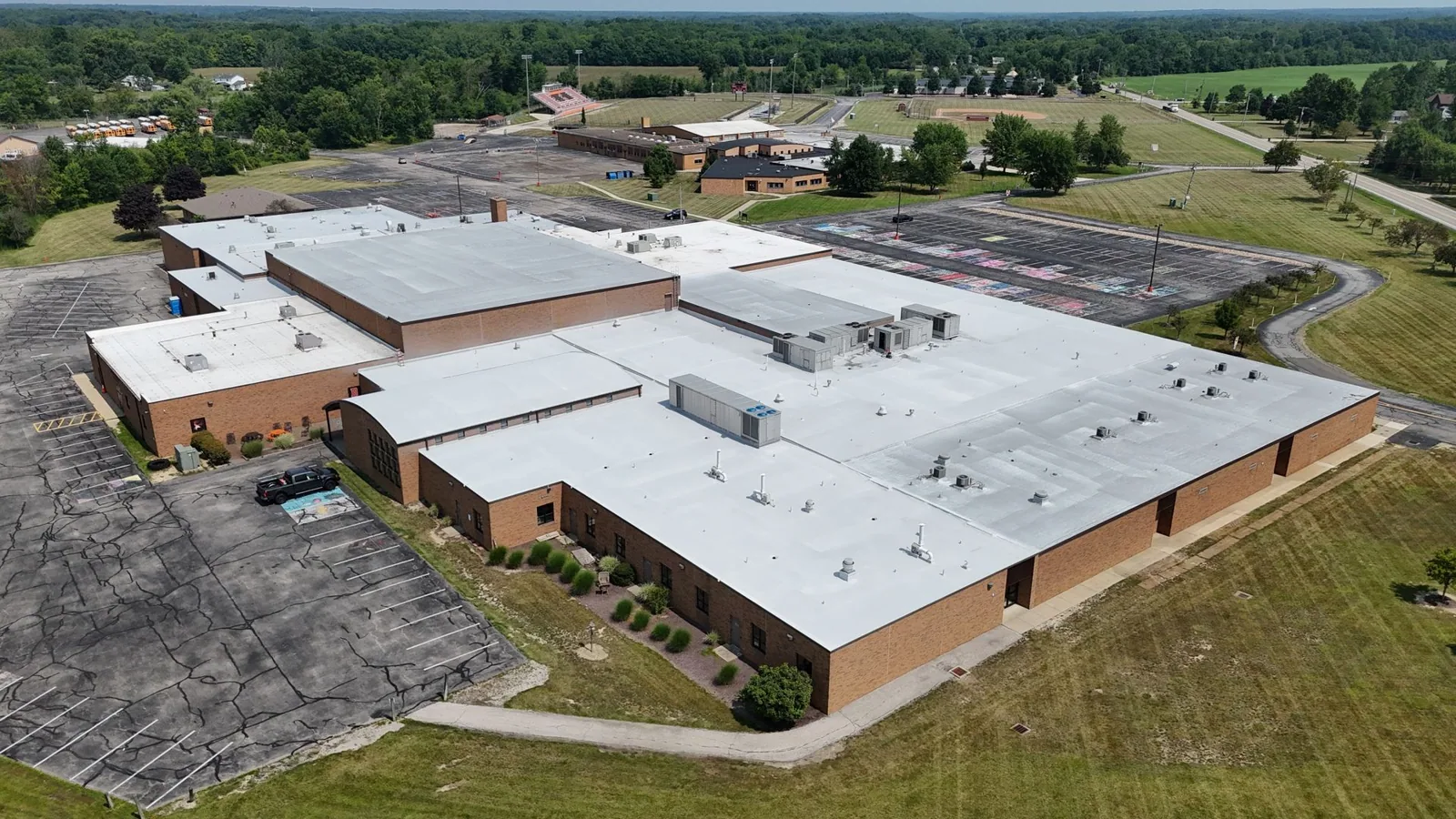
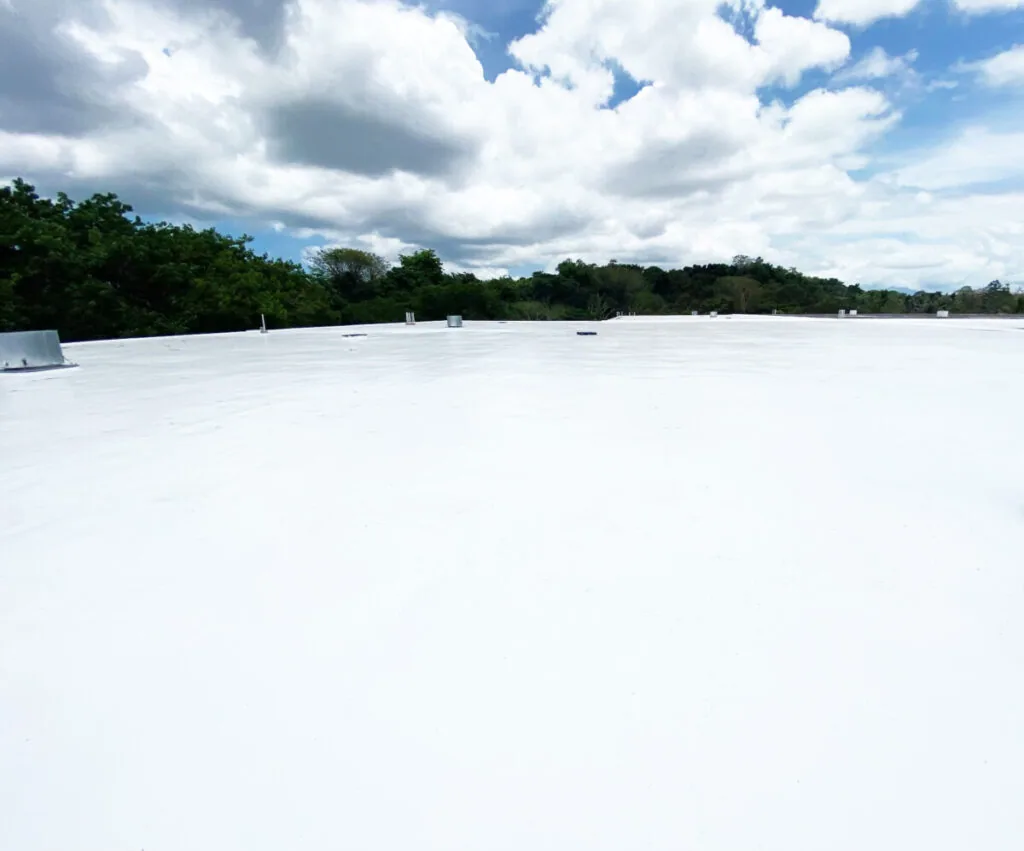
On a roof with stable insulation and sound attachment, a compatible reflective coating may extend the service window while reducing solar absorption at the surface. The coating still needs clean, prepared substrate, repaired seams, and dry conditions during application. We compare test areas and manufacturer system requirements with the actual membrane, then describe areas excluded from the work. A restoration scope can address substrate repair and coating preparation together, while a condition inspection establishes what the surface is covering before the capital decision.
Separate surface temperature from building results
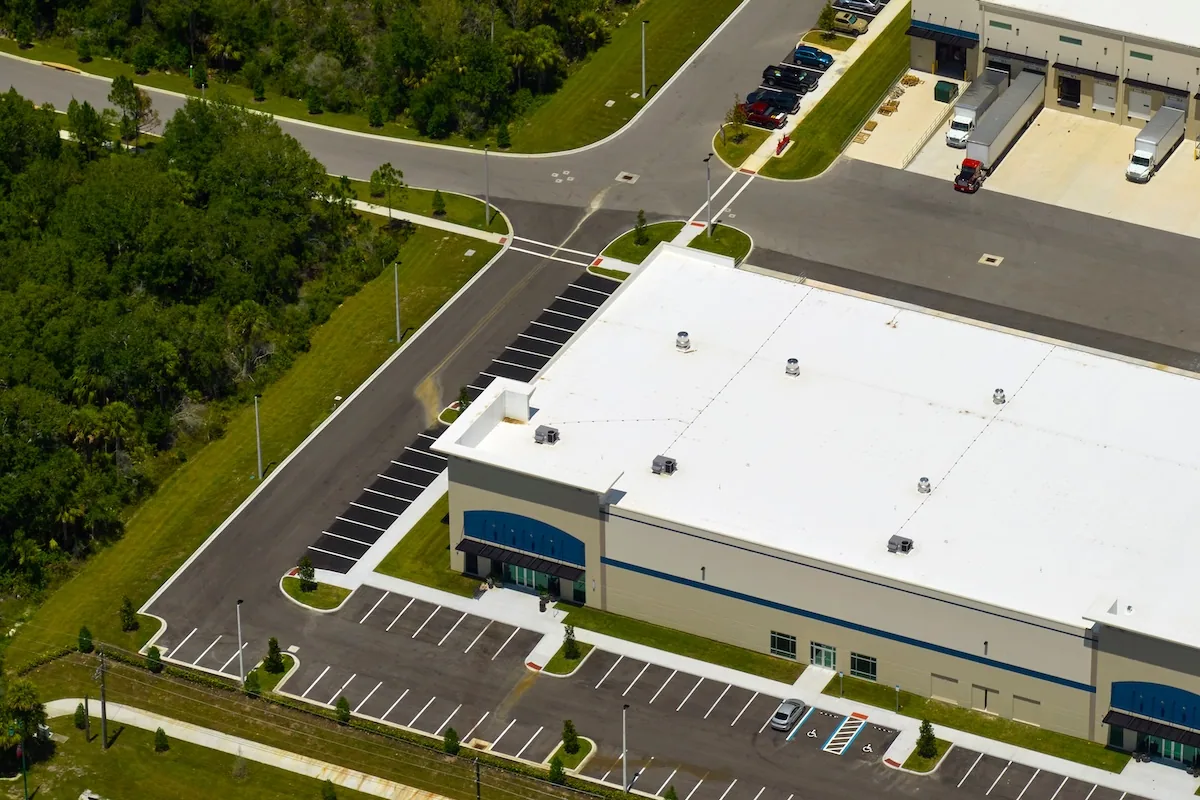
Reflective roofing returns more incoming solar energy than a dark surface, but the effect on a particular building depends on insulation, air leakage, HVAC performance, operating hours, and interior loads. A warehouse with frequent door openings and a conditioned office do not produce the same energy profile, even if both have broad low-slope areas. We can document roof conditions and compare assembly options, while the facility team evaluates utility data and equipment operation against its own baseline. The decision record should not turn a surface property into an assumed savings figure.
KDOT's K-10 planning work connects Olathe with Lenexa and De Soto across a corridor with varied commercial and industrial uses, while the city lists I-35/Santa Fe among its corridor studies. That corridor mix gives an asset manager properties with very different operating schedules to compare, and the right assembly follows from the building. We review each building's occupancy, exhaust, rooftop equipment, and access pattern individually. A reflective assembly near rooftop units needs a plan for service routes and curb flashing, not a coating carried under every piece of equipment. We keep roof scope and HVAC work distinct so an asset manager can compare a capital-year allowance against equipment or insulation work without mixing the assumptions.
Preserve drainage and repair boundaries
Olathe's local climate includes both regular precipitation and recurring freeze-day exposure, making outlet condition and trapped water useful parts of the roof review. The NOAA normal set informs inspection timing. We record drain bowls, scuppers, crickets, low areas, and prior patches before coating so the new surface does not hide a drainage problem. Where water remains after a storm, the scope identifies whether the cause appears related to slope, a blocked outlet, deflection, or an obstruction that needs another trade.
Parapets, penetrations, skylights, edge metal, and equipment curbs create transitions that need compatible preparation and reinforced detailing. We mark a repair boundary on the roof plan and identify any wet or deteriorated material that must be removed before the finish is applied. At transitions where a liquid-applied detail is part of the selected system, the silicone coating assembly must follow substrate and reinforcement requirements rather than bridge movement that remains active. A separate insulation review helps quantify deck, cover-board, and slope corrections that should not be hidden in a coating line.
Compare the work window with the replacement window
Coating work can require less tear-off and disposal than replacement, but that difference does not make coating the right answer on every roof. We compare preparation, repairs, primer, reinforcement, finish coats, edge treatment, access, and the areas that remain outside the proposed scope. If moisture is widespread or attachment has failed, carrying the problem under a new surface would defer rather than resolve the decision. A recover or replacement option may then give the owner a clearer long-term record, with insulation, deck exposure, and drainage corrections described as separate quantities where they can be confirmed.
Timing depends on weather, substrate dryness, wind exposure, equipment access, tenant schedules, and the cure requirements of the selected system. We identify staging areas, roof access, protection at occupied spaces, and the point when rooftop equipment or foot traffic must stay clear. A phased sequence can keep sections available for operations, but each boundary needs a dry-in plan and an approval contact. Closeout records identify products, repaired conditions, application areas, excluded locations, and photographs, giving the next inspection interval a reliable point of comparison rather than a broad claim that the entire roof was renewed.
More About Cool Roof Installation in Olathe, KS
Carry the roof-area record into the next review
For a property manager overseeing more than one building, the useful output is a consistent roof-area register with condition, selected scope, completed repairs, and open assumptions. We label each building and section separately, so the same capital year can include a coating at one roof and replacement planning at another without forcing a uniform treatment. The register can include maintenance access, drain locations, warranty documents supplied by the owner, and photographs from defined views. Those records make a later bid comparison more precise because quantities and exclusions can be traced to an actual area.
After completion, the owner should retain application documentation, product data, field observations, weather records when relevant, and any maintenance limitations supplied for the assembly. The next review can then distinguish coating wear from new punctures, movement, or drainage changes. If a roof's defect recurrence grows or the repair boundary expands, the reserve plan can compare continued maintenance with recover or replacement rather than extending the same assumption indefinitely. Scheduling covers commercial properties in Olathe and the cities around it, with each roof decision recorded to the building it concerns.
Commercial Roofing Questions
When is a reflective coating a reasonable alternative to replacement?
A coating is a candidate when the existing roof is dry enough, well attached, and compatible with the proposed system after repairs. We inspect seams, penetrations, drainage, and substrate condition, then list exclusions and preparation work. If moisture or attachment problems extend beyond isolated areas, replacement or a different recover scope may provide a clearer correction than covering the existing defects.
Will a cool roof lower this building's energy bills?
A reflective surface changes how the roof absorbs solar energy, while the utility result depends on insulation, air leakage, HVAC equipment, hours, and interior loads. We document the roof and compare system options; the facility team can evaluate that record alongside energy use and equipment data. We do not assign a savings estimate from roof color alone.
What should the Olathe roof review include before pricing?
The review should map the membrane, repairs, insulation signs, drains, edges, penetrations, equipment areas, access, and any locations where moisture needs confirmation. We connect those observations to the proposed preparation and mark areas that are excluded or still require testing. That gives the owner quantities to compare instead of a finish-only allowance.
How does the coating scope handle drains and rooftop equipment?
Each outlet and equipment transition should be checked before the surface is prepared. We identify blocked or low drainage points, flashing condition, service paths, and the boundary around units that remain in operation. The written scope assigns repair details and access responsibilities so future HVAC work does not damage a newly finished roof area.
What records should remain after the work is complete?
Keep the approved scope, product and application records, repair locations, exclusions, photographs, and any maintenance instructions supplied for the system. We can organize those items by roof area and note conditions that need another review. The next inspection can then compare the same locations and separate finish wear from a new leak path or changed drain condition.
Set the comparison before the capital year
Share the roof-area register, available inspection reports, utility context, decision date, and access contact. We can document the existing assembly and compare coating, recover, and replacement scopes with repairs and exclusions shown separately.