PVC Roofing in Olathe, KS
The decision to choose PVC for a replacement is usually made months before the roof is opened, at the point where an owner compares what the roof will carry against what the old membrane could not tolerate: grease from kitchen exhaust, oils from process equipment, chemical residue from a plant vent. A polyvinyl chloride sheet resists those exposures better than many other single-ply membranes, and its welded seams give a continuous surface. In Olathe, KS, winter brings roughly 110 days with lows at or below 32°F, so the same membrane also has to stay flexible and weld-tight through a long cold season. We start with the roof-area register and decide from the field condition, not from the product name.
Send the property list, the exposure notes and the decision date
Tell us which roofs see grease, oil or heavy service traffic and which reports exist. We will document membrane condition, welds and drainage, and prepare a scope version for comparison.
When PVC is the right membrane and when it is not
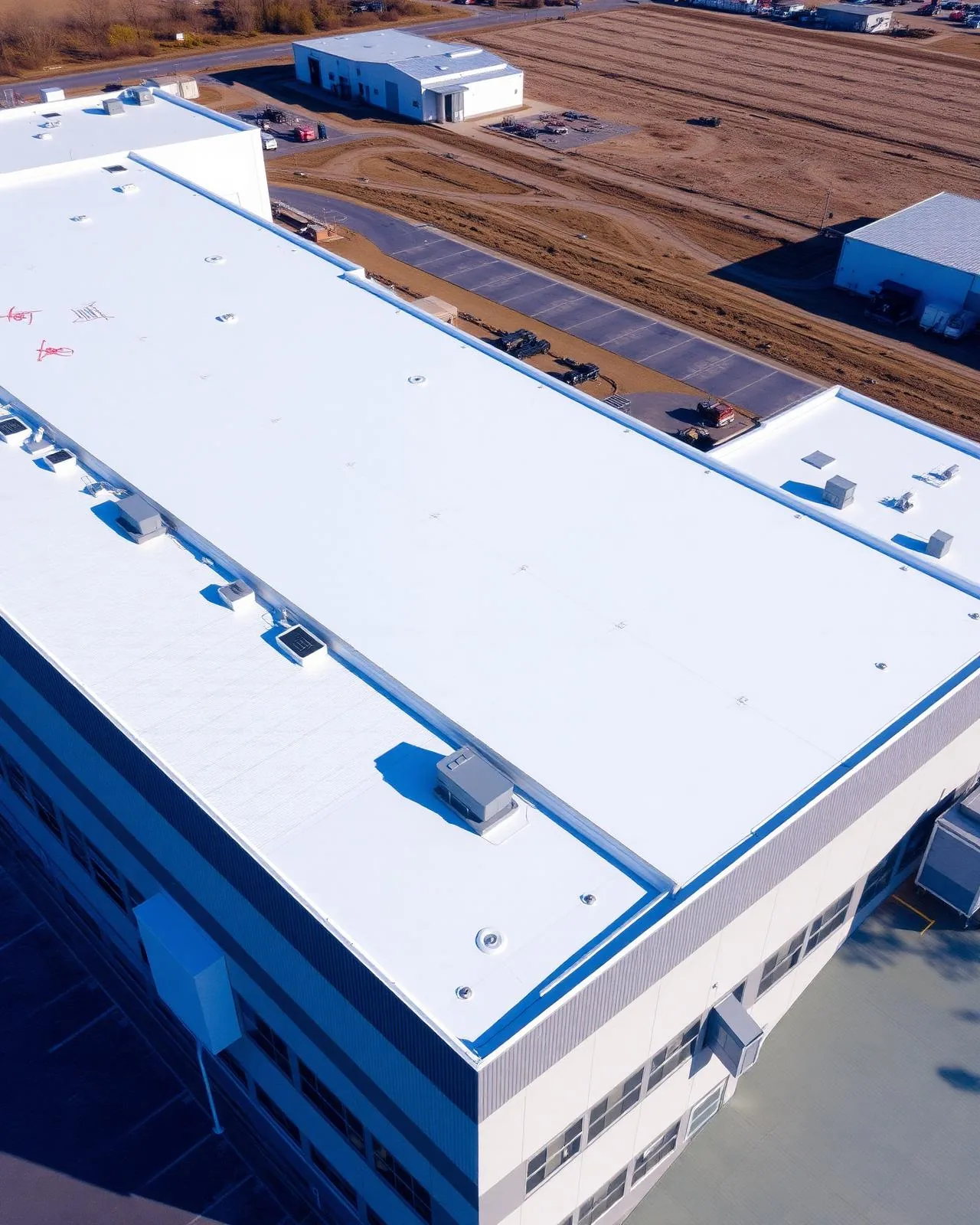
PVC earns its place on roofs with chemical or grease exposure, on rooftops with heavy service traffic, and on buildings where fire resistance of the membrane matters to the code review. It is a good fit for restaurants, food processing, healthcare mechanical rooms and plants with exhaust vents. Where none of those apply, a less expensive single-ply may meet the need, and a coating may serve an older roof whose insulation is dry.
The trade-offs are plain. PVC sheets stiffen in cold weather, flashing pieces need care at low temperatures, and plasticizers that keep the membrane flexible can migrate out over many years, so aging shows up as hardening at edges and penetrations. We note membrane age, color, surface cracking and seam condition before recommending a repair or a renewal. A comparison with KEE-based membranes belongs in the decision when plasticizer loss is the main worry.
Fire performance is the other deciding factor. PVC is inherently flame-retardant because of its chlorine content, and some assemblies reach better fire ratings than the same roof built with other single-ply sheets. On a building with roof-mounted equipment close to the membrane, or where the code review is strict, that property can settle the choice without any other consideration.
Welded seams, base flashing and the details that fail first
PVC seams are joined with hot air, and a well-made weld becomes as strong as the sheet. Quality varies with temperature, speed and pressure, so we probe seams and test welds on every inspection. The field of a PVC roof is rarely where it fails. Corners at curbs, pipes with tight clearance and base flashing at walls are the areas that open first, because they depend on hand welding and on adhesive bonded to a vertical surface.
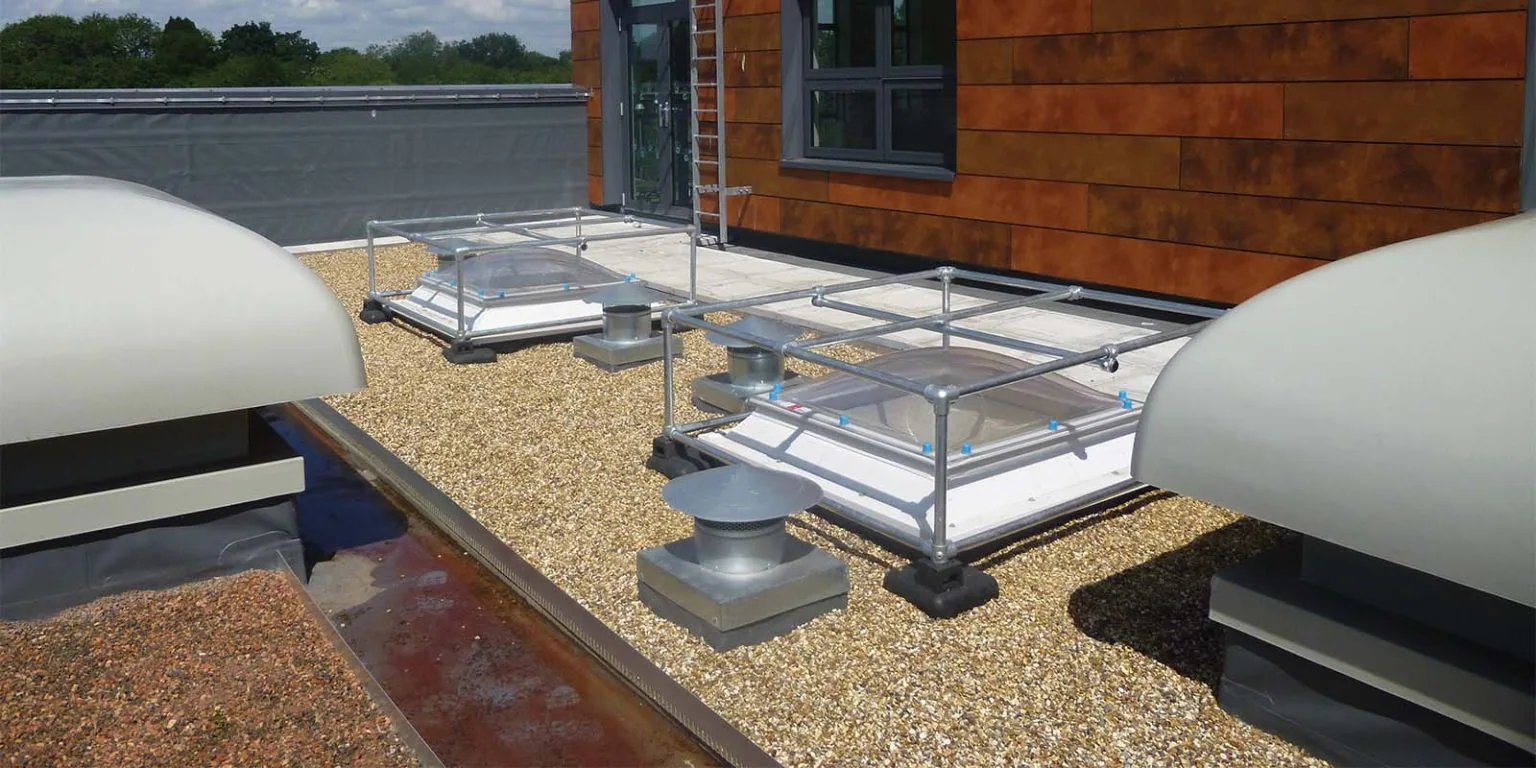
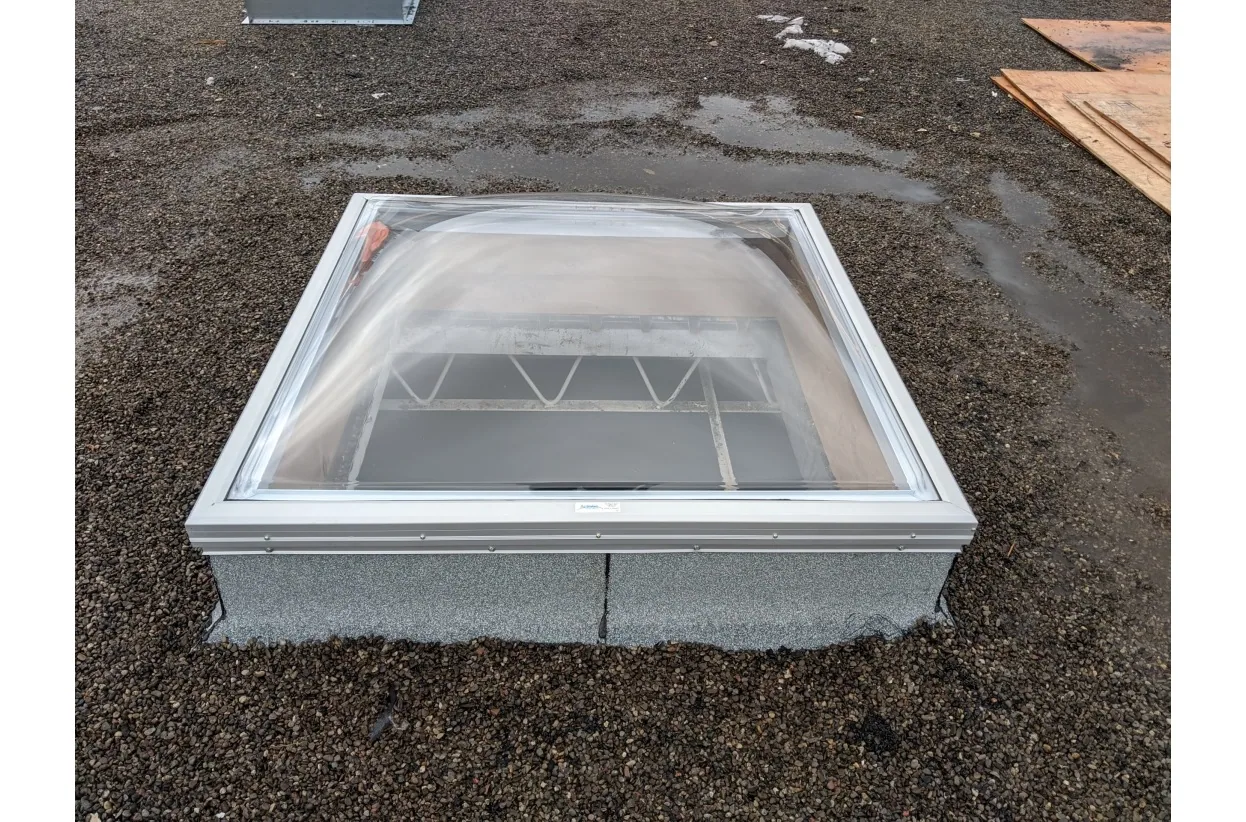
Prefabricated boots and corners reduce the number of hand welds and are our default at penetrations. Where a curb carries a large rooftop unit, we flash the full height and fasten a termination bar under a sealed counterflashing. Our work on skylight and penetration flashing uses the same approach, and the detail is recorded so the next visit can compare it with the first.
Seam width, probe spacing and weld temperature are not details to leave to memory. We record the weld parameters used on repairs, photograph the sample cut for each welded patch, and keep the cut sample for owners who want one. That small file turns a future dispute about workmanship into a short comparison.
Local climate loads on a PVC roof
January averages 29.8°F at the airport station and July 78.8°F, daily highs run from 39.4°F to 89.4°F across those two months, and a year brings 37.54 inches of precipitation. The range matters for PVC because the sheet expands in heat and contracts in the cold, pulling on fixed attachments and flashings. Roofs with long unbroken runs show it first, as slight wrinkling in summer and tension at corners in winter.
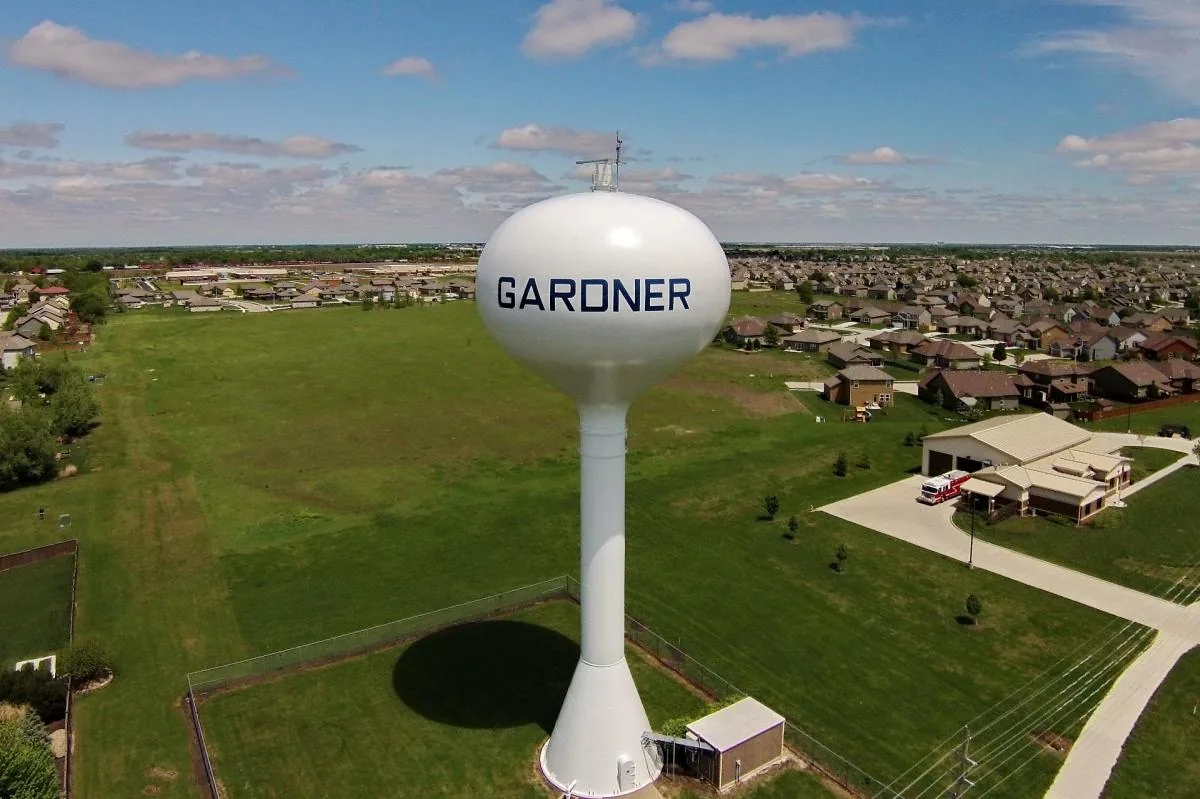
Buildings along the May 19, 2024 wind track from Gardner into Olathe, where surveyors estimated gusts near 80 mph, have a specific reason to be inspected. After such an event we check the perimeter attachment, the edge metal and the field fastening for movement, and photograph any membrane flutter marks. Hail is a regional hazard in Kansas City-area thunderstorms, and we treat it as an event inspection and not as a presumed condition. A wind-lifted edge goes to wind damage roof repair before the next storm.
Records that make a PVC decision defensible
The most useful records are the original installation data when available, a drawing of the roof areas, the repair log and any warranty documents. When those do not exist, we build them from the field: seam probe results, core samples with membrane and insulation thickness, moisture readings and a drainage record. The register then separates the repairs that keep the roof working from the line items that belong in a reserve plan.
A roof exposed to grease or oil also needs a cleaning and inspection interval. Residue that is left to build up can attack sealants and reduce traction for service crews, so we set an interval with the owner and record each cleaning. Owners who carry the roof across several properties can fold those records into a roof asset management file.
More About PVC Roofing in Olathe, KS
Placing PVC inside a portfolio sequence
A property portfolio rarely renews all of its roofs in a single year, and PVC does not need to be chosen for every building. A rational sequence puts chemical and grease exposure roofs first, uses the registry to rank the rest by moisture and recurrence of leaks, and leaves dry roofs in a maintenance cycle. Olathe's economic-development plan describes large industrial developments in the south of the city and names corridors such as K-7 and I-35/Santa Fe, which marks a broad industrial and commercial setting where grease, oil and chemical exposure are likely to turn up on some roofs.
The scope version for each building states membrane, thickness, insulation, attachment, flashing and drainage corrections, along with a pricing basis that can be compared. If the owner is also weighing TPO, both options are written on the same scope so the difference is visible. For permits, Olathe adopted the 2018 International code set on September 1, 2019; whichever edition applies to a given project is confirmed with the city.
Commercial Roofing Questions
What exposure should push an owner toward PVC?
Grease, oil or chemical vapor at the roof is the strongest reason. A restaurant exhaust, a plant vent or a laundry discharge can degrade membranes that are not designed to resist them. Without those exposures, the choice rests on cost, warranty terms and detail complexity.
Does PVC become brittle with age?
It can stiffen as plasticizers leave the sheet over a long service life, and the edges and penetrations show it first. We record hardness at those details and use the trend to time renewal.
Can PVC be installed in winter?
Cold limits what can be welded and bonded, and sheets handle poorly when stiff. Most owners place installation in the warm months, and emergency work in winter uses temporary protection until conditions allow permanent welds.
How is a leak traced on a welded roof?
We start at the interior stain, move uphill along the deck and insulation path, and probe seams, flashing and penetrations in the matching roof section. Moisture mapping narrows the search when the entry point is far from the stain.
Does the May 2024 wind event apply to every Olathe roof?
No. The survey identified a path from Gardner into Olathe, and the review trigger applies to properties in or near that path. Outside it, the standard inspection interval governs.
Send the property list, the exposure notes and the decision date
Tell us which roofs see grease, oil or heavy service traffic and which reports exist. We will document membrane condition, welds and drainage, and prepare a scope version for comparison.