Commercial Roof Repair in Olathe, KS
A repair reserve is easier to manage when each work order records the defect, location, and result of the visit. In Olathe, freeze-day exposure and seasonal movement make recurring seam, flashing, and drainage conditions worth tracking across inspection dates. We inspect the affected roof area, determine whether the surrounding material can support a durable repair, and separate immediate water control from the corrective scope. The owner receives findings that connect the repair to its cause where evidence allows, plus an interval or follow-up test when the condition remains uncertain. That record helps distinguish a resolved defect from a line that is likely to return.
Put the repair and follow-up in one record
Share the leak location, roof-area register, prior repair notes, available photos, and access contact. We can inspect the affected area, document what is confirmed, and separate temporary protection from the lasting correction.
Use the local record to set the inspection question
The NOAA normal set for Olathe's Johnson County Airport station records 109.6 days a year at or below freezing. That helps frame inspection timing and the review of drainage and detail movement. We note the leak date and location, compare earlier visits, and inspect related seams, penetrations, and transitions. A weather event can guide the review while the roof condition determines the repair.
KDOT's K-10 corridor connects Olathe with Lenexa and De Soto, communities that may appear together in a property schedule. An office may need a different access window than a production building, and materials can differ across similar systems. We map each repair by roof area and building contact so reporting stays consistent while the scope stays specific.
Separate water control from the lasting repair
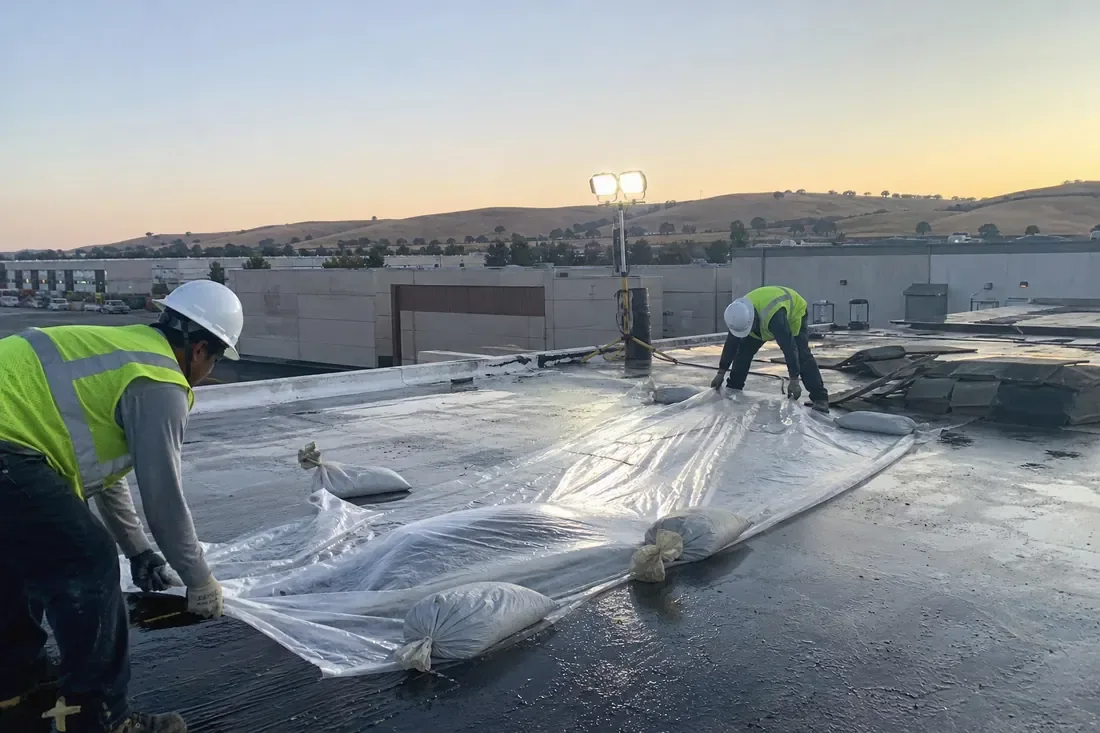
For an active leak, the first visit may need temporary protection while the source is traced. We document where water appears inside without assuming the ceiling stain sits below the roof opening. Water can travel along a deck, insulation joint, curb, or framing before becoming visible. The review checks likely paths, nearby penetrations, seams, drains, and wall transitions. Temporary dry-in is recorded as stabilization, with follow-up for the permanent correction.
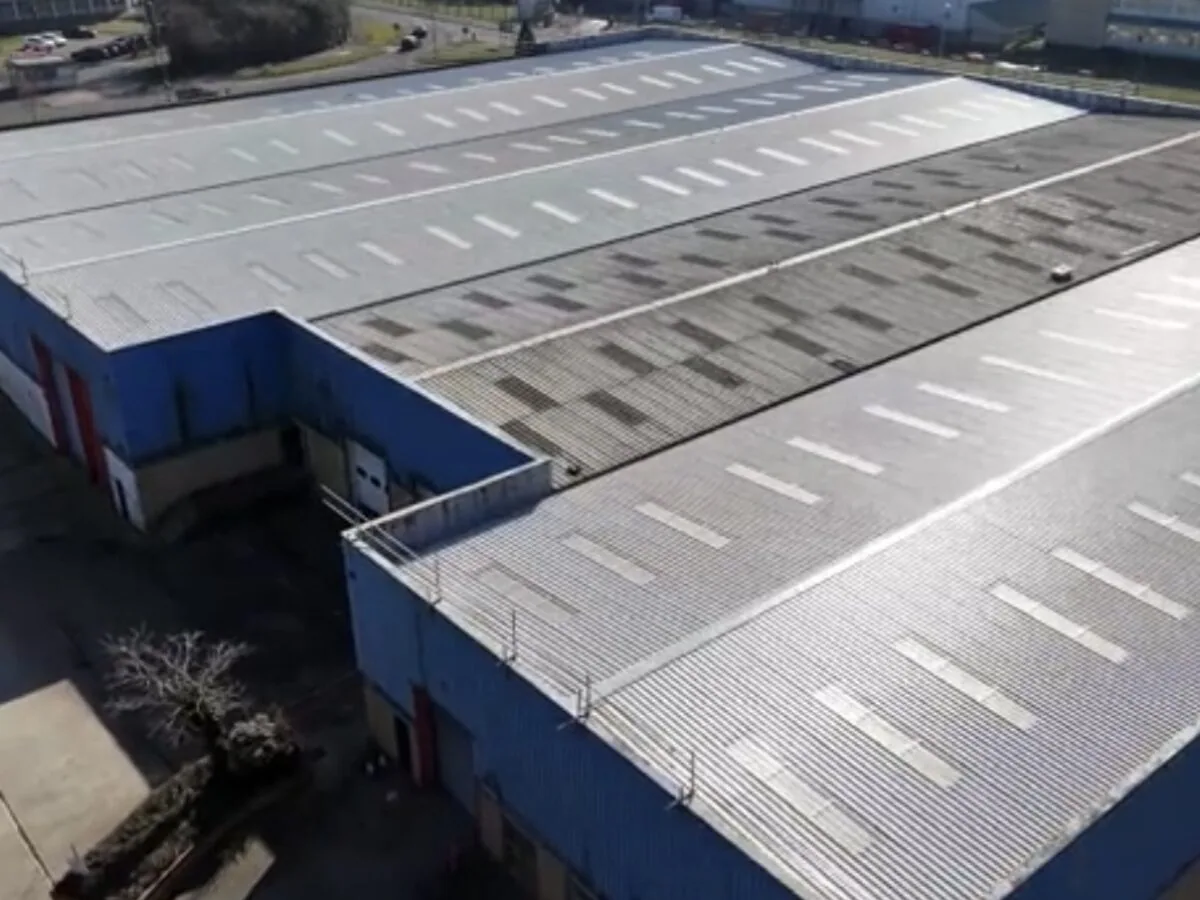
A leak-repair assessment can include interior observations, roof photographs, and a marked repair area. Drone imagery may support broad documentation, while hands-on testing confirms details that images cannot resolve. We note the assembly, prior repair materials, and whether adhesion or substrate limits the fix. If the source remains uncertain, the report names the next check instead of labeling the leak solved.
Match the repair to the roof assembly
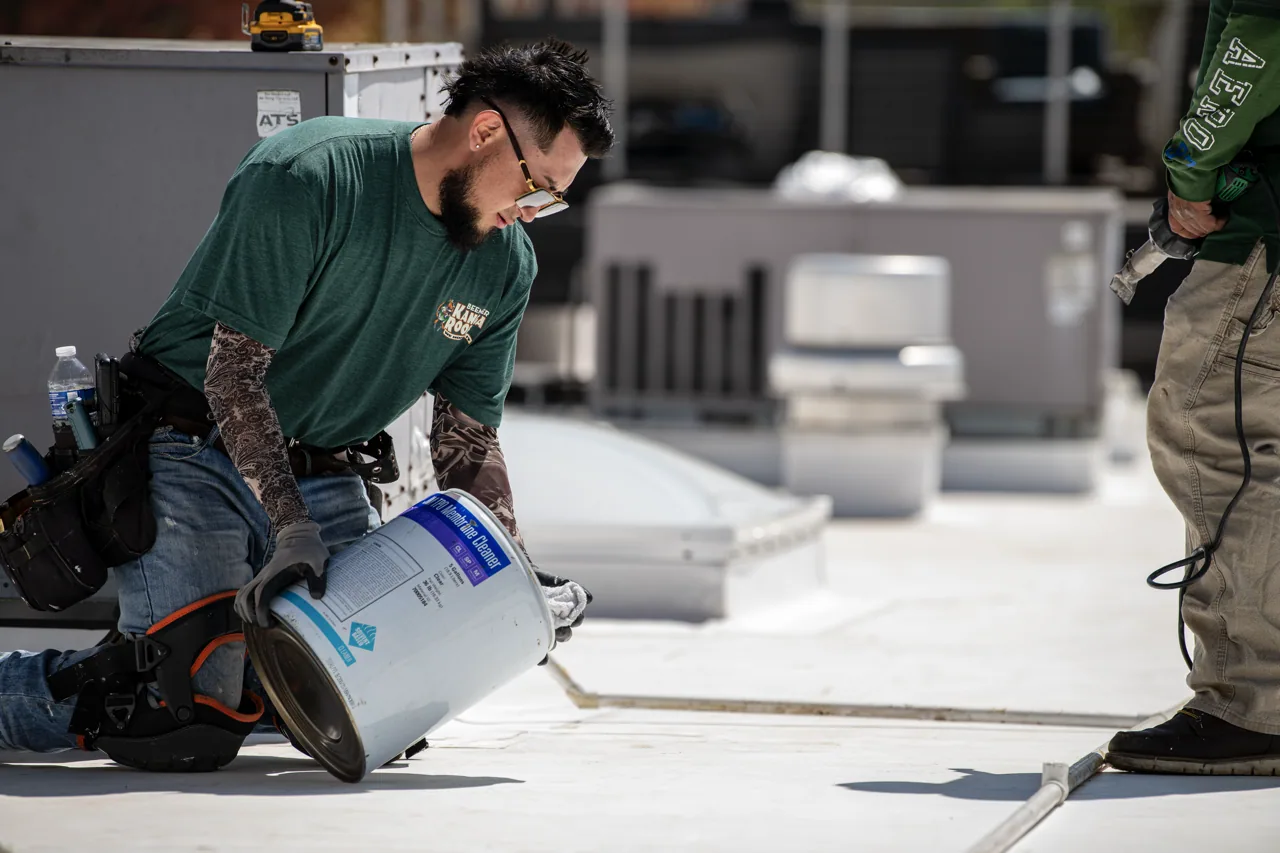
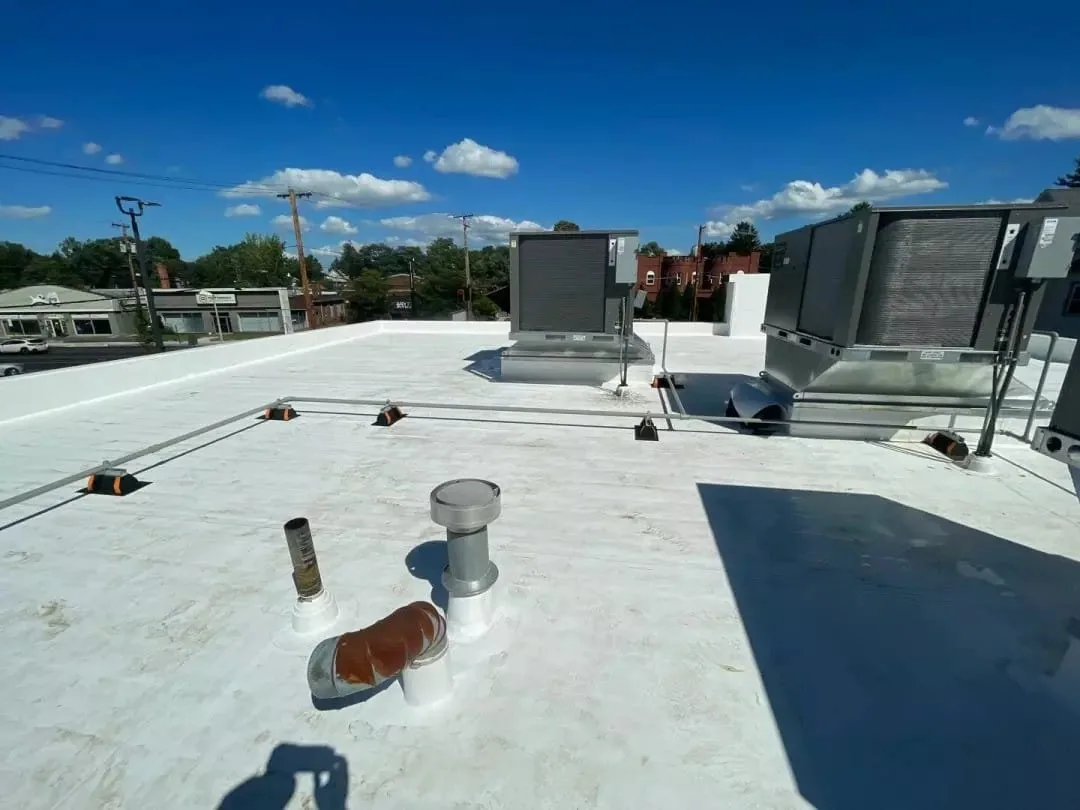
Repair materials must suit the membrane, coating, metal, or flashing. Dirt, moisture, oxidation, aged sealant, and loose material can prevent a patch from bonding as intended. We identify the system where possible, prepare the failed area for the repair method, and detail its transition to sound material. Edges, terminations, and drainage paths need review before the repair is closed.
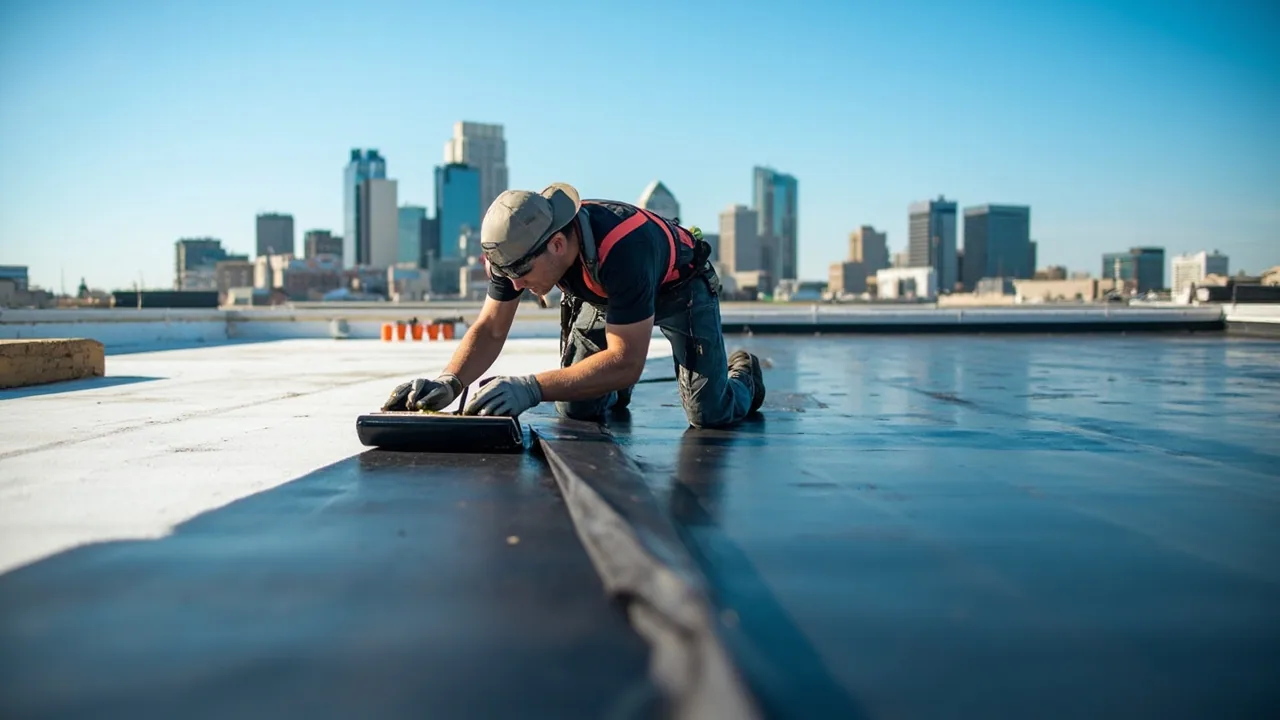
A flashing-failure review can determine whether movement or poor termination drives separation, while a membrane puncture repair may address a localized opening. An EPDM assembly requires different preparation than a thermoplastic membrane. We record material and method so the next technician can avoid incompatible products.
Track recurrence before expanding the scope
A repair that holds and one that returns are different budget signals. When a defect reappears, compare its location and appearance with prior photographs, materials, weather exposure, and nearby work. Recurrence may point to a larger seam, flashing, drainage, or substrate problem. We inspect adjacent areas and state whether evidence supports another repair, added testing, or a replacement discussion.
Keep that history in a photo-backed condition report and relate repair lines to a roof-area register. Preserve dates, locations, access limits, materials, and outcomes without treating an unverified cause as a conclusion. For buildings in Olathe and Lenexa, a shared format helps compare recurring issues while each diagnosis stays tied to its field observations.
More About Commercial Roof Repair in Olathe, KS
Fit repair work to the building schedule
Occupied properties need access coordination, interior protection, and a work window suited to operations. We confirm roof access, equipment clearances, loading activity, and who can approve a change if hidden conditions appear. For a leak, the owner also needs a path to report whether water returns. These steps connect Diligence Notes to operating impact and give the next visit a useful starting point.
When urgent stabilization is needed, emergency roof repair can provide temporary dry-in before the permanent scope. A maintenance visit can track open items and corrections. We state what is complete, what remains temporary, and who owns the next step, including when weather changes the schedule.
Close the work order with a usable baseline
At closeout, record the repaired area, material, preparation, photographs, and inspection limits. Note nearby defects, pending interior confirmation, and when to revisit. If the surrounding roof is near a replacement decision, keep repair scope distinct from capital planning and identify what evidence would change the recommendation. The owner can compare field condition with the reserve plan without treating one service call as a full assessment.
Repair visits reach Olathe, Lenexa and nearby municipalities when the property list calls for them. Shared dispatch helps coordinate access, while each repair stays specific to its building and assembly. A documented finding, approval path, and scheduled follow-up give the next inspection a practical starting point.
Commercial Roofing Questions
What information helps locate a leak before a roof visit?
Share when water appeared, where it was seen inside, whether it changed after rain or wind, and any nearby equipment or ceiling work. Photos can help, but they do not establish the roof opening by themselves. We compare the interior report with roof details and likely water paths, then mark what was inspected. If the source remains uncertain, the work order should state what follow-up is needed rather than recording a temporary patch as a confirmed permanent correction.
When should a repeat repair trigger a broader assessment?
Look at how often the condition returns, whether the location is spreading, and whether adjacent seams, flashing, or insulation show related defects. A repeated repair may still be appropriate when the failure remains isolated and the surrounding material is sound. If the cause is unclear or the scope keeps expanding, map the evidence and consider testing or a wider condition review. The owner can then compare the cost and risk of continued service calls with a defined capital alternative.
Can a repair be completed while a commercial building stays open?
Often the work can be planned around operations, but access, noise, staging, interior sensitivity, and weather determine the sequence. We coordinate roof entry and loading windows, protect affected areas, and identify a contact for field decisions. A temporary dry-in may be needed before the permanent correction. The closeout should state which work is complete and which item remains open so building staff know what to monitor after the crew leaves.
What should the repair report say if the source is not confirmed?
It should distinguish observed conditions from possible causes, include the areas inspected, and describe any limitation such as inaccessible equipment or concealed material. Record temporary work separately from the permanent repair and name the next test or observation that could resolve the question. This gives the owner a usable basis for approval and avoids turning a plausible explanation into a fact. If the leak returns, the next technician can continue from the documented evidence.
How can an owner compare repairs across Olathe and Lenexa properties?
Use the same fields for roof area, defect type, date, repair method, access limits, photographs, and return status, then keep each finding tied to its building. K-10 ties the two communities together on the map, yet their roof systems and conditions are their own. Consistent records make recurring lines easier to identify while preserving the separate diagnosis needed for each property and assembly.
Put the repair and follow-up in one record
Share the leak location, roof-area register, prior repair notes, available photos, and access contact. We can inspect the affected area, document what is confirmed, and separate temporary protection from the lasting correction.