
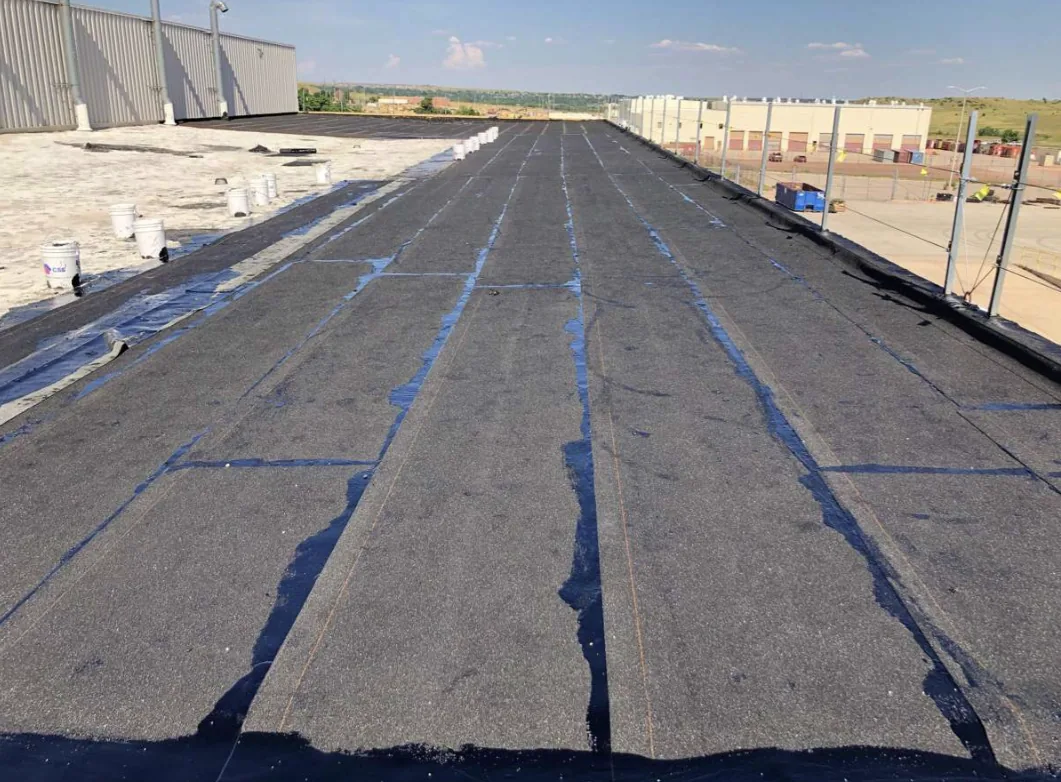
Modified Bitumen Roofing in Olathe, KS
Modified bitumen reaches its renewal discussion through the surface before the structure of the roof is at risk: the granules on the cap sheet thin out, laps open slightly, and the owner sees repair lines at the same drains and walls in successive years. In Olathe, KS the airport-station record shows about 110 days a year at or below freezing and 37.54 inches of precipitation, so a layered asphalt membrane meets freeze, thaw and rain every year. The question for a portfolio manager is whether the base plies remain sound enough to keep the roof in service, or whether the cap sheet is shielding a layer that has already taken water. We open the roof-area register, test the plies and answer that before the capital year is set.
Send the ply history, the leak log and the replacement window
Share prior reports, any coating records and the capital year under review. We will test the plies and laps and separate current repairs from renewal assumptions.
SBS, APP and how the plies are applied
Modified bitumen is asphalt blended with a polymer, reinforced with polyester or fiberglass and supplied in rolls. SBS-modified sheets are rubber-like and flexible, and are commonly applied with hot asphalt, cold adhesive or a self-adhering backing. APP-modified sheets are plastic-like and are commonly heat-welded with a torch. A typical assembly has a base sheet, a mid-ply and a granule-surfaced cap sheet, so there are several layers between the weather and the deck.
That layering is both its strength and its maintenance burden. A single scrape rarely exposes the deck, which gives redundancy. The laps, however, are where one sheet meets another, and each lap is a place for bitumen to flow, weather and open. Torch application also carries fire risk, so cold-applied or self-adhered methods are the usual options on occupied buildings, and the installation method belongs in the scope version from the start.
Surfacing is the next variable. Granules protect the asphalt from sunlight, and white or light-colored cap sheets reflect heat. Smooth-surfaced sheets are usually coated, and gravel-surfaced roofs add weight and a place for debris to collect against drains. The surface tells us how often a roof will need attention, so we record it for every section.
Freeze-thaw, hail and the May 2024 wind path
Asphalt membranes stiffen as temperatures drop. A 29.8°F January mean and daily highs near 39.4°F leave stiff laps and flashings working through the coldest part of the year, and a 78.8°F July mean with highs near 89.4°F softens the surface again. Thermal movement tests the laps, the base flashings and the metal edges where the membrane is fastened.
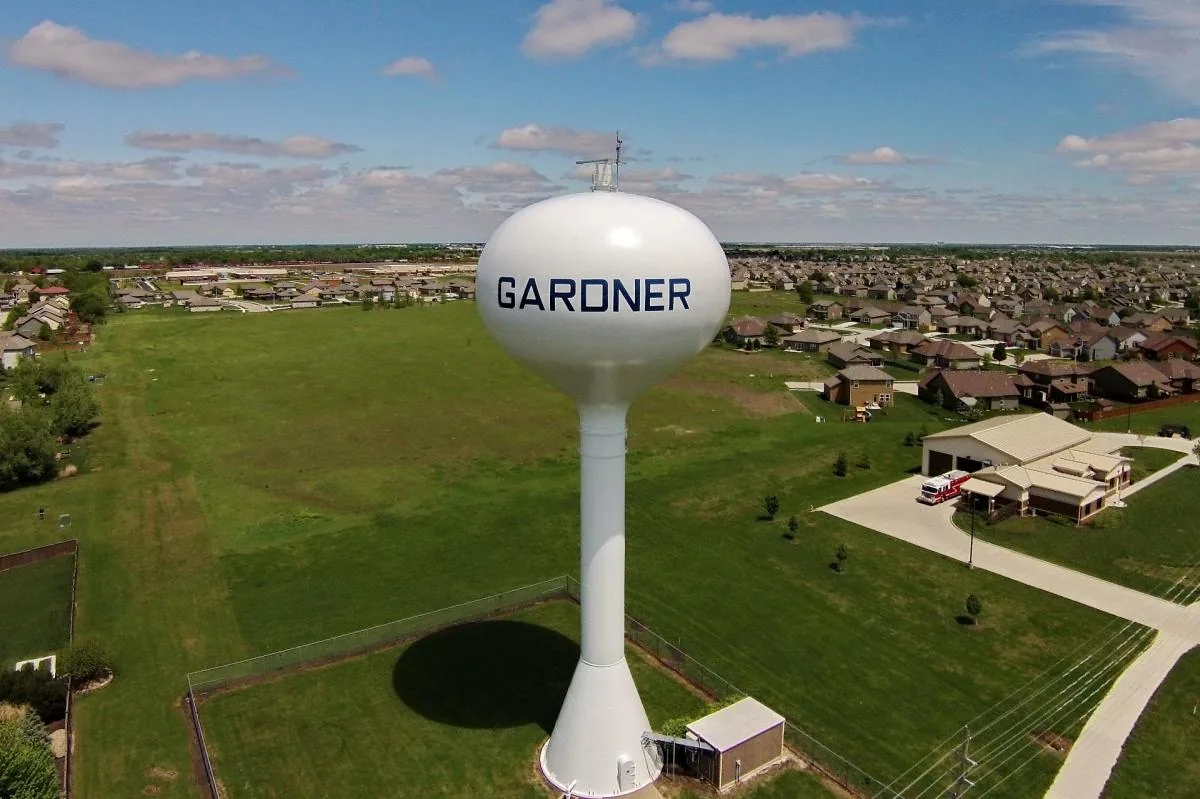
Hail comes with the region's severe thunderstorms. Granule-surfaced cap sheets can show hail strikes as displaced granules and bruised spots, and the exposed mat below is a leak path once the granule layer is gone. We inspect after a reported event and map affected areas, because only the roof itself shows whether it was hit. On May 19, 2024 straight-line winds damaged buildings in a swath from Gardner into Olathe, and surveyors put the peak near 80 mph. In that path we check perimeter laps, edge metal and flashing for lift before the next capital decision.

Granule loss, lap condition and moisture below the cap
The condition review of a modified bitumen roof starts at the surface. We look for exposed mat where granules have worn away, blisters that rise where trapped moisture or air has pushed up the sheet, splits at laps, and bitumen that has bled out at seams. Edge flashings and wall terminations are next, since they are the details that move the most.
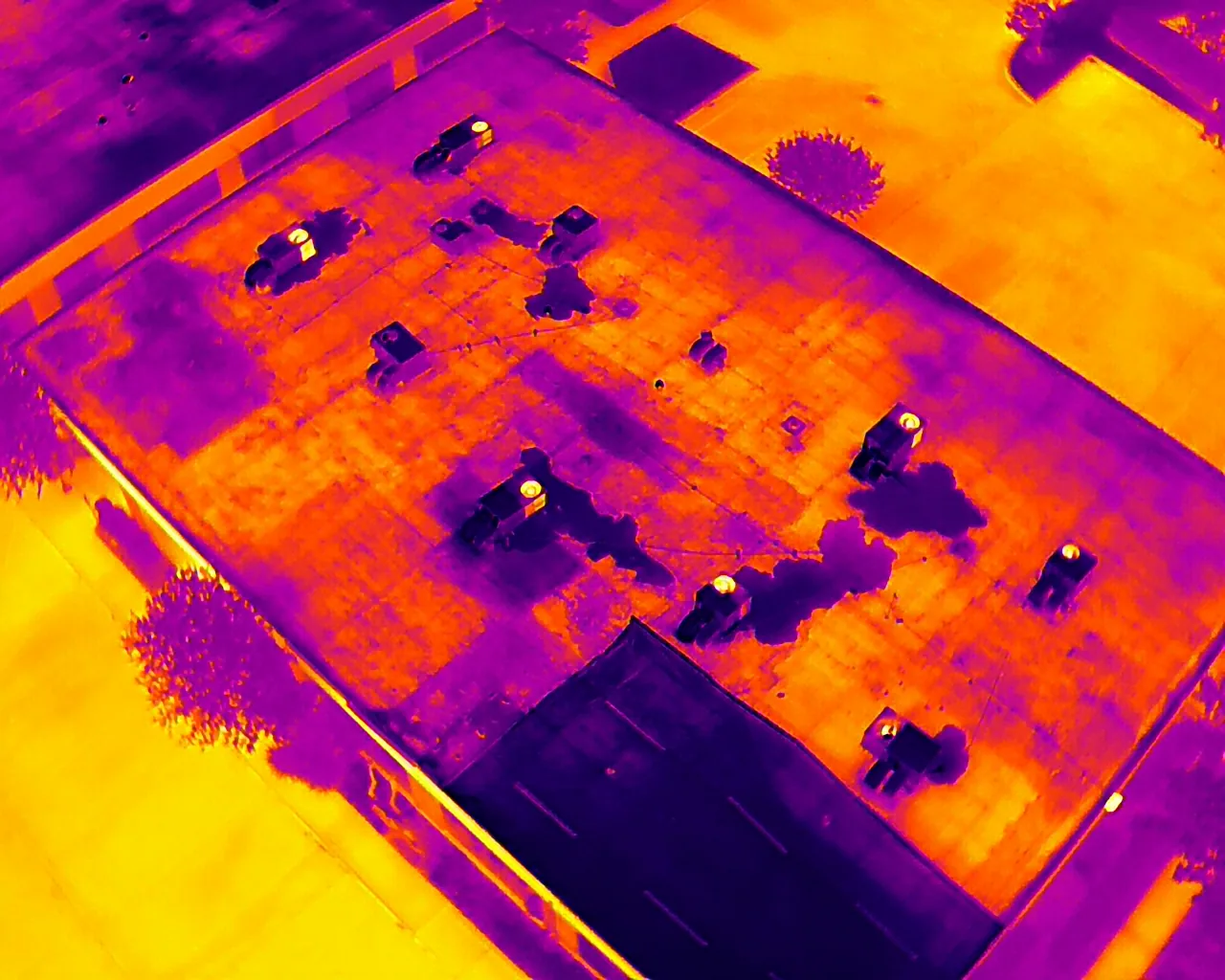
Where a roof appears sound but leaks continue, moisture sits in the insulation or between plies. An infrared moisture survey and a few cores settle the question. The record notes the number of plies, any prior coating, the presence of gravel or granule surfacing and each repair. Defect recurrence at one location often points to a drainage problem, which we address with the drainage scope, not with another patch. The outlet side of that correction is drain and scupper work: resetting sumps, adding crickets and clearing scuppers that sit above the roof surface.
Penetrations and flashings need as much attention as laps. A modified bitumen flashing is typically built up in two layers on a vertical surface, and the top termination at the wall is where sealant fails first. We re-seal terminations, replace cracked pitch pockets and check counterflashing, since all of them are repairs that can be done on a normal maintenance visit.
Coat, repair, recover or renew
A modified bitumen roof with sound plies and dry insulation can often be restored: seams resealed, flashings replaced and a coating applied to renew the surface. That path keeps cost below a tear-off and can extend the replacement window by several seasons, provided the substrate passes testing. Our roof coating restoration service starts with that testing.
If moisture has entered the plies, or if the roof already carries more than one layer of roofing, restoration loses its footing and replacement becomes the sensible choice. A new membrane can be another modified bitumen system, a single-ply such as TPO, or a built-up assembly, and the choice depends on traffic, exposure and the owner's hold period. The scope version states what remains, what is removed and what the new assembly must meet under the code in force.
More About Modified Bitumen Roofing in Olathe, KS
Application methods, odor and tenant schedules
Cold-applied adhesive and self-adhered sheets give off less heat and smoke, but they have their own temperature limits and need clean, dry substrates. Hot-applied systems need a kettle and a safety plan, and torch-applied systems need a fire watch after the last flame is out. Odor control, intake protection and a clear route for trucks are part of the plan whenever the building stays occupied.
The permit side follows the 2018 International code set that Olathe adopted as of September 1, 2019, with the edition and local amendments confirmed for each project. We write the insulation value, the fastening or adhesion method and the edge detail into the scope so the permit review and the bid match. For larger industrial settings, such as the southern Olathe developments the city's economic plan describes, truck routes, tenant schedules and laydown areas would set the pace of a tear-off.
Weather decides when each ply is laid. Moisture trapped between plies at installation leads to blisters months later, so crews keep the roof covered at day's end, stage rolls under cover and stop work when dew or rain threatens. We record temperature and conditions on application days, which gives the owner proof of workmanship at turnover and a baseline if a blister appears in the first year.
Hot-applied days are planned around wind, since a gusty afternoon moves smoke and heat toward neighboring buildings, whether the roof is in Olathe or Lenexa.
Commercial Roofing Questions
What makes a modified bitumen roof a coating candidate?
Dry insulation, sound plies and laps that can be resealed. Core samples and a moisture survey confirm it. A roof with wet plies cannot hold a coating, and the coating would only hide the problem.
Is torch application necessary?
No. Cold adhesive and self-adhered sheets are available and often chosen for occupied buildings. The owner and insurer decide which method is acceptable, and the scope states it.
How do blisters affect the replacement decision?
A few small blisters in a dry roof may be cut and repaired. Widespread blistering suggests trapped moisture or vapor pressure, and the plies beneath need testing before any repair is priced.
Does hail always mean a modified bitumen roof needs replacement?
No. We inspect after a reported event and record granule loss, bruising and fractures. Minor surface damage may be repaired, while exposed mat across a section calls for a larger fix.
How does the 2024 wind path factor into inspection frequency?
Roofs inside the Gardner-to-Olathe path receive a prompt edge, lap and flashing inspection. Roofs outside it continue on their normal interval.
Send the ply history, the leak log and the replacement window
Share prior reports, any coating records and the capital year under review. We will test the plies and laps and separate current repairs from renewal assumptions.
