
Hail Damage Roof Repair in Olathe, KS
Severe thunderstorm climatology for the Kansas City area includes hail, and the National Weather Service treats it as part of the regional picture. That is a reason to keep a hail inspection ready for any Olathe, KS roof. A hail decision starts with a date: a storm that reached the property, a report of stones on the ground, or damage someone has seen on cars, skylights or rooftop equipment. We inspect from that date, record what the roof shows, and give the owner a scope tied to observed damage, not to the regional label.
Send the storm date and the last inspection report
Share the property list, the roof-area register, the date of the storm you are concerned about, and any inspection photographs from earlier years. We will inspect for functional damage, document it for your insurer, and separate hail findings from older wear.
What hail does to different roof surfaces
Hail damage looks different on every material. On a single-ply membrane, impacts leave round marks, bruises where the insulation below has crushed, and occasionally a fracture or puncture. On a built-up or modified bitumen roof, hail can knock granules loose, expose the asphalt and crack the surface, and a gravel-surfaced roof may show displaced stone. Metal panels dent, and the question there is whether a dent is cosmetic or whether the coating, seam or fastener has been compromised.
Soft metals around the roof are the first clue. Dents in rooftop unit housings, vent caps, gutters and downspouts show the direction and size of the stones even before the membrane has been examined. Skylights and domes may crack. We photograph those indicators, then work onto the field of the roof, since the soft metals tell us where to look hardest and the membrane tells us what actually happened to the waterproofing.
Event dates, storm lines and which buildings to check
The National Weather Service documented the May 19, 2024 squall line for straight-line wind damage from Gardner into Olathe. That was a wind event, and a roof from that path belongs in a wind file, not a hail file, unless stones were also reported at the property. If a property in Olathe, Overland Park or Lenexa reports a storm that produced stones, the inspection should be dated to that storm and documented as such.
Hail damage that is not caught and recorded soon after the event becomes hard to prove. Weathering, foot traffic and later storms make old bruises indistinguishable from new ones, and an insurer deciding on a late claim will want evidence of timing. Our approach is a prompt walk, test cuts where needed, and photographs of each finding against a roof plan.
Testing for bruising, fractures and hidden moisture
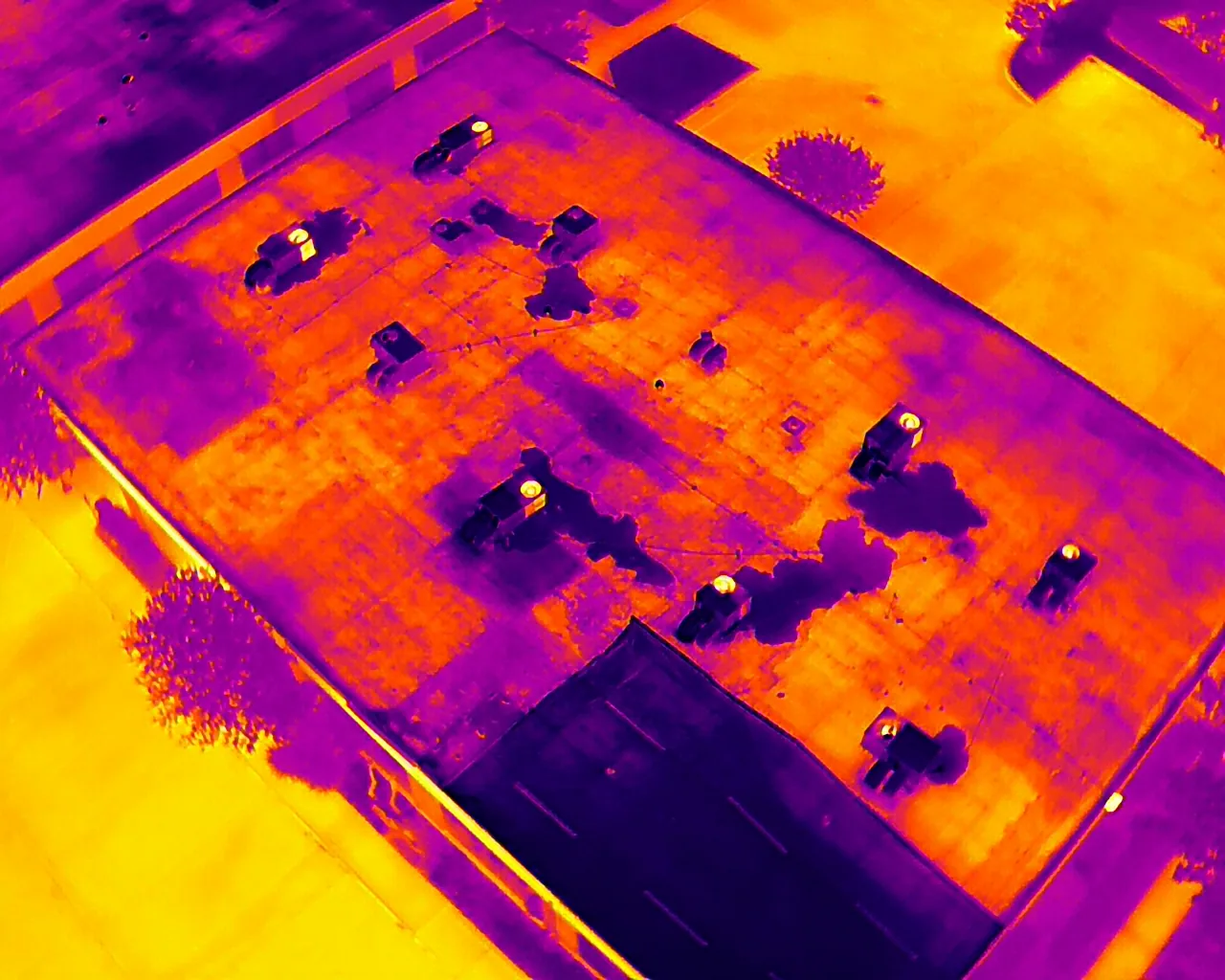
A bruise can be invisible from the surface. Where hail has struck a membrane over soft insulation, the sheet may look intact while the board below is crushed, which creates a depression that holds water and stresses the membrane over time. We probe suspect spots, take test cuts, and use infrared and moisture scanning to find wet insulation that a fractured membrane has let in.
The repair answer follows the extent. Isolated punctures and fractures can be patched, and cracked flashing or metal can be replaced, as long as the roof's remaining life justifies the investment. When hail has affected most of the surface, patching dozens of small areas costs more per square foot than a recover or replacement and leaves a roof full of splices. Whether the system is worth saving depends on its age and the insulation beneath it, which the testing shows. Temporary protection over fractured areas goes on first, with the permanent scope staged to the weather: membrane work in the milder weeks, and metal and flashing replacement whenever the order times allow. The schedule also needs tenant contacts and rooftop equipment shutdowns agreed before a crew opens the roof, since fractured membrane over an occupied space cannot be left open overnight.
Records that support a hail claim
A hail claim is only as strong as its records. We recommend the owner keep the last inspection report before the storm, photographs of the roof in earlier years if they exist, the roof plan and age of each section, and the date and source of the storm report. After the storm, the new inspection report should show test locations, the number of confirmed hits in sample areas, the date and the weather, and the opinion on whether the damage is functional or cosmetic.
Our claim documentation support assembles these and keeps them separate from maintenance items that were already open. Adjusters and owners both benefit when old wear, such as a long-standing seam or flashing problem, is recorded separately from new hail findings. The same tidy file helps when a puncture is a result of foot traffic and not of the storm.
More About Hail Damage Roof Repair in Olathe, KS
Placing hail findings in the replacement window
A roof that has taken hail damage and is within a few years of its planned replacement presents a decision: repair the functional damage and keep the original date, or pull replacement forward and let the claim fund part of it. That comparison depends on the roof's remaining life, the deductible, and the policy's valuation method. We provide the field data and cost drivers, while the owner and insurer settle coverage.
For a portfolio spread along K-10 and the Olathe industrial areas in the south of the city, where the city plan lists developments such as Lone Elm Commerce Center and 56 Commerce Center, it helps to rank roofs by exposure and age so inspections go to the highest-priority properties first. A capital plan that already holds each roof's age and condition makes that triage quick, and a nearby tornado damage review uses the same file when a storm brings both hazards.
If the owner has a choice of when to inspect, sooner is better, and a second look after the next heavy rain is worth scheduling. Rain finds fractures that a dry walk can miss, and a wet-weather visit often shows which punctures are actively admitting water. Both visits go into the same dated record.
Commercial Roofing Questions
How big does hail need to be to damage a commercial roof?
Stone size is only one factor, together with wind-driven angle, the age and flexibility of the membrane, and the softness of the insulation beneath. Older, brittle roofs can be damaged by smaller stones than a newer one. We assess the actual impacts, since reported stone size from the weather service is a guide to where to look, not a measure of damage.
Is cosmetic damage a reason to replace a roof?
Not by itself. Dents in metal that do not break the coating or open a seam may leave the roof functional, though some policies treat cosmetic damage differently. The owner should read the policy language, and we describe the damage as functional or cosmetic in plain terms so that decision is based on facts.
How long after a storm can hail damage be claimed?
Policies set their own time limits for reporting a loss, and those limits vary, so the policy and the insurer define the answer. The practical risk is evidence: the longer the delay, the harder it is to separate storm damage from weathering. An inspection soon after the event, with photographs, is the safest position.
Can hail damage be hidden under a coating?
A coating can mask surface marks but not crushed insulation or fractures beneath, which is why testing includes probes and moisture scans. If a coated roof has been hit, we look at the coating condition and adhesion, then check the substrate. The report should state what was and was not reached by the tests.
Should a roof be repaired before the insurer inspects it?
Emergency protection should not wait, because water entry makes the loss worse. Permanent repairs should wait until the damage has been documented and the insurer has had a chance to inspect, unless the policy says otherwise. We photograph and record everything before any material is removed.


Send the storm date and the last inspection report
Share the property list, the roof-area register, the date of the storm you are concerned about, and any inspection photographs from earlier years. We will inspect for functional damage, document it for your insurer, and separate hail findings from older wear.