
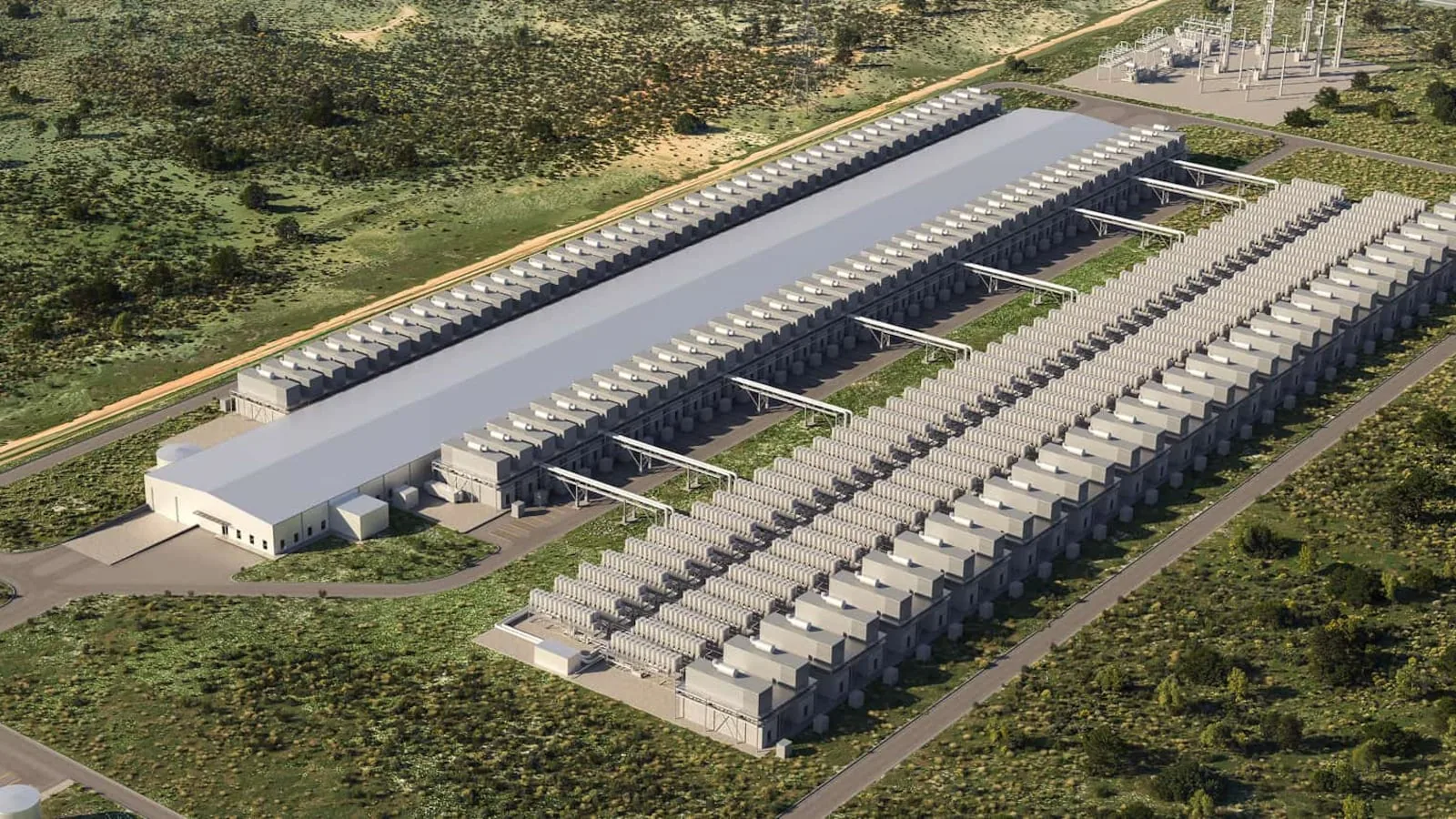
Data Center Roofing in Olathe, KS
A data center roof is judged by one outcome: no water above the white space. Every other roofing question, from membrane choice to drain count, serves that outcome. Capital planning works differently here than on a general commercial building, because the cost of a leak is not the repair but the exposure of equipment, and because the owner often cannot accept the risk of an open roof during certain weeks. We build the schedule around the facility's change windows first, then the weather, then the material.
The first product is a dated roof-area register that shows every rooftop mechanical unit, penetration and drain, with the condition of each. From it comes a plan for monitoring, repair and eventual renewal.
Provide the roof drawings and change calendar
Send the roof plan, equipment list, access procedure, change-window dates and prior reports. We will inspect the roof, document its field condition and return a written plan that separates immediate repairs from long-range capital assumptions.
Corridor setting and storm exposure
KDOT's profile of K-10 names high-tech and industrial uses beside office, commercial, education and residential ones along a 16.5-mile route that crosses De Soto, Lenexa and Olathe. For a data center owner the list sets the scene: neighbors in office, industrial and commercial use, and shared road access for crews and deliveries. The storm record matters for a facility that cannot tolerate a roof opening. The May 19, 2024 squall line left straight-line wind damage from Gardner into Olathe, surveyed at an estimated 80-mph peak, and several brief tornadoes touched down elsewhere in Johnson County. After an event like that, a data center owner wants a documented inspection of edge metal, equipment screens, membrane attachment and drain function, completed quickly and supported by photographs.
Equipment-heavy roofs and the drainage record
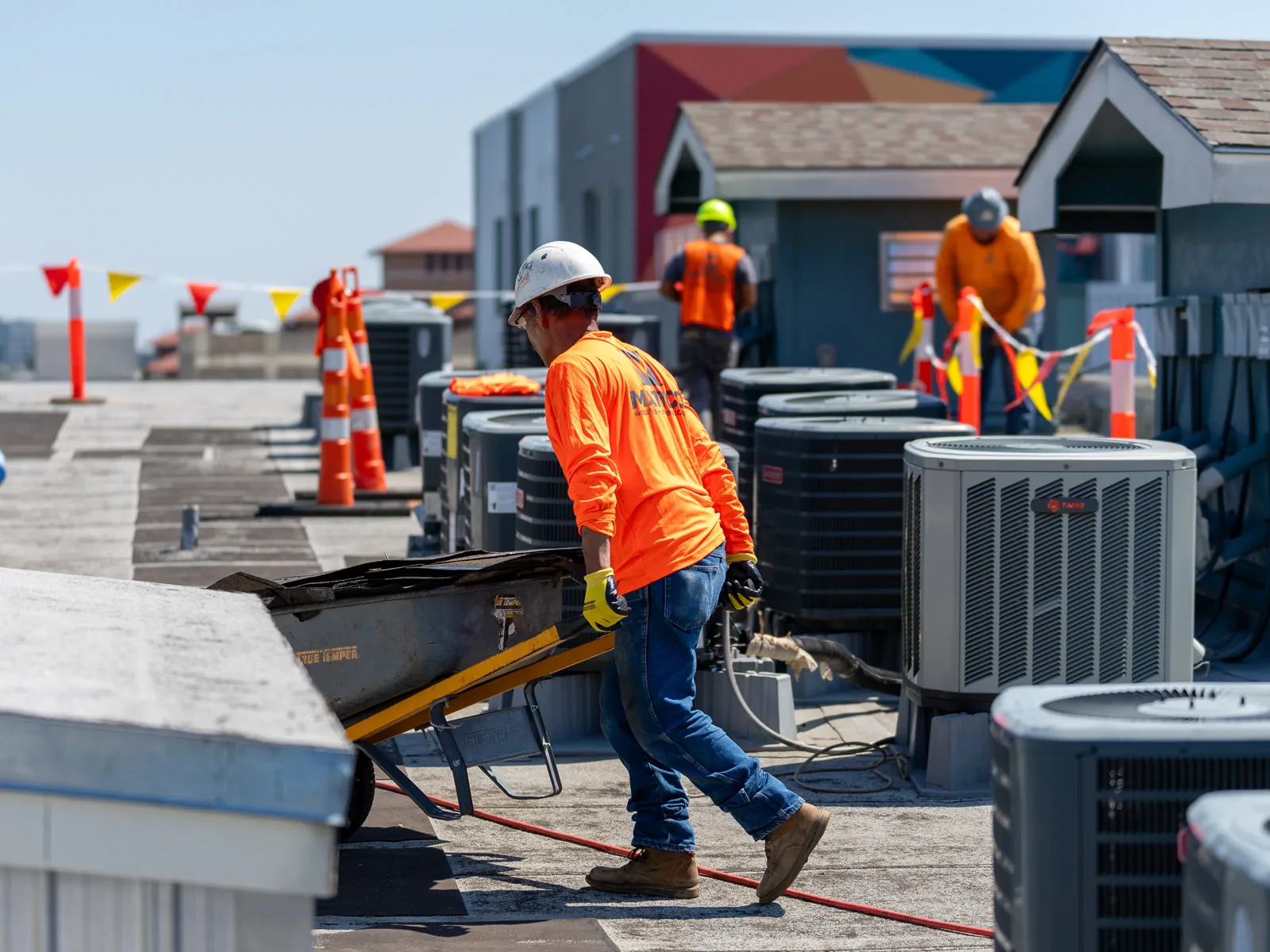
Data center roofs often carry chillers, cooling towers, generator exhaust, conduit runs and structural supports for solar or antennas. Each support is a penetration, and each penetration is a place where a roof can fail. We photograph every curb and support base, test sealants, and look at the membrane around each one for signs of abrasion from service traffic.
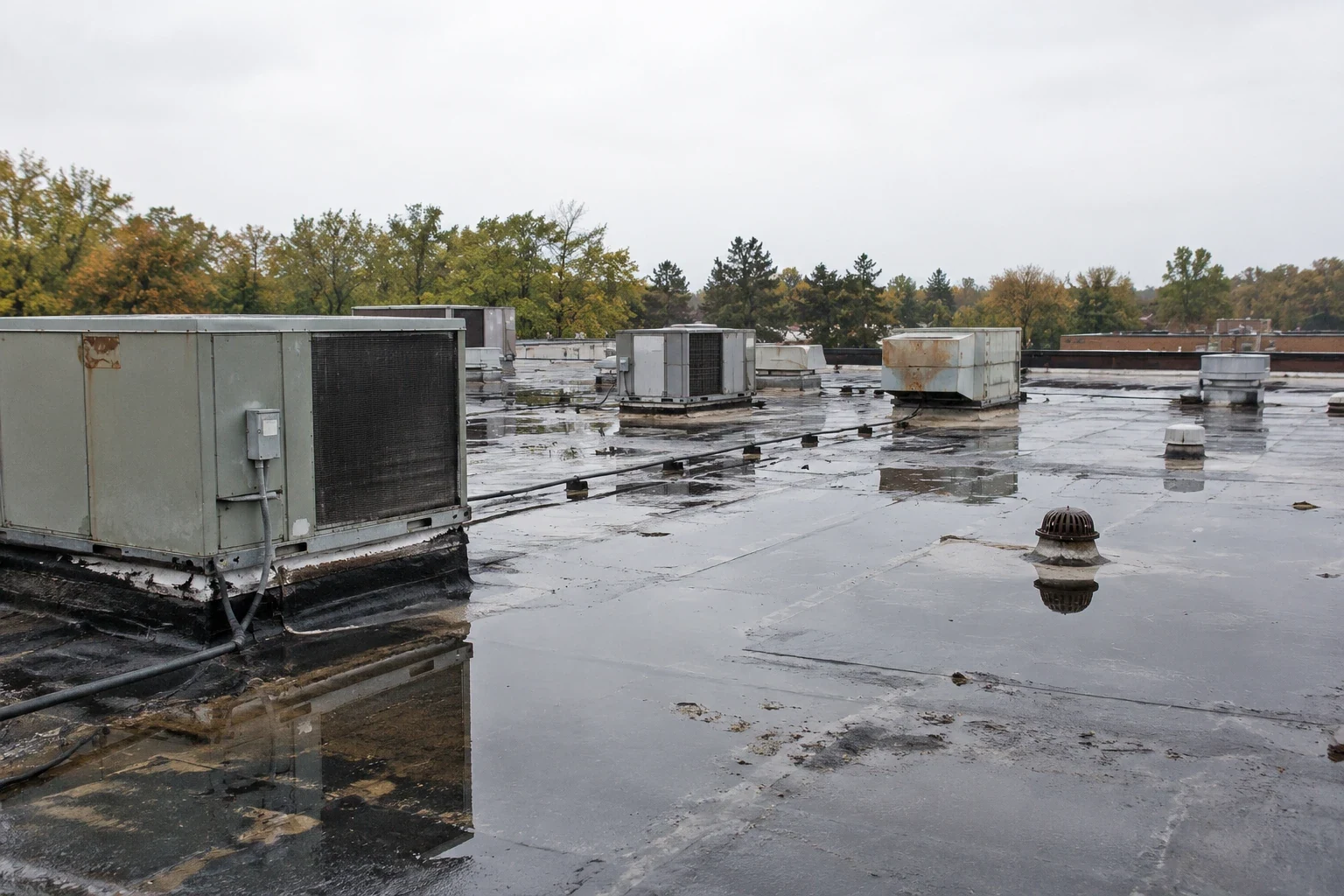
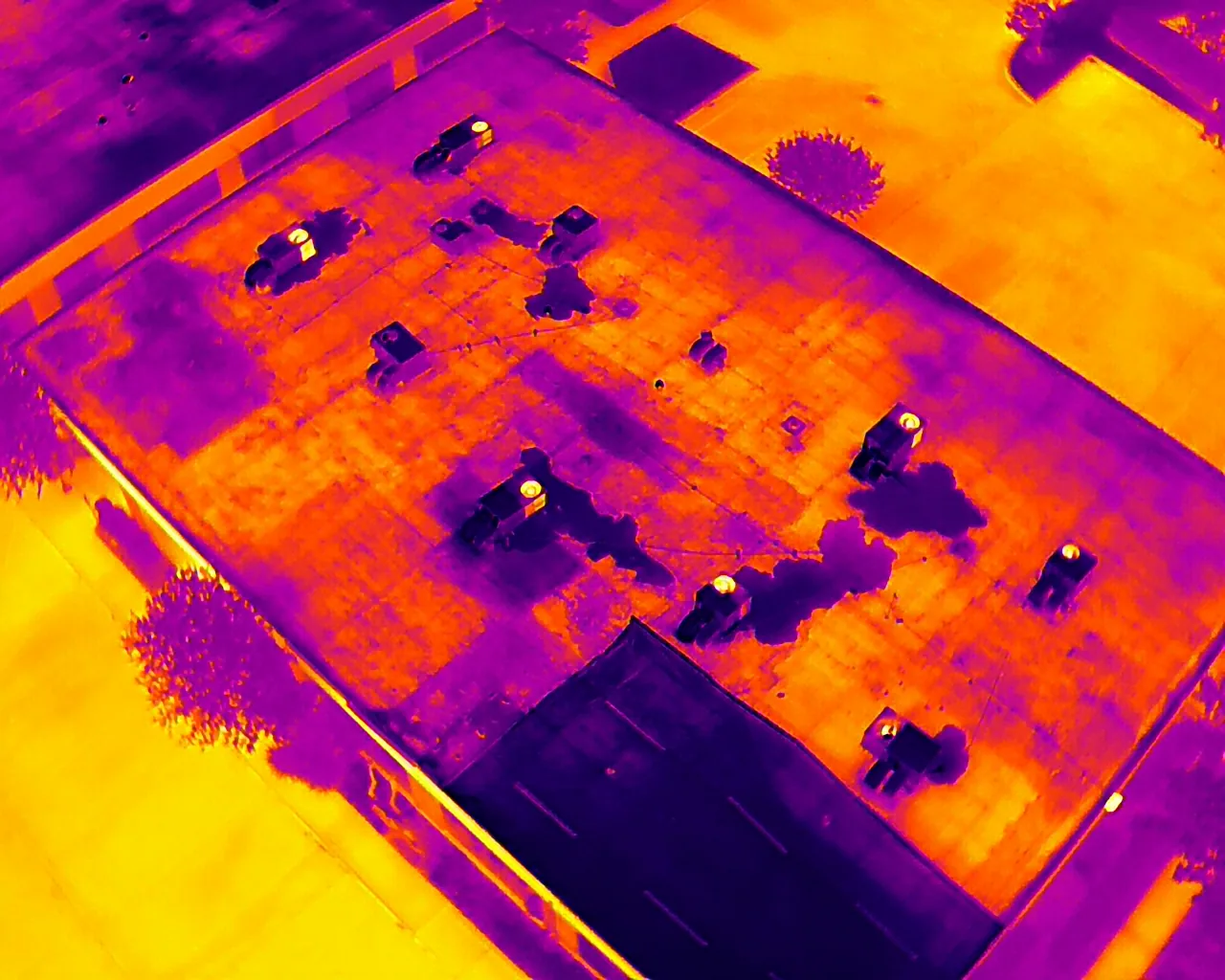
Drainage gets particular attention. A clogged drain or a blocked scuppers path can raise water levels and expose any weak seam. We clear and flow-test drains, check overflow outlets, and log depth and duration of ponding, which becomes part of the ponding water record. Where exposure justifies it, leak detection under the membrane can alert the owner to moisture before it reaches the deck. An infrared moisture survey establishes a baseline for later comparison.

What the owner needs to decide, and by when
A decision summary for a data center is brief. It states which parts of the roof are sound, which have a defect that could admit water, and what each repair would require in terms of access, hot work and rooftop equipment. It also states what happens if work is deferred, with a time limit. The owner can then match the summary to the facility's change calendar and approvals.
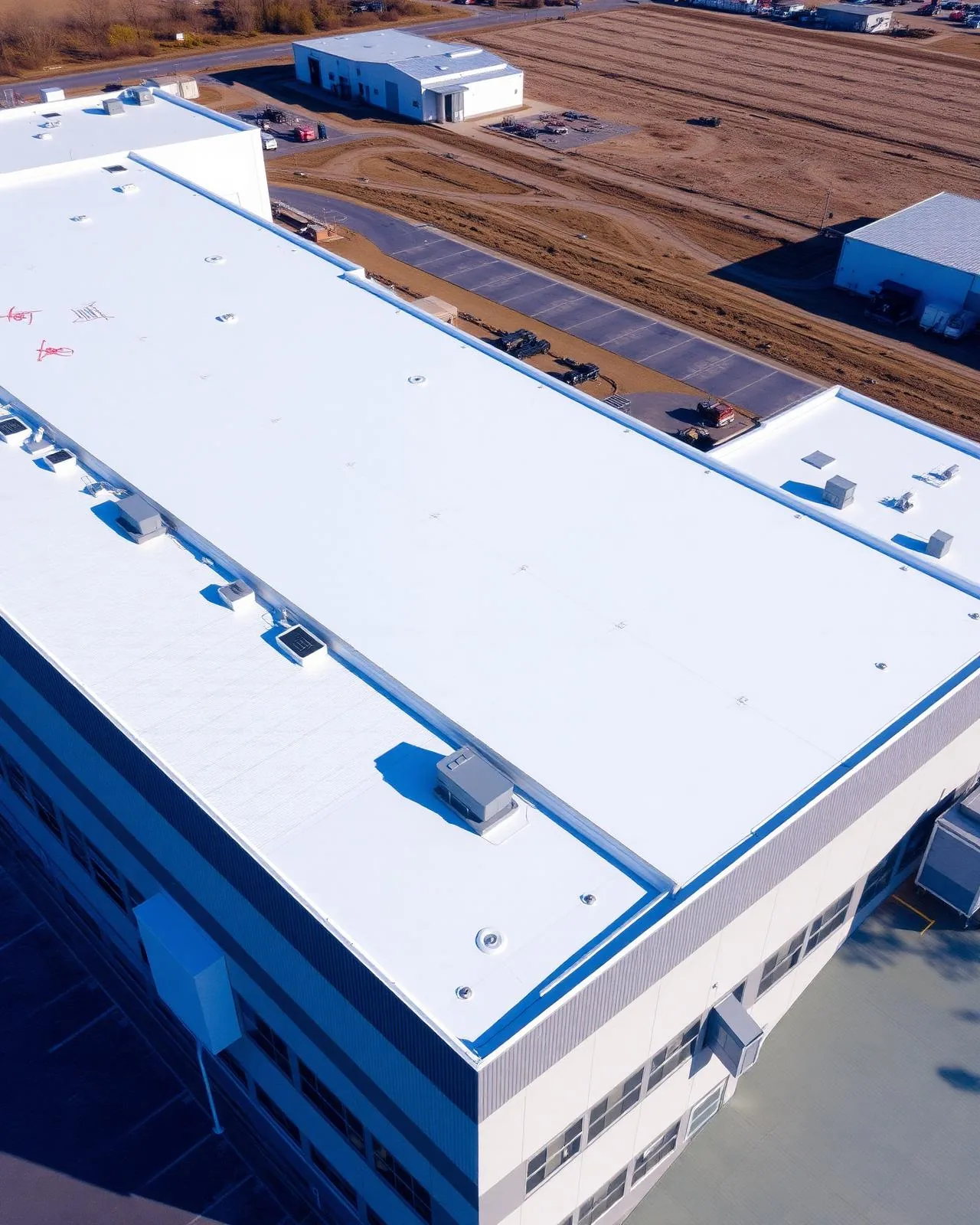
Replacement is a larger decision. A PVC or reinforced single-ply system with a cover board and tapered insulation is a typical choice for equipment-heavy roofs, since walking and service traffic punish thin membranes. The comparison at that stage covers lifespan, resistance to equipment wear and ease of repair when something new is added.
Reserve planning follows the same logic. A roof with a known defect and a deferred repair belongs in the near-term budget with a date, while a sound roof with no open items belongs in the long-range plan with an inspection interval. Keeping the two apart stops the capital year from drifting every time a small repair is approved.
Change windows, hot work and access control
Most data centers control access tightly. Roofing crews need escorts, badges, materials inspection and a check-in process, and the owner may restrict hot work such as torches or hot-air welding near critical systems. Heat-welded membrane seams use hot air, so approvals for that equipment are requested early. Cold-applied adhesives and mechanically attached assemblies are alternatives when open flame is prohibited.
The scope version lists each of these conditions along with the weeks when work cannot occur. A repair that can be done in one day is sequenced for the next permitted window, and temporary protection is staged in advance. For an occupied building of this type, we also plan for dry-in capacity at the end of each shift.
More About Data Center Roofing in Olathe, KS
Fitting a data center into a larger property plan
Owners often hold a data center alongside an office building or a flex industrial property, and the roofs age on different schedules. We separate them in the roof-area register so the data center receives a shorter inspection interval and a tighter reserve assumption. Preventive visits to clear drains and check seams reduce the chance of a surprise, and a preventive maintenance program can be set up to match.
Owners with facilities in De Soto or elsewhere along the corridor can use one report format across all of them.
Records that make the first assessment efficient
Helpful items include roof drawings with equipment locations, the facility's change-window calendar, any leak detection reports, recent storm inspection records and the access procedure for contractors. If the facility follows a standard for roof work, such as a hot-work policy, we read it before bidding. Records of earlier repairs show whether defects are recurring at the same location.
Weather shapes the plan too. Because the normals show 109.6 days at or below freezing, cold-weather limits on adhesives and sealants affect which weeks are realistic for repair. Where a facility has a long approval chain, we send the proposed scope early, so permits, escorts and material checks are lined up before the weather window opens, not after it.
Commercial Roofing Questions
How can a data center reduce the risk of a roof leak reaching equipment?
Keep drains clear, inspect seams and penetrations on a schedule, and fix small defects before they grow. Leak detection beneath the membrane and a documented response plan add a second layer. We build the inspection interval around the facility's risk tolerance.
Is it safe to replace a roof over a live data center?
It can be done with care. Work proceeds in small sections that are made watertight the same day, with temporary protection staged ahead of the weather. The owner's approvals and change windows set the pace, and the scope version records each constraint.
What happens when rooftop equipment needs to be added later?
Each new support or penetration is a potential leak point. We detail new curbs and flashings to match the existing roof system and record them in the register. A walk pad is added where service traffic would otherwise wear the membrane.
Should a data center roof be inspected after a severe storm?
Yes, promptly. Wind of the kind surveyed on May 19, 2024 can lift edge metal or loosen equipment screens, and a short inspection after the weather clears documents condition and catches small damage early.
Are hot-work restrictions a problem for membrane installation?
They narrow the options but do not block the work. Mechanically attached and adhesive-bonded systems avoid open flame, and heat-welded seams use equipment that many sites approve with a fire watch. We raise this early so approvals are in hand before the crew arrives.
What does a baseline survey give a facility that has no known leaks?
It gives a dated reference for every later comparison. The infrared scan and hands-on review record the dry condition of the insulation, the state of each seam and the flow of each drain. If a leak appears later, the baseline shows what changed, which shortens the search and supports a targeted repair.
Provide the roof drawings and change calendar
Send the roof plan, equipment list, access procedure, change-window dates and prior reports. We will inspect the roof, document its field condition and return a written plan that separates immediate repairs from long-range capital assumptions.
