

Roofing for Logistics and 3PL Operators in Olathe, KS
Peak season sets the roofing calendar for a logistics operator, because the weeks when a leak is most expensive are the same weeks when no one can spare the dock doors for a contractor. Census QuickFacts reports 2022 transportation-and-warehousing receipts of $547.337 million in Olathe, KS, and the city's economic-development plan places large industrial developments in the south, among them FedEx, Lineage Logistics and the Lone Elm and 56 Commerce Center parks. Third-party logistics operators typically hold customer inventory under contract, so a roof-area register that records each building's assembly, drain history, leak count and the zones where product is racked gives the operations lead a way to schedule roof work in the quiet weeks and defend the plan to customers.
Send the building list and the peak calendar
Share the roof-area register, rack layout, prior reports, decision dates and access contacts. Our reply is an assessment that lists current repairs apart from capital planning assumptions.
Weather over racking and dock doors
Olathe collects 37.54 inches of precipitation a year, with 109.6 freezing-low days and monthly means between 29.8°F and 78.8°F. Large distribution roofs collect a great deal of water, and a drain that clogs or a seam that opens during a heavy rain puts that water on inventory within minutes.
Hail belongs to the severe thunderstorm record for the Kansas City area, and buildings in the corridor surveyed after the May 19, 2024 squall line, along the Gardner-to-Olathe track, peaking around 80 mph, have a dated reason for a post-storm roof walk. Operators along K-10, K-7 and I-35 should record the date of every post-storm walk and what was found, so the file shows when each roof was last confirmed sound.
Dock canopies, drains and long runs of membrane
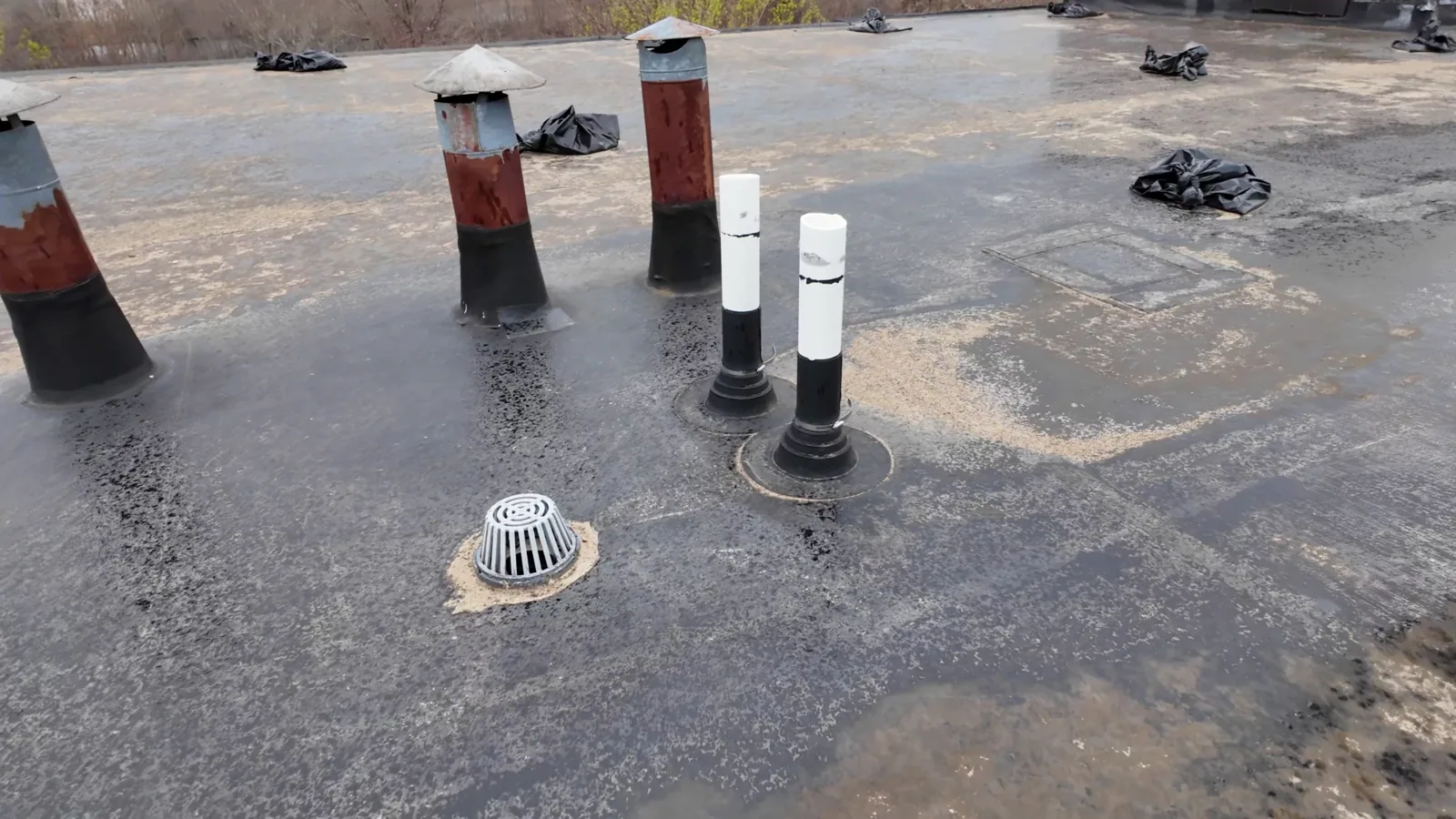
The details that fail first on a distribution roof are rarely in the middle of the field. They are at the dock canopy tie-ins, at the parapet base, at the drains and scuppers, and around the rooftop units and skylights. We walk the building by zone, record each detail and photograph the ones that show wear, because those details predict the next leak. Skylights and roof hatches on older buildings get attention as well, since frames dry out and fasteners loosen, and a hatch left unsecured can open in a storm.
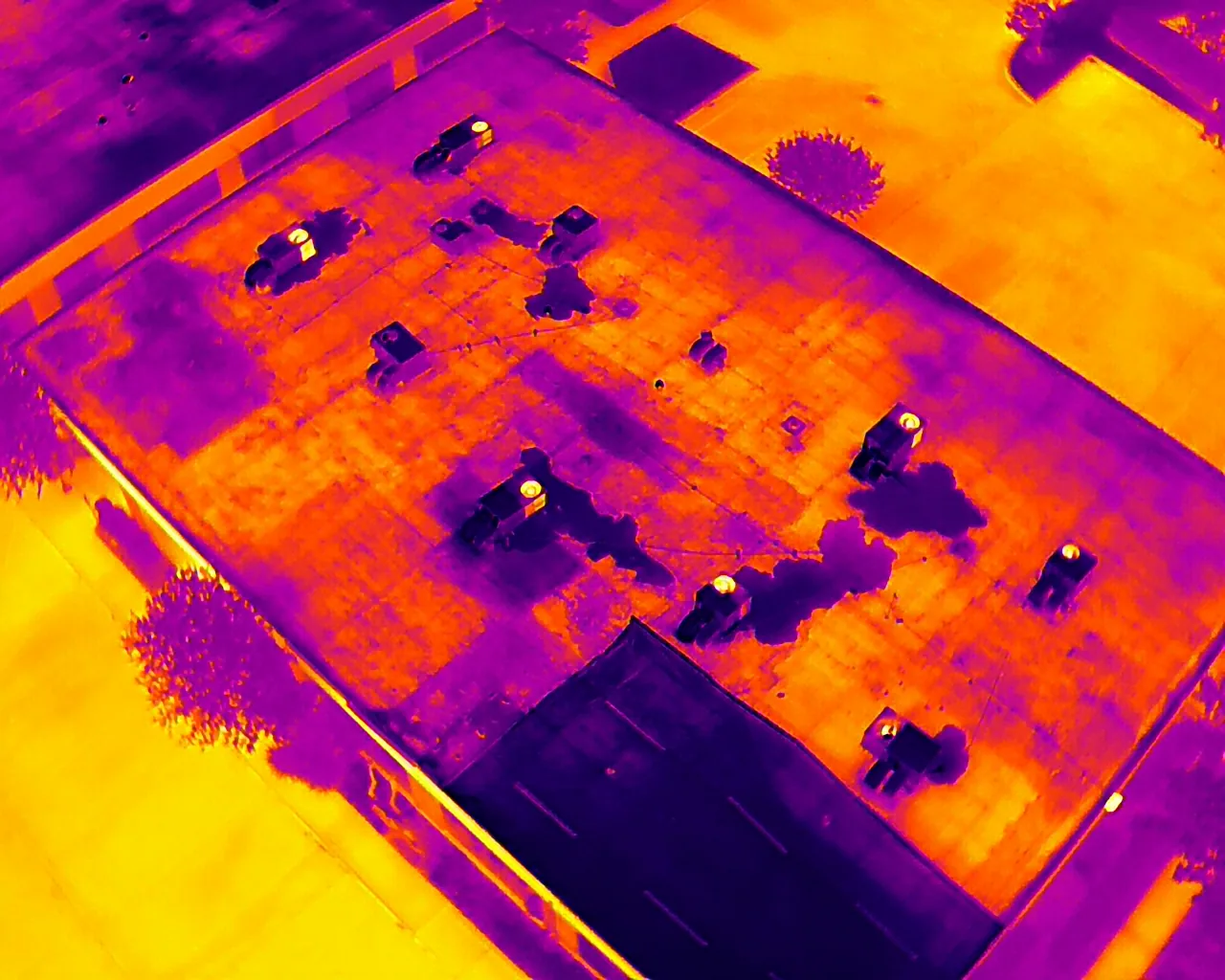
Where a building has a history of patching, an infrared moisture survey shows where insulation has absorbed water, which in turn shows how much of the roof can be repaired and how much has to be replaced. Drain function is tested after rain or with water, since a drain that holds a foot of water at the edge of a sump is a ponding problem waiting to happen. Roof drains and scuppers get their own line in every register.

Where product sits under a failing roof
A roof area over cold-sensitive or high-value product ranks above a roof area over empty racking or office space, even if the second roof is older. The register therefore records what lies below each zone. When a leak occurs, the operations lead can see immediately which customer's inventory is at risk and which racking bays should be moved.
We also note where fire protection piping, sprinkler lines and electrical conduit run close to the roof deck, because a leak there creates a different kind of problem. That information sets inspection frequency and the order in which findings are repaired, and it explains the ranking to customers who ask why a particular roof was prioritized. Third-party operators often have to report roof events to the customer under contract terms, so the file also keeps the date and time of each leak call, the zone affected and the temporary measure taken, in a form that can be forwarded without rewriting.
When repair spending becomes a replacement case
Operators carry a repair budget and a capital line. Recurring repairs at the same drains, repeated leaks over the same bays and wet insulation across a section show that the roof has reached the point where repair spending is delaying a decision instead of avoiding one.
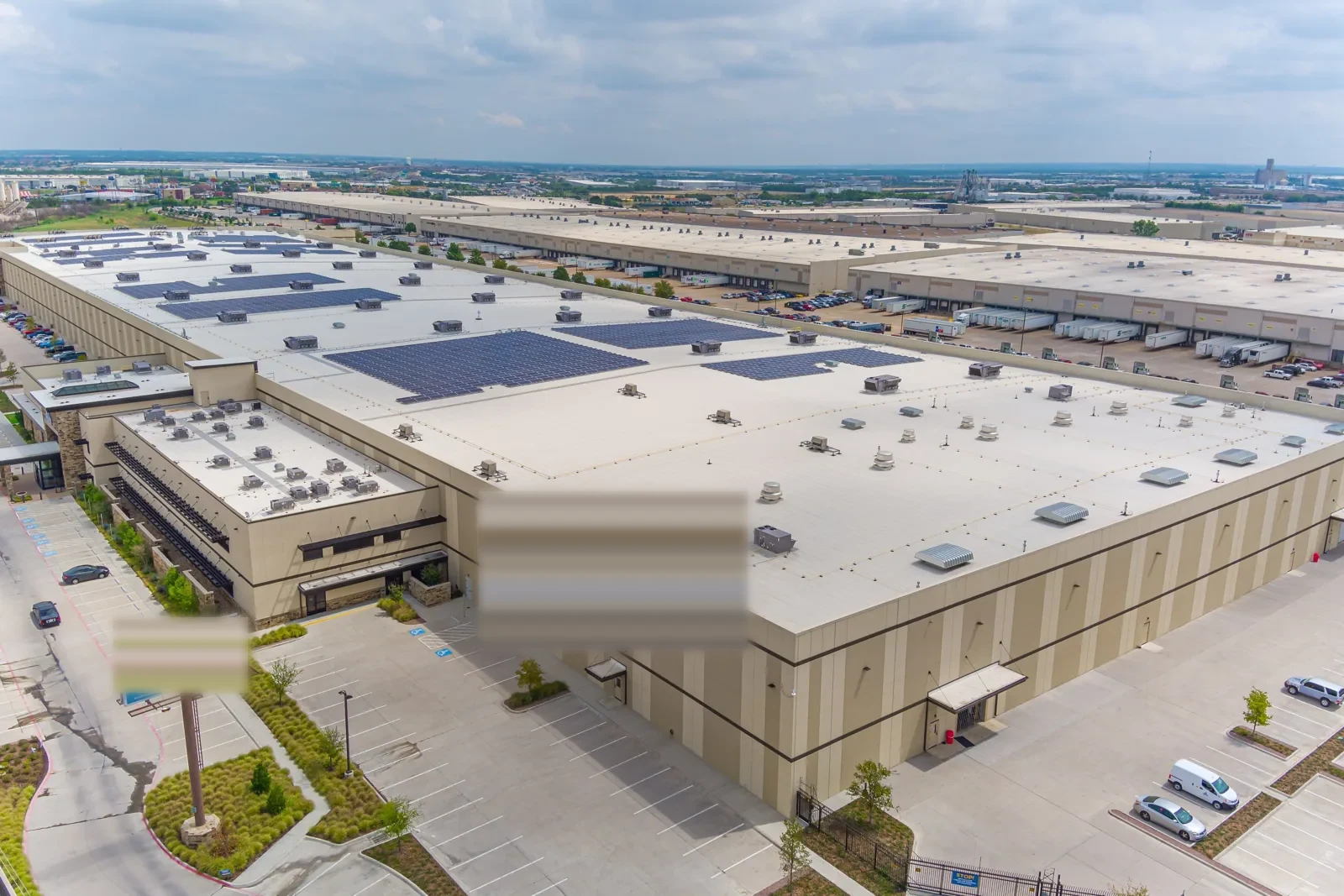
For large low-slope roofs, TPO roofing is a common replacement choice because of its welded seams and its availability in large sheets, while coatings and recovers may fit roofs whose insulation is dry. Cost drivers include roof area, the number of penetrations and skylights, drainage changes, insulation thickness and access past trucks and trailers. Roof loads from added rooftop units, solar mounts or conveyor supports are checked against the drawings before the scope is final, so new weight does not land on a section that was not designed to carry it. The code basis for a replacement is the 2018 International code set for buildings, existing buildings and energy that Olathe moved to in September 2019, with the city confirming the edition before the scope is final.
More About Roofing for Logistics and 3PL Operators in Olathe, KS
Working around trailers and peak weeks
A roof crew on a distribution building has to work around trailers, forklifts and inbound schedules. Staging is placed away from dock aprons and fire lanes, lift paths are agreed in advance, and noisy work is scheduled when it will not interfere with the yard. The roof is worked in sections so no area is left open when the weather turns.
Timing matters even more than usual. We try to avoid the weeks when volume peaks and plan the heaviest tear-off for the slower months, using the register to show which sections can safely wait. A seam that opens the night before a major shipment gets an answer at any hour, holidays included. A temporary repair is placed to hold until the permanent fix can be scheduled, and the register records exactly where it was applied so the next crew can find it without searching the roof.
A register that covers every building
Operators with buildings in more than one city, say Olathe and Lenexa (where QuickFacts reports 2022 transportation-and-warehousing receipts of $547.337 million and $841.925 million respectively), can keep one register for all of them. Each building has a line with its assembly, repair count and next decision date. Leased buildings add a column for who is responsible for the roof. The sequence then follows consequence: buildings with active leaks over customer inventory first, buildings with recurring drain problems second, and roofs that test dry and stable last, with an inspection interval attached to each. The same file supports lease negotiations, because a landlord and a tenant can look at the same dated photographs when they decide who pays for a repair.
A cross-dock building and a distribution center differ in dock count and drainage, and a multi-site roof program keeps their records consistent. The same register also works for manufacturers and real estate investors who hold industrial space in Olathe and beyond.
Commercial Roofing Questions
What decides which dock zone gets repaired first?
What sits below it. A zone over temperature-sensitive or high-value product comes before a zone over empty space, and a roof with an active leak comes before one that is merely worn.
Can a distribution roof be replaced without halting operations?
Usually, if the work is sectioned, trailers and dock aprons are left clear, and inventory below an open section is moved or covered. The sections over the most sensitive product are scheduled in the slowest weeks.
Why do drains deserve their own line in a roof file?
Because standing water drives seam failures, adds weight and hides leaks. Drain condition and test results tell the operator whether a section is draining as designed.
How does the 2024 wind event matter for a building near K-10 or I-35?
The wind survey followed a path from Gardner into Olathe, with the peak estimated at 80 mph. A building in that path gets a dated look at edge metal and equipment, and the others stay on their usual interval.
Send the building list and the peak calendar
Share the roof-area register, rack layout, prior reports, decision dates and access contacts. Our reply is an assessment that lists current repairs apart from capital planning assumptions.
