Ponding Water Roof Repair in Olathe, KS
Olathe receives 37.54 inches of precipitation in an average year by the NOAA 1991-2020 normals, and every inch of it has to leave a flat roof by some path the building was designed to provide. Where water lingers for days after a storm instead, the owner has a drainage record worth reading: a low spot, a clogged outlet, a deck that has deflected, or insulation that has compressed under foot traffic. We measure the standing water on the roof, trace it to the cause, and tell you whether the right answer is a drainage correction, a localized repair, or a place in the next capital year.
Send the leak history and the rain-day photographs
Share the property list, the roof-area register, drain locations if you have them, and photographs of standing water after recent storms. We will measure the ponded areas, trace each to its cause, and give you a drainage scope separate from your capital planning assumptions.
Why standing water matters in a freeze-thaw climate
The same normals count 109.6 freezing-low days in a year, and a puddle that sits on a membrane through those nights is going through repeated expansion and contraction at the seams and flashing around it. Ice also shifts debris into outlets, so a roof that drains well in July can hold water in January when a scupper is half blocked with frozen leaf litter.
Some membranes tolerate a measure of standing water better than others. The practical test is duration: water still present two days after the last rain, in the same place on each visit, is a drainage condition worth fixing, whatever the weather was last week. A property schedule that crosses the K-7 and I-35/Santa Fe corridor areas the city plans for needs a water record for each roof, since neighboring buildings can drain very differently, and the same applies to a schedule that stretches along K-10 through Lenexa and De Soto.
How we find the cause of a ponded area
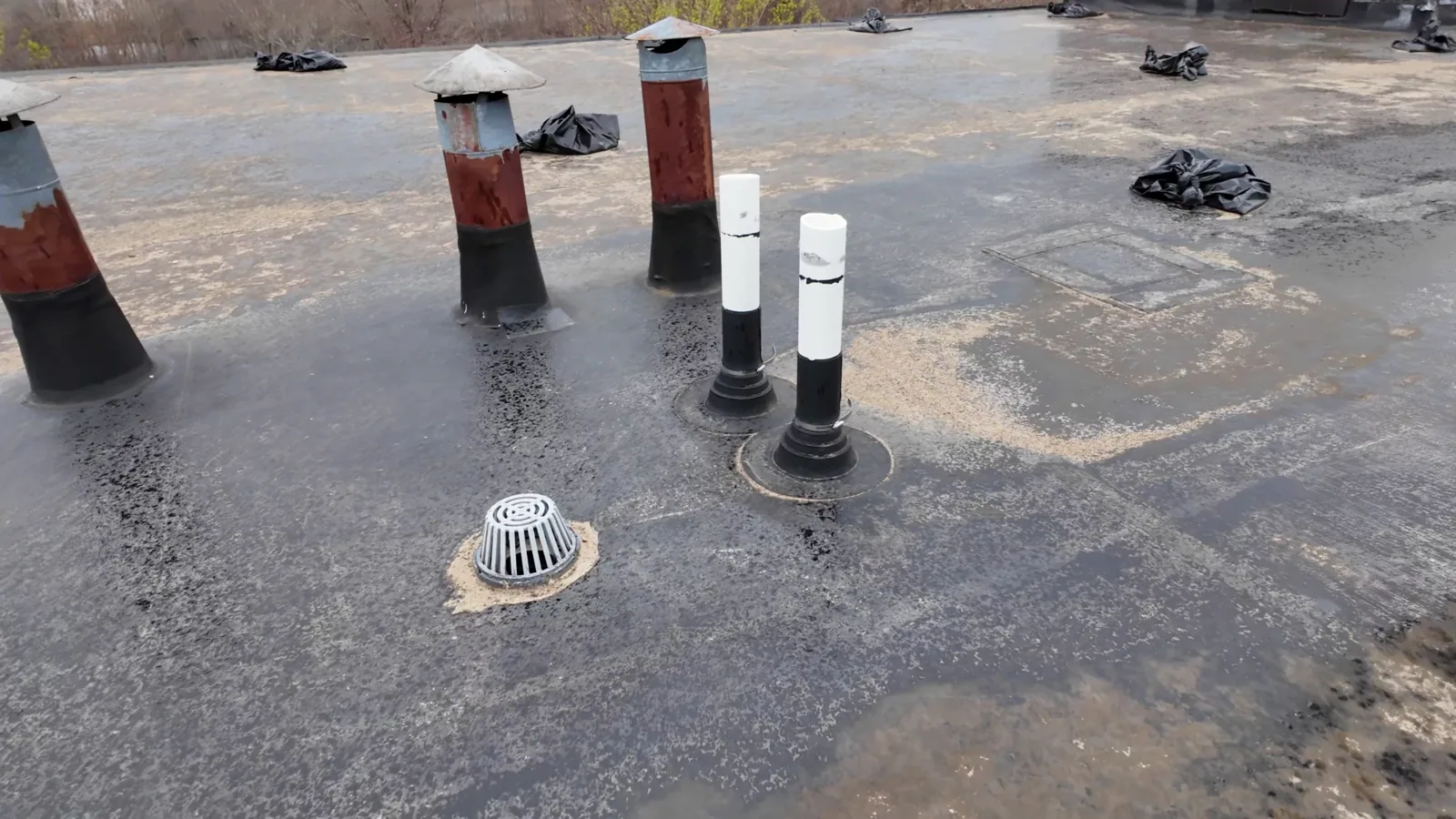
We start by looking at where the water sits relative to the drains. A pond that surrounds an outlet usually points to a clogged or undersized drain, a dropped sump or a membrane that has pulled away from the drain bowl. A pond in the middle of a bay, away from any outlet, suggests deck deflection between supports or crushed insulation below the membrane. A pond along a wall can come from a blocked scupper, a failed wall flashing that traps runoff, a raised cant strip or a parapet that holds water back.
After the rain, we mark the extent of the water and photograph it with a reference for scale. When the question affects a replacement decision, a level survey or slope measurement shows how far the surface sits below the drain elevation. We also look at the membrane inside the pond: algae growth, dirt rings, blistering, softened seam edges and loosened sealant tell us how long the condition has existed and whether the roof has already been damaged by it.
Drainage correction, tapered insulation or replacement
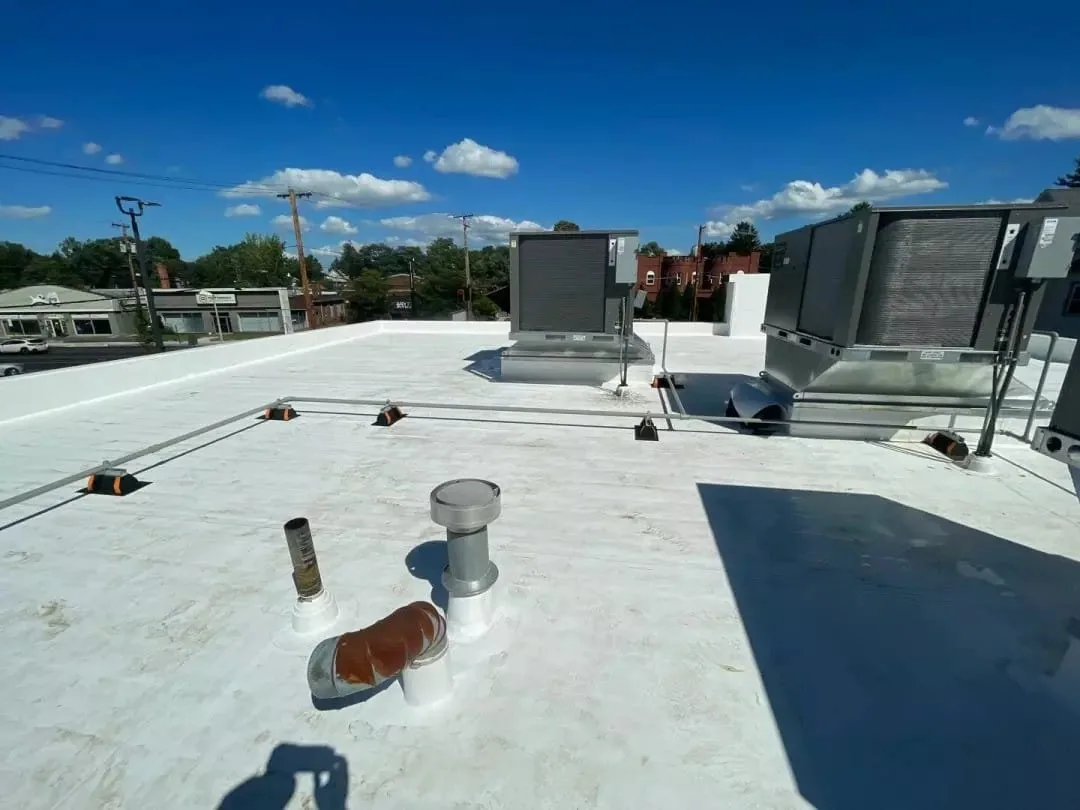
If the cause is a blocked or poorly sited drain, the correction is usually cleaning, a new drain body or a re-detailed membrane connection, and the roof drains as intended afterward. A shallow, local depression can sometimes be filled with tapered insulation and a new membrane section, which turns a flat area into one that slopes to an outlet. Where deck deflection is widespread, patching the surface does not remove the pond, and the owner is better served by a drainage plan built into the next reroof.
Adding a drain is a legitimate option on some buildings, but it requires plumbing coordination and structural review, so it moves the project from a maintenance line to a design scope. Routine corrections fall to our drain and scupper work, and the insulation and cover board assembly decides what the new surface can tolerate. When a membrane has already deteriorated in the pond, replacement may be the right scope for that area, with the rest of the roof left to its own schedule.
Timing the correction around weather and tenants
Drain cleaning and minor sump work can happen almost any time of year. Tapered insulation and new membrane need dry conditions and temperatures that suit the adhesive or welding method, so the work window in Olathe leans toward the months with fewer freeze days. We plan the sequence so the roof is not left open ahead of forecast rain, and we stage materials where they do not block loading areas or tenant parking.
Where a ponded area sits over an occupied space, we check the interior for stained ceiling tiles or damp insulation that could signal moisture below the membrane. A moisture survey across the ponded zone shows whether the water has gotten in, which decides whether the repair stays at the surface or extends into the insulation and deck.
More About Ponding Water Roof Repair in Olathe, KS
Ponding in the roof-area register
Standing water is one of the easiest conditions to track across a portfolio, because the same area can be photographed after a similar rain at each visit. A register that records where water sits, how deep, and how long it remains turns a recurring complaint into a trend the capital plan can use. If the pond is growing, the deck is moving, and the replacement window should be pulled forward. If the pond is stable and the membrane is sound, a drain correction may be all the roof needs for several more years.
In the industrial developments of southern Olathe, where the city's economic-development plan names Lone Elm Commerce Center and 56 Commerce Center, each roof is walked before anything is assumed about its drainage. A roof asset management file keeps the observations together, and a property list across Olathe and its neighbors can be tracked in one place.
Commercial Roofing Questions
How long can water sit on a flat roof before it is a problem?
Water that is gone within a day or two of rain is generally normal for a low-slope roof. Water that remains for several days, returns to the same spot after each storm or leaves algae and dirt rings is a drainage condition. The duration, the depth and the age of the membrane together set how urgent the correction is, and we record all three at the visit.
Does ponding void a manufacturer warranty?
Some manufacturers limit coverage where water is allowed to stand beyond a stated depth or time, and the terms differ by system and by document. Read the specific warranty before assuming either way. We document ponded areas with photographs and measurements so you can compare the roof's condition against the exact language in your file.
Can tapered insulation fix a ponding area without replacing the roof?
For a shallow, local depression with a sound membrane around it, yes, tapered insulation under a new membrane section can restore slope toward a drain. For widespread low areas caused by deck movement, the correction would have to cover so much of the roof that a full reroof design is more sensible. A level survey shows which case you have.
What should be checked before adding a new drain?
The structure beneath, the available piping route, and whether the existing drains are performing at all. Many ponds trace back to clogged or poorly detailed outlets, and a new drain on a roof with unmaintained old ones will simply repeat the pattern. A plumber and, where required, an engineer should confirm the connection before work begins.
Will ponding cause leaks even if the membrane looks intact?
It can, through seam edges and flashing laps that sit under water for long periods. Intact in the middle of a sheet does not mean tight at its perimeter. We probe seams at the edges of ponds and check adjacent details, because a slow leak at a lap may be the first sign that water has found a path to the insulation.
Send the leak history and the rain-day photographs
Share the property list, the roof-area register, drain locations if you have them, and photographs of standing water after recent storms. We will measure the ponded areas, trace each to its cause, and give you a drainage scope separate from your capital planning assumptions.