Roof Condition Reports in Olathe, KS
A lender, a buyer, an insurer and a facilities director will each ask for the same thing in different words: show me what the roof looks like and what it will cost. Our written reports for Olathe, KS properties answer in the order that decision-makers read them. A one-page summary comes first, with the rating for each roof area and the action recommended. Behind it sit photographs placed on a roof plan, moisture findings where scans were done, the repair and drainage record, and the interval we propose before the next visit. Because the report is dated and photographed from fixed positions, the next one can be laid beside it and the change read directly.
Send the property list and the decision it supports
Share the property list, the roof-area register, the date you need the report by, the available plans and prior reports, and an access contact. We will return a dated, photographed assessment that separates current repairs from capital planning assumptions.
The first page: ratings, actions and dates
The summary lists each roof area with its system type, a condition rating from a fixed scale, the action we recommend, and the date by which we suggest that action be taken. The actions are plain: monitor, repair now, repair and re-inspect, plan replacement, or replace. Next to each we state the main evidence, whether that is open seams, wet insulation, ponding or surface loss.
The summary is built so a property manager can forward it to an owner without editing. A second block lists the repairs that are already open, in order of urgency, with a price range for each, and a third lists assumptions and limits, such as areas that could not be reached or conditions hidden by snow, ballast or equipment. Where a finding depends on a later test, the summary says which test and when. Each recommended action also carries a trigger: the observation that would move it up a level, such as a second leak at the same detail, a ponded area that no longer drains between storms, or a moisture reading that spreads at the next visit.
What the field work covers and what the photographs show
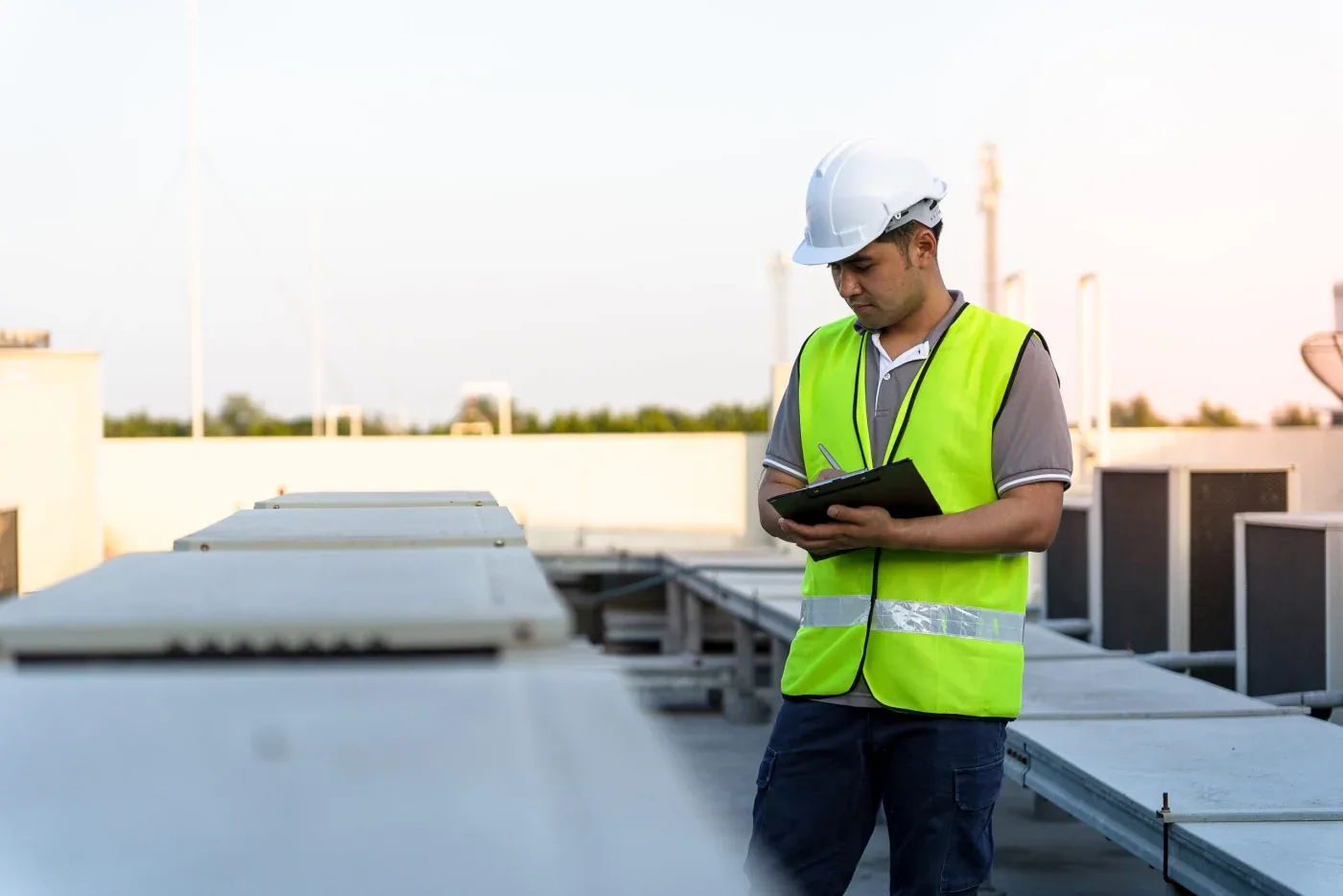
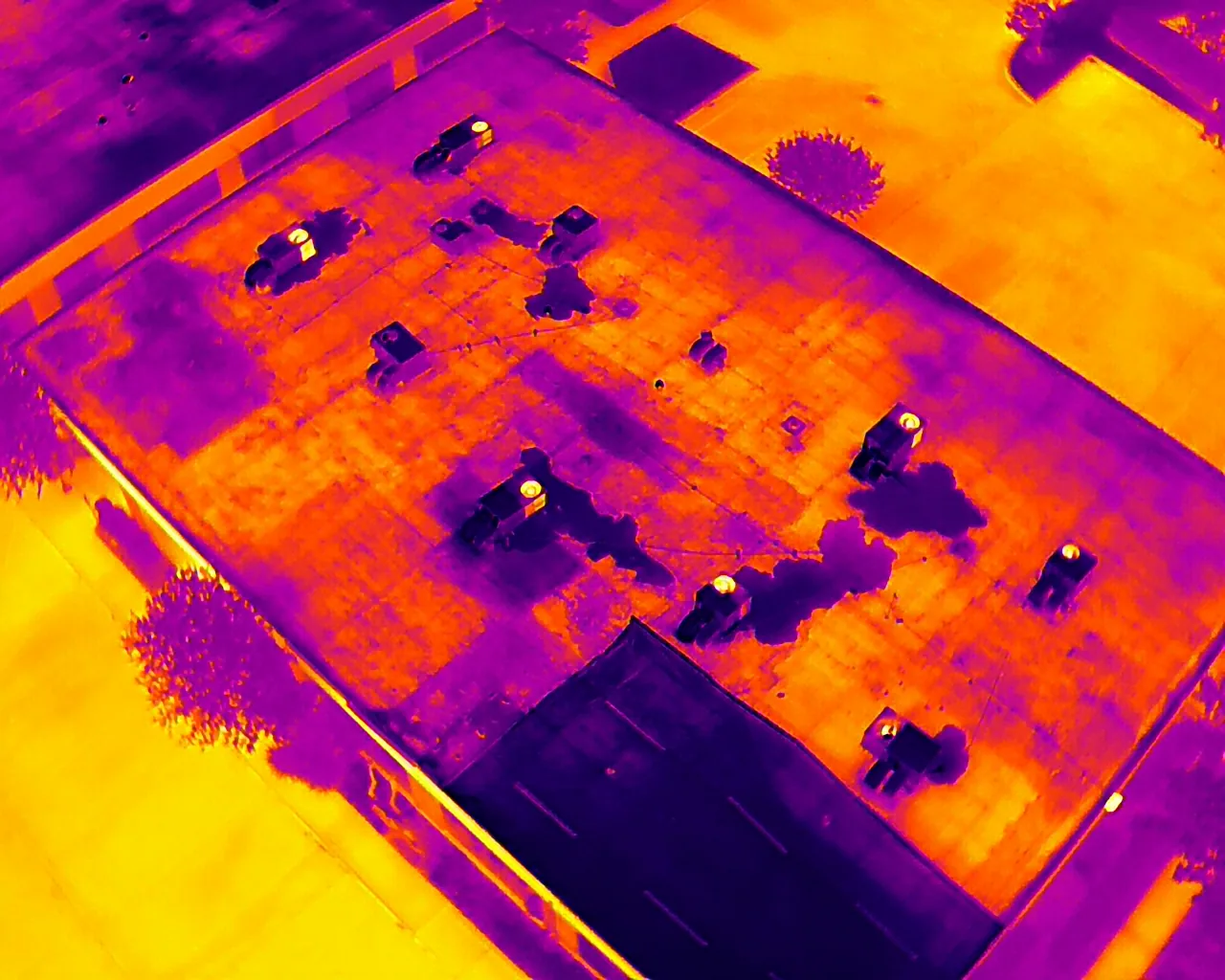
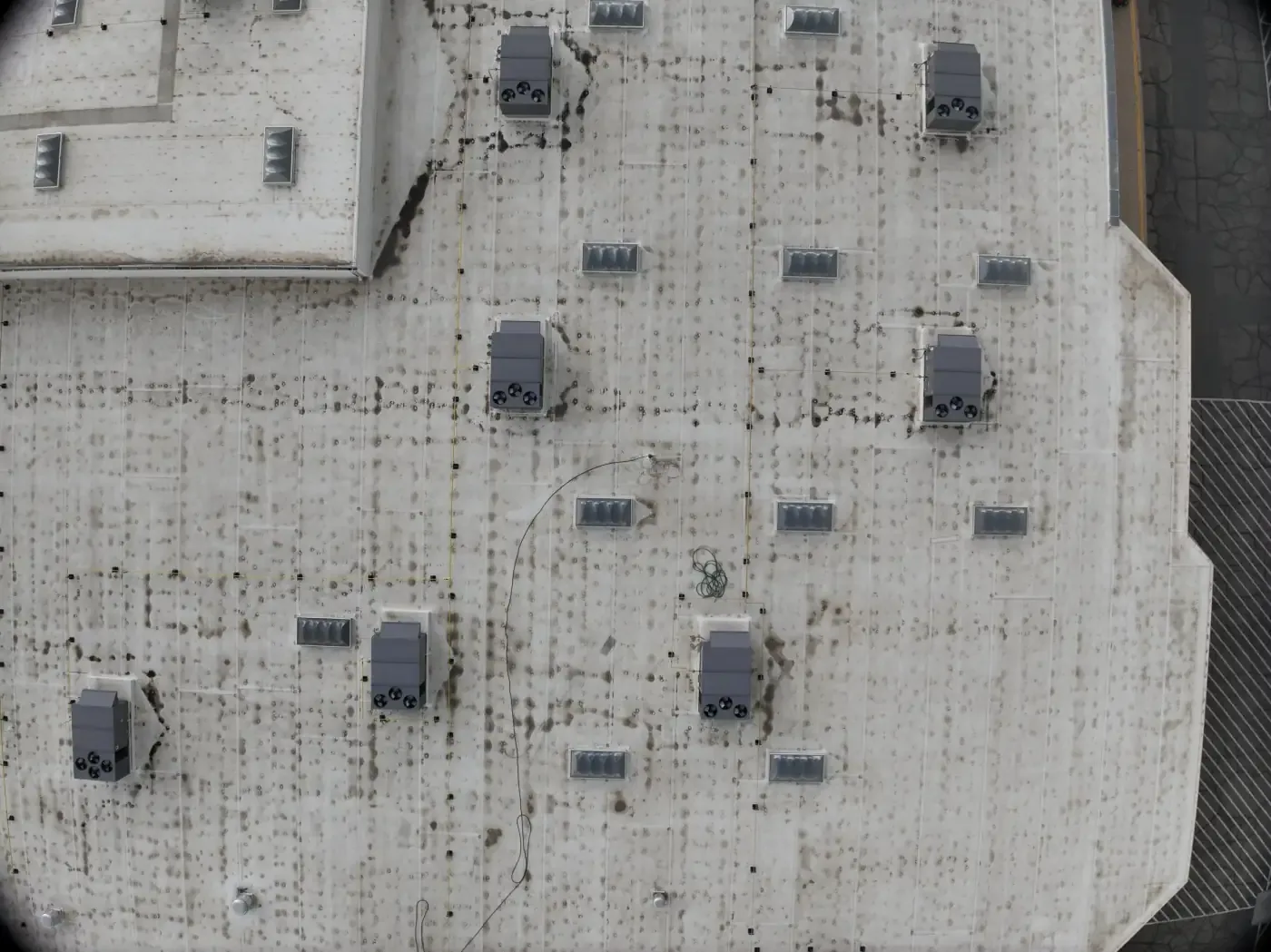
Field work follows a repeatable walk. We look at the membrane surface, seams and laps, flashings and terminations, drains and scuppers, penetrations and equipment, edge metal and coping, and any signs of past leaks inside. We probe seams, check for ponding and take moisture readings where the question warrants it. Drone imagery covers areas that are unsafe or hard to reach, and an infrared moisture survey maps wet insulation that the surface does not show.
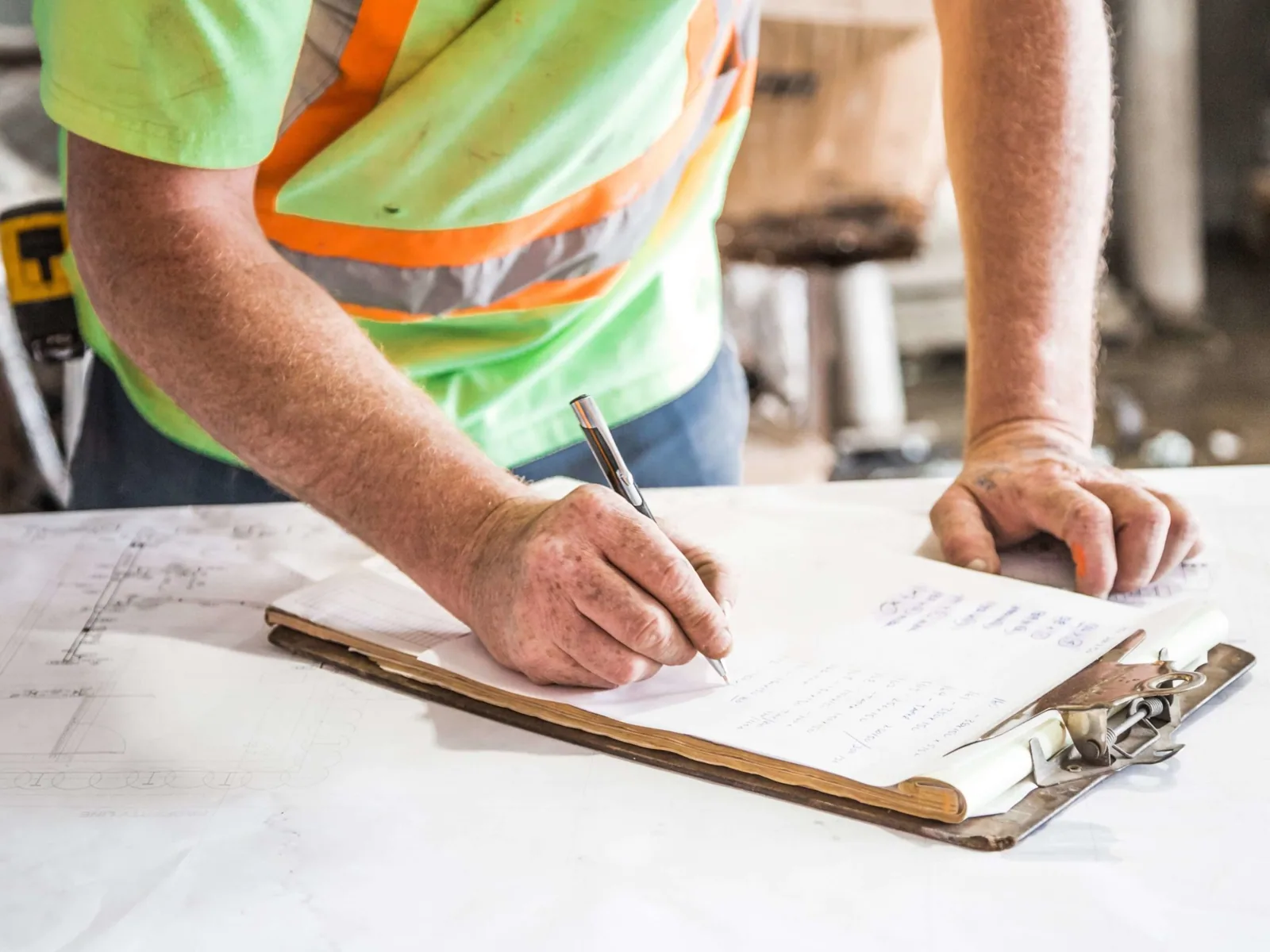
Every photograph is tied to a place on the roof plan and dated. Wide shots establish context, close shots show the defect with a scale reference, and repeat positions let the owner compare year to year. A caption states what is shown and what it means, in words a non-roofer can use. A photograph with no location or explanation does not enter the report.
Reading the findings against Olathe's weather record
The report puts findings next to the climate the roof actually works in. The 1991-2020 airport normals list 29.8°F as the January mean, 78.8°F as July's, and 109.6 days a year with lows at freezing or below. Seam splits, flashing separation and drain freezing are standard checklist items for that reason, and each is looked for on the roof itself.
When a roof lies in the path of the May 19, 2024 straight-line wind event between Gardner and Olathe, the report includes a separate section on edge metal, attachment and equipment, with before-and-after comparison if an earlier report exists. Properties in Overland Park, Lenexa or De Soto are reported in the same format, so an owner with buildings in Lenexa, De Soto and Olathe along K-10 can read them as a set.
Documents that make the report stronger
The report is better when it can lean on what already exists. Roof plans, warranty documents, prior inspection reports, repair invoices, installation dates and photographs of past leaks let us tie current conditions to history. Where they are missing, the report says what is unknown, and a list on the roof plan sets out the questions that field work could not answer.
Access information matters too: hatch locations, key holders, equipment shutdown rules and tenant hours. These do not appear in the findings, but they shape the repair schedule that follows, and they let the next inspector arrive prepared. We also record the rooftop equipment that was operating during the visit, because a unit that cycled on and off can explain a warm patch on a thermal scan and keep the next reader from chasing it. The report becomes part of the roof-area register, where each new report extends the same record.
More About Roof Condition Reports in Olathe, KS
Uses of the report: claims, lenders and warranties
After a storm, a dated report supports the insurance claim by documenting condition and separating new damage from old wear. For a refinance or sale, it gives the other side a clear view of the roof, and the due diligence survey format adds reserve estimates. For a warranty, it records maintenance and defects in a form the manufacturer can read, which supports the warranty file.
A report is not a bid, and it does not commit the owner to work. It gives a scope version the owner can send to any qualified contractor, and it identifies which items are urgent and which can wait for the capital year. If a repair is needed immediately, we say so on the first page and offer emergency repair at any hour.
One format across a set of buildings
For multi-building owners, consistent reports are what make a portfolio comparable. The same scale, the same sections and the same photograph positions mean that a roof in Olathe and one in Shawnee can be ranked by condition and not by who wrote the report. The city's economic-development plan names industrial developments in southern Olathe, including Lone Elm Commerce Center and 56 Commerce Center, and a manager with buildings in such areas can request a report per roof area with the same structure.
Reports feed the capital plan directly. The rating, the repair lines and the estimated remaining life move to the reserve table without retyping, and the plan cites the report date so readers know how fresh the evidence is.
Commercial Roofing Questions
How long does a condition report take to deliver?
Timing follows roof area, access and whether moisture scanning or drone work is included. A single building can be reported soon after the field visit, while a large portfolio is delivered in batches so early properties are not held for later ones. We agree the delivery sequence before starting.
What photographs and plan formats do we receive?
Photographs come in a standard image format with captions, tied to a marked roof plan. The plan and the report are delivered as a PDF, and the photographs and ratings can be provided as files that load into a spreadsheet or asset system. The owner keeps all of it.
Can the report be shared with a lender or buyer?
Yes, it is written to be shared. The summary stands alone, the limits are stated, and no internal pricing is mixed into the findings. If a transaction requires a specific format or scope, tell us the requirement at the start so the field work covers it.
What if the report finds nothing wrong?
Then the report records that, with photographs, moisture readings and the interval for the next visit. A clean report is a valuable baseline, since later changes can be measured against it. It also supports warranty maintenance files and shows an insurer that the roof was in good condition before a loss.
Does the report recommend our own work?
It recommends actions in plain terms, and where we can do the work we say so. The scope is written so another contractor could bid it from the same findings. That keeps the report useful whether or not the owner hires us.
Send the property list and the decision it supports
Share the property list, the roof-area register, the date you need the report by, the available plans and prior reports, and an access contact. We will return a dated, photographed assessment that separates current repairs from capital planning assumptions.