Infrared Roof Moisture Survey in Olathe, KS
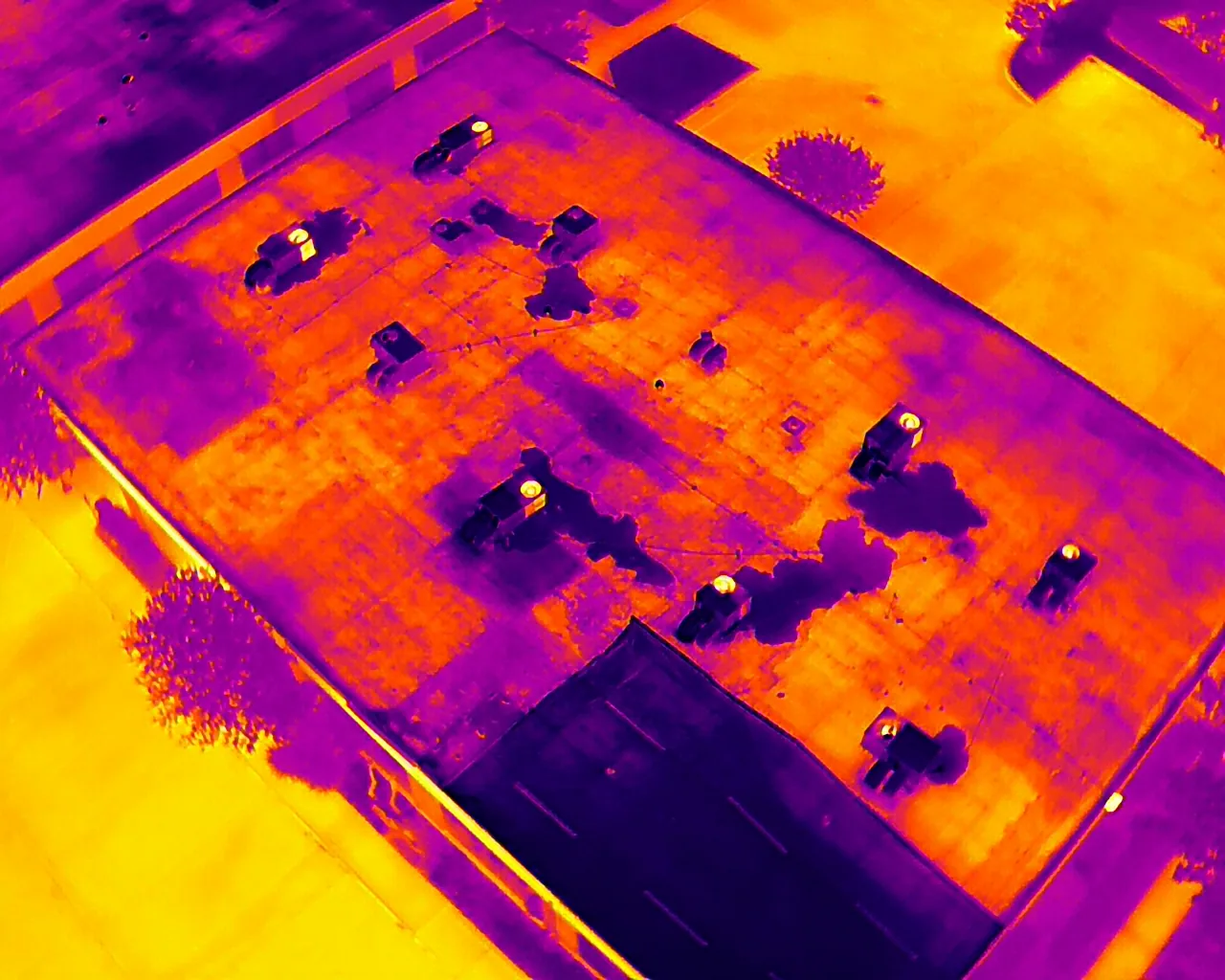
A moisture question can change the recover boundary, the insulation allowance, or the decision to open a roof area. Infrared screening can help identify temperature patterns for further review, but it does not confirm wet insulation by itself. In Olathe, annual precipitation and freeze exposure make drainage history and inspection timing useful context, while the building's tested condition remains decisive. We map the areas reviewed, state the survey limits, and identify where direct verification is appropriate. The owner can then compare a tested finding with the repair or replacement scope instead of budgeting from an unexplained image.
Verify the area before setting the scope
Share the roof plan, leak history, prior reports, access contact, and decision date. We can document screening limits, identify locations for direct verification, and carry confirmed findings into a repair or replacement scope.
Use climate context without assuming roof damage
On 109.6 days in an average year, the Olathe station's normal minimum temperature is 32°F or lower; NOAA also gives 37.54 inches as annual normal precipitation. The captured temperature pattern is compared with leak history, assembly, and survey conditions. An image alone does not prove wet insulation; we map anomalies, compare them with seams, penetrations, and drains, and identify any confirmatory test before removal.
K-10 links properties from Olathe toward Lenexa and De Soto; KDOT describes a 16.5-mile corridor running between I-435 and the Douglas/Johnson County line, with industrial, high-tech, office, commercial, education, and residential uses. That corridor is a scheduling reference. Each building gets its own roof map, access plan, and verification record. A warehouse with broad open areas and an office with dense rooftop equipment will not produce the same survey conditions. We preserve those differences so a portfolio review compares each building's own conditions.
Prepare a roof area that can be interpreted
Before capture, confirm the roof plan, surface type, recent weather, access time, and areas where temperature readings may be affected by equipment, shade, ponding, or reflective material. Infrared results depend on conditions and timing, so the surveyor should state when the surface was reviewed and what limits were present. We mark roof sections and notable details, then align the observations with available leak reports and prior repairs. Without that context, a color pattern can be mistaken for a moisture map.
A hands-on commercial roof inspection can record seams, drains, flashings, and visible defects alongside the scan. Drone imagery may also support broad coverage notes, but it does not verify concealed material. We keep methods distinct in the report, noting which observations came from infrared screening, which came from direct inspection, and which locations need a core cut or other test.
Treat patterns as locations for verification
A temperature pattern can result from moisture, but it can also reflect stored heat, insulation variation, shade, equipment, surface changes, or recent weather. We compare the pattern with roof construction, interior conditions, and visible drainage before assigning significance. The report identifies areas that merit attention and describes why they were selected. Direct verification may confirm moisture, show that the signal had another explanation, or identify a boundary that differs from the first image review.
Where water is repeatedly present, a drain and scupper check can assess outlets and surrounding membrane. If a confirmed wet area follows a leak, a repair assessment can define corrective work. The test record should distinguish screened area from confirmed area, include the verification method, and explain where the result changes the proposed scope. An owner should be able to see what the image suggested and what the field work established.
Connect verified moisture to the bid basis
Confirmed moisture can affect whether insulation is removed, whether a recover is suitable, and how much roof area belongs in a replacement scope. We map the verified extent and identify areas that were not tested, then carry both into the proposal. If the evidence is mixed, the scope can list a testing allowance or a decision point before final quantities are set. That approach keeps the base bid tied to known conditions while making the uncertainty visible to the owner.
A recover assessment can evaluate existing layers and attachment once moisture questions are addressed. A compatible TPO assembly may be considered for some low-slope applications, but product selection follows the deck, insulation, details, and project requirements. The replacement scope should state how wet material and concealed conditions will be handled. We keep the test result linked to the area and system it actually describes.
More About Infrared Roof Moisture Survey in Olathe, KS
Keep screening and confirmation in one file
The report should include the survey date, conditions, roof-area labels, images, screening limits, and locations selected for direct verification. Record the test result beside the original observation, including any area that was inaccessible or inconclusive. If field work changes a repair boundary, retain the revised scope and approval with the same roof-area reference. This helps the next manager understand whether an estimate used screened, tested, or assumed quantities.
A photo-backed condition report can preserve scan and field findings together, while a capital planning review can separate confirmed work from provisional allowances. For an owner coordinating Olathe and Lenexa properties, a common label system makes reports easier to compare without blending their findings. Consistent records also help set the next inspection interval around unresolved risk rather than a generic calendar.
Choose the next test or repair deliberately
After review, the owner should know which areas were screened, which were verified, and which still require testing. A confirmed condition may lead to targeted removal, repair, or replacement planning. An unconfirmed pattern may call for another observation under suitable conditions or a direct test. We identify the action that would change the decision and keep it separate from work that can already be priced. That gives the budget a clear basis without overstating the certainty of the survey.
A survey assignment can cover Olathe and select Lenexa properties in the same trip. Findings are never merged; each temperature pattern stays linked to the building, roof section, and survey conditions that produced it. We can carry verified results into the repair record, reserve plan, and next inspection so owners can compare the evidence with the work approved.
Commercial Roofing Questions
Does an infrared roof scan prove that insulation is wet?
No. Infrared screening identifies temperature patterns that may warrant investigation, but moisture must be confirmed with appropriate direct testing. Shade, equipment, surface material, and recent weather can affect readings. The report should distinguish the screened area from the area tested and state any limitation. That lets an owner use the image to guide inspection without treating a signal as a measured moisture quantity.
What conditions should be considered before scheduling the survey?
Recent weather, surface conditions, roof material, shade, equipment, access, and the time of capture can influence interpretation. Provide the roof plan, leak history, and repair records so patterns can be compared with known areas. If a section is inaccessible or obscured, note that before the visit. The surveyor can then describe coverage and limitations rather than implying that every roof area received the same review.
How does a confirmed wet area affect a recover decision?
The verified extent, existing layers, attachment, deck, drainage, and proposed system all matter. A localized area may be removed and corrected while surrounding material remains serviceable, or broader conditions may change the recover boundary. We map what was tested and carry untested assumptions separately. The owner can compare options using the same roof areas and see what additional evidence would alter the bid basis.
Can the survey be completed while the property remains occupied?
Often the work can be coordinated around building operations, but access, equipment, tenant schedules, and any required direct testing shape the sequence. We confirm the building contact and areas that need special handling. If testing requires a separate visit or opening, the report identifies that step and any protection needed afterward. The schedule should account for the work that follows screening, not only image capture.
What records should remain with the Olathe roof file?
Keep the survey date, conditions, labeled images, screened and tested areas, direct test results, access limits, and any scope change together. Include the roof plan and prior leak or repair notes when available. For Olathe and Lenexa properties, use consistent labels but retain separate files by building. That record supports the next inspection and makes it clear which capital quantities came from confirmed findings rather than an initial pattern.
Verify the area before setting the scope
Share the roof plan, leak history, prior reports, access contact, and decision date. We can document screening limits, identify locations for direct verification, and carry confirmed findings into a repair or replacement scope.