

Commercial Roofing in Blue Springs, MO
A bid basis is only as good as the scope version it was written against, and roof scopes drift when nobody records what the first walk actually found. Blue Springs, MO counted 58,603 residents in the 2020 Census and reported roughly $1.25 billion in 2022 retail sales against only about $29 million in transportation-and-warehousing receipts, a mix in which the retail figure runs far ahead of the warehousing one. The work we do covers repair, replacement, recovery, coating and inspection of commercial roofs, and for Blue Springs retail and service owners we fix the scope version on paper before any price is requested.
Lock the scope version before requesting prices
Send the property list, any roof plans, leak history, tenant constraints and the date a decision is due. We will return a documented assessment that separates current repairs from capital planning assumptions.
Fixing the scope before the bid
Two contractors can quote the same roof and arrive at numbers far apart because they priced different assumptions: one counted wet insulation, the other did not; one included new edge metal, the other reused the old. A written scope version lists the roof areas, the assembly at each, the quantity of insulation to be replaced, the flashing details to be rebuilt, the edge metal treatment, drain work and the disposal of old material.
When field conditions change after tear-off, the scope version gives both sides a baseline and a unit price for the change. On a Blue Springs retail roof that needs to keep tenants trading, that discipline protects the schedule as much as the budget, because a dispute over what was included stops work faster than rain does.
Hidden conditions get a price before the work starts. Typical examples are saturated insulation under a membrane that looked sound, deteriorated deck at a drain, and rusted fasteners along a wall. Each is listed with a unit rate and a way of measuring it, so a quantity found in the field is paid at the rate agreed in advance, and the owner can reserve a contingency that matches the risk shown by the moisture readings.
Flashings, seams and the details that leak first
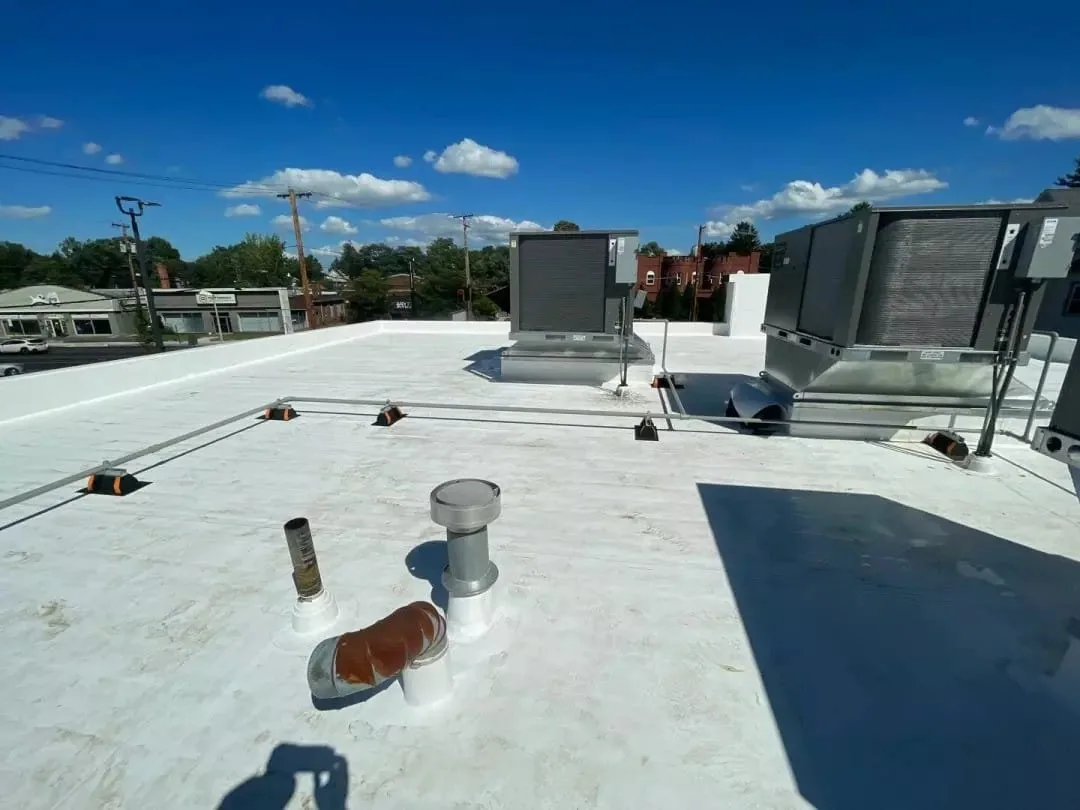
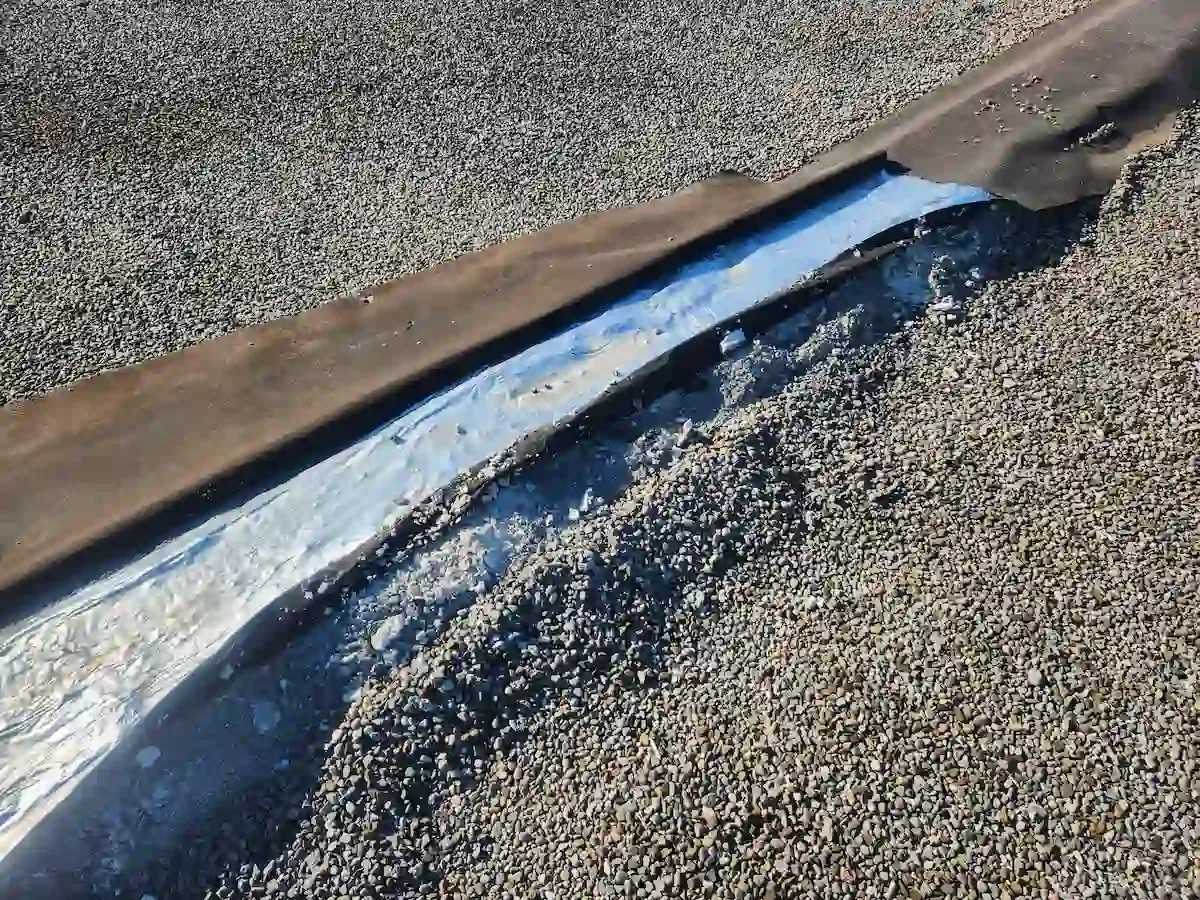
On low-slope commercial roofs the field membrane tends to outlast the details around it. Wall flashings pull away when sealant dries, pitch pans open, boot seals crack, and seams at the junction of two membrane sheets lose adhesion where water pools. A walk that skips these is not a condition review, so we examine every penetration, every wall termination and every roof-to-roof transition on the plan.
Our flashing failure repair work and seam failure repair work follow the findings from that walk. Many small defects can be corrected in a single mobilization, which is cheaper than answering one leak call at a time, and the corrected locations are logged so that a repeat leak can be compared with the earlier repair.

Freeze days and what they do to a seam
The Olathe station normals report 109.6 days a year with minimum temperatures at or below 32 degrees F, 37.54 inches of annual precipitation, and a swing from a January mean of 29.8 degrees to a July mean of 78.8 degrees. We cite those as the metro reference set. For a roof owner the consequence is repeated expansion and contraction: sealants harden, sheet seams move, and water that gets into a lap can freeze and widen the opening.
Those cycles are the reason we look for hairline cracks in coatings, loose termination bars and lifted laps before spring, when thaw water finds each of them. An inspection scheduled after winter, not before, catches the damage freezing caused while the repair is still small. The record from that visit sets the next snow and ice damage comparison.
Comparing repair, coating and replacement
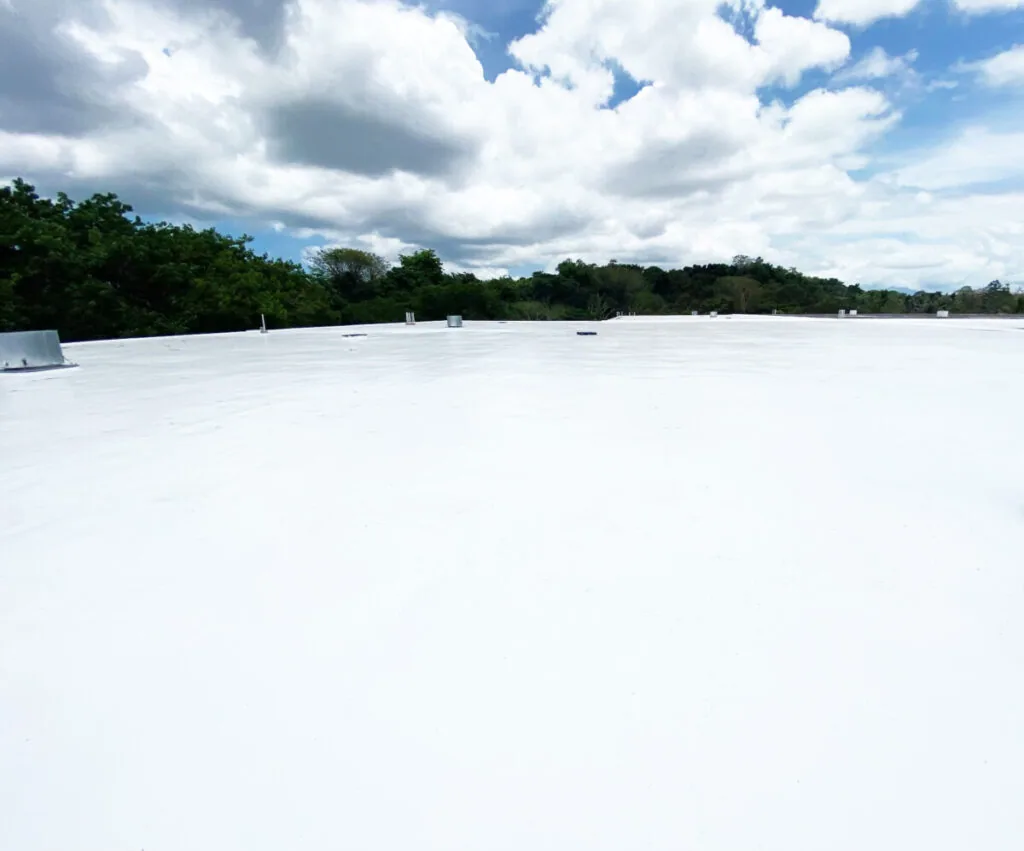
With the scope fixed, three paths can be compared on the same basis. Repair addresses specific details. A restoration coating, whether silicone or acrylic, suits a weathered but dry membrane and adds a waterproof surface at lower cost and disruption than replacement. Replacement or recover suits a roof whose insulation is wet or whose membrane has reached the end of its serviceable life.
The comparison includes tenant impact. Coatings need dry weather and clean surfaces but little noise; tear-off needs hoisting, disposal and more staging. For a shopping center with a mix of larger and smaller tenants, the quieter path may be worth a higher unit cost if it protects sales during the work.
A coating or recover also resets the warranty question. Manufacturer terms depend on the system, the surface condition and who installs it, so the owner should have the paperwork in hand before approving a path. We read the available terms with the owner and note which preparation steps they require, because skipping one can undermine coverage that the budget assumed.
More About Commercial Roofing in Blue Springs, MO
Adding Blue Springs to a regional register
A property in Blue Springs may be one of several in an owner's holdings. We keep a roof-area register that lists each building, each area, the assembly, the last inspection date and the open items, then group the results by urgency. A manager with sites in Lee's Summit, Grain Valley and Blue Springs can read the whole portfolio sequence side by side and fund the most urgent work first.
Starting with the roof plan
Send whatever exists: roof plans, past reports, leak logs, warranty paperwork and the date by which a decision is needed. Where nothing exists, we build the roof-area register from the first walk. Our commercial roof leak repair response can begin immediately if water is entering the building, and the permanent scope follows once the roof is dry enough to examine closely.
Include the contact who can open hatches and approve roof access, and tell us about any tenant with restricted hours, refrigeration on the roof, or sensitive interior finishes below the area in question. Those details change staging, hoisting and the order in which roof areas are taken.
Commercial Roofing Questions
What belongs in a scope version for a retail roof replacement?
The scope should name each roof area, the existing and new assemblies, insulation thickness and any replacement allowance for wet material, edge metal, flashing heights, drain changes, disposal and the work windows around tenants. It should also give a unit price for hidden conditions so that a surprise at tear-off becomes a quantity change rather than a dispute.
Why do leaks often return after a quick patch?
A patch fixes the point where water showed up, but the entry may be several feet away because water runs along the deck or between membrane and insulation before it drops. We trace the path, test the nearby details, and repair the actual opening. The location goes in the log, so a return of the leak can be checked against the earlier repair.
Is spring a good time to inspect after a freezing winter?
Yes, because it shows what winter did while the damage is still repairable. Lifted laps, cracked sealant and displaced flashing are easy to spot once snow is gone, and fixing them before the storm season keeps small openings from becoming interior damage. An early-season visit also gives the owner time to place larger items in the next capital year.
How does a coating decision get made on a leaking roof?
Moisture testing decides it. If the insulation is dry and the membrane is sound apart from isolated defects, a coating over repaired details can restore protection. If insulation is saturated, the coating would trap water and the roof needs removal in that area. We show the readings so the owner sees why one path was chosen.
Do tenants need to leave during roof work?
Usually not. Most retail and service roofing proceeds with the building open, using protected walkways, set hoisting areas and noisy tasks scheduled away from peak hours. A tenant with sensitive operations can request a quieter window for its roof area, and the sequence adjusts so the rest of the property keeps moving.
Lock the scope version before requesting prices
Send the property list, any roof plans, leak history, tenant constraints and the date a decision is due. We will return a documented assessment that separates current repairs from capital planning assumptions.