Seam Failure Repair in Olathe, KS
A seam is a decision made once, at installation, and tested every winter afterward. For a roof in Olathe, KS, the test arrives about 109.6 days a year, the number of days the NOAA normals record at or below freezing, and each of those nights asks the lap between two sheets, two courses of modified bitumen or two metal panels to stay closed while the material around it shrinks. When a seam opens, the owner usually sees a stain or a drip before anyone sees the seam. We locate the open or weakening laps, determine whether the cause is the seam, the substrate or movement in the building, and restore the roof in a way that is recorded for the next inspection.
Send the leak map and the installation year
Share the property list, the roof-area register, installation or last-replacement years where known, and any prior seam repair records. We will probe the laps, map the failures, and give you a repair scope that is separate from your replacement assumptions.
Freeze days and thermal movement along the lap
A seam in Olathe lives between a 29.8°F average January and a 78.8°F average July at the airport station, and a dark membrane in direct sun moves further than the air temperature suggests. Hot-air-welded thermoplastic seams, adhered EPDM seams and torch or cold-applied bitumen laps all respond to that movement differently, which is why the repair method has to be chosen for the system and not copied from the last job.
Property schedules that stretch from Olathe to Shawnee and Merriam will include roofs installed in different years by different crews, and seam condition tends to track that history more than geography. Recording installation year where it is known, and the date of the last probe test where it is not, gives the register a column that matters when the replacement window is being argued.
How seams are tested and what the probe finds
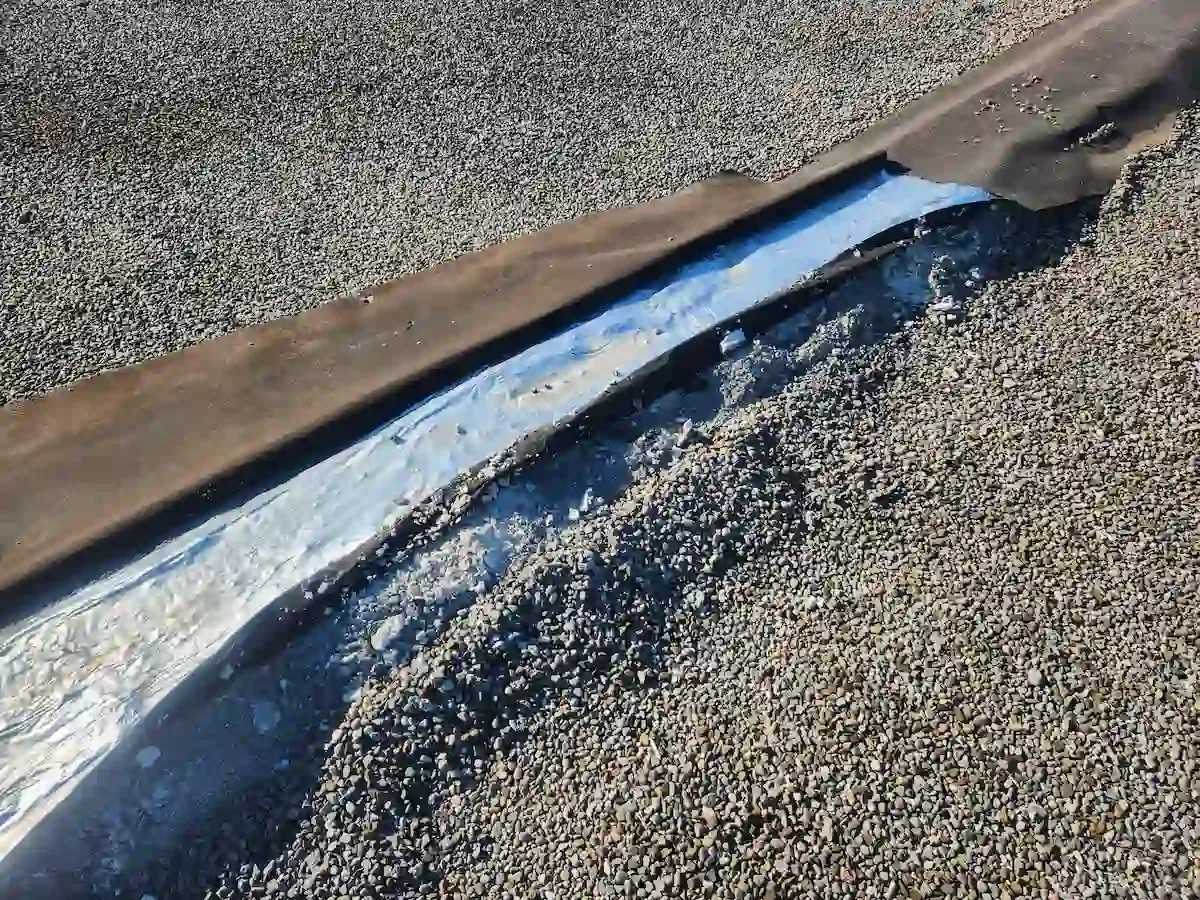
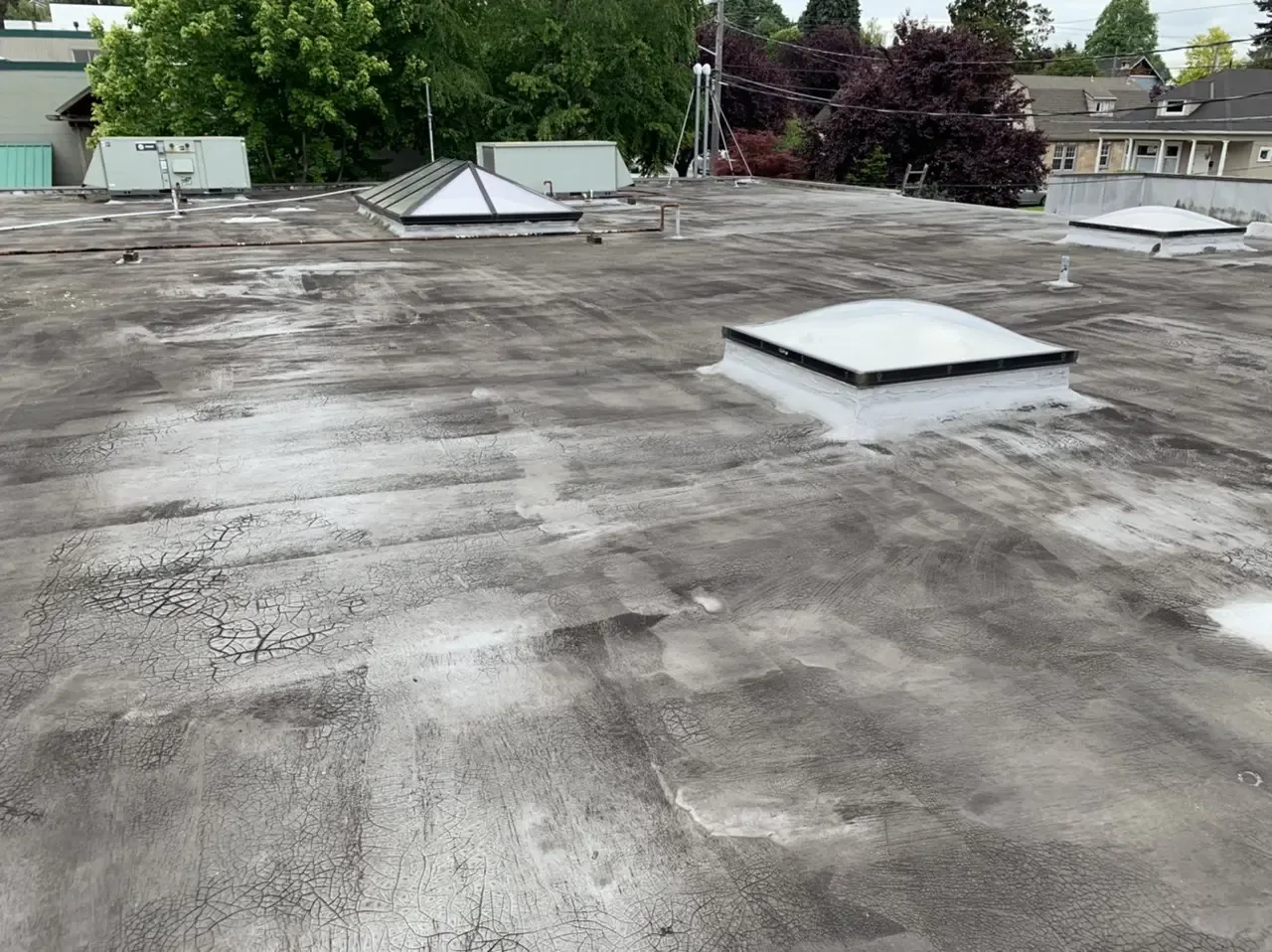
We walk the roof and look at every lap in sight, then probe with a rounded tool along the edge of welded or adhered seams. A good seam resists the probe; a weak one lifts, peels or shows a gap that was invisible from standing height. We check for fishmouths, where the edge of a sheet curls and leaves a channel for water; for open butt joints on built-up and modified roofs; for lifted tape on adhered laps; and for cross-seam T-joints, which are the most demanding points on a welded roof.
On a metal roof, seam failure means a different list: separated panel laps, fasteners backing out at exposed seams, sealant that has hardened, and standing seams that have opened at a clip. For any system, we mark the failures on a roof plan, photograph them with scale, and record whether adjacent laps are sound, because the number and spread of failures decides between a repair and a larger conversation.
Welding, patching and the point where the roof is done
Isolated seam failures in a membrane that is otherwise supple can often be re-welded or re-adhered after cleaning and a test cut, and the repair is covered with a reinforcing strip of compatible material. On an aged thermoplastic sheet, however, surface contamination or plasticizer loss can prevent a good weld, and a patch that will not bond is just a delay. We test a small area before committing to a large repair.
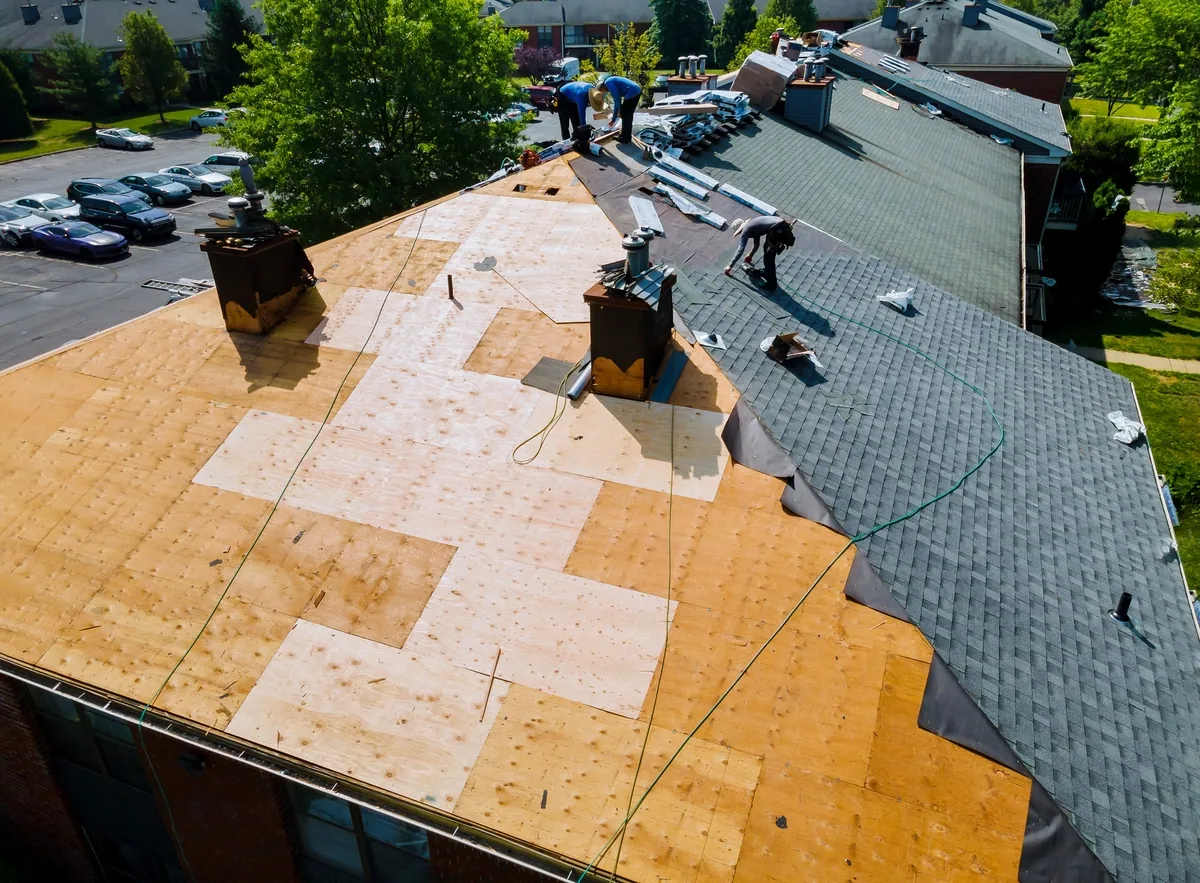
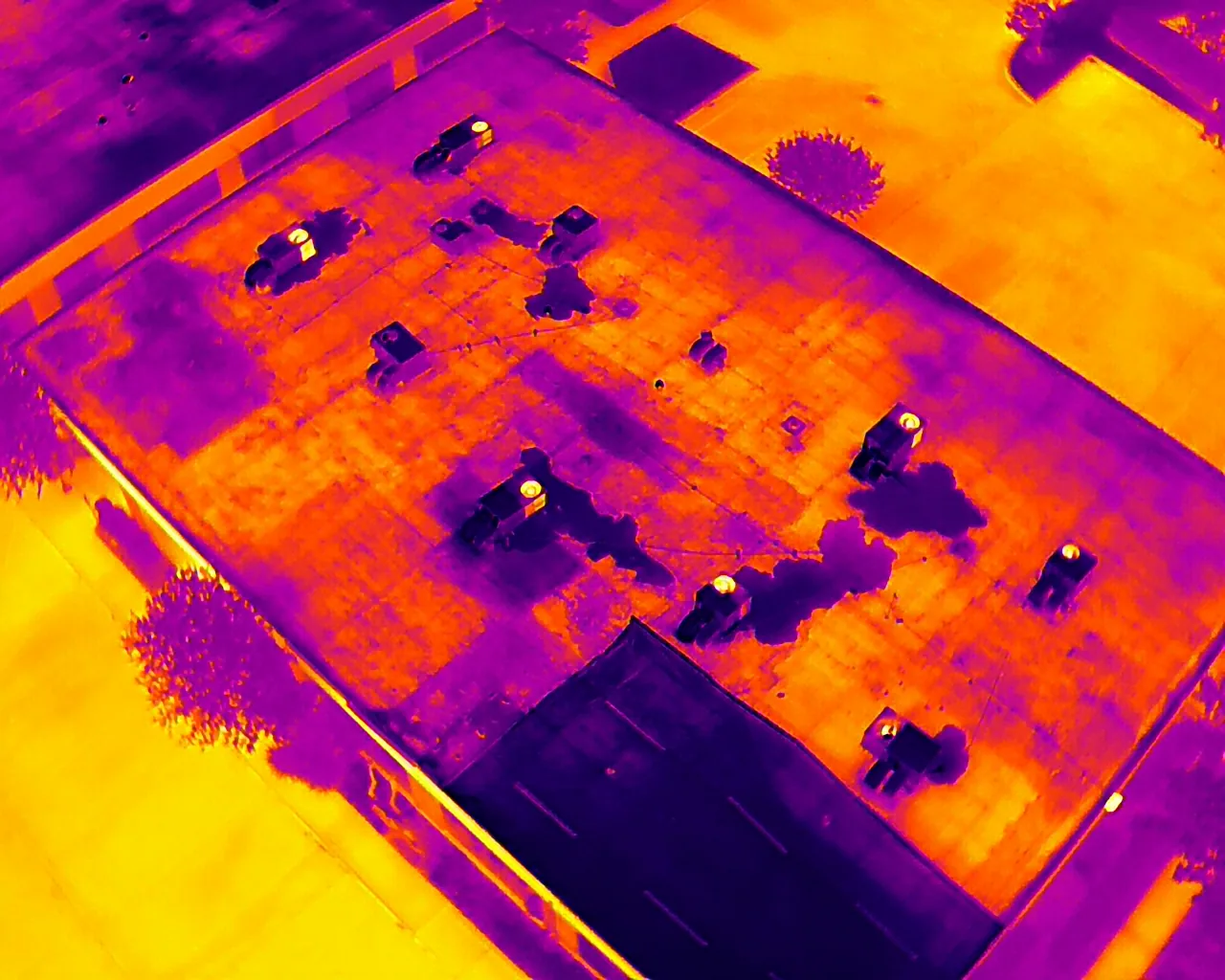
When seam failures appear across many laps, in more than one orientation, or in the same pattern on every roof section, the system is telling the owner something about its age. At that point, a recover over the existing roof or full replacement belongs in the plan, and the repairs still needed in the meantime are bridges to that date. A coating can also close small laps on some roofs, but only where the membrane and moisture condition support it, which an infrared moisture survey helps establish.
Weather limits on seam work
Welding needs a dry, clean surface and a temperature the equipment can handle, and adhesives have their own limits for cold and dampness. In winter, repairs are often limited to temporary measures, such as sealing an open lap with a cold-applied method, with the lasting correction scheduled for a milder week. We state that limit in the scope so the owner is not told a seam is fixed when it has only been closed for the season.
Access to the seam area, the loading schedule below it, and any rooftop equipment that must be shut down are agreed in advance. Where the building is occupied, we plan the routes for materials and waste to avoid tenant entrances, and we keep the interior contact informed when work begins above their space. A test cut at the start of each visit tells the crew whether the existing sheet will accept a weld, and the result goes into the work order, because a repair method that fails the test is changed on the spot instead of being applied anyway and discovered later.
More About Seam Failure Repair in Olathe, KS
Seam condition and the replacement window
A seam count by roof section is one of the more useful items a portfolio can collect. When the same building shows more open laps each year, the repair line grows and the replacement window moves closer, and the budget for the next capital year can be built from field facts. Industrial developments in southern Olathe, which the city's plan names alongside Lineage Logistics and FedEx, are the kind of property where a section-by-section count is worth keeping, and the walk comes first.
We assemble a condition report that shows seam findings by location, and the capital planning work that follows can separate repairs the roof still earns from money better spent on its successor. For the immediate leak, a flashing review and puncture check belong in the same visit.
Commercial Roofing Questions
Why do seams open when the membrane looks fine elsewhere?
Seams are the narrowest bond on a roof, and they carry the movement of two sheets at once. A sheet can be supple in the middle while its lap has been weakened by dirt trapped at installation, by ponding, or by repeated expansion and contraction. The field of the roof will often outlast its seams, so probing, not appearance, is the test.
Is a seam repair a temporary or permanent fix?
It can be either, depending on the cause and the weather during the work. A properly prepared and welded or adhered repair on sound material can last for years. A closure made in cold weather or on contaminated membrane is temporary and should be labeled that way in the work order, with a date for the return visit.
How many open seams mean the roof should be replaced?
There is no fixed count, but the pattern says more than the number. A few random failures on a roof with ten useful years left are repairable. Open seams in the same orientation across several sections, or laps that will not accept a repair, point toward the end of service life. We give the owner a map and a recommendation rather than a threshold.
Will a coating cover failed seams?
Only small ones, and only on a roof whose membrane and insulation are dry and sound enough to hold a coating. A coating bridges hairline laps but does not re-bond a seam that is peeling under tension. If the seams are moving, the correction is mechanical, and the coating, if used, follows it.
What does a seam inspection cost compared with the repair?
Inspection costs are driven by roof area, access and whether probing and moisture scanning are both needed, and they are small next to the cost of repairing hidden wet insulation. Repair costs follow the number of laps, the material and the weather window. We separate the two so you can approve the assessment before committing to a scope.
Send the leak map and the installation year
Share the property list, the roof-area register, installation or last-replacement years where known, and any prior seam repair records. We will probe the laps, map the failures, and give you a repair scope that is separate from your replacement assumptions.