
Commercial Roofing in Grain Valley, MO
Storm season sets the schedule for many commercial roof decisions in Grain Valley, MO, and the owner who has a dated roof-area record in hand before a hailstorm arrives is the owner who can separate old wear from new damage afterward. Grain Valley had a 2025 Census estimate of 16,908 residents, with 2022 retail sales of $221,298 thousand and a 2020-2024 median household income of $89,649. We inspect, repair, recover, retrofit and replace low-slope and metal commercial roofs, and we begin every Grain Valley assignment by recording what the roof looks like today, so any later event has a baseline to be measured against.
Set the Grain Valley baseline before the next storm
Share the property list, roof plans, earlier reports, decision date and access contact. We will return a documented assessment that separates present repairs from capital planning assumptions.
Using the Kansas City metro weather record
The climate normals we rely on were measured at the Olathe Johnson County Airport station, on the Kansas side of the metro. They put the January mean at 29.8°F and the July mean at 78.8°F, with 37.54 inches of precipitation in a year and freezing lows on 109.6 days. A Grain Valley roof is not at that station, so we use the figures as metro context and let the field condition of the building decide the plan. They still explain the stresses we expect to see: thermal movement at seams, water that freezes in small gaps, and sealants that lose elasticity after many cycles.
The National Weather Service also documents severe thunderstorm climatology across the Kansas City area that includes hail. Whether a particular roof was struck is decided by inspection and not by the forecast. After a storm we look for bruised or fractured membrane, dented metal, torn flashing and displaced gravel or granules, and photograph each finding with a location marker. Roof surfaces differ in what they show: a smooth single-ply membrane can hide a fracture until it is flexed or probed, a granulated cap sheet shows lost granules in a scatter pattern, and a coated roof may show cracked or chipped coating at the impact points. Knowing which signs belong to which surface keeps each finding matched to the building in front of us.
Writing the baseline before the storm
A baseline survey records the roof as it is: membrane type, seam condition, flashing, penetrations, drains, existing patches and any ponding. With dated photographs and a marked plan, the owner has a reference point. When a storm passes and a claim becomes possible, the post-event inspection can be compared against the baseline, and the difference shows what changed. Without a baseline, an insurer and an owner can argue for months over whether a split or a dent was already present.
The baseline also supports ordinary budgeting. Findings sorted into immediate repairs, items to watch at the next visit, and items for the capital plan give a property manager a rational place to start. A commercial roof inspection with those categories separated can be dropped into a reserve plan without translation, and the next inspection interval is set by what remains uncertain. Where access allows, a drone pass adds an overview of the whole roof, and an infrared survey after sunset can show whether any of the suspect areas hold moisture beneath the membrane.
Claim documentation without overstating the damage
When a storm does leave damage, the paperwork should say what is visible and what was done, no more and no less. We document dates, roof areas reached, photographs, temporary protection installed and permanent repairs proposed. Coverage decisions belong to the insurer. Our roof insurance claim assistance is a documentation service that helps owners present observed conditions clearly, and it does not promise any outcome.
Hail and wind produce different evidence. Hail leaves impact marks, fractures in brittle membrane and dents in metal. Wind lifts edges, loosens coping and peels back poorly attached sections. A hail damage repair scope and a wind repair scope therefore differ, and we separate them in the estimate. We also note age-related wear and earlier repairs separately, so the claim is not weakened by mixing them with new damage.
When a metal retrofit makes sense
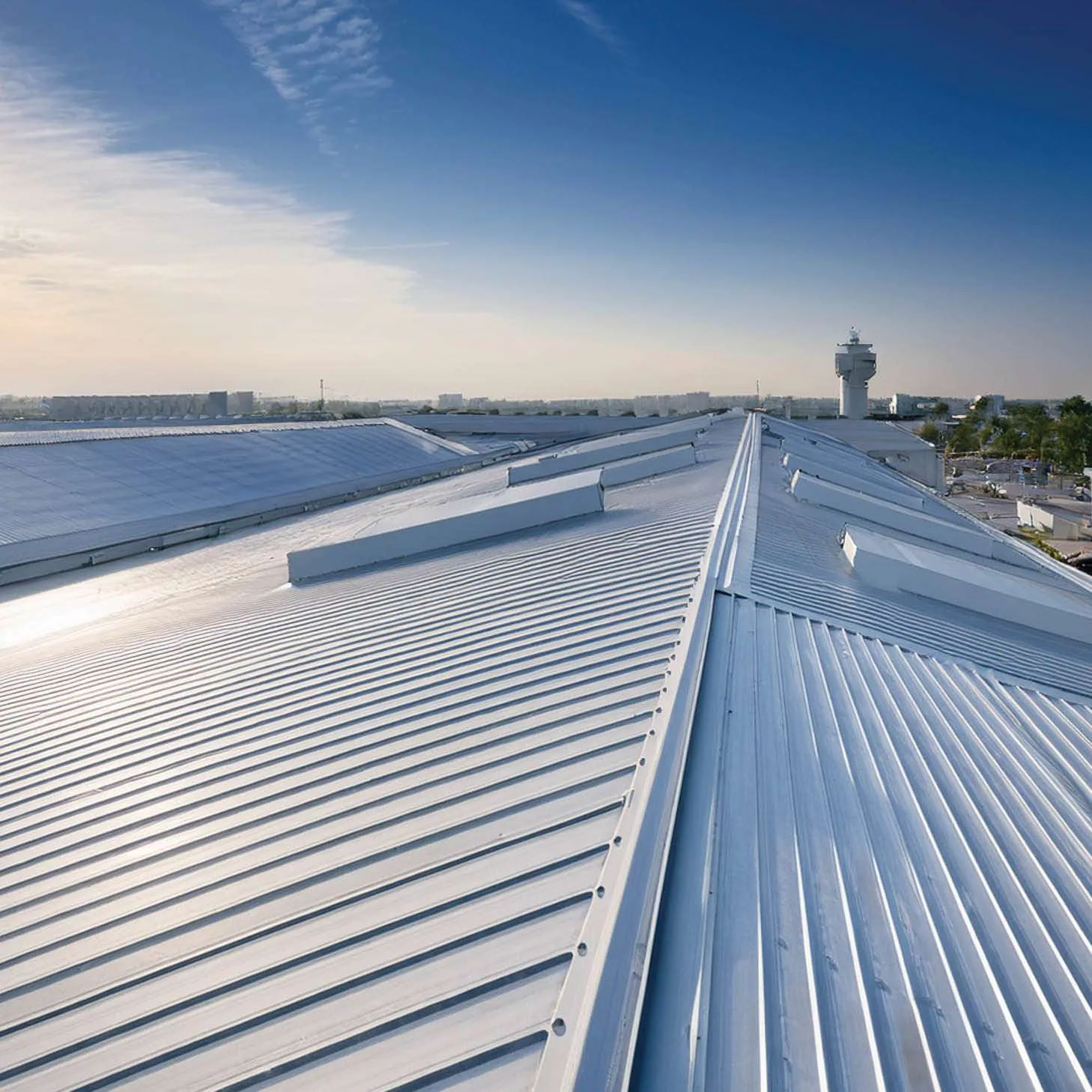
Some low-slope buildings have been patched for years, and the owner begins to ask whether a different system would end the cycle. A metal roof retrofit installs framing and panels over the existing roof, avoiding a full tear-off and giving a durable, water-shedding surface. It suits buildings where the structure can carry the added weight, where the existing roof is stable enough to serve as a base, and where the owner wants a long service period and lower maintenance.
It is not the answer everywhere. Rooftop equipment, drainage geometry, building height and appearance rules all affect the decision, and a retrofit adds a new set of details at edges and penetrations. We compare it to a membrane replacement on the same terms: first cost, expected service life, maintenance needs, disruption to tenants and what each leaves behind. The owner then picks the option that fits the capital year.
More About Commercial Roofing in Grain Valley, MO
Work windows and nearby properties
Commercial roof work is sequenced around the building's use. We confirm roof access, laydown areas, deliveries, parking and any shutdown requirements before the first day, then divide the roof into sections that can be dried in during a working day. If water is coming through, emergency roof repair is available at any hour, with the temporary protection recorded separately from the permanent fix. Material lead times, a dry stretch of forecast and the tenant's calendar usually decide the start date, so we raise them at the first walk and write the expected sequence into the scope version, including who approves any added work if concealed damage appears.
Owners with buildings in Blue Springs or Independence can sequence them together with this one under the same documentation process. Placing the roofs in one register lets a portfolio manager see which building needs capital first and which can wait a season.
If a storm does arrive, the first call should go out with the baseline in hand. A short message with the date, the affected buildings and the photographs from the last walk lets the post-event inspection start where the record left off, and it keeps the conversation with an insurer focused on observed differences instead of memory.
Commercial Roofing Questions
Should I have my Grain Valley roof surveyed before storm season?
A survey before the season creates a dated record of condition, which makes any later damage easier to identify and describe. It also catches small defects while repair is still inexpensive. We provide photographs, a marked plan and a ranked list of items.
How do you tell hail damage from ordinary wear?
Hail leaves a pattern of impacts: bruises or fractures in the membrane, dents in metal, and marks across exposed surfaces in a consistent direction. Wear shows as general weathering, cracking along seams, or erosion near drains. We record each separately and note where they overlap.
Will your documentation secure an insurance payment?
No. The insurer decides coverage. We supply clear records of observed damage, temporary protection and repair scope, which helps the owner present the claim accurately and keeps repair costs separate from unrelated wear.
Is a metal retrofit worth considering for an older low-slope roof?
It can be, when the structure can carry the load and the existing roof is stable. A retrofit avoids tear-off and gives a long service period, but equipment, drainage and detailing must be checked first. We price it beside a membrane replacement so the choice is clear.
What is the quickest way to start?
Send the address, a roof plan or aerial image, any earlier reports and the name of an access contact. We schedule a walk, then return a written condition report with photographs and a ranked scope.


Set the Grain Valley baseline before the next storm
Share the property list, roof plans, earlier reports, decision date and access contact. We will return a documented assessment that separates present repairs from capital planning assumptions.