
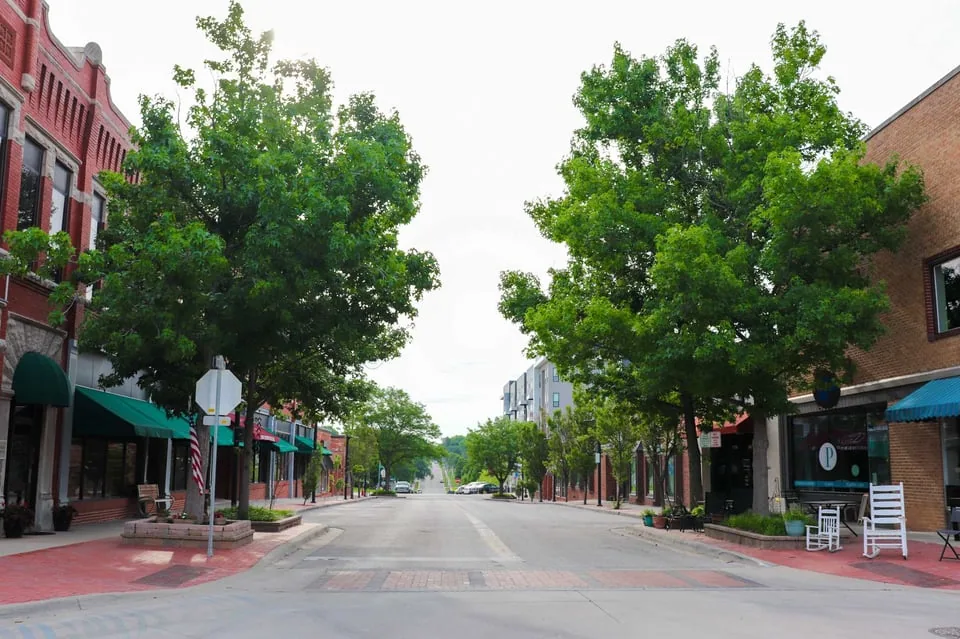
Commercial Roofing in Lee's Summit, MO
Reserve schedules for commercial roofs tend to fail in the same place: the number on the spreadsheet was set when the roof was new and never revisited against what the membrane has actually done since. Lee's Summit, MO has a 2025 population estimate of 107,514 and 2022 retail sales of about $2.39 billion, a level of commercial activity that gives owners of shopping, office and professional space a roof budget question every year. We inspect, repair, replace, recover and coat low-slope and metal roofs, and we begin a Lee's Summit assignment by comparing the reserve line with the field condition.
Compare the reserve line with the field
Send the property list, the replacement window now on the books, prior reports and an access contact. We will return a documented assessment that keeps field findings apart from reserve assumptions.
Where a reserve plan meets the field
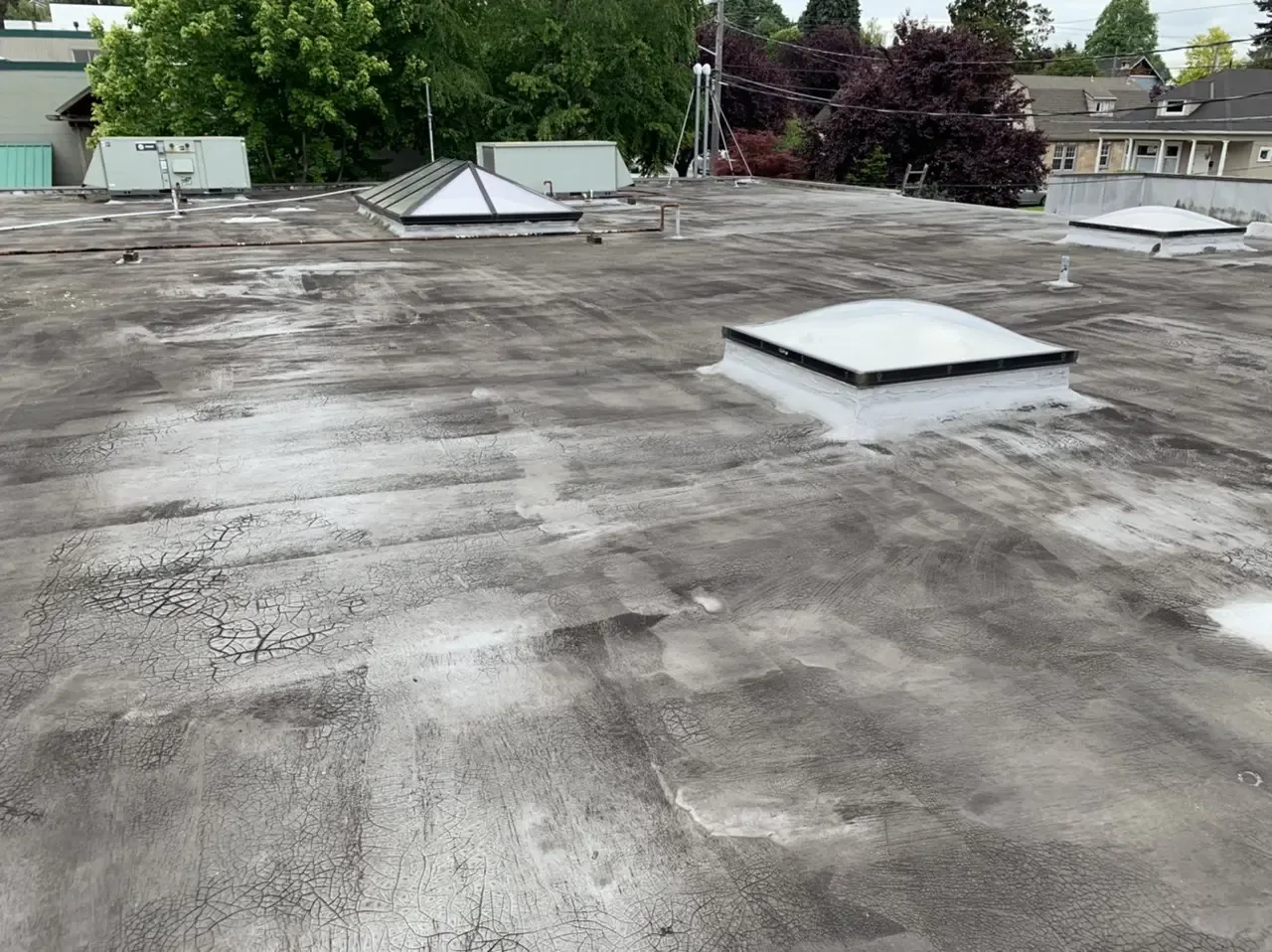
A reserve plan assumes a replacement window. The field supplies evidence for moving that window earlier or later: open seams, shrinkage at the perimeter, ponding after a rain, blistering, loose edge metal, repeated repairs in the same corner. One dated condition report lets the owner decide whether to keep the capital year, spend on targeted repairs to push it out, or pull it forward before leaks begin damaging tenant improvements.
Lee's Summit reported median household income of $102,531 for 2020 to 2024. For an asset manager, finished interiors are the stake: damage from a slow leak costs more to repair and more to explain than the roof work that would have prevented it. That is why we weigh consequence below the roof as heavily as the condition of the surface.
What a first walk covers
On the first visit we separate the property into roof areas, identify the assembly at each one where we can, and photograph seams, flashings, penetrations, drains and perimeter details. Single-ply roofs get a close look at seam welds and the transition to walls; modified bitumen and built-up areas get a check of laps, granule loss and ridging; metal roofs are checked at fasteners, panel seams and trim.
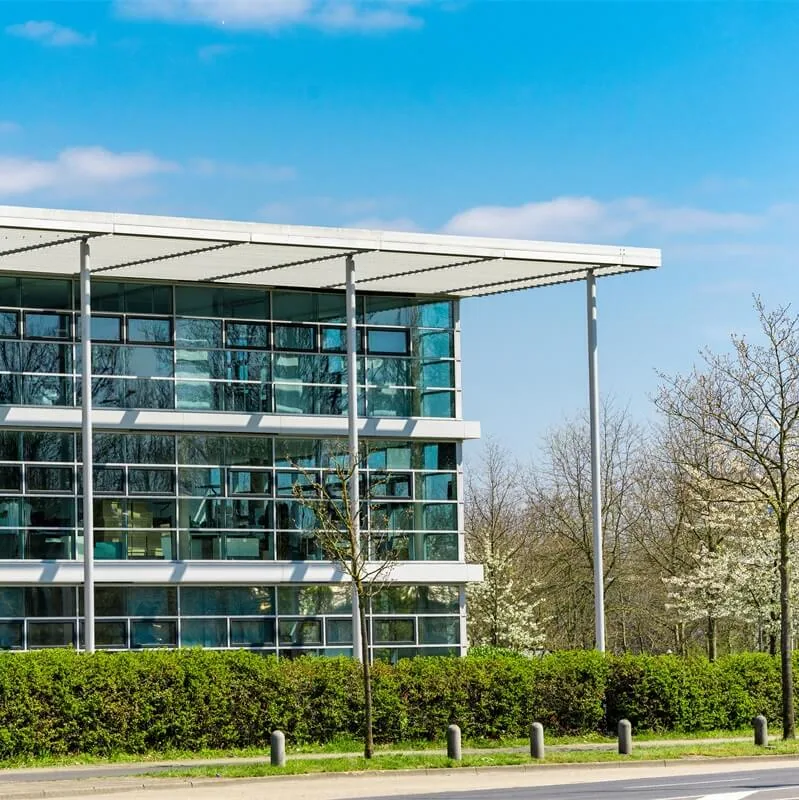
For office and professional buildings the rooftop equipment is often the busiest part of the roof, so we trace each unit's curb, its supply lines and the nearest drain. A basic commercial roof inspection sets the baseline, and an office building roofing scope adds attention to service access and parapet details. Findings are listed by area so the property manager can hand them straight to a work order.

Paper that shortens the bid
Bids come in tighter when the owner can supply the roof plan, any prior condition reports, warranty paperwork, leak logs, invoices for earlier repairs and the date of the last drain cleaning. Even a hand sketch with roof areas lettered helps, because every later photograph and note can point back to a letter.
The records also decide how much exploratory work is needed. If a previous owner left a core sample report, we can skip some probing; if nothing exists, a few test cuts or an infrared pass fill the gap. Either way we write down the assumptions behind the numbers so a future manager, who may not have been present for today's walk, can see why a scope grew or shrank when conditions were opened up.
Choosing between patching and renewal
A repair is justified when the leaks come from a small number of details and the surrounding membrane is sound. Renewal is justified when insulation is wet over a wide area, when seams are failing along whole runs, or when repair frequency has climbed to the point that the maintenance line rivals a replacement payment spread over the remaining life. We put those two scenarios side by side in the report.
The middle path is often a recover over the existing roof or a restoration coating, which can keep a retail or office tenant operating through the work. Availability of either depends on deck condition and moisture, which is why the decision follows testing rather than preference. Our roof capital planning work converts the chosen path into a year-by-year figure the owner can defend.
More About Commercial Roofing in Lee's Summit, MO
Weather exposure and the work calendar
The Olathe station normals put annual precipitation at 37.54 inches and count 109.6 freezing-low days a year, the nearest published reference for the metro. A roof that cycles through that many freeze days moves at its seams and flashings every winter, and a drain that clogs in autumn can hold water through the next thaw.
Hail is part of the regional storm record as well. After any severe storm we inspect for bruising, fractures, dented metal and displaced granules before any claim conversation, and we use hail damage roof repair only where the damage is visible. Scheduling replacement outside deep winter keeps adhesives and welds within working temperatures and gives the owner a firmer finish date.
Starting the assessment
Send the property address list, roof ages if known, the last inspection date and any open leak locations. We will return a written finding set with photographs, a ranking of work by urgency, and an outline of replacement options with the field evidence behind each. Properties in neighboring Blue Springs or Independence can be added to the same register so the whole portfolio is sequenced together.
Commercial Roofing Questions
What triggers moving a replacement year forward on a Lee's Summit office roof?
Wet insulation, repeated leaks at the same location, and seam failure along continuous runs move the date. A single leak at a curb does not. We document each trigger with a photograph and a location mark so the owner can show the board or lender why the capital year changed, and the reserve plan updates from evidence instead of from a general age assumption.
Is a recover a good idea on a medical or professional suite roof?
It can be, when the existing deck and insulation are dry and the structure can carry the added layer. A recover avoids tear-off debris and shortens the time the building is open to weather, which matters over sensitive interiors. If moisture is found during testing, we say so and price full removal in that area instead.
How long should an owner wait after a storm before calling for an inspection?
Call soon, because bruising and exposed fasteners are easiest to attribute to the event when fresh, and temporary protection is simpler before water has traveled. A dated storm record plus photographs of conditions before and after make the case for any claim, and an early look also catches drains that the storm packed with debris.
What would be on the bid for a multi-building property?
Each building gets its own roof areas, each area gets its own scope, and the total is shown as a sequence rather than a single sum. That lets the owner fund the highest-consequence roofs first, hold lower-risk areas for later years, and compare the options without unbundling a lump-sum price after the fact.
Who should hold the roof records when staff change?
A single shared folder owned by the property or asset manager works better than files scattered across site offices. It should hold the roof plan, dated inspection reports, photographs tied to roof-area letters, repair invoices, warranty paperwork and the latest drain cleaning date. When we finish a visit we deliver findings in a form that drops straight into that folder, so a new manager can pick up the thread without a call to the previous one.
How does a coating fit into a Lee's Summit renewal plan?
A coating suits a roof whose membrane is intact but weathered and whose insulation tests dry. It restores reflectivity, seals small defects and can extend service without tear-off, so the capital year moves out. It does not rescue a saturated assembly, which is why moisture mapping comes first and why we show the owner the readings behind the recommendation.

Compare the reserve line with the field
Send the property list, the replacement window now on the books, prior reports and an access contact. We will return a documented assessment that keeps field findings apart from reserve assumptions.
