Snow and Ice Roof Damage Repair in Olathe, KS
A winter in Olathe, KS is measured in freeze days, and the NOAA 1991-2020 normals for the Johnson County Airport station count 109.6 of them each year with minimum temperatures at or below 32°F. For a flat or low-slope roof, that is roughly one night in three on which meltwater can stop moving, drains can seal with ice and the weight of accumulated snow can sit on a deck. The damage that follows is usually found in spring, when thawing exposes split seams, torn flashing, crushed insulation and stained ceilings. We inspect for it at the right time, repair what the winter opened, and place the findings in the owner's reserve plan.
Send the winter leak list and the drain locations
Share the property list, the roof-area register, interior leak reports from the freeze season, and your access contact. We will inspect drains, seams and details after the thaw, repair what opened, and separate those repairs from your capital planning assumptions.
Freeze-day exposure and what it does to drainage
The January mean at the airport station is 29.8°F, with average daily highs of 39.4°F, so a typical January day hovers near the point where snow melts in the afternoon and refreezes at night. That cycle turns small amounts of meltwater into ice in scuppers, gutters and drain bowls, and it pushes water backward under laps and flashing. A roof that drains well in summer can pond in February if a scupper freezes shut, and the standing water then adds weight and attacks seams.
Annual precipitation of 37.54 inches describes all weather, not snow alone. Snow load is a structural question answered by the building's design, the code in force and measured conditions on the roof. The Kansas City metro's property managers who work from Olathe through Lenexa and Overland Park can use the freeze-day count as a scheduling cue, and the roof-area register supplies the rest.
Spring inspection: what winter leaves behind
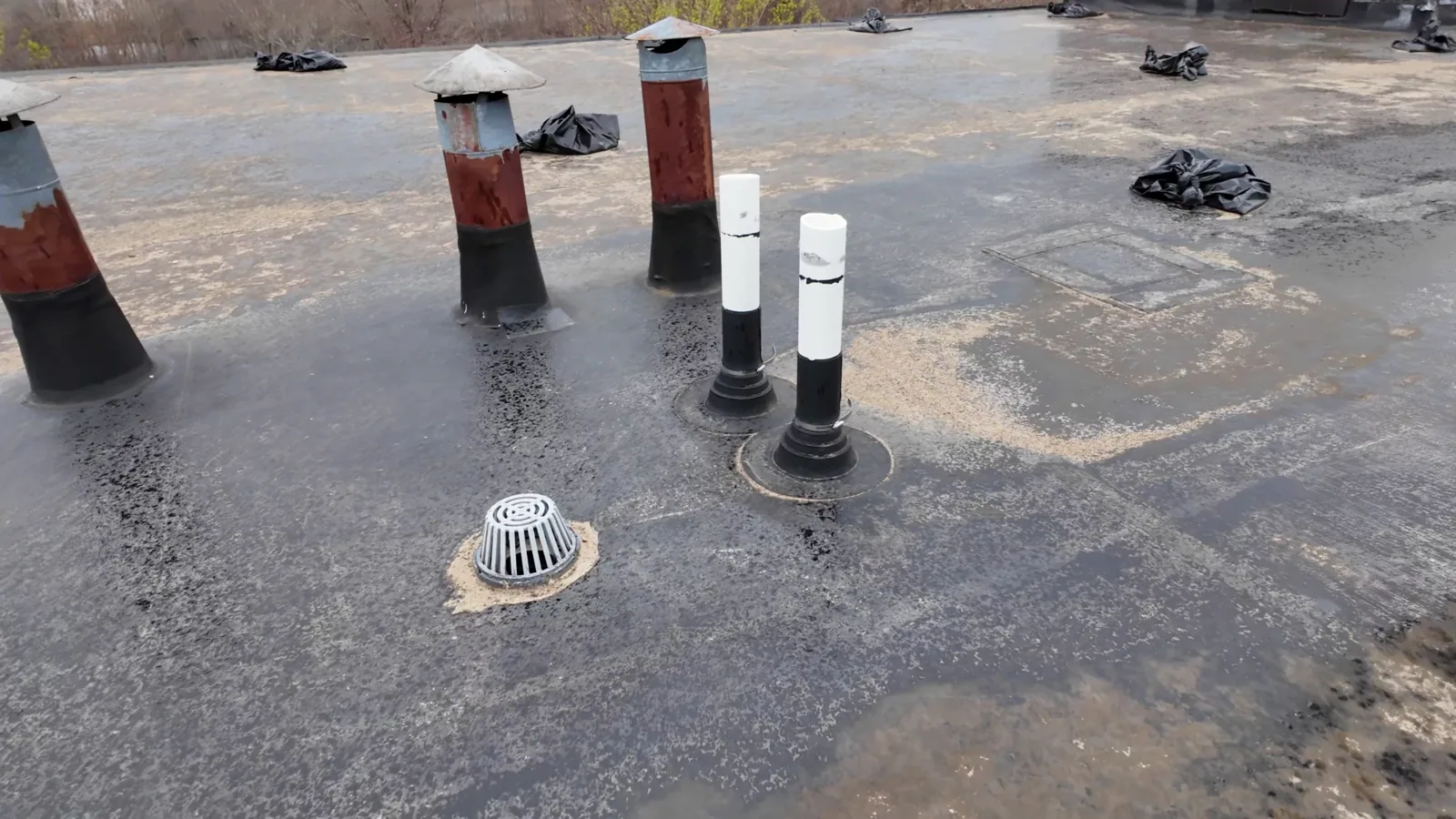
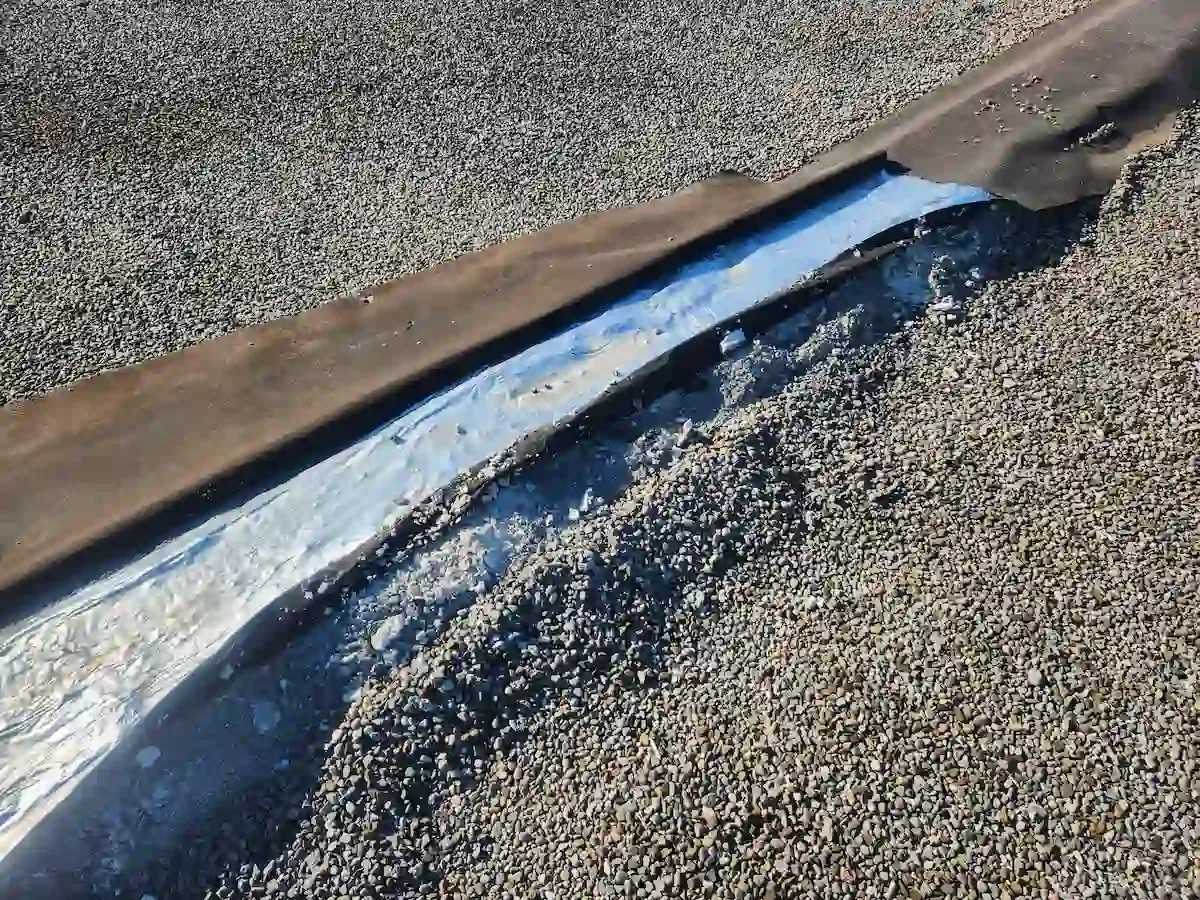
After the thaw we look first at drains, scuppers and gutters, checking for ice damage such as cracked sumps, bent gutters, displaced downspouts and pulled-away edge metal. Then we check the membrane for splits along seams and laps, which open when cold shrinks the sheet and the substrate cannot follow. Flashing at walls and curbs may show cracks where ice has lifted the termination, and sealant joints often fail in a hard freeze.
Roof sag and deck deflection need a different look. Heavy accumulated snow, or drifts against a parapet or a taller adjacent wall, can load one part of a roof more than another. We look for new depressions, ponding that was not there last year, cracked or dislodged insulation joints, and interior signs such as ceiling deflection or sticking doors. Anything suggesting structural movement goes to an engineer before roofing work proceeds. Rooftop units get a look as well, because ice can break condensate lines and snow can pack around intakes and curbs, leaving torn flashing that looks like a fresh leak path once the thaw begins.
Ice dams, frozen drains and the repair that holds
Ice dams are most familiar on pitched roofs, but on commercial buildings the same mechanism works at low-slope edges, behind parapets and above heated spaces where warmth from the interior melts snow from below. Water refreezes at the cold edge, backs up and finds its way beneath flashing. The permanent answer is usually better flashing height, an insulated and ventilated edge where the design allows, a heat-traced drain where the drain is vulnerable, or correcting the interior air leaks that warm the roof deck.
Drain damage is repaired with drain and scupper work that resets sumps and restores a watertight connection. Torn flashing and cracked termination bars are detail repairs, as set out in the flashing failure review, and split laps follow the seam failure method. If winter has exposed widespread splitting, the roof is telling the owner that its remaining life is shorter than the register assumed.
Emergency response during a freeze
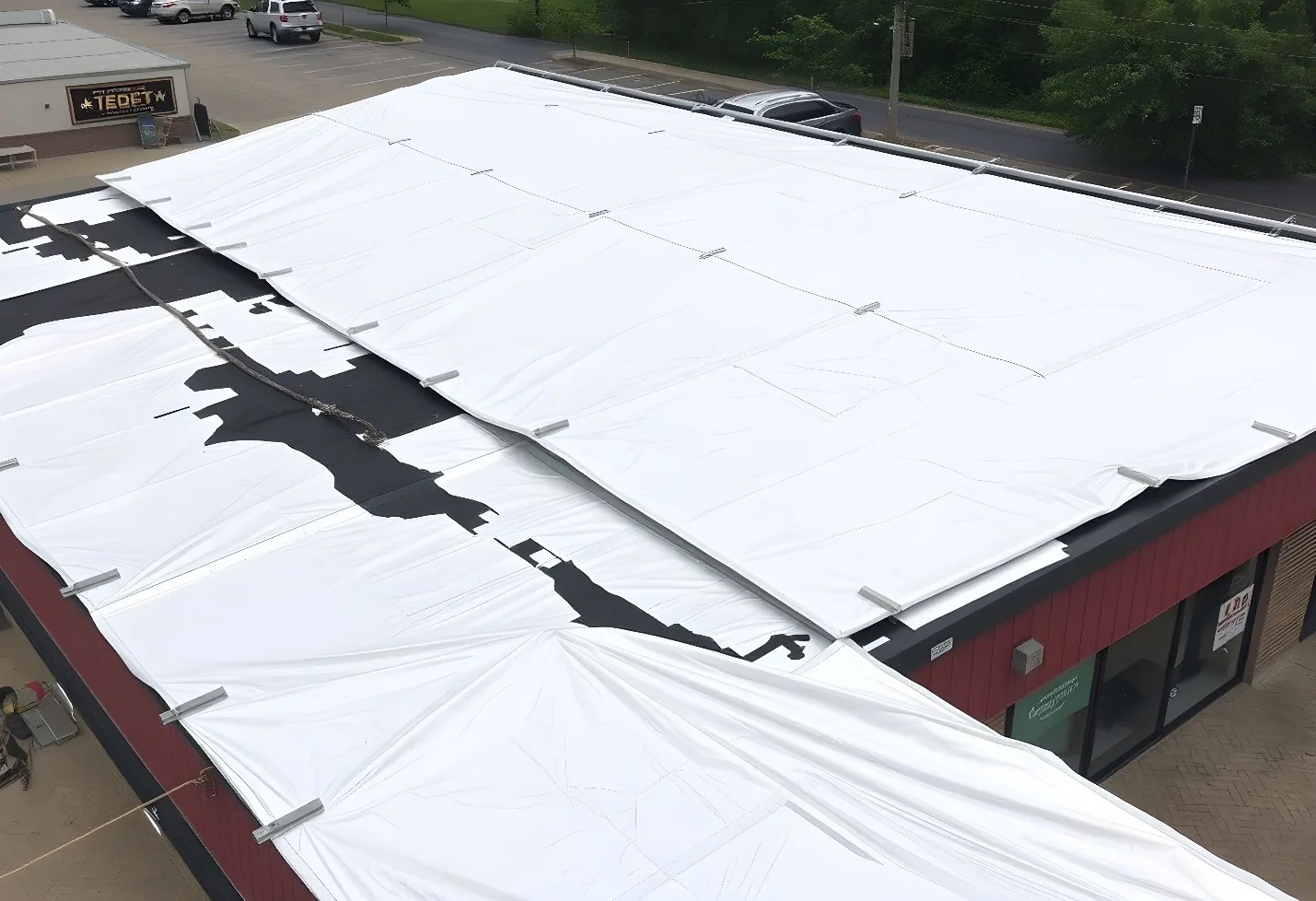
A leak during a freeze presents a dilemma: most adhesives and sealants will not cure well in the cold, and a roof covered in snow cannot be inspected completely. We use temporary measures designed for low temperatures, remove snow and ice only where needed to reach the problem, and avoid cutting into frozen membrane. That work is recorded as stabilization, and the permanent repair is scheduled for a milder, drier week.
For active interior leaks or a roof that has deflected enough to worry the building staff, emergency roof repair is available at any hour. A call that reports the location of water inside, the time it started, and whether the building has been heated or not helps us bring the right materials. Roof access for crews, and snow removal arrangements, should be confirmed with the building contact before the visit, along with who can authorize added work if the first look finds wet insulation under the ice.
More About Snow and Ice Roof Damage Repair in Olathe, KS
Winter findings in the capital year
The spring inspection is one of the best dates in the year for a portfolio check, because winter has tested each building under the same conditions. A manager with sites in Olathe, Shawnee and along the K-7 corridor, which KDOT describes as a 40-mile north-south metro route, can compare roofs by how they came through. Those that show new seam splits, repeated drain problems or new ponding move toward the front of the replacement queue.
A capital plan built on such comparisons is easier to defend than one built on age alone, and a preventive maintenance visit each autumn, clearing drains and checking details before the first freeze, reduces the amount of winter damage to find. Where the damage is already there, we record it with photographs and keep the repair lines separate from the reserve assumptions.
Owners who want to get ahead of winter can use the autumn walk to set up the spring one. Photograph each drain and edge detail in October from a fixed position, then repeat the shots after the thaw. Comparing the two sets makes ice damage obvious and gives the repair scope a clean before-and-after record.
Commercial Roofing Questions
How do we know whether snow weight is a problem on our roof?
The building's structural design and the code in force when it was built define its snow capacity, and an engineer is the right person to evaluate a concern. Visible warning signs include drifted accumulation against walls, ceiling deflection and new ponding. We report what we see on the roof and refer structural questions to the engineer.
Should snow be shoveled off a commercial flat roof?
Only with caution and a plan. Removal tools can cut membrane, and crews on a snow-covered roof face unseen hazards such as skylights and drains. If a structural concern exists, an engineer should direct removal, and we can coordinate roof protection. For routine accumulation, the better investment is clear drains and sound seams.
Why do leaks appear after the thaw and not during the freeze?
Frozen water cannot enter a seam or flashing gap, but meltwater can, and snow melting against a wall base or behind a parapet puts more water at the detail than rain does. The leak often shows when ice softens, days or weeks after the cold snap. The location tells us which detail to inspect.
Can heat tracing prevent drain freezing?
On some drains and gutters, heat cable keeps a channel open during melt. It adds electrical work and maintenance, and it does not replace sound slope and clean outlets. Whether it makes sense depends on how often the drain freezes, which the maintenance record shows.
Does winter damage count as a storm claim?
Some policies treat ice and snow damage as covered perils and others limit it, so the policy and the insurer decide. Photographs with dates, a roof plan marking each finding and a record of the weather on the date of the loss all help. We can prepare that package alongside the repair scope.
Send the winter leak list and the drain locations
Share the property list, the roof-area register, interior leak reports from the freeze season, and your access contact. We will inspect drains, seams and details after the thaw, repair what opened, and separate those repairs from your capital planning assumptions.