
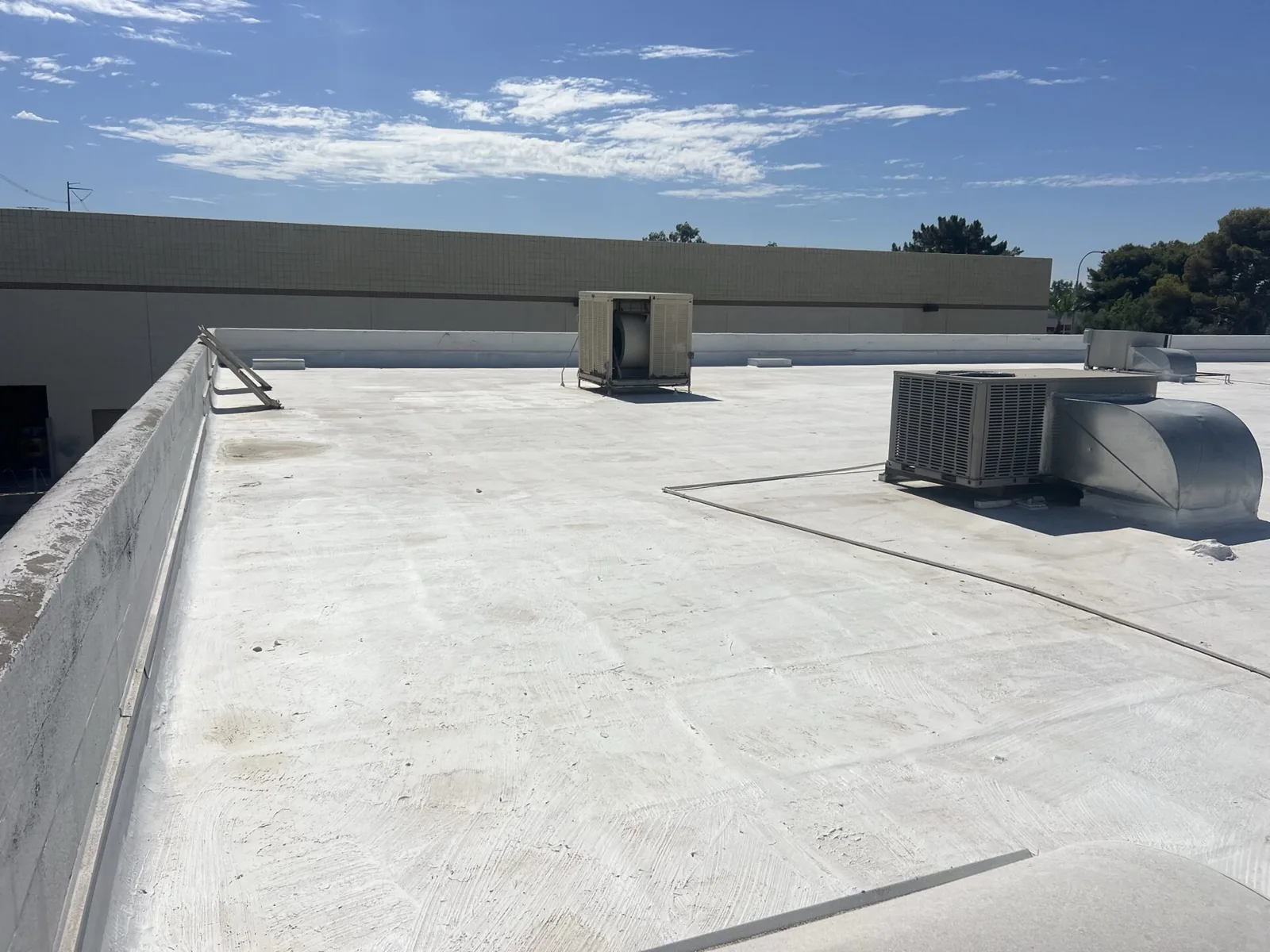
Spray Polyurethane Foam Roofing in Olathe, KS
A spray foam roof comes up for review on a recoat schedule, not on the age of the foam, because the protective coating over the foam is the layer that wears first and the layer that decides how long the insulation underneath stays dry. For an owner in Olathe, KS the planning question is when the coating on each roof section will need renewal and whether hail, foot traffic or ponding has already damaged the foam beneath it. With 37.54 inches of precipitation a year and about 110 freezing days, a foam roof must shed water without standing pools that break down the coating. We read the surface, test the foam and record the recoat date so the capital year reflects the roof as it is.
Send the coating history, core data and the recoat window
Share prior reports, storm history and the capital year under review. We will document the foam and coating and separate current repairs from renewal planning.
Foam, coating and the single-layer logic of SPF
Spray polyurethane foam is a two-component liquid sprayed onto a prepared deck or an existing roof, where it expands and cures into a rigid, closed-cell insulating layer. Because it is sprayed, it forms a continuous surface with no seams, and it adheres around curbs, pipes and irregular shapes without separate flashings. The foam itself is not weatherproof against sunlight, so a protective coating, commonly acrylic, silicone or a polyurethane topcoat, covers it, usually with granules in high-wear areas.
The coating is the maintenance item. It chalks, thins and wears with sunlight and foot traffic, and once the foam is exposed it degrades quickly. The foam thickness varies across the roof, since it is built up to create slope to drains, so the register records thickness at core locations. The system can be installed over a range of existing roofs when the substrate is dry, which is why it appears in both new and retrofit scopes.
Foam density and thickness also set traffic tolerance. A denser foam handles foot traffic from service technicians, while a lighter foam is suited to roofs with little traffic. Rooftop units should sit on curbs or stands that clear the surface, and walk pads belong along service routes. We log both so the register shows where the surface will wear first.
Hail, wind and freeze days on a foam roof
Hail is the best-known threat. Hail comes with severe storms in the metro area, and a strike can bruise the coating or dent the foam, opening a path for water. Foam can absorb some impact, but fractures in the coating are small and easy to miss from above. After a reported event we inspect on foot, check for dents, cracks and punctures, and take cores where damage is suspected. Whether a given roof was hit is settled by the inspection. Hail repairs are written under hail damage repair with the affected sections and the coating repair detail.
Wind is a smaller worry for a fully bonded foam roof, since the foam is adhered across the whole surface. Even so, the wind that tracked from Gardner into Olathe on May 19, 2024, with gusts estimated near 80 mph, is a reason to check edge metal, flashings and debris impacts along its path. Freeze days matter for ponding: water that freezes in a low area stresses the coating and can spall the surface, so low spots go into the drainage record.

Coating wear, blisters and wet foam
On a foam roof, the first signs of aging are on the surface: chalking, color change, thinning at traffic paths and small pinholes. Blisters or soft spots can mean trapped moisture or a loss of bond to the substrate. Rough areas where the foam was applied in a gust show as uneven texture, and they hold dirt and water.
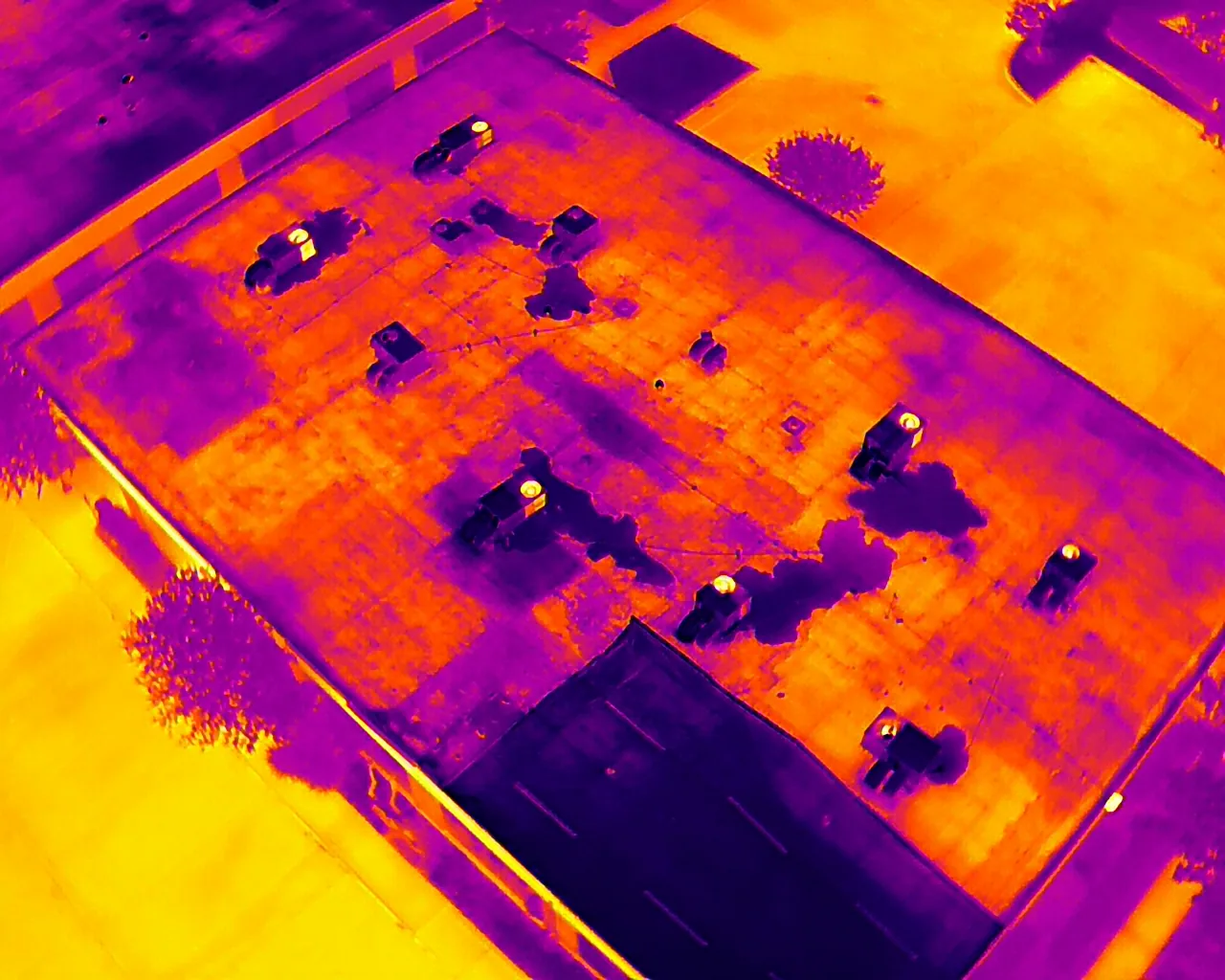
We probe the surface with a gentle tool, cut cores for thickness and density and check the cores for moisture. An infrared moisture survey can identify wet foam or wet substrate under the surface, and the findings go into the register by roof section. If a section has foam that has soaked up water, that foam is cut out and replaced. A section with dry foam and a worn coating needs only a recoat, which costs less than replacement and extends the window.
Penetrations are simple on a sprayed roof, since foam wraps pipes and curbs, but the coating at those corners wears first. We check the junction at every penetration, the top edge of the foam at walls and the termination at parapets, where a coating that has pulled away lets water behind the foam. A repair there is small and quick when found early.
Recoat, patch or remove the foam
The decision follows the foam. When the foam is dry and well bonded, the answer is a thorough cleaning, repair of damaged areas and a new coating, applied at a rate the manufacturer specifies for the product used. Silicone suits low areas that hold water, while acrylic suits sloped, well-drained surfaces. The two should not be mixed without testing compatibility.
If the foam is wet, brittle or delaminated, patching becomes a short-term measure and the capital plan should price removal and replacement of the affected foam or a new roof assembly. Replacement can use a new membrane over a cover board or a new foam application over a recovered substrate. The scope version states thickness, density, coating type and dry film, so bids can be compared on the same basis.
Drainage details decide how a repair holds. A foam roof can be sloped toward drains with additional foam, which corrects ponding without a tear-off, and crickets behind curbs can be formed the same way. Scuppers and gutters still need clear outlets, and roof drains and scuppers that sit above the surface of the roof will keep a pond in place whatever the foam thickness.
More About Spray Polyurethane Foam Roofing in Olathe, KS
Application conditions and overspray control
Foam application depends on the weather. Substrate and ambient temperature, humidity, wind and surface moisture must be within the limits set by the foam system, and a roof that is damp at dawn may not be ready until late morning. We watch the forecast, protect against overspray with screens and cover, and schedule the work so that the roof is coated in the same window as the foam. Foam left uncoated is exposed to sunlight and rain.
Overspray is the main risk to neighbors, vehicles and building finishes. Wind carries mist, so the crew stages and monitors wind speed. Around large industrial developments like the FedEx and 56 Commerce Center sites the economic plan describes in southern Olathe, cars, trucks and dock equipment sit close to a roof, so overspray protection has to reach the yard as well as the building. The code edition that applies, the 2018 International set adopted in September 2019, is confirmed with the city for each project.
Along the K-10 corridor through De Soto, Lenexa and Olathe, the same limits on wind and overspray apply, so the daily forecast decides the start time.
Commercial Roofing Questions
What decides when the coating must be renewed?
Visible wear, thinning at traffic paths and exposed foam. A recoat before foam is exposed protects the insulation and extends the replacement window.
Can foam be applied over an existing roof?
Yes, when the existing assembly is dry and well attached. Moisture readings and adhesion tests decide, and wet material is removed first.
How does hail affect a foam roof in Olathe?
It can bruise the coating and dent the foam. We inspect after a reported storm, map damage and repair the coating at each affected spot, with core samples where the foam may be compromised.
Is foam a good choice for roofs with ponding?
The foam can be built up to correct low areas, and a silicone coating tolerates standing water better than most. Chronic ponding still points to drainage that should be corrected.
What does the 2024 wind path mean for an SPF inspection?
In the reported Gardner-to-Olathe path we check flashings, edge metal and coating for impact damage. Roofs outside the path stay on their normal interval.
Send the coating history, core data and the recoat window
Share prior reports, storm history and the capital year under review. We will document the foam and coating and separate current repairs from renewal planning.