Commercial Roofing in Gardner, KS
May 19, 2024 gives Gardner, KS owners a fixed date to measure a roof against, because the National Weather Service documented straight-line wind damage along a path from Gardner into Olathe, with an estimated 80 mph peak wind in its survey. A property manager with a replacement window in the next few capital years can use that date to ask a precise question: has this roof been walked since, and what did the edges look like? Gardner had a 2025 population estimate of 26,154, about $330 million in 2022 retail sales and roughly $32 million in transportation-and-warehousing receipts. Repair, replacement, recovery, coating and inspection are the commercial roof work we do, and we treat the 2024 event as an inspection trigger for any roof in the reported path.
Bring the storm date and the last roof report
Send the property list, photographs, leak history, prior reports and an access contact. We will return a documented assessment that separates current repairs from capital planning assumptions.
A dated wind event as a review trigger
The survey describes a single storm line, and it also notes brief tornadoes elsewhere in Johnson County the same evening. For a Gardner owner it gives a reason to compare the roof before and after: the last report, the last set of photographs, any leak that began in late spring 2024.
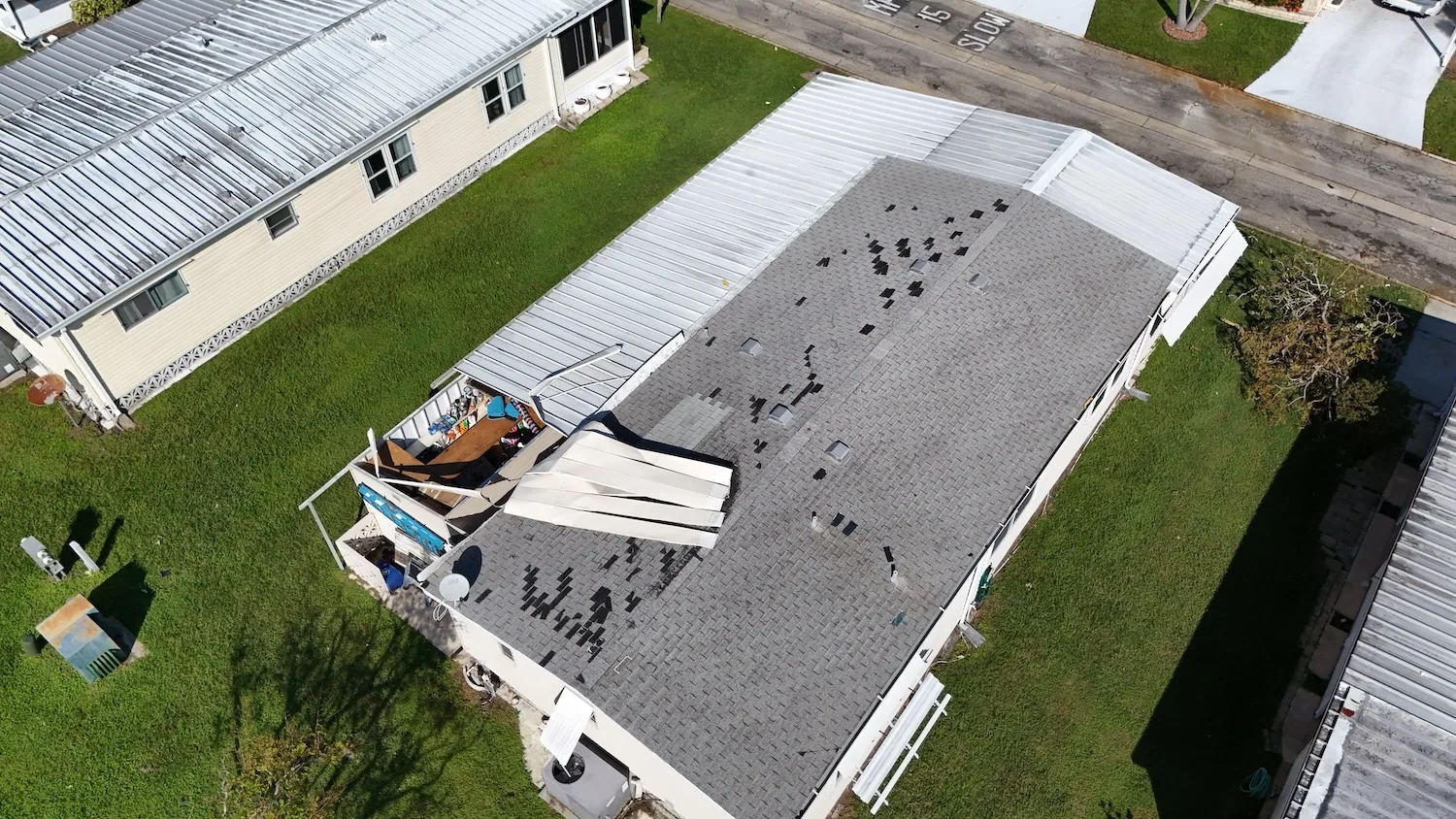
Where those records are missing, a fresh condition survey builds the baseline. We look for the signs wind leaves even after the weather has passed: edge metal pulled out of line, lifted flashing, loose coping, billowed or wrinkled membrane near corners and fasteners that have backed out. Our wind damage roof repair work begins with those details.
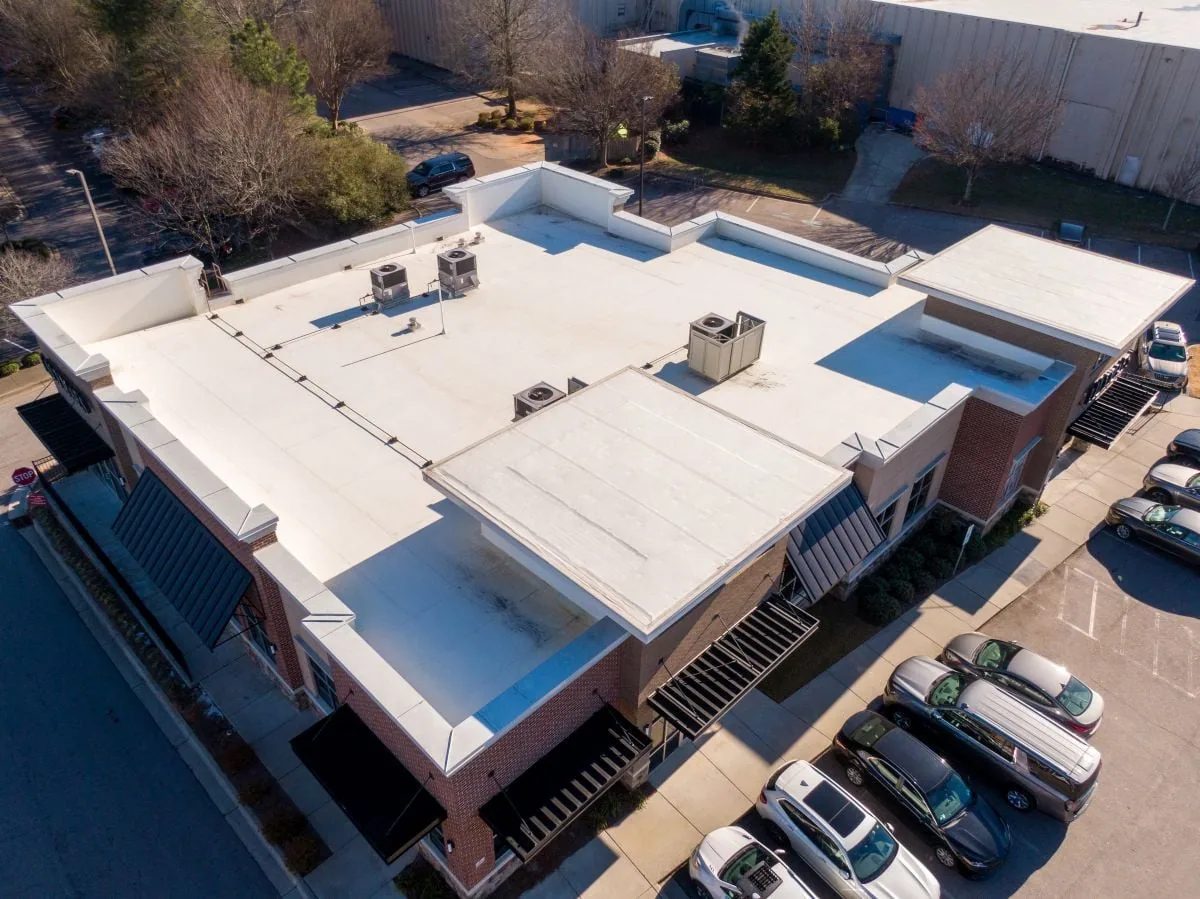
Gardner reports both retail and transportation-and-warehousing figures, so roofs in town may include storefront membranes, metal-clad buildings or low-slope roofs over goods handling. Each type fails differently under wind, and the survey method adjusts: seams and terminations on single-ply, ridge and rake trim on metal, and coping and gravel stops on built-up and modified bitumen.
Edges, corners and perimeter attachment
Wind lifts a roof from the outside in. Pressure is highest at corners and along edges, which is why the perimeter gets the heaviest attachment on a well-built system and the closest look on a survey. If edge metal is loose, wind can get beneath the membrane, and a single unsecured termination can allow progressive peeling across the field.
We check coping and edge metal for fasteners and cleats, membrane terminations for open or lifted edges, parapet flashing for tears and adhesion loss, and the field membrane for billows that suggest broken attachment. Findings are photographed and located on the plan. The edge metal and coping repairs that follow are often the lowest-cost, highest-value work an owner can do ahead of the next storm season.
Rooftop equipment deserves its own look after a wind event. Units can shift on their curbs, condensate and refrigerant lines can be pulled, and panels or hoods can be bent. Each shift opens a path for water, and the repair is often small if caught early.
Order of work after a storm
The first task is dry-in. Open sections are tarped or patched, loose metal is secured and drains are cleared. Then comes documentation: photographs, moisture readings and notes on suspected causes. Finally, a permanent scope separates repair from replacement and splits event damage from age-related wear.
Material lead times matter in the weeks after a widespread storm, when many owners order at once. Early scope approval lets us place orders sooner, and temporary protection holds the roof until materials arrive. Our storm damage roof repair response is set up to move first on protection and then to plan, so the building is not left open while the paperwork catches up.
Records that support a post-storm decision
Useful records include the roof plan, the last inspection report, photographs from before the storm, repair invoices, warranty papers, leak logs and any insurer correspondence. Even imperfect records help. A photograph from a tenant on a roof visit can show a flashing that has since moved.
If a claim is under consideration, we document the roof in a format an adjuster can follow, separating observed event damage from older conditions. Our roof insurance claim assistance does not decide coverage, which is the carrier's role, but it gives the owner a clear file and a defensible scope.
More About Commercial Roofing in Gardner, KS
When wind damage points to replacement
Localized wind damage, such as a peeled corner or a lifted flashing, supports localized repair and an upgraded attachment at the failure. Replacement becomes the sound choice when peeling has run through large areas, when insulation has taken on water or when the roof was near the end of its life before the event.
Where replacement is chosen, the new system can be specified for better edge performance: heavier perimeter attachment, upgraded edge metal and clear details at parapets. We describe the options with the field evidence so the owner can weigh cost against the exposure that remains.
Insulation moisture decides the scale of work. A peeled corner over dry insulation is a patch and an upgrade; the same peel over wet insulation is a section replacement. We run moisture checks before the permanent scope is written so the price reflects the real extent of the damage.
Sending the Gardner property file
Provide the roof plans, dates of the last inspection, any photographs since May 2024, leak history and the access contact. Owners with other properties in Olathe or Spring Hill can send those too, and we will use the same condition scale across all of them.
Include the contact who controls the roof hatch, the hours when the building is quiet and any tenants with equipment that cannot be shut down. Those details shape the first visit and the order of the repairs that follow.
Commercial Roofing Questions
Should every Gardner roof be inspected because of the May 2024 wind event?
The survey path is a reason to look. A roof inside or near the reported path, or one with leaks that began after the storm, deserves a documented walk. Others can be scheduled in the normal cycle. Observed condition, not the date alone, decides what repair is needed.
What are the first signs of wind damage on a flat roof?
Loose or displaced edge metal, lifted or torn flashing at parapets, wrinkles or billows in the membrane near corners and exposed fasteners all point to wind. Water stains inside near exterior walls after a storm are another clue. We trace each sign on the roof to the detail that failed and photograph it for the file.
Is it worth upgrading edge metal when repairing a roof?
Often yes, because the edge is where wind starts its work. Heavier-gauge metal, closer fastener spacing and continuous cleats make the perimeter more resistant. The extra cost is a small part of the repair and can reduce the chance of another failure. We price the upgrade separately so the owner can see the difference.
How do temporary repairs affect a later claim?
Done correctly, they help. Tarps, patches and cleared drains limit further damage, which insurers expect owners to do, and photographs taken before and after show why they were needed. Receipts for materials and labor belong in the file. What hurts a claim is hiding damage before it is recorded.
Do emergency calls reach Gardner after hours?
Yes. Emergency service covers every hour and every holiday. A crew can secure loose metal, tarp open sections and clear drains, then send a short report so the manager can brief tenants and notify the carrier. The permanent scope follows once the roof is dry and safe to walk.

Bring the storm date and the last roof report
Send the property list, photographs, leak history, prior reports and an access contact. We will return a documented assessment that separates current repairs from capital planning assumptions.