
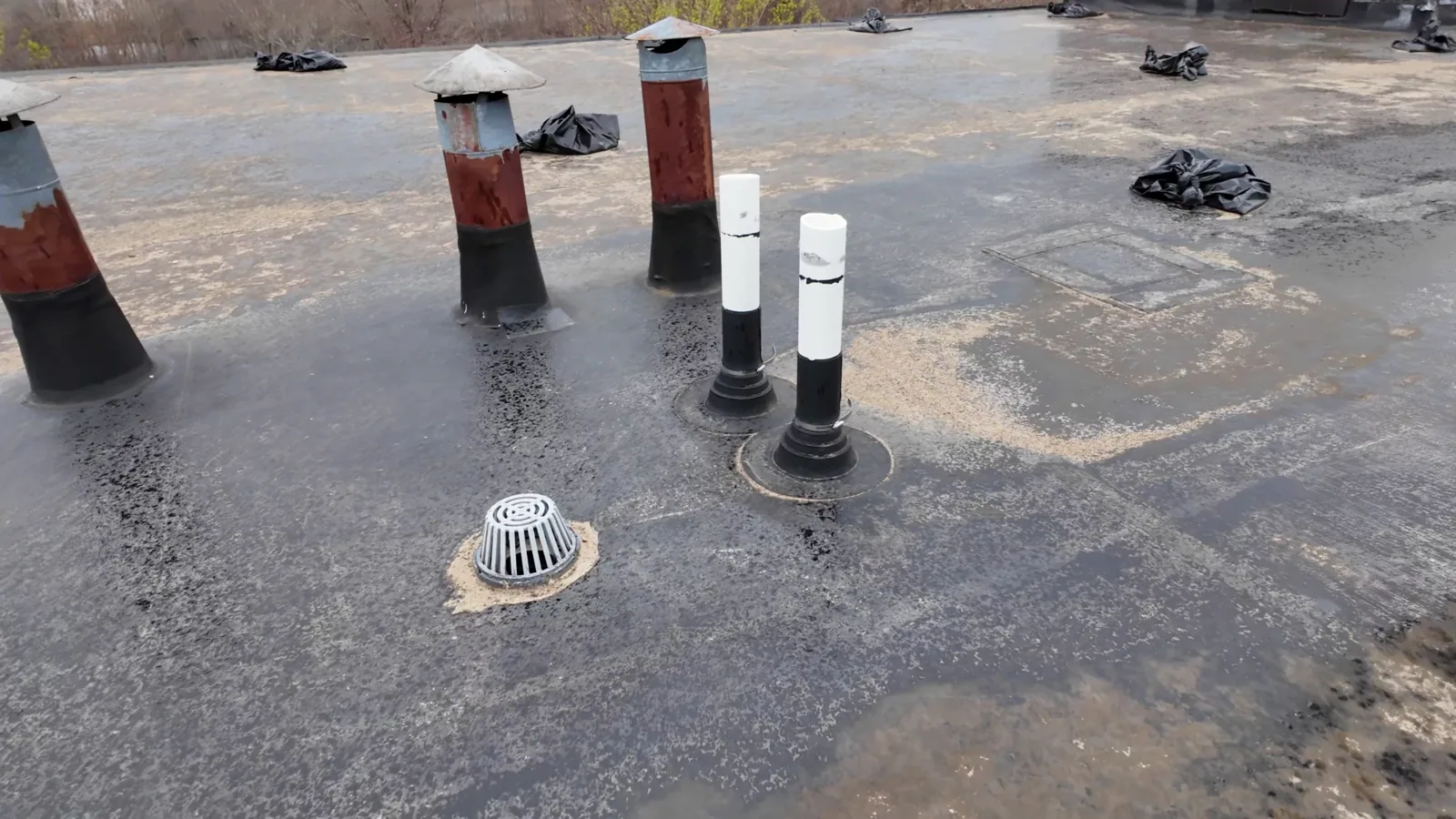
Commercial Roof Drain and Scupper Repair in Olathe, KS
An outlet only makes sense when the report connects it to the roof zone and the route water follows. Olathe’s NOAA station logged 37.54 inches of precipitation in a normal year; minimum temperatures reached 32°F or lower on 109.6 days. Those climate measures make drainage review a standing planning item. We trace the actual slope, drains, scuppers, and low areas, then compare the field condition with the roof-area register and prior repair record.
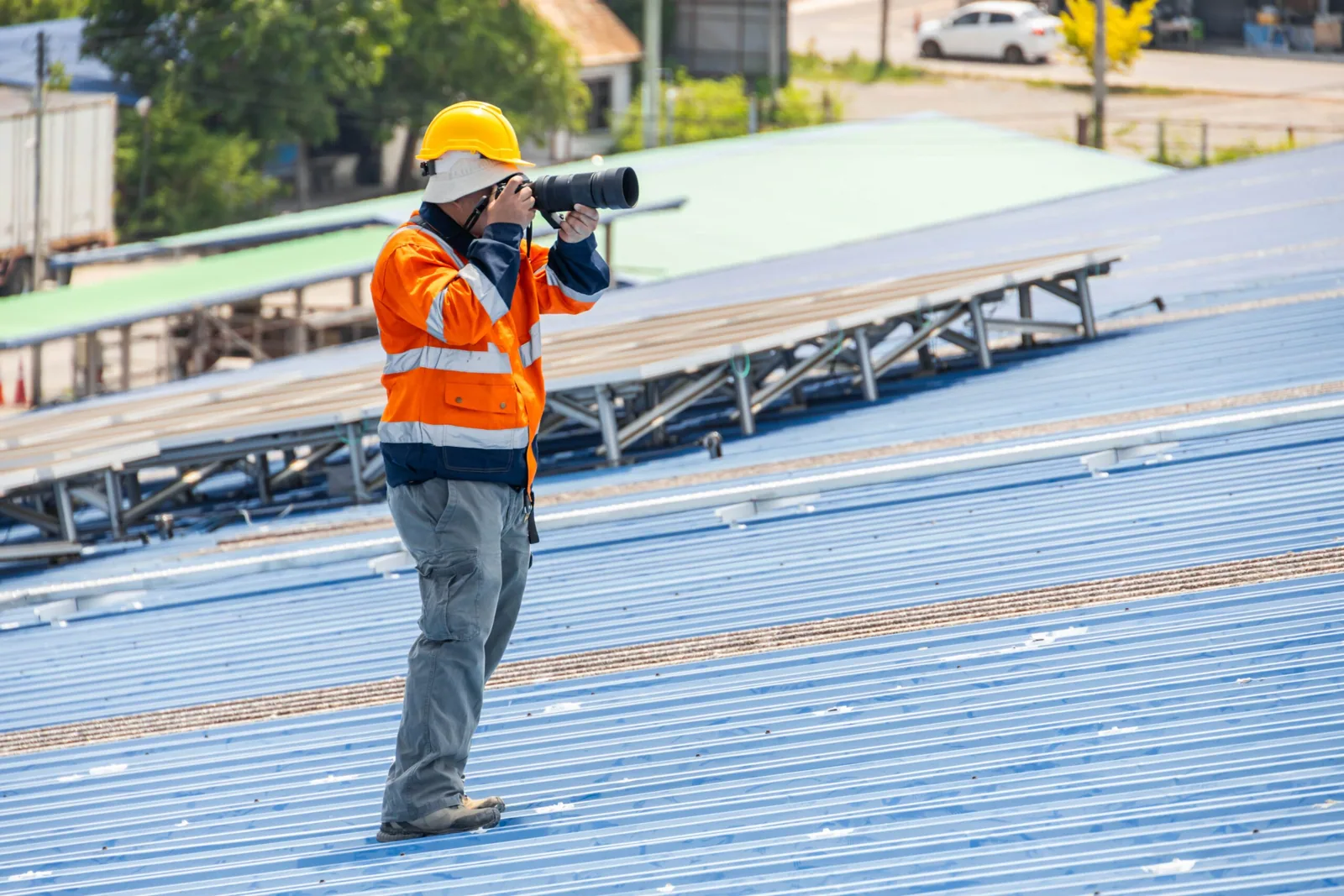
A commercial roof inspection can map the outlet and nearby details. The scope distinguishes a blocked opening from a failed drain bowl, a low area from a damaged membrane, and a drainage correction from routine debris removal. That separation gives an owner a bid basis tied to the condition that was observed.
Map the drainage work before pricing
Share the roof plan, reported low areas, outlet photographs, prior repairs, decision date, and access contact. We can document the water path and separate maintenance, outlet repair, and slope correction in a scoped proposal.
Map the Route from Field to Outlet
At each roof area, we note where water collects, which outlet serves it, and whether a curb, wall, joint, or addition interrupts the path. The roof plan identifies the zone; the field walk confirms what is open and reachable. We photograph the drain, strainer, bowl, flashing, and membrane, then record debris, separation, corrosion, or blockage.
An obstructed drain may need clearing and a flow check. A failed flange, loose ring, damaged bowl, or open flashing calls for a different repair. We separate cleaning from correction so the owner can tell whether maintenance is enough or a detail must be rebuilt. A scheduled maintenance plan tracks repeat debris and slow outlets by roof area.
The drain connection must suit the membrane and its attachment. We check the termination before selecting a patch or replacement detail. If water passes through the outlet but remains across a low area, the outlet may not explain the condition. The report marks any need for elevation review, testing, or slope correction.
At a scupper, we check the throat, wall sleeve, flashing return, and discharge point as separate details. Staining below the opening can guide the inspection, while the roof-side connection confirms what repair the evidence supports. If a downspout or leader is part of the assembly, we note its connection and discharge path. The scope states whether the correction ends at the roof outlet or continues to a connected component, so responsibility and quantity remain clear.
Correct Low Areas with a Measured Scope
A cricket or tapered insulation layout can redirect water when the current slope does not carry it to an outlet. We map the low area and elevations, then check the deck, insulation, and transitions that constrain the correction. Material placed over a wet or unstable assembly can conceal the cause, so the proposal identifies any opening or test needed before pricing a larger build-up.
The repair line separates taper, drain work, membrane tie-ins, and edge or wall terminations. Added height may affect supports, doors, curbs, or flashing. A tapered insulation and cover-board scope can compare the build-up with replacement when insulation or attachment changes the decision. A bounded correction can remain separate when the assembly is suitable.
For repeat ponding, we log the area, extent, observation date, and whether water remains after clearing. A roof repair scope addresses a confirmed defect and states what the drainage correction changes.

Plan for Olathe’s Seasonal Water and Freeze Exposure
The Olathe airport normal set records substantial precipitation and frequent freeze days. That context makes seasonal drainage review relevant, while the assembly determines whether an outlet or seam needs correction. We document the field condition, then compare the same low area in a dated photo at the next inspection.
KDOT’s corridor study follows 16.5 miles of K-10 between the Douglas/Johnson County line and I-435, crossing the cities of De Soto, Lenexa, and Olathe. The study inventories industrial, high-tech, office, commercial, education, and residential uses along the route. That mix can affect access windows and equipment coordination. A visit in Olathe begins with the address and roof-area register.
For shared ownership, list each outlet and open condition separately. We can group visits by access window while keeping findings, approvals, and review dates with each building. The record then supports a repair decision in the correct capital year.
Separate Maintenance from Construction
Pricing changes with outlet count, access, membrane type, surrounding detail, water path, and slope correction. Clearing differs from replacing a connection or adding taper. The estimate lists preparation, materials, protection, tie-in, and any opening needed to confirm the deck, plus weather or access limits that affect sequence.
Access can change the work window when drains sit near rooftop equipment, occupied areas, or restricted staging zones. We identify the contact who can release the work area and whether another trade must move an obstruction. If a water test is proposed, the scope states the test area, method, and any interior observation needed during the check. These conditions make the bid basis easier to compare than a single allowance for all outlets.
If the drain and membrane need separate work, show both lines. A TPO assembly review can define compatible details after the system is identified. For broader deterioration, compare drainage repair with a replacement alternative using the same roof areas, insulation assumptions, and outlet quantities.
Keep unknown deck or moisture conditions out of a fixed quantity. State what must be opened, how the area is protected, and who approves added scope. A photo-based condition report can connect the test and approval to future maintenance.
More About Commercial Roof Drain and Scupper Repair in Olathe, KS
Keep Outlet Findings in the Roof Record
After work, record the date, outlet identifier, correction, material, photographs, and any water test. Closeout distinguishes a cleared drain from a rebuilt connection and notes what was not tested. If water remains, identify whether another elevation review is needed. The next interval can follow observed recurrence.
A portfolio drainage record can group repeat defects and proposed work without transferring one building’s finding to another. Our capital timing review carries separate repair and renewal choices into the budget year.
Send the roof plan, low-area report, outlet photographs, repair history, decision date, and access contact. We will map the water path and prepare a scoped choice between maintenance, correction, and broader review.
Commercial Roofing Questions
How do you tell a blocked drain from a roof-slope problem?
We inspect the strainer, bowl, flashing, and path leading to the outlet, then note whether water remains after the opening is clear. A persistent low area may need elevation review or a tapered correction. The report separates cleaning from construction so the owner can compare the right work lines.
Can a scupper be repaired without replacing the roof?
A localized connection may be repairable when the surrounding membrane, wall detail, and discharge path remain serviceable. We document the opening, termination, and adjacent condition, then identify any testing or material compatibility question. A broader replacement review follows only if the field record supports it.
Does ponding mean the roof needs replacement?
Ponding alone does not set the scope. We map the area, check drainage outlets and assembly condition, and determine whether a localized correction or broader review fits the evidence. The estimate keeps slope work, drain repairs, and unrelated membrane defects in separate lines.
What does a cricket or tapered correction change?
It can redirect the water path toward an outlet when the existing slope is inadequate. We review deck and insulation condition, height transitions, attachment, and tie-ins before pricing the build-up. The scope shows the intended route and any adjacent flashing or equipment detail affected by added height.
Which drainage details should appear in the closeout?
Keep the outlet identifier, correction, materials, dated photographs, and any flow test with the roof-area register. Note whether water remained and which areas were not checked. That record gives the next maintenance visit a clear comparison point and preserves open work for the reserve review.
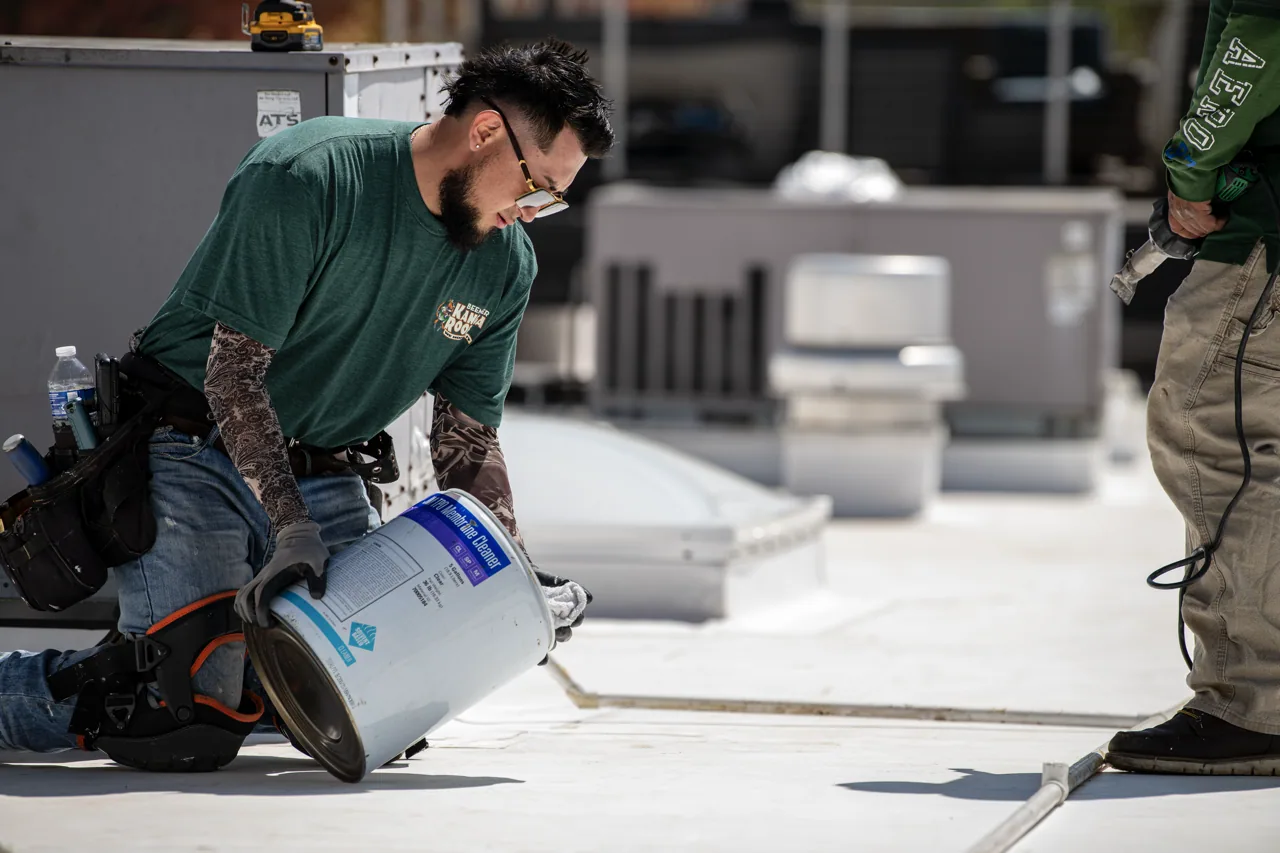
Map the drainage work before pricing
Share the roof plan, reported low areas, outlet photographs, prior repairs, decision date, and access contact. We can document the water path and separate maintenance, outlet repair, and slope correction in a scoped proposal.
