College and University Roofing in Olathe, KS
Deferred maintenance on a campus is a list that grows quietly, and roofs sit near the top of it because their failures are expensive and visible. A facilities office that tracks the whole campus needs more than a list of leaks. It needs a register that ranks every roof section by condition and consequence, with a capital year attached, so that the next budget cycle can fund the right buildings in the right order. We build that register one section at a time, then match it to the academic calendar, where the work windows are set by terms, exams, move-in and commencement.
KDOT lists education among the uses along the K-10 corridor through De Soto, Lenexa and Olathe, where learning and training sites sit beside industrial and commercial neighbors.
Send the campus roof list and term calendar
Share the building list, roof plans, deferred maintenance register, term and event dates, and the facilities contact. We will walk each section and hand back a written plan in which current repairs and capital planning assumptions are listed apart.
Mixed construction across a campus
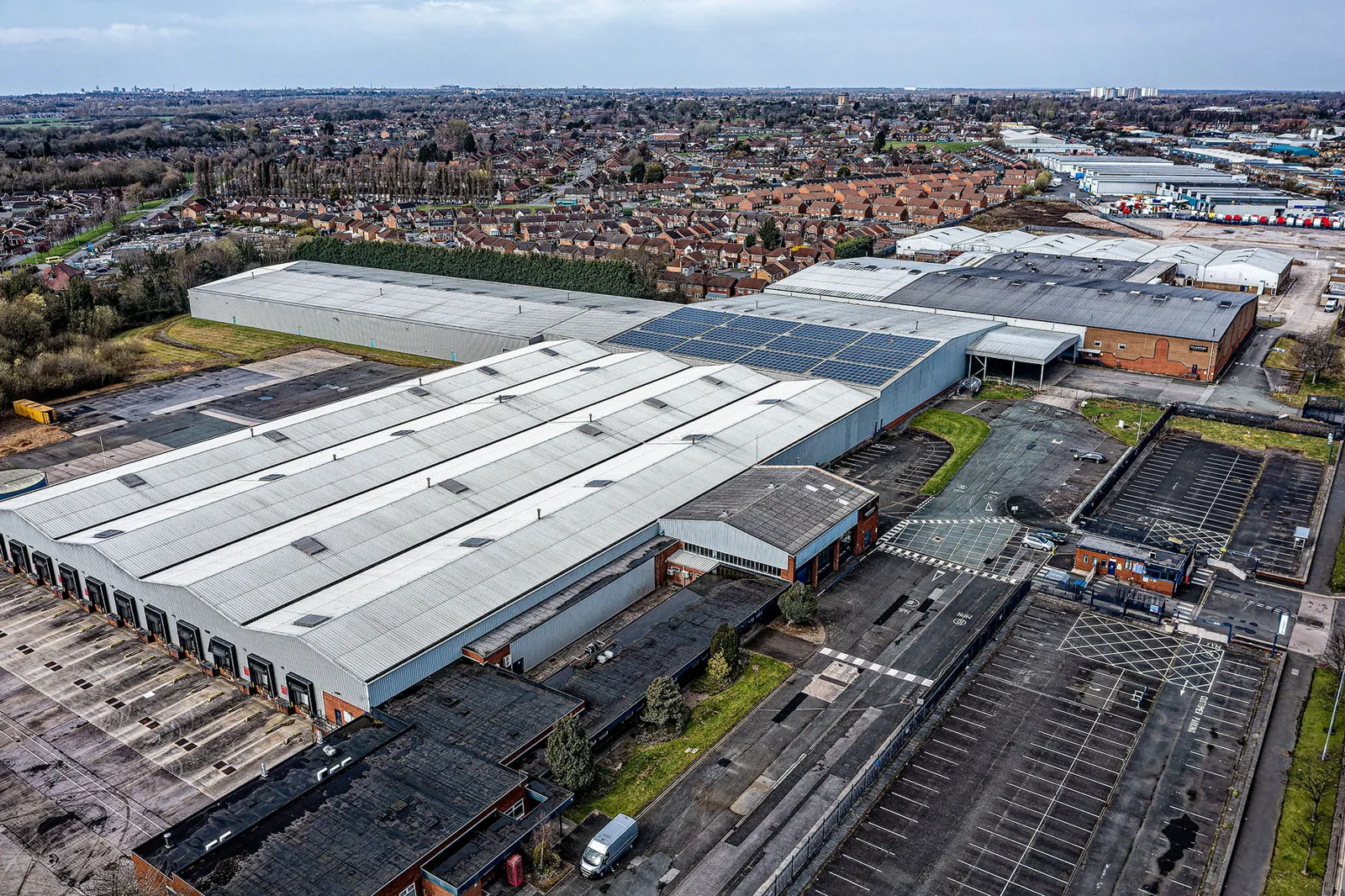
University roofs rarely match. A lecture hall from one era carries a built-up roof, a science building from another has a single-ply membrane, a residence hall has a low-slope roof with many penetrations, and the library has a mix of metal and flat sections. Each system fails in its own way, and each calls for a different repair. We identify the system on every roof section, then record seam condition, flashing, drainage and insulation moisture where evidence calls for it.
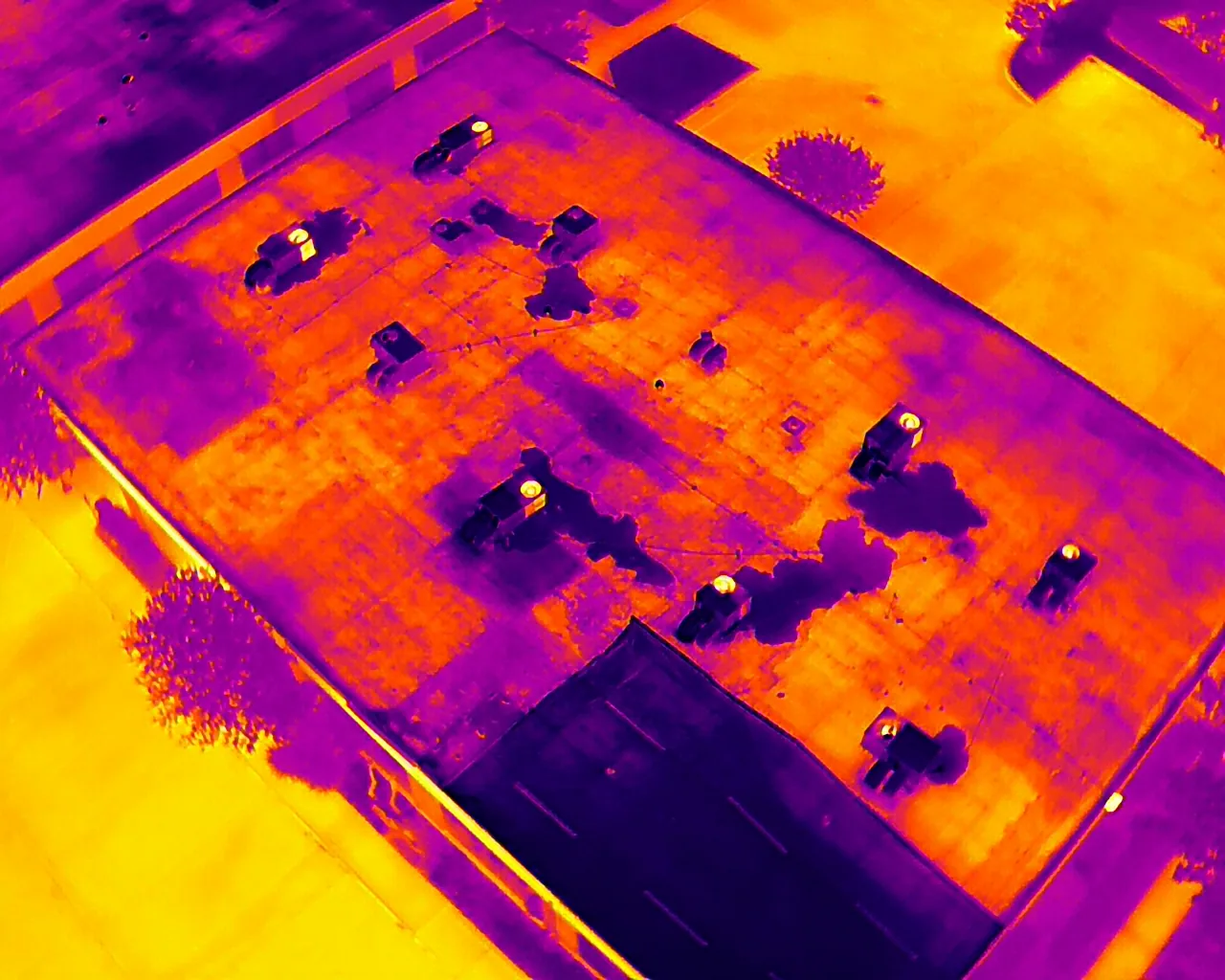
Lab and research buildings carry heavy mechanical loads, with fume hoods, exhaust fans and supply units penetrating the roof in numbers. Their curbs and boots deserve a closer look, and an infrared moisture survey may be worth doing before any funding request, since wet insulation affects both energy use and interior conditions. A drone inspection speeds the survey of tall or sprawling buildings.
Weather record and campus roof stress
The local normals describe a long freeze-thaw season: 109.6 freezing-low days, 37.54 inches of precipitation, and monthly means between 29.8°F and 78.8°F. Campus roofs that have gone through many winters show it at seams, flashings and copings first. Severe thunderstorms in the metro include hail, so a post-storm inspection records what each roof shows.
The straight-line wind that ran from Gardner into Olathe on May 19, 2024, estimated at 80 mph at its peak, is the dated storm that most clearly calls for a campus-wide check. Rooftop screens, edge metal and lightweight roof sections on any building in the path should be inspected and photographed. The findings give the institution evidence for insurance and a repair list for maintenance staff.
Reporting to a facilities committee
College facilities decisions pass through committees, trustees and finance offices, so each roof recommendation needs to stand on documented evidence. A decision summary lists the buildings in priority order, the evidence for each, the options and the time limits. Photographs, core results and moisture maps go behind it.
Where a roof is sound, the summary says so and gives an inspection interval. Where it is not, it states which defects drive the recommendation and what happens if the work is deferred another year. When funding is limited, the summary also proposes a staged approach, with urgent sections first and the remainder placed in a later capital year, so a partial budget still delivers a coherent result.
When repair spending signals renewal
A campus work-order system holds the best evidence of a failing roof. When the same building generates leak tickets every spring, the pattern matters more than any single ticket. We pull the work-order history, plot the tickets on the roof plan and look for clusters. A cluster at one drain or one wall points to a local fix. A scatter across the whole membrane points to a roof at the end of its service life, and further patching buys little.
The comparison between repair and renewal is then a matter of arithmetic and risk: what the repairs cost over the next several years, what a failure would damage inside, and what a new roof would cost spread over its life. We write both sides on the same page.
More About College and University Roofing in Olathe, KS
Working around terms, move-in and events
Campus work has hard dates. Summer is the main construction window, but summer programs, camps and conferences use some buildings. Move-in week blocks access to residence halls, and commencement and exam periods affect nearly everything else. Our scope version places the project on the calendar with those dates marked, and it lists the access routes, staging areas and noise limits that apply near classrooms and labs.
For buildings that cannot close, an occupied building reroofing approach separates work zones from pedestrian routes, plans deliveries around class changes and protects interior spaces below the active section. A campus project confirms with the city first which edition of the building, existing-building and energy codes governs; Olathe's notice names the 2018 set from September 1, 2019.
Campus-wide registers and shared standards
An institution with many buildings benefits from one register and a stable report format. A roof asset management program lets the facilities office track every section over time, and public institutions can connect it to the budget requests that public agencies must justify. When a recover is possible, the overlay option may preserve funds for another building.
The same register can hold a school building, a residence-style apartment building or a satellite site in Overland Park.
Records that shorten a campus assessment
Useful records include roof plans from construction and later additions, work-order history, warranty files, prior moisture surveys and the schedule of projects already funded. Mechanical engineers who service the lab and residence hall systems can often tell us where water collects around equipment. If records are thin, we start the register on the first visit and date it, so that every later inspection compares against something real.
Campus owners also gain from a short annual summary that rolls every building into one table: roofs inspected, repairs completed, open items and any change in ranking. Presented to the facilities committee each spring, it ties the summer work list to evidence and shows trustees how deferred maintenance is trending, without anyone having to climb a ladder to follow the argument.
Commercial Roofing Questions
How does a campus decide which roofs to replace first?
Rank them by condition and consequence together. A roof over a research lab with wet insulation outranks an older roof over a storage building that is still dry. The register shows both factors, and the committee adds its own priorities, such as enrollment plans or planned renovations.
Can residence hall roofs be replaced during the school year?
Usually it is better to avoid it. Summer is simpler because the building is empty. If a section cannot wait, we plan around quiet hours, protect interior spaces and keep work zones away from entrances.
What does a campus gain from a moisture survey?
It shows wet insulation that visual inspection misses, which lets the institution fund replacement where it is needed and skip it where it is not. The survey also gives a baseline for later comparison.
How are mixed roof systems handled in one contract?
Each system gets its own scope line with materials suited to it. A built-up roof may be repaired with compatible materials while a single-ply roof gets heat-welded patches. The contract documents list them separately so the work can be tracked.
Is a coating practical for a campus building?
It can be, on a dry and sound membrane. A coating adds surface protection and reflectivity with less disruption than a tear-off, but it does not correct wet insulation. We confirm condition first, then compare the coating with the alternatives.
Who documents storm damage across many campus buildings?
We inspect each affected roof, photograph damage with scale references and mark locations on the plan. A single report covers all buildings and separates storm damage from wear, which makes insurance submissions simpler.

Send the campus roof list and term calendar
Share the building list, roof plans, deferred maintenance register, term and event dates, and the facilities contact. We will walk each section and hand back a written plan in which current repairs and capital planning assumptions are listed apart.