Apartment and Multifamily Roofing in Olathe, KS
Olathe counted 53,072 households for 2020-2024, which puts housing at the center of what roofs in the city protect. For a multifamily owner, a roof is a reserve line, a risk to occupancy and a source of resident complaints, all at once. The replacement window is easiest to manage when it is chosen, not forced, and the way to choose it is to know the condition of every roof section before the first emergency call. We build that knowledge in a roof-area register, then convert it into a capital year and a phased scope.
The plan treats each building in a complex as its own asset, since age and condition rarely match across a site.
Send the site plan and leak ticket history
Share the building list, site plan, leak tickets with unit numbers, repair invoices, warranty paperwork and the maintenance supervisor's contact. We will inspect each building and return a written plan in which current repairs stand apart from capital assumptions.
Building-by-building field condition
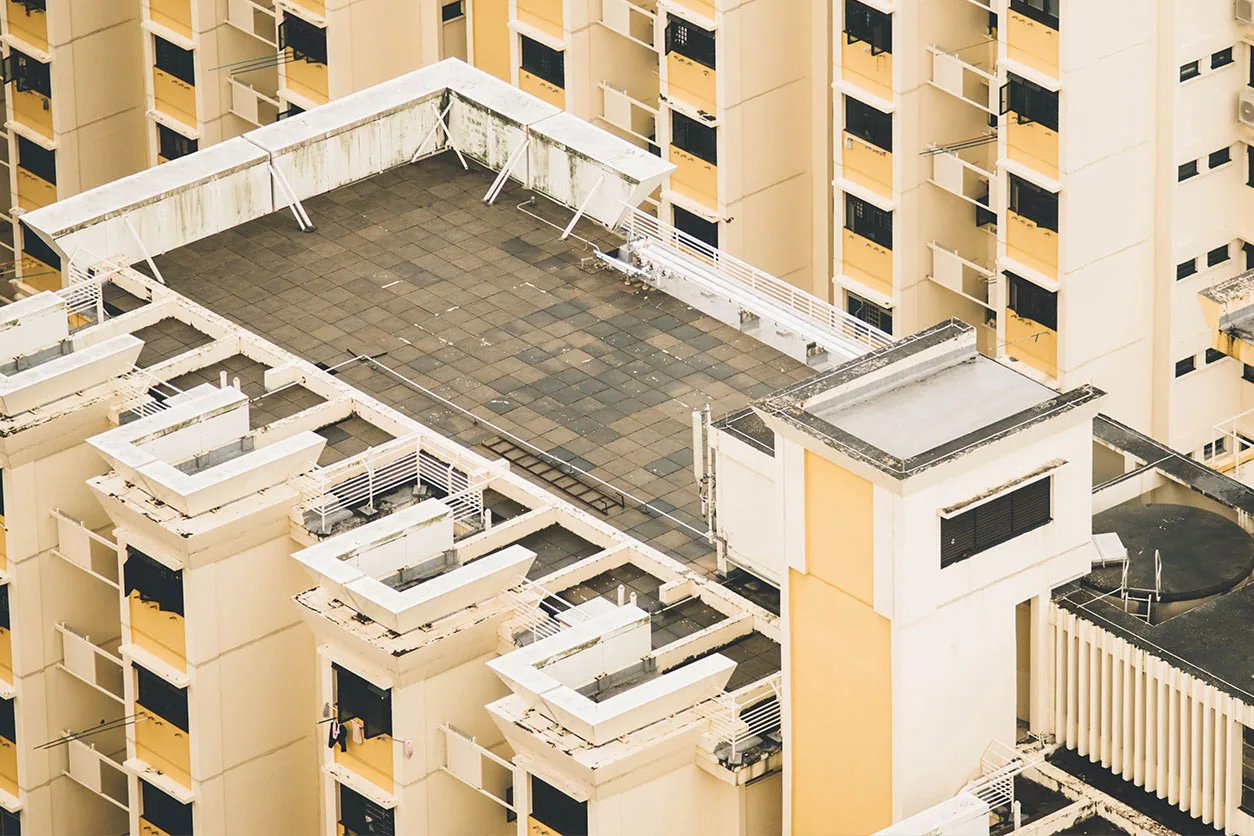
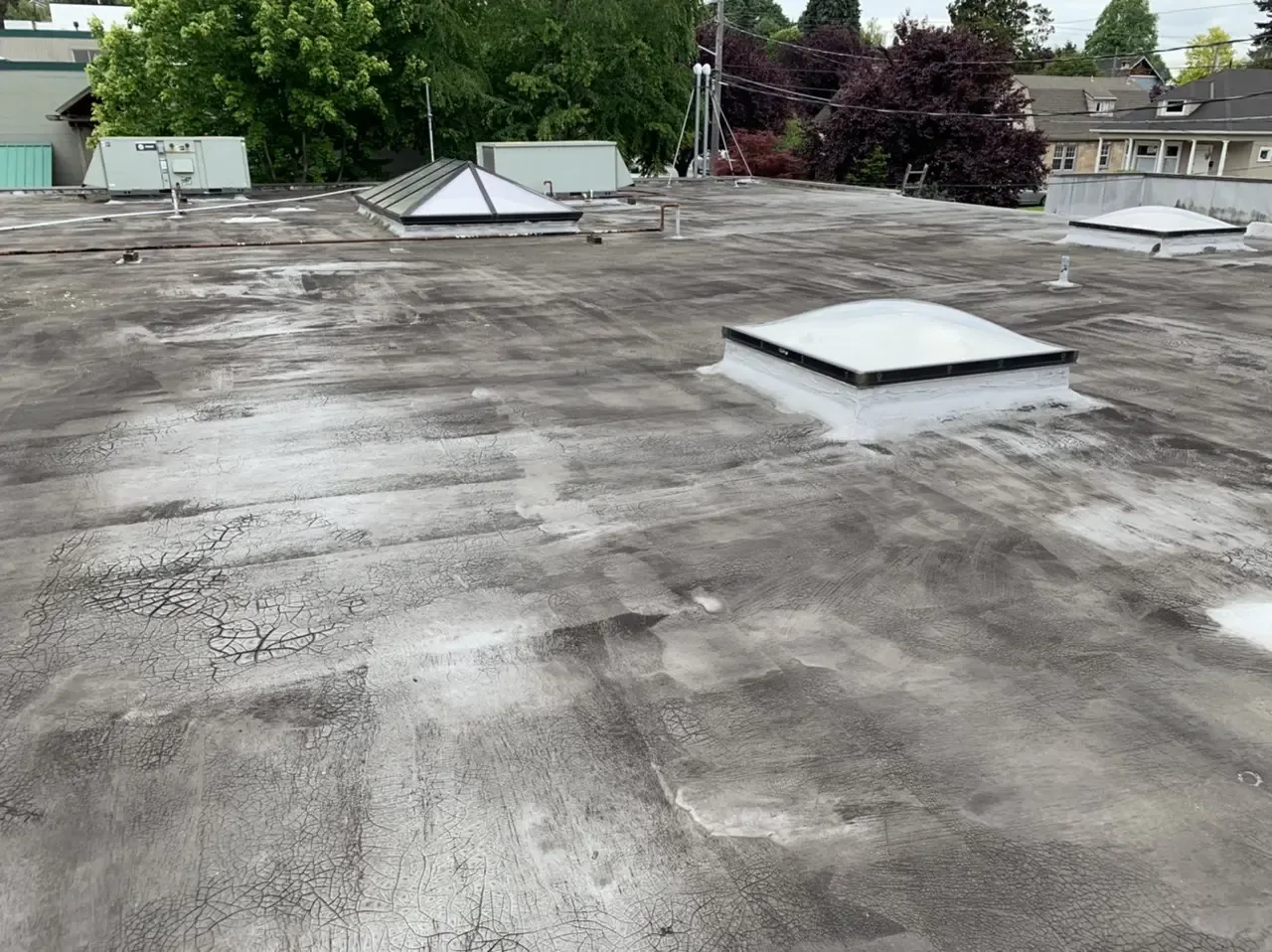
A garden-style complex may have a dozen buildings, a clubhouse, a leasing office and carports, all built in one phase or several. We walk each roof and record its system, age if known, drainage, penetrations and defects. Common problem areas include low-slope sections behind parapets, flat roofs over breezeways and stairs, balcony and deck transitions, and the flashing where a roof meets a stucco or siding wall.
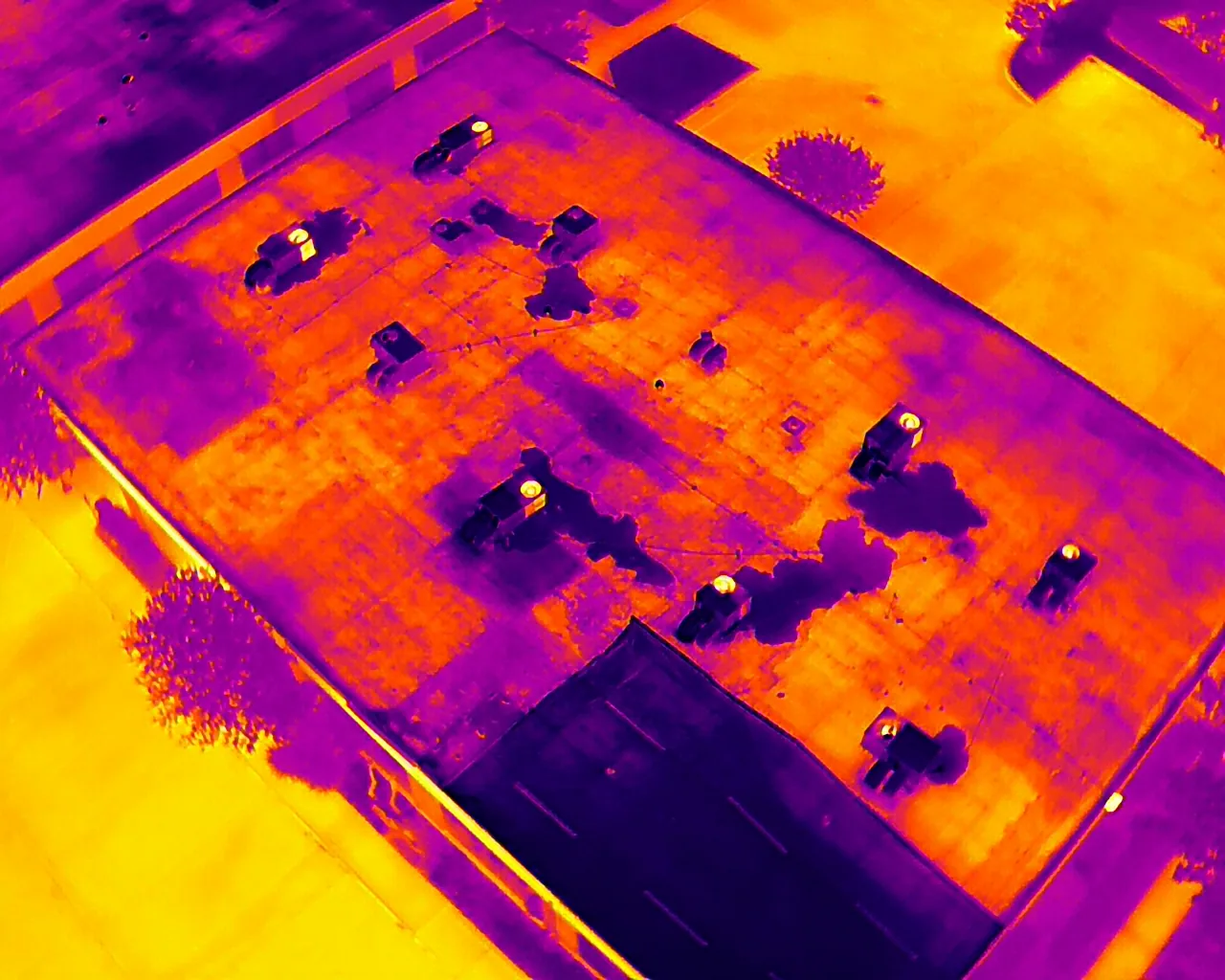
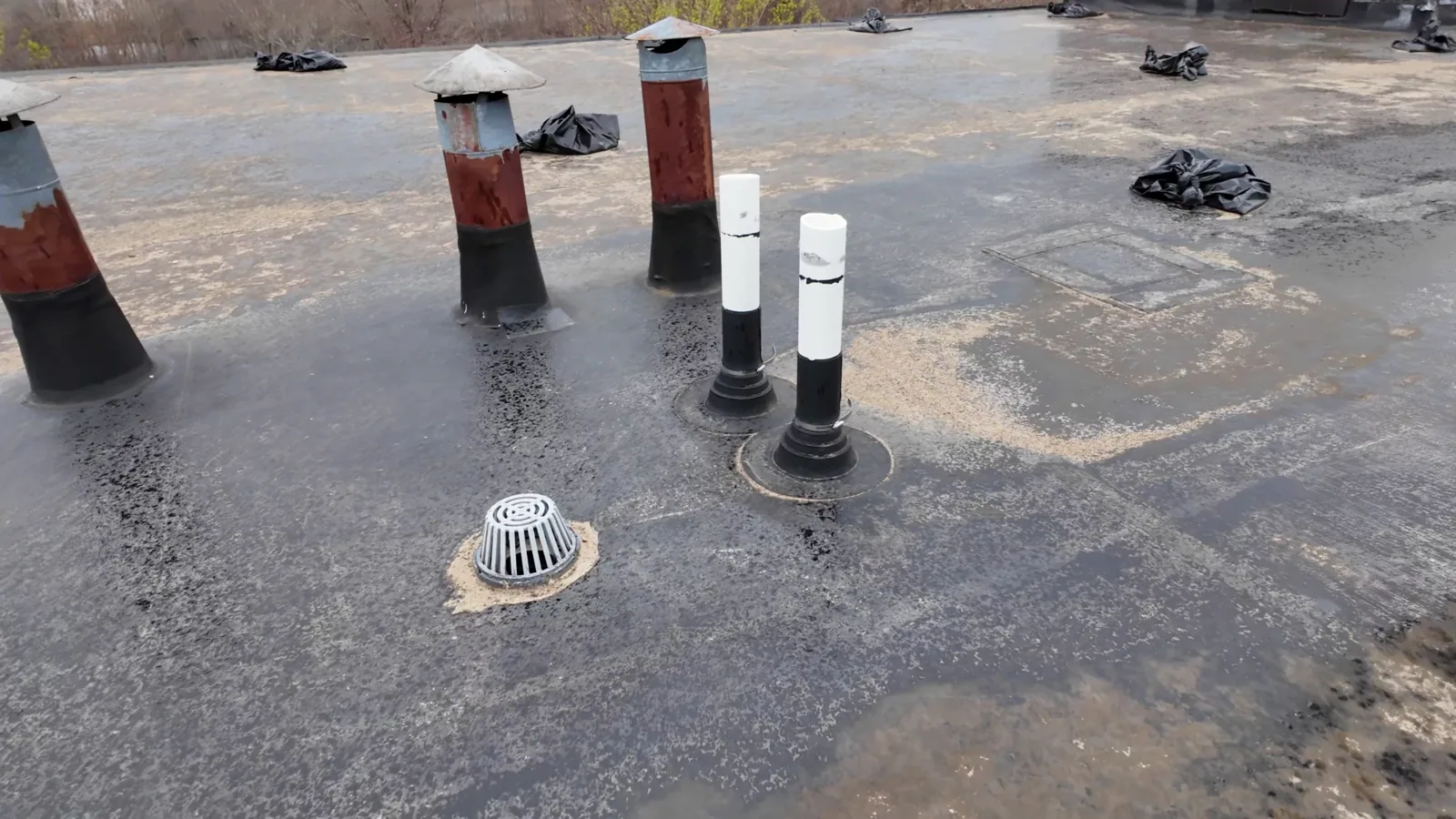
Plumbing vents, exhaust fans from bathrooms and kitchens, and dryer vents all pass through the roof and multiply the number of possible leak points. We tag them by building and record whether they are sealed or failing. An infrared moisture survey shows wet insulation before it becomes a ceiling stain in a unit, and drains and scuppers on flat sections get cleaned and flow-tested.
Carports and detached garages, if present, are checked too, since they often carry metal or low-slope roofs with their own drainage questions.
Residential setting and seasonal movement
KDOT counts residential use among the land uses along K-10, a corridor linking De Soto, Lenexa and Olathe with industrial, high-tech, office, commercial and education neighbors. A multifamily owner along that corridor shares access roads and drainage conditions with commercial neighbors.
The roof itself works through Olathe's weather. Each year brings 37.54 inches of precipitation and 109.6 days at or below 32°F, with the mean running 29.8°F in January and 78.8°F in July. Seams, flashings and parapet joints move with that range. The May 19, 2024 storm line carried an estimated 80-mph peak wind from Gardner into Olathe, so complexes in or near that path warrant a documented check of edge metal, flashing and rooftop vents.
Repair, recover or replace within a reserve plan
Waiting one more year is reasonable only when the evidence supports it: the number of open leak lines, the moisture result and how many units have been affected. A building with two isolated leaks and dry insulation is a repair candidate. A building whose repair log shows new leaks each spring has crossed into replacement territory, and each additional patch reduces the value of the money spent.
For flat sections, a recover may be possible when insulation is dry, avoiding tear-off noise above residents. Where a full tear-off is needed, a single-ply membrane with tapered insulation improves drainage. Each option is written with its scope, bid basis and the condition that would favor the alternative, so the owner sees the choice in one place.
A summary for owners, lenders and residents' managers
Multifamily roofs draw attention from several readers. The owner wants a capital year, the lender wants evidence that collateral is sound, and the on-site manager wants to know which buildings will generate calls next. A summary that ranks buildings by condition and consequence serves all three. It lists open defects with photographs, states what happens if work is deferred and gives an inspection interval for the roofs that are not scheduled for work.
Keeping the summary current after each visit means the next refinancing or sale starts with an answer to the roof question instead of a scramble.
More About Apartment and Multifamily Roofing in Olathe, KS
Resident notice, noise and phasing
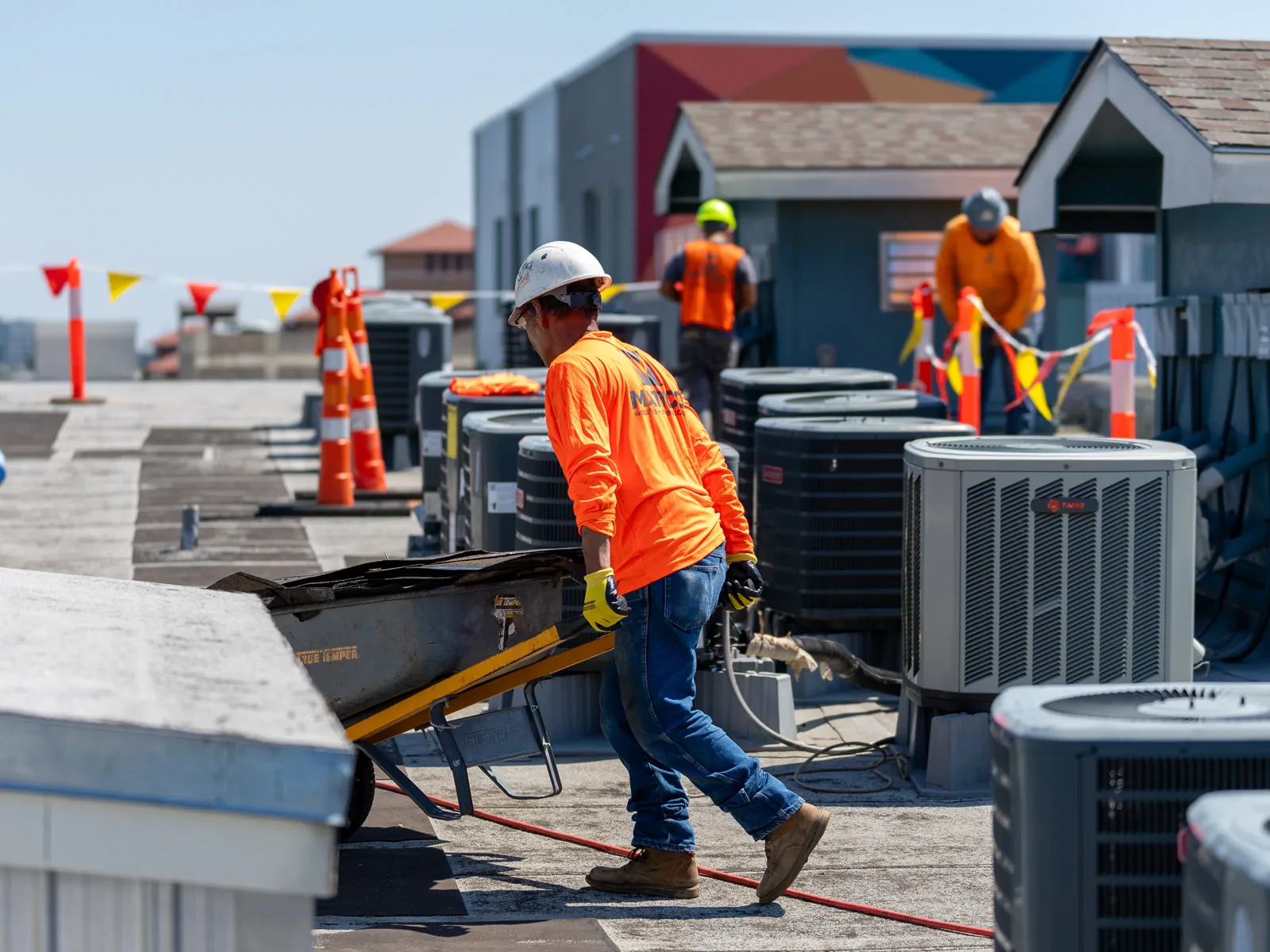
Residents live under the work, and many work from home or sleep during the day. The scope version sets work hours, notice periods and procedures for balconies, parking and trash areas. A courtesy notice with dates goes out through the management office, and we supply the information. Phasing by building lets the owner keep the burden spread, and temporary protection is staged at the end of each day.
Each building's reroofing review begins with the code edition in force, which since September 1, 2019 has been Olathe's 2018 set, plus whatever amendments the city confirms. The occupied building reroofing plan carries all of this on paper before material is ordered.
Parking matters on a multifamily site. Material deliveries and hoisting take space that residents use every day, so we mark a staging area, protect cars from debris, and keep fire lanes clear. Trash enclosures and package rooms near the work are coordinated with the office so service continues.
Owners with several complexes
A property management company or an investor with many complexes needs consistent records. A shared register tells the committee which buildings have the oldest roofs, the most leak complaints and the highest consequence. Complexes in Olathe and Lee's Summit can be compared on the same register, and a roof capital plan spreads replacement across years.
The resident sensitivity at a senior living community and the occupancy-driven scheduling at a hotel raise questions similar to an apartment's.
Records that speed up a complex assessment
Useful records include a site plan with building numbers, maintenance tickets that mention leaks, unit numbers affected, repair invoices, warranty documents and the maintenance supervisor's contact. Maintenance technicians usually know which buildings leak first, and a short walk with one of them can point to the worst roofs. If records are thin, we build the register on the first visit with dated photographs and a plan of each building.
Resident complaint forms, if they record the date and unit, give an interior map of leaks that we can match to roof features above.
Before work starts, a walk with the on-site manager helps too. Balcony access, trash enclosures, resident parking and package rooms near the staging area are easier to protect when the people who deal with residents every day have seen the plan. Their questions often catch a detail, such as a window unit or a satellite dish mount, that the roof drawings do not show.
Commercial Roofing Questions
How are residents told about roof work?
The management office sends a notice, and we provide the dates, hours and any access needs. Residents with balconies or parking near the work zone get specific instructions. A single point of contact on site handles questions.
Can leaking units be fixed before a full replacement?
Yes. We trace each leak to its source and make a targeted repair, then record the result. If repairs keep recurring, the record supports the case for replacement.
Does a recover work on apartment roofs?
On dry, sound low-slope sections it can, and it spares residents the noise of tear-off. A moisture survey and core samples settle whether the existing insulation can stay. If it cannot, we price a tear-off instead.
What do hail and wind events mean for a complex?
Metro-area thunderstorms can bring hail, so we inspect after reported events and record what is present, and the findings support insurance claims.
Why do leaks show up in the top-floor units first?
Water enters at the roof and reaches the nearest ceiling. Penetrations, parapets and drains are the usual entry points. We map the affected units and look for the shared roof feature above them.
What interval suits routine roof visits at a multifamily complex?
A spring and fall visit works for most complexes, with an extra check after severe storms. Those visits clear drains, check flashing at parapets and vents, and update the drainage record. The first inspection shows whether any building needs a tighter interval.
Send the site plan and leak ticket history
Share the building list, site plan, leak tickets with unit numbers, repair invoices, warranty paperwork and the maintenance supervisor's contact. We will inspect each building and return a written plan in which current repairs stand apart from capital assumptions.