
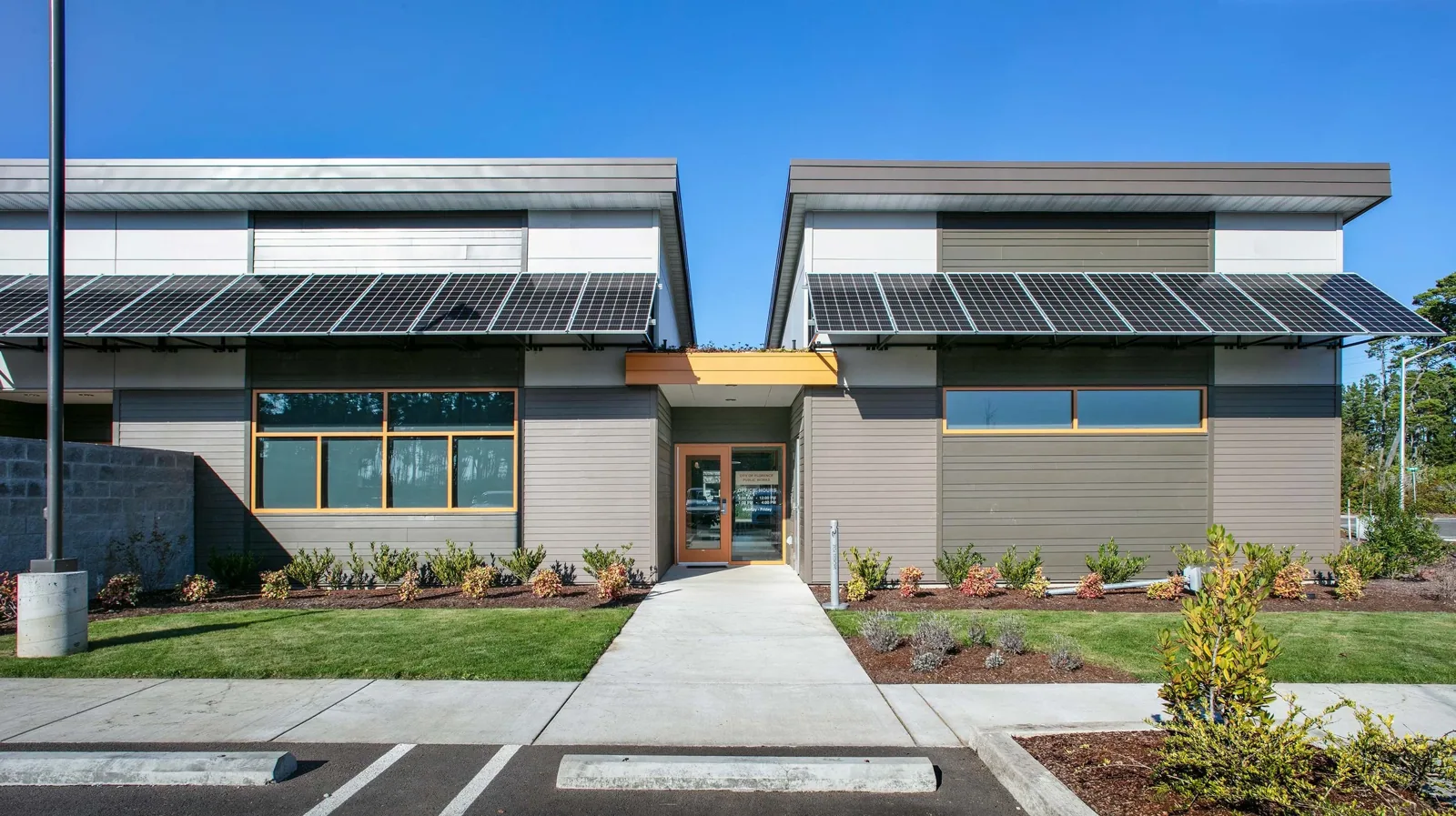
Roofing for Cities, Counties and Public Agencies in Olathe, KS
A capital improvement plan names a year for each roof long before anyone has measured the roof, and the gap between that planned year and the real field condition is where public agencies lose money or lose time. Olathe, KS logs freezing lows on 109.6 days of a normal year and 37.54 inches of precipitation, and that weather presses on whatever public buildings an agency owns, from administration offices and maintenance yards to libraries and recreation facilities. A dated roof-area register lets the agency test the planned year against the observed record, so a roof is advanced when it is failing early and deferred when it is not.
Send the building list and the capital plan years
Share the roof-area register, prior reports, capital plan entries, appropriation dates and facility contacts. The assessment we return puts current repairs and capital planning assumptions on separate lists.
Planning documents and the roofs they depend on
Olathe's economic-development plan lists long-range planning resources that include a comprehensive plan, a downtown plan, a transportation master plan and corridor plans for Woodland, K-7, Cedar Creek and the I-35 and Santa Fe area. A public building's roof budget competes with those plans for the same capital years.
For the roof file, the practical point is the weather. A 29.8°F January and a 78.8°F July stress seams and flashings alike, and the thaw after a run of freezing nights is when slow leaks over records rooms and server closets tend to show. Hail belongs to the Kansas City area severe thunderstorm record, so a post-storm walk is logged with the same care as a scheduled inspection, and a public building under the May 19, 2024 squall line, which the National Weather Service surveyed over the Gardner-Olathe stretch at roughly 80 mph, has a dated reason for one.
What procurement staff need in the scope
Public procurement rewards scopes that are specific enough to bid evenly. The scope has to name the existing assembly, the new system, insulation and cover board, drainage and edge details, access conditions, working hours and quality checks. Vague scopes produce uneven bids and change orders. Alternates are worth writing in when the budget is uncertain, for example a base bid for the failing section and an alternate for the adjoining roof that is aging but dry, so the agency learns the price of both before it commits.
We prepare the assessment so procurement staff can lift the findings directly into a bid package: the roof areas, the observed defects, the options and the open questions that need testing before bidding. Separating observed condition from the estimate also helps when funds are appropriated in stages, because the same file supports the design phase, the bid phase and the post-award review.

Condition findings across mixed public buildings
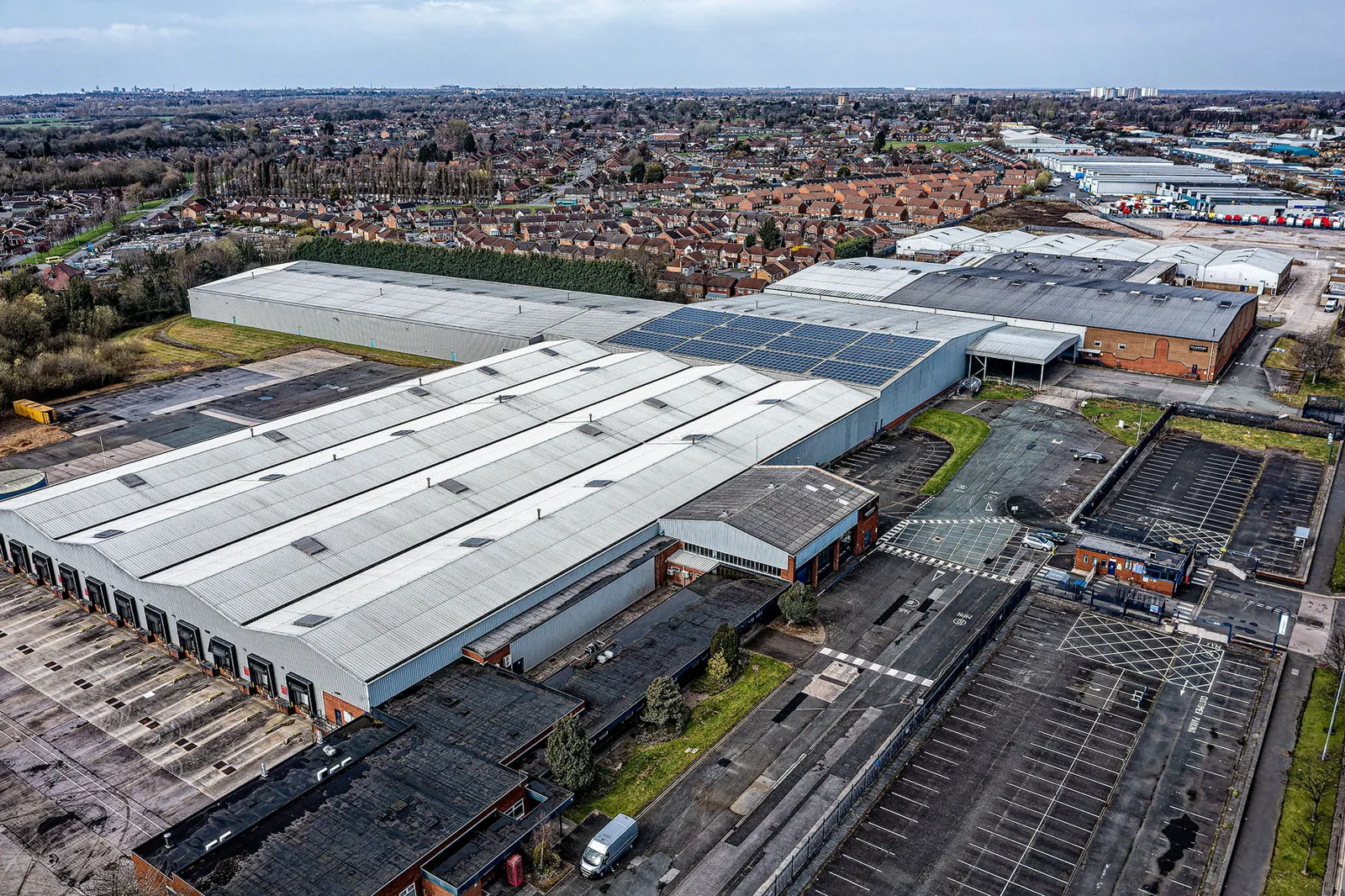
Agency portfolios vary widely: a low-slope office roof, a metal vehicle storage building, a gabled library, a flat-roofed fire station. Each is judged by the system it has, not by an assumption of what public buildings usually carry. A vehicle storage building with exposed-fastener panels fails differently from a membrane roof over offices, and the repair plan follows the failure mode. We record layers where visible, drains, curbs, penetrations, flashing and rooftop equipment on every building, using the same fields each time.
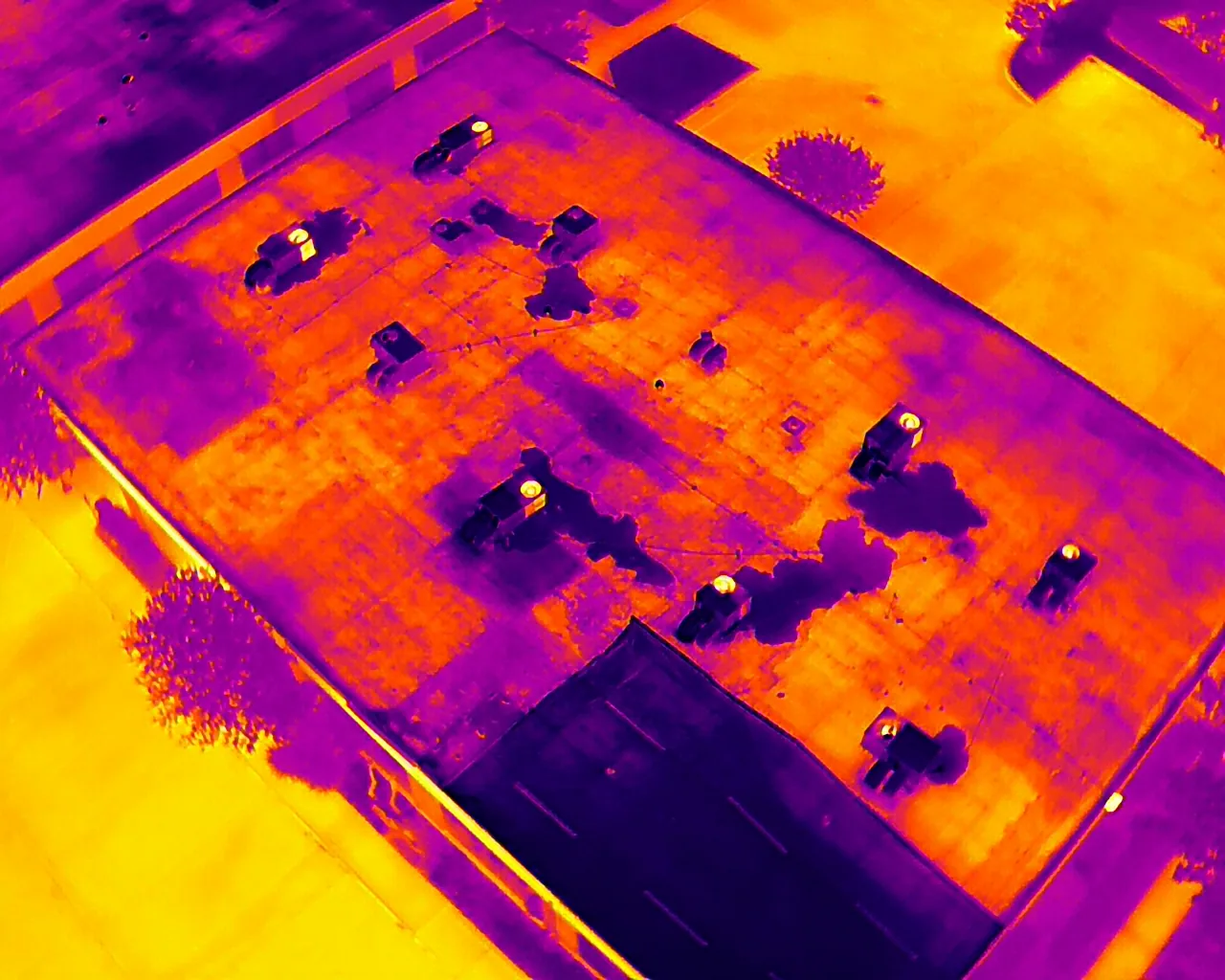
A drone roof inspection speeds the first pass across many buildings and keeps staff off roofs that are not safe to walk, while an infrared moisture survey narrows down where wet insulation sits. Staff time matters in an agency, so the inspection visit is booked around the building contact's calendar and the findings are delivered in a format that can go straight into a work order system. The result is a prioritized list that a facilities supervisor can use right away. Buildings that share a roof design, for example several identical vehicle storage buildings, are compared against each other so a defect found on one is checked on the rest.
Maintenance authority versus capital authority
Many agencies set a spending threshold below which maintenance staff can authorize work and above which a bid is required. The roof file should show where each finding falls. A puncture repair, a clogged drain and a flashing reseal can be handled as maintenance. A roof with wet insulation, repeated leaks and failing seams belongs in the capital request. Documenting each maintenance repair with a date, a location and a photograph is what later proves the repairs were recurring, and that proof carries weight with a governing body deciding whether to fund a replacement.
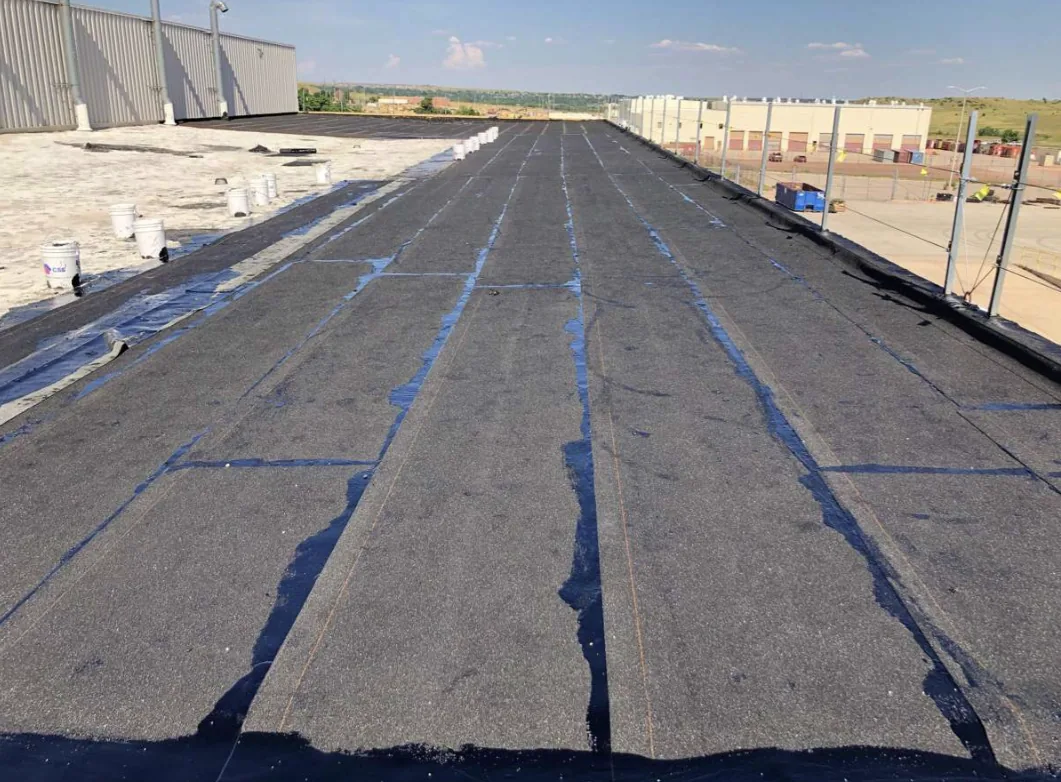
For replacement, systems such as modified bitumen roofing, TPO and EPDM are all common on low-slope public buildings, and metal retrofit suits some storage and utility structures. Olathe moved to the 2018 IBC, IEBC and IECC on September 1, 2019, and the permit office confirms which edition and which local amendments govern a given project.
More About Roofing for Cities, Counties and Public Agencies in Olathe, KS
Keeping public service running
Many public buildings stay open to the public. Dispatch, records rooms, counters and vehicle bays keep operating, so the plan sets entrance routes, noise limits, security escorts and debris removal that never blocks public access. Staging, parking and the hours for loud work are settled with the building contact.
Staff parking, public entrances and the delivery routes for bid-awarded materials are mapped on a one-page plan that the building contact approves before mobilization. Where a building houses sensitive equipment, the plan names the protection required below the work and who is told, and how fast, if a leak turns up mid-project. Work on an occupied building follows occupied building reroofing practice, drying in each section before the crew leaves. Storm calls are taken at all hours, holidays included, and a storm repair on a public building is documented with photographs, locations and materials used so the agency has a clean record for its own review and for any insurance or emergency declaration process that follows.
A multi-year schedule for the capital plan
The agency's roof schedule works best when each building is ranked by condition and consequence, and the cost drivers are written without assuming figures that have not been bid. The result is a multi-year schedule that finance staff can place in the capital plan and update as conditions change. Every line carries a roof area, finding, likely action, consequence and decision date, and reviewers see the oldest finding first. Our roof capital planning supports that cycle, with the register updated after each inspection.
A city hall or courthouse-type government building is shaped by code and bid documents from the start, and an agency in Olathe that shares projects with school districts or general contractors can keep one file format across all of them.
Public owners also benefit from keeping the roof file open to the next budget cycle rather than closing it at final payment. Add the first-year inspection, any warranty correspondence and the maintenance log, so that when the capital plan is reviewed the roof's actual performance sits beside the original scope and bid. Reviewers can then see whether the money bought what it was meant to buy.
Commercial Roofing Questions
How can an agency test whether its planned replacement year is right?
Compare the plan with a dated inspection. If moisture testing and the repair count show a roof is failing early, the year moves up. If the roof tests dry and stable, the year can be deferred with a stated inspection interval.
What belongs in a roof scope that will be competitively bid?
The existing assembly, the proposed system, insulation and cover board, drainage and edge details, access limits, working hours and quality checks. A specific scope produces comparable bids.
Can a public building stay open during a reroof?
Usually, with phased sections, daily dry-in, fenced routes and agreed hours for noisy work. Critical rooms get extra protection.
Does the 2024 wind event reach all public buildings in Olathe?
Only buildings that lie along the surveyed Gardner-to-Olathe route; those get a dated look at edge metal and rooftop equipment.
Send the building list and the capital plan years
Share the roof-area register, prior reports, capital plan entries, appropriation dates and facility contacts. The assessment we return puts current repairs and capital planning assumptions on separate lists.
