
Big-Box Retail Roofing in Olathe, KS
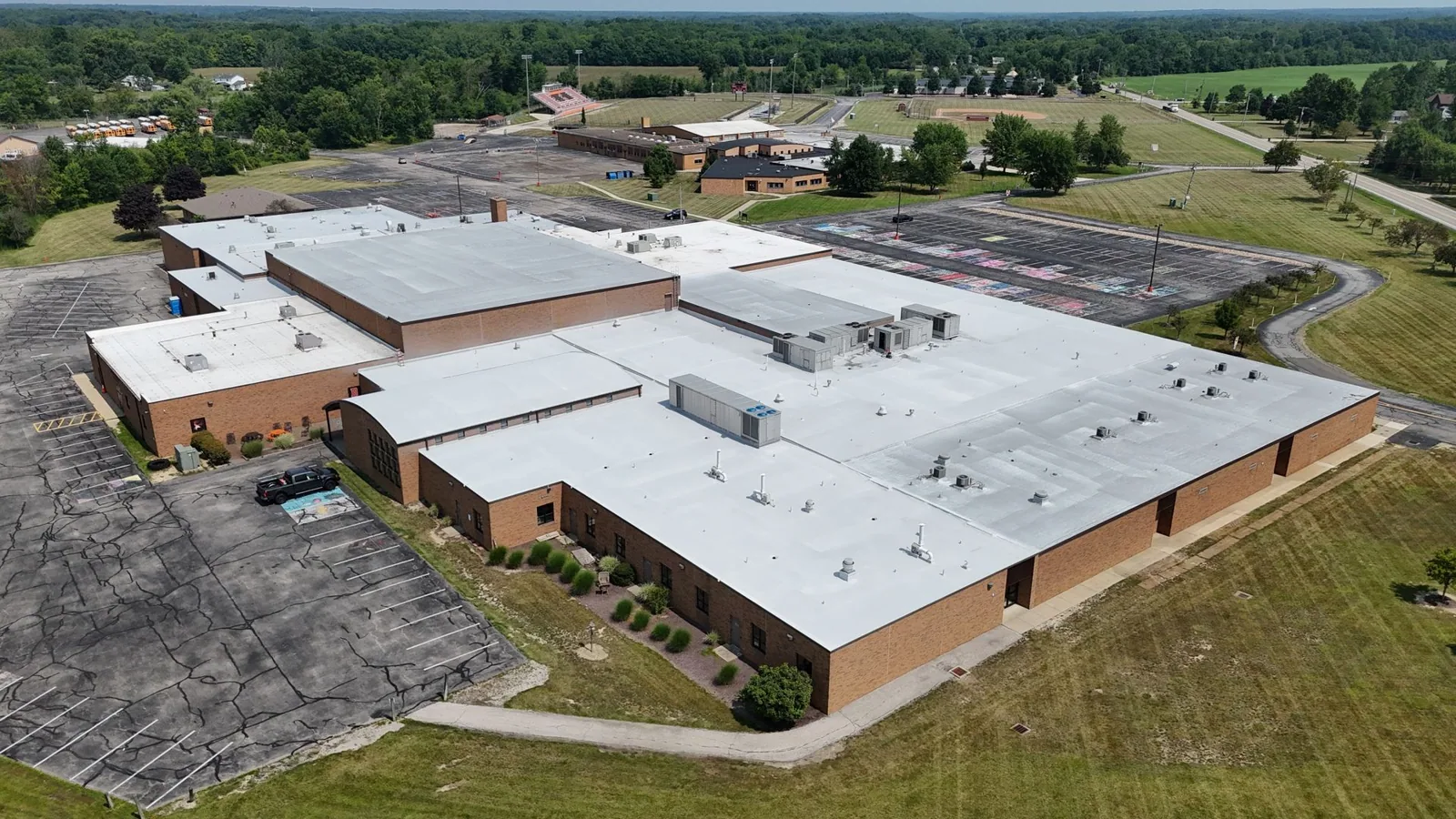
Retail real estate teams budget roofs the way they budget store remodels: in a rolling plan that looks at the next several capital years across a portfolio, with each store ranked by condition and by the revenue at risk if the roof fails. A big-box store has a large roof area with a lot of rooftop equipment, a sales floor directly beneath it and a trading calendar that includes weeks when no one wants a crew on the roof. We build the roof plan around those weeks, and we pair it with a dated field condition record for each store.
Retail is a large part of Olathe's economy, with $3.313 billion in 2022 sales reported by Census QuickFacts, and the stores behind those sales need roofs that stay dry through every season.
Send the store list and trading calendar
Share the store list, roof plans, equipment schedules, warranty files, trading calendar and the facilities contact. We will inspect each store roof and return a written plan that holds current repairs and capital assumptions on separate pages.
Rooftop equipment and the membrane beneath it
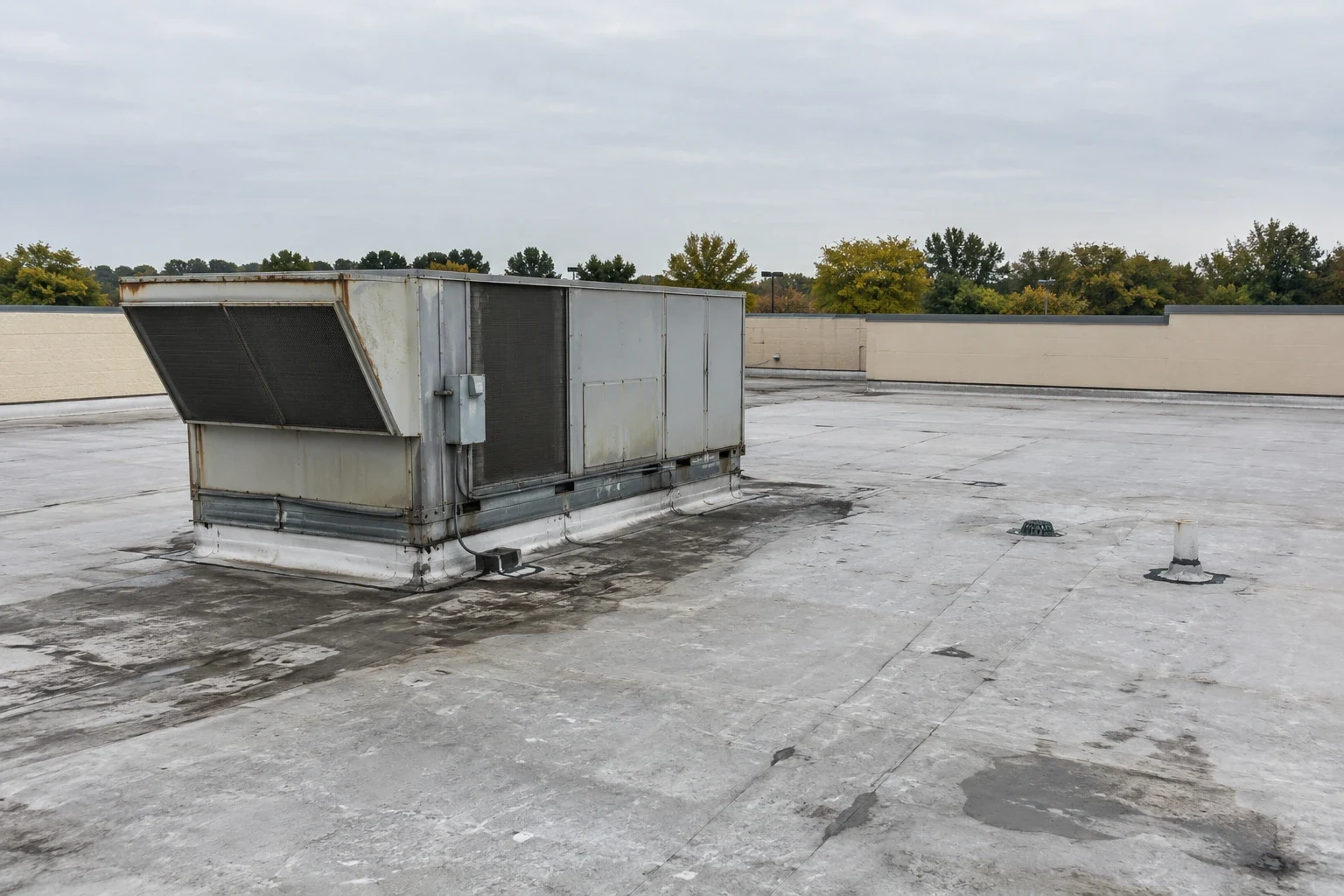
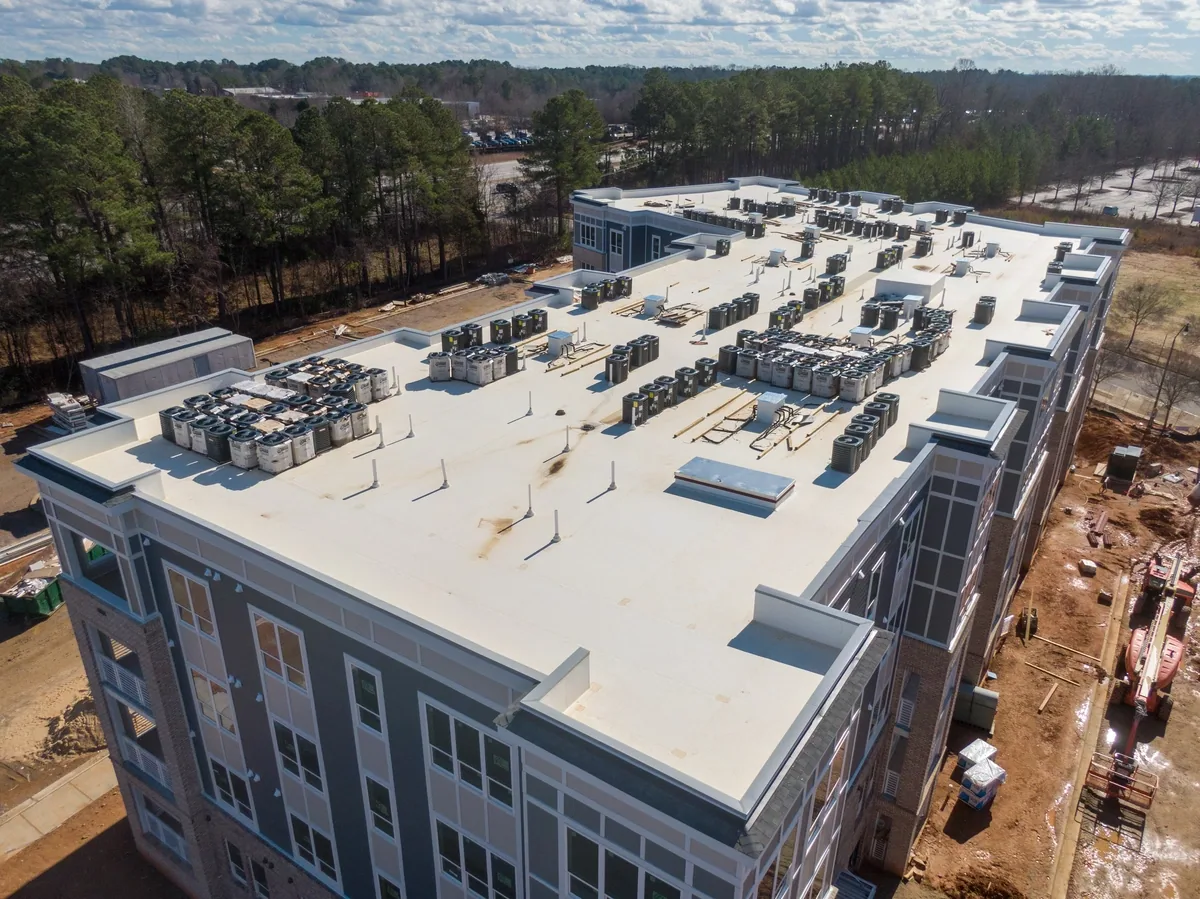
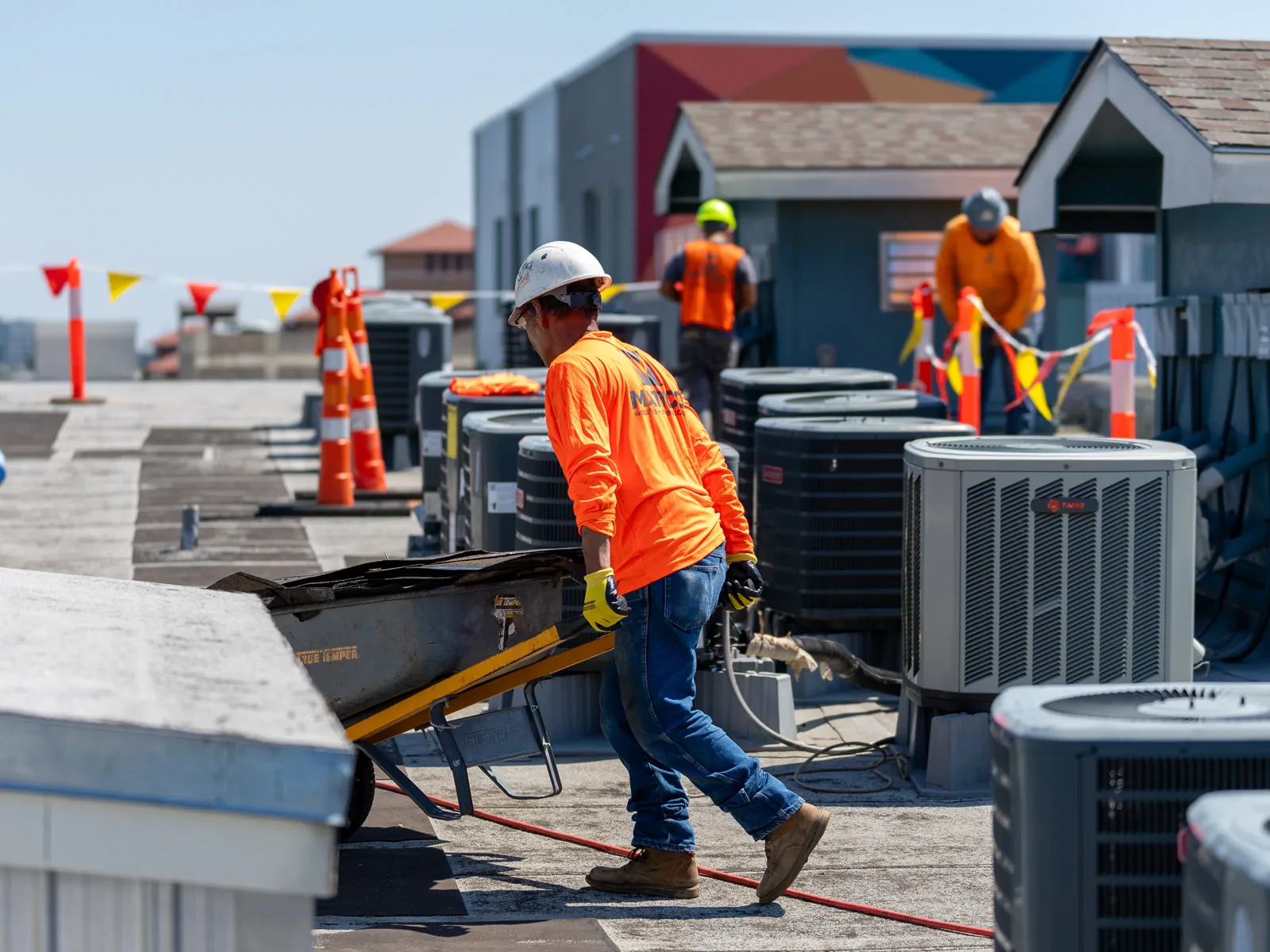
A big-box roof carries refrigeration condensers, air handlers, exhaust fans, satellite equipment and sometimes solar. Service technicians walk the same paths day after day, and the membrane under those paths wears faster than the rest. We map traffic routes, check for abrasion and punctures, and recommend walk pads where they are missing. Equipment curbs and pipe supports get the same hands-on review, because each is a flashing detail that can fail.
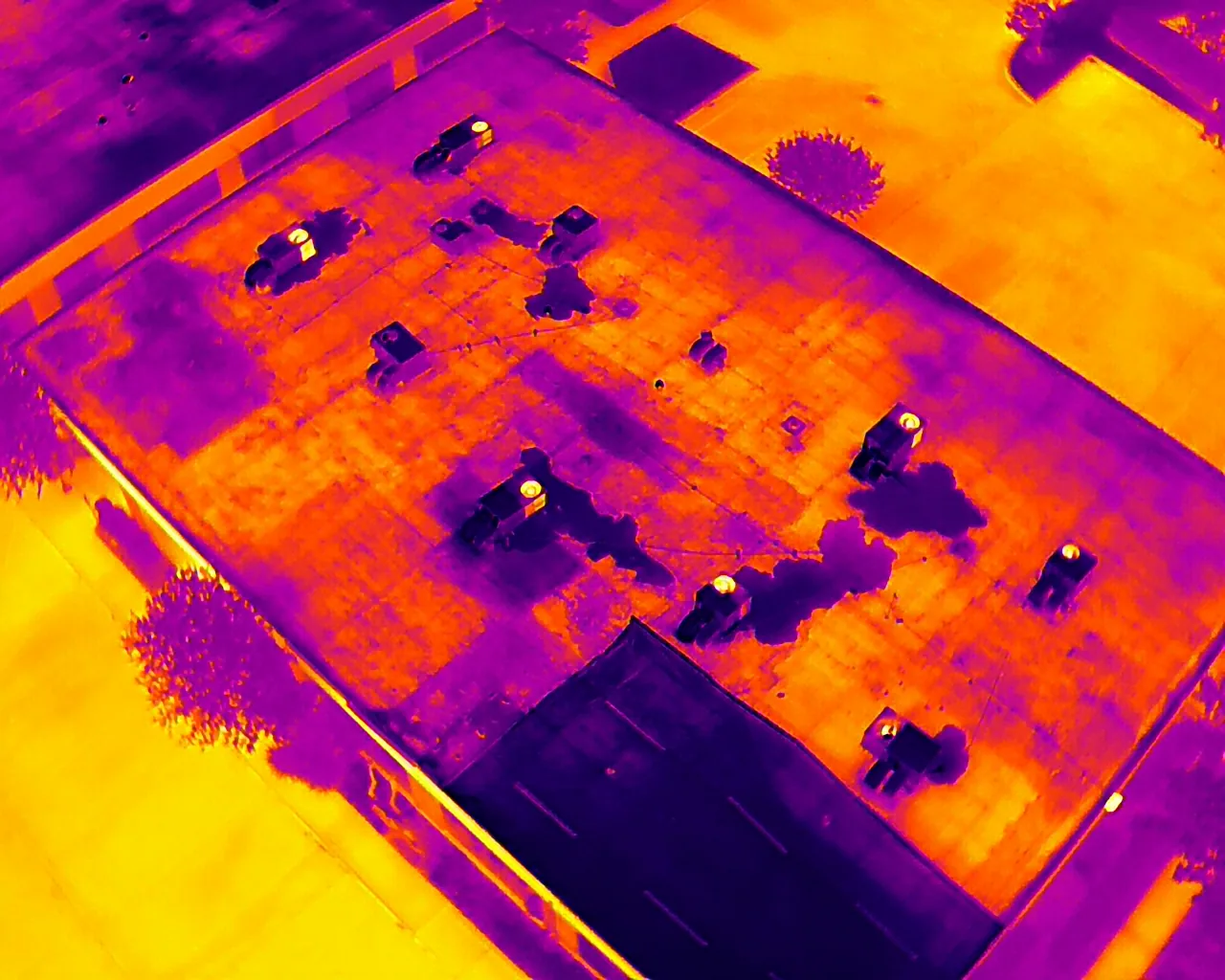
Large roofs also hide moisture. An infrared moisture survey scans the entire deck in one pass and shows where insulation has absorbed water, which drives the choice between patching, coating and replacement. A drone inspection handles access and record-keeping for the field condition report, and hands-on probing confirms what the imagery suggests.
Seasonal swings across a large low-slope roof
A long, flat roof moves with temperature. July highs in Olathe average 89.4°F while the January mean is only 29.8°F, so the membrane expands and contracts every year, and its seams, laps and perimeter details take the stress. Add 37.54 inches of yearly precipitation and 109.6 days with lows at or below 32°F, and water and ice reach the weak points repeatedly.
KDOT's K-7 plan treats K-7 as a north-south Kansas City metro corridor, roughly 40 miles of study area, with Olathe among the participating communities. Stores along such corridors share the area's weather, and a dated storm can affect several at once. On May 19, 2024, straight-line wind tore across the Gardner to Olathe stretch, peaking at an estimated 80 mph in the survey. For stores in or near it, an edge-metal and parapet check is warranted, and any reported hail is a prompt for inspection.

Coating, recover or tear-off
Big-box roofs offer all three options, and the right one depends on the moisture survey. If the membrane is aging but the insulation is dry, a coating restoration can extend service life and add reflectivity at lower cost than replacement. If insulation is partly wet but the deck is sound, a recover or a targeted replacement of wet areas may be the better choice. Where wet insulation is widespread, tear-off and new insulation are the sensible capital expense.
For replacement, a heat-welded TPO membrane is a familiar specification on large retail roofs, with tapered insulation to improve drainage. We write each option with scope, schedule and a bid basis, so a real estate committee can compare them on one page.
Decision summary for a real estate committee
A committee that oversees dozens of stores wants each roof reduced to a short page: current condition, open defects, the options and the capital year. We write that page for every store, with photographs and a plan beside it. Olathe's economic-development plan names the I-35/Santa Fe, Cedar Creek, K-7 and Woodland corridors, and stores on any of them compete for the same customers, so a leak that closes an aisle has a direct cost.
It also spells out the consequence of deferral and the time limit, and it separates repairs that protect the sales floor from planned renewal. That separation keeps routine repair requests from consuming the capital budget.
More About Big-Box Retail Roofing in Olathe, KS
Trading seasons, deliveries and customer routes
A big-box store cannot give up its parking lot or its loading dock for long. Roofing crews stage on the roof or in a corner of the lot, and hoisting happens away from customer entrances. We place the heaviest work in the quiet months and avoid the weeks before major trading periods. Temporary protection is kept ready every day, and interior stock below the work zone is covered where needed.
Insulation and reroofing requirements follow the code set Olathe put into effect on September 1, 2019 (the 2018 IBC with its existing-building and energy counterparts), confirmed with the city for each store. Our occupied building reroofing method keeps the store open throughout.
Delivery trucks matter as much as customers. A crane or hoist needs a clear footprint, and the store's receiving schedule decides which mornings are usable. We agree the staging plan with the store manager before the first load arrives, and we keep the fire lane open at all times.
Portfolio sequence across stores
A retail chain with stores in several communities benefits from a multi-site roof program that shares one report format, one register and one ranking method. Stores in Olathe and Gardner, for example, can be inspected in one trip, with findings entered in the same format.
When one owner holds a shopping center with a big-box tenant and a grocery store, the three roofs can be managed together.
Records that shorten the first inspection
Helpful records include roof plans, the equipment schedule, the warranty file, past repair invoices and the leak log kept by store management. Photos of past incidents, if the store has kept any, help locate recurring problems. If records are missing, the first visit builds a register with dated photographs and a plan marked with each unit and drain. That register becomes the baseline for later comparison.
The building's insurance carrier may also have inspection reports on file, and those can fill gaps in the roof history.
Commercial Roofing Questions
How does a store stay open during a reroof?
Work is staged by section, with the sales floor protected and customer routes kept clear. Hoisting and material storage sit away from entrances, and temporary dry-in is ready each evening. The store's operations lead approves the daily plan.
Can rooftop equipment stay running during roof work?
Usually yes. We coordinate with the mechanical contractor, protect units while work happens nearby and shut down only what safety requires. Refrigeration and air handling plans are agreed before the crew starts.
What does a moisture survey cost compared with a wrong decision?
The survey costs far less than a replacement, and it shows whether insulation is wet. A wrong call in either direction, replacing a dry roof or coating a wet one, costs far more than the survey.
Why do big-box roofs pond more than small buildings?
Longer spans flex under load, and drains sit far apart. A small deflection can hold a shallow pond for days. We measure depth and duration and compare them with the drainage record before recommending tapered insulation or added drains.
Is a cool roof worthwhile on a retail store?
A reflective membrane lowers surface temperature during Olathe summers, which can reduce thermal stress on the roof. The effect on cooling load depends on insulation and equipment, so we weigh it with the building's details.
How should a retailer handle a roof leak during a busy trading week?
Contain the water first. We place temporary protection over the leak path, document the source and schedule the permanent repair after the busy period. Store staff handle interior protection and signage while the roof work waits for a safe window.
Send the store list and trading calendar
Share the store list, roof plans, equipment schedules, warranty files, trading calendar and the facilities contact. We will inspect each store roof and return a written plan that holds current repairs and capital assumptions on separate pages.
