Roofing for Retail and Restaurant Chains in Olathe, KS
A regional brand that adds stores faster than it renews roofs ends up with a map of buildings in very different states, and the regional facilities manager decides each quarter which store goes into the budget. Census QuickFacts reports 2022 retail sales of $3.313 billion in Olathe, KS, while neighboring Overland Park reports $4.169 billion. Freezing lows on 109.6 days of an average Olathe year mean every store roof in the area takes the same thermal cycle, and each shows a different amount of wear. A roof-area register with one line per location lets a facilities group rank them before a leak decides the order for them.
Send the store list and the lease responsibilities
Share the location list, roof-area register, prior reports, decision dates and the manager contact for each store. We reply with an assessment that keeps current repairs and capital planning assumptions on separate lists.
Trading corridors and the weather over them
the Woodland, K-7, Cedar Creek and I-35/Santa Fe studies are the corridors the city plans around, and KDOT describes K-10 as carrying commercial and industrial uses between De Soto, Lenexa and Olathe. Stores and restaurants on those roads share one climate: 37.54 inches of precipitation a year and monthly means between 29.8°F and 78.8°F.
Hail belongs to the Kansas City area severe thunderstorm record. A store on the track of the May 19, 2024 squall line has a dated reason to check parapets, coping, rooftop units and signage mounts. A brand with stores on both sides of the state line should keep a storm log for each location, with the date, the observed wind or hail, the roof walk and any repair, so a single event produces a dated file for every store it touched.
Kitchen exhaust, rooftop units and parapets
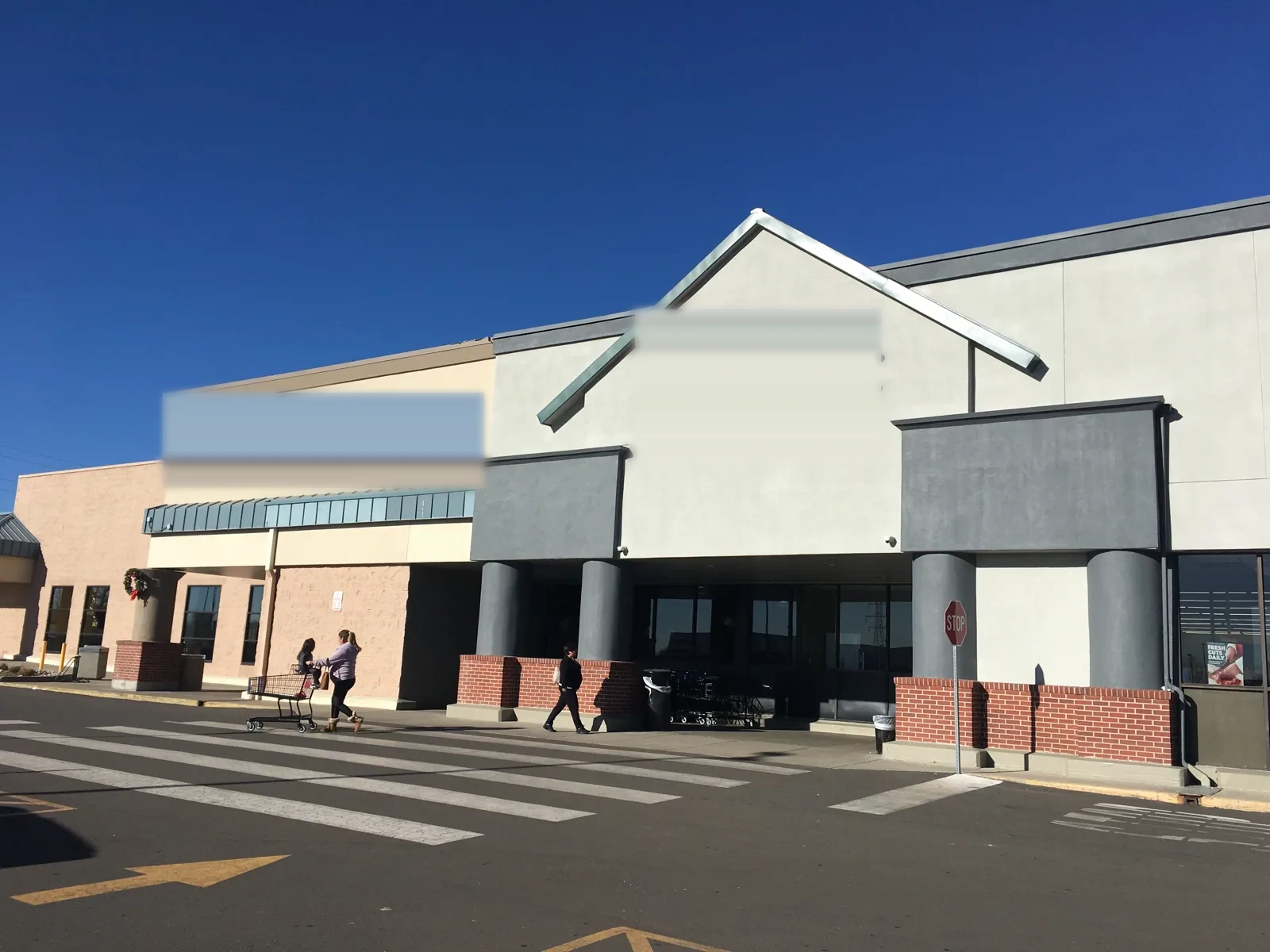
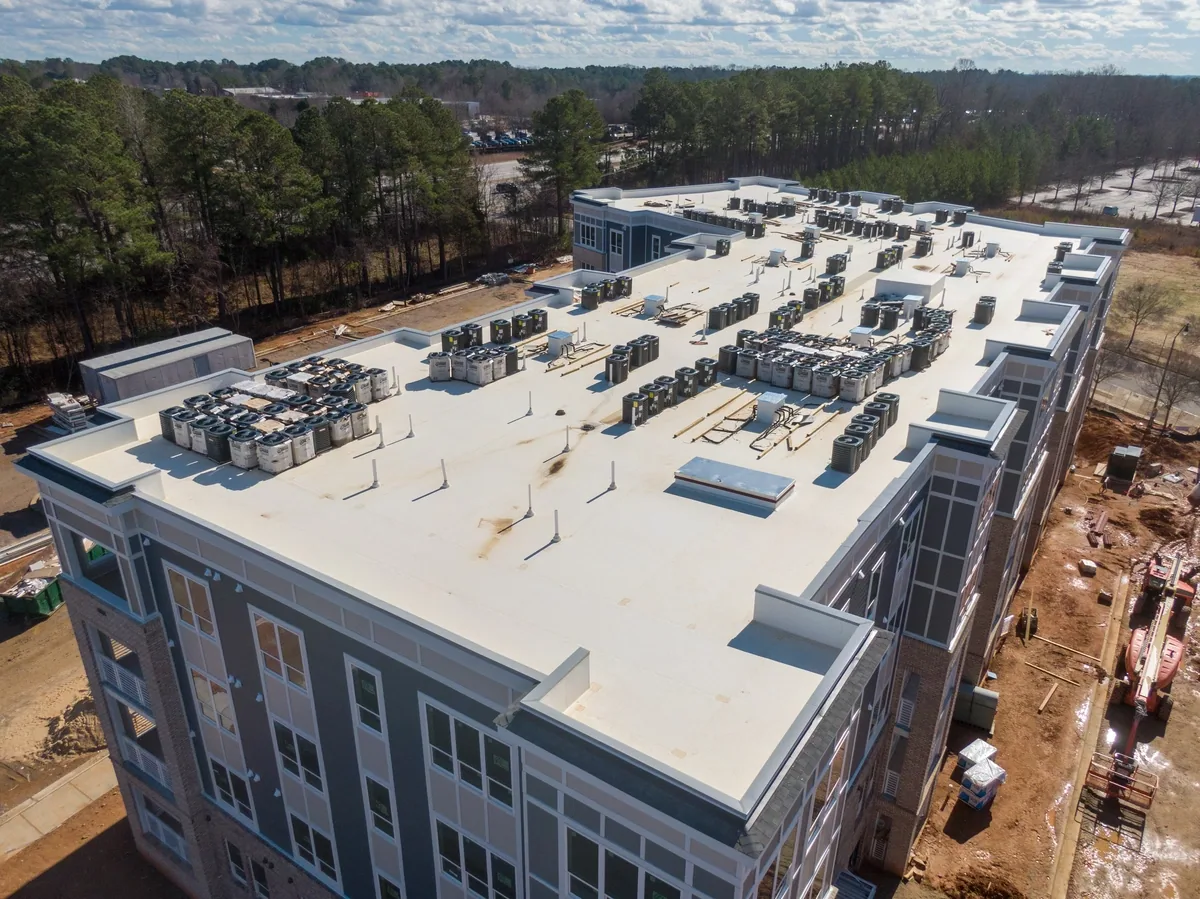
Retail and restaurant roofs wear in particular ways. A restaurant roof carries kitchen exhaust fans that deposit grease, and grease softens many membranes and clogs drains and scuppers. A retail store may have large rooftop units, a front parapet with decorative elements and a canopy tie-in at the entrance. Strip-center tenants share a roof, and a defect over one tenant often appears in another.
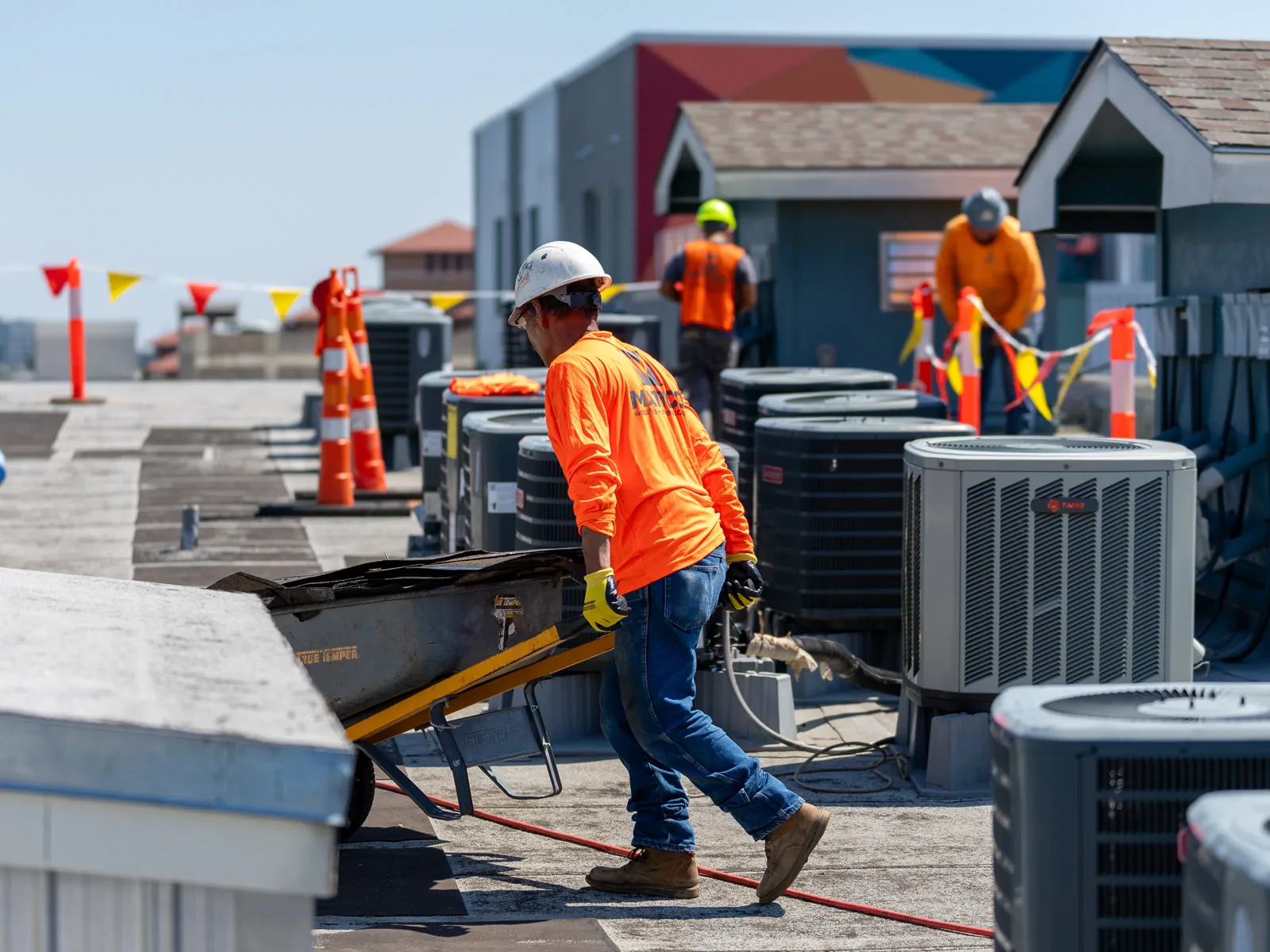
We walk each location by zone and record system type, visible layers, grease deposits near exhaust, drains, curbs and flashings. A commercial roof inspection uses the same fields for every store, so findings can be compared across the chain. Where leaks have been patched repeatedly, an infrared scan shows whether insulation has absorbed water. Drive-through canopies, patio covers and the flashing where they meet the building wall are checked too, since those add-ons are often installed by a different trade than the original roof and the junction is where water finds its way in.

Ranking stores by revenue exposure and condition
A leak in a dining room closes tables, and a leak over a sales floor can close an aisle. The register therefore weighs two things: the roof's condition and what the leak would interrupt. A roof over a kitchen or a checkout area ranks above one over a stockroom, and a high-volume store ranks above a quiet one at equal condition.
This ranking is not arbitrary. It follows the field findings, the repair count and the consequence of failure, and it gives the facilities group a way to explain to finance why a particular store moved up. Observed condition is kept apart from the estimate so the numbers can be debated without disputing what was seen. A franchise operator with several units can use the same method, with one register per owner entity and one inspection standard across all of them, which keeps landlord conversations short because the photographs speak for themselves.
Working outside trading hours
Restaurants and stores cannot close for a reroof, so the plan starts with trading hours. Noisy work is kept away from lunch and dinner service and from peak shopping periods, staging is placed away from customer entrances and drive-through lanes, and parking is protected so customers can reach the door.
Roof sections are dried in at the end of every shift, and overhead protection covers entrances. Kitchen exhaust is mapped so that fumes from adhesives do not reach dining areas, and fresh-air intakes near the work are identified before the first day. Health inspection dates and seasonal events, such as holiday trading periods, are put on the schedule so that roof work never lands on the busiest week of the year. The pattern matches any occupied building reroofing job, and storm calls are answered at every hour, holidays included, which covers the night a seam opens before a weekend rush. A temporary repair is placed and recorded by location, and the permanent fix is scheduled for an overnight or early morning window when the store is closed.
More About Roofing for Retail and Restaurant Chains in Olathe, KS
Repair line, renewal trigger and lease terms
For each store the question is whether repair spending has reached the point where replacement is cheaper. Recurring leaks at the same curb, wet insulation and failing seams are the usual triggers. Leased stores add a second question: who is responsible under the lease, and what notice must be given before work begins. A landlord who owns the roof may have its own preferred system or warranty terms, and the roof file should capture those before the tenant orders a repair that could affect them.
Common replacements include TPO roofing and PVC roofing, with PVC often considered where grease exposure is a concern. Permitting goes through the building department, which confirms whether the code set adopted on September 1, 2019 and any local amendments cover the store.
A chain-wide schedule across the metro
The sequence for a chain ranks locations by consequence and condition, and groups nearby stores so a crew can work several in the same period. The register records each store's assembly, repair count and next decision date, and it flags leased locations where the landlord handles the roof. A store near a lease renewal or remodel is moved forward or back so roof work is not done twice, and a store slated for closure gets repair-only treatment with a written stopping point.
A freestanding restaurant and a big box store differ in grease exposure and roof size, though both rely on the same store-level record. A brand with a hotel or restaurant inside a larger property, or the real estate investors who own the center, can read the same file, and hospitality groups use it too, from Olathe outward. Franchisees who operate several units can share one register with their franchisor, with each store's roof, lease responsibility and last inspection on a single line, which shortens approval when a repair needs a brand sign-off.
A chain also gains from a one-page store summary kept at the front of each file: system type, last inspection, open items, lease responsibility and the next decision date. A regional manager can scan twenty of those pages in an afternoon and see which stores need a call this month, and the facilities group can show finance why a particular location moved up the list.
Commercial Roofing Questions
How does a chain decide which store roof to fix first?
By what a leak would interrupt and how many repairs the roof has needed. A kitchen or checkout roof with recurring leaks leads, and a stable stockroom roof waits.
Does kitchen grease affect the choice of roof membrane?
It can. Grease softens some membranes and clogs drains, so restaurants often use grease-resistant membranes or protective pads near exhaust fans, and drains near exhaust are cleaned and checked regularly.
Who pays for a roof repair at a leased location?
The lease decides. The roof file records the lease responsibility beside the findings so the right party is notified and the repair is documented either way.
Does the 2024 wind event reach all stores in Olathe?
Just the stores on the Gardner-to-Olathe track, surveyed near 80 mph; those get a dated check of parapets, coping and rooftop units.

Send the store list and the lease responsibilities
Share the location list, roof-area register, prior reports, decision dates and the manager contact for each store. We reply with an assessment that keeps current repairs and capital planning assumptions on separate lists.