
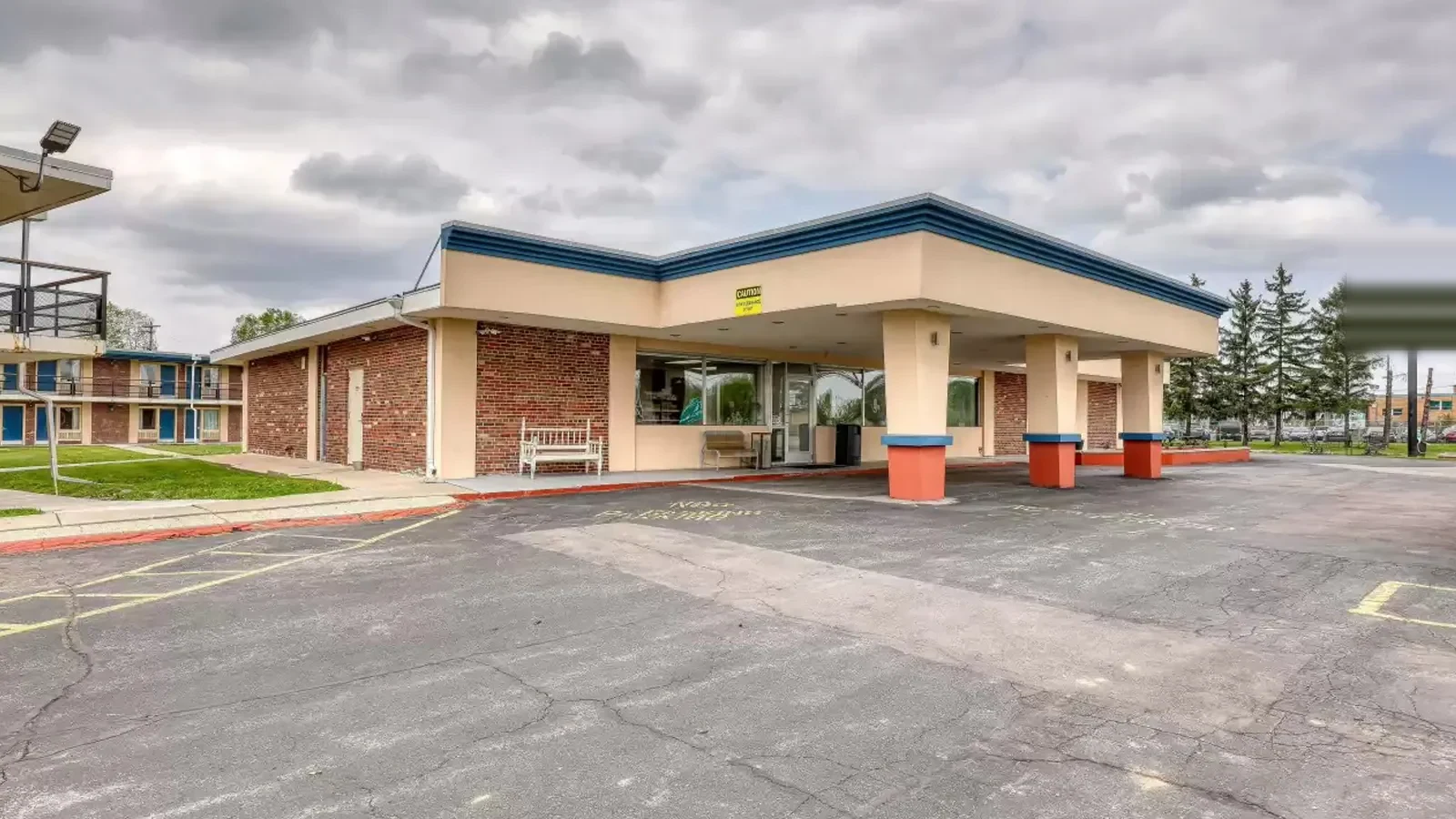
Hotel Roofing in Olathe, KS
Hotel owners fit roof projects into the same planning cycle as property improvement plans, brand inspections and renovation reserves. A roof that fails between those cycles creates unplanned cost and takes rooms out of inventory, and an out-of-service room is revenue that does not come back. The replacement window for a hotel roof is therefore set by two clocks, the roof's physical condition and the owner's renovation schedule, and the best outcome is when they line up. We build that alignment by recording the roof's field condition first and then testing it against the capital calendar.
The result is a plan that lets an owner replace a roof in a quiet season, with rooms already scheduled for downtime, rather than in an emergency.
Send the roof plan and room calendar
Share the roof plan, a map of rooms under each section, leak history, the renovation calendar and the chief engineer's contact. We will inspect, note the rooms under each defect and return a written plan that tells current repairs from capital assumptions.
Guest-floor leaks and the roof sections above them
Hotel roofs combine a main low-slope section with smaller roofs over entries, porte-cocheres, pool enclosures, stair towers, lift machine rooms and sometimes a lounge or terrace. Water that enters at one of those smaller roofs may stain a room far from where it started. We build the register by section, label each with the rooms below it and walk it for seam failure, flashing separation, ponding and damage from equipment traffic.
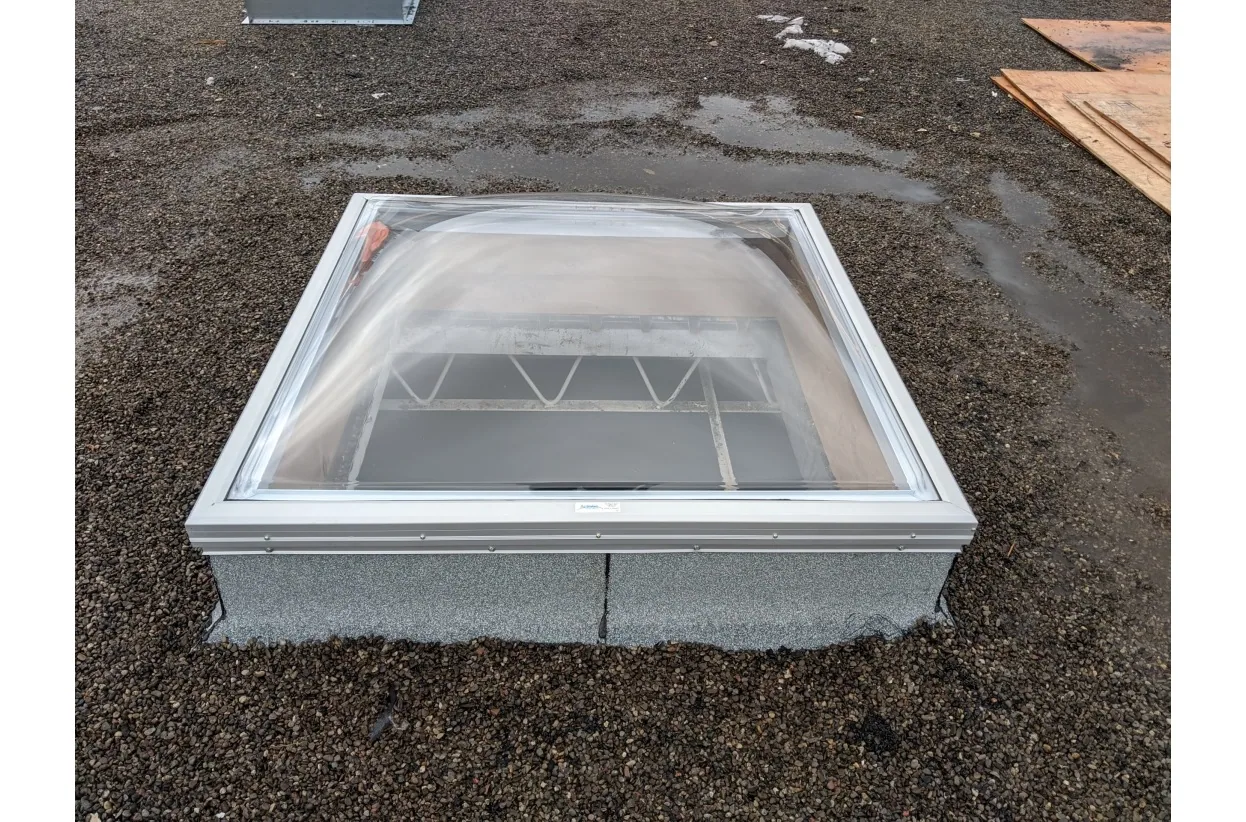
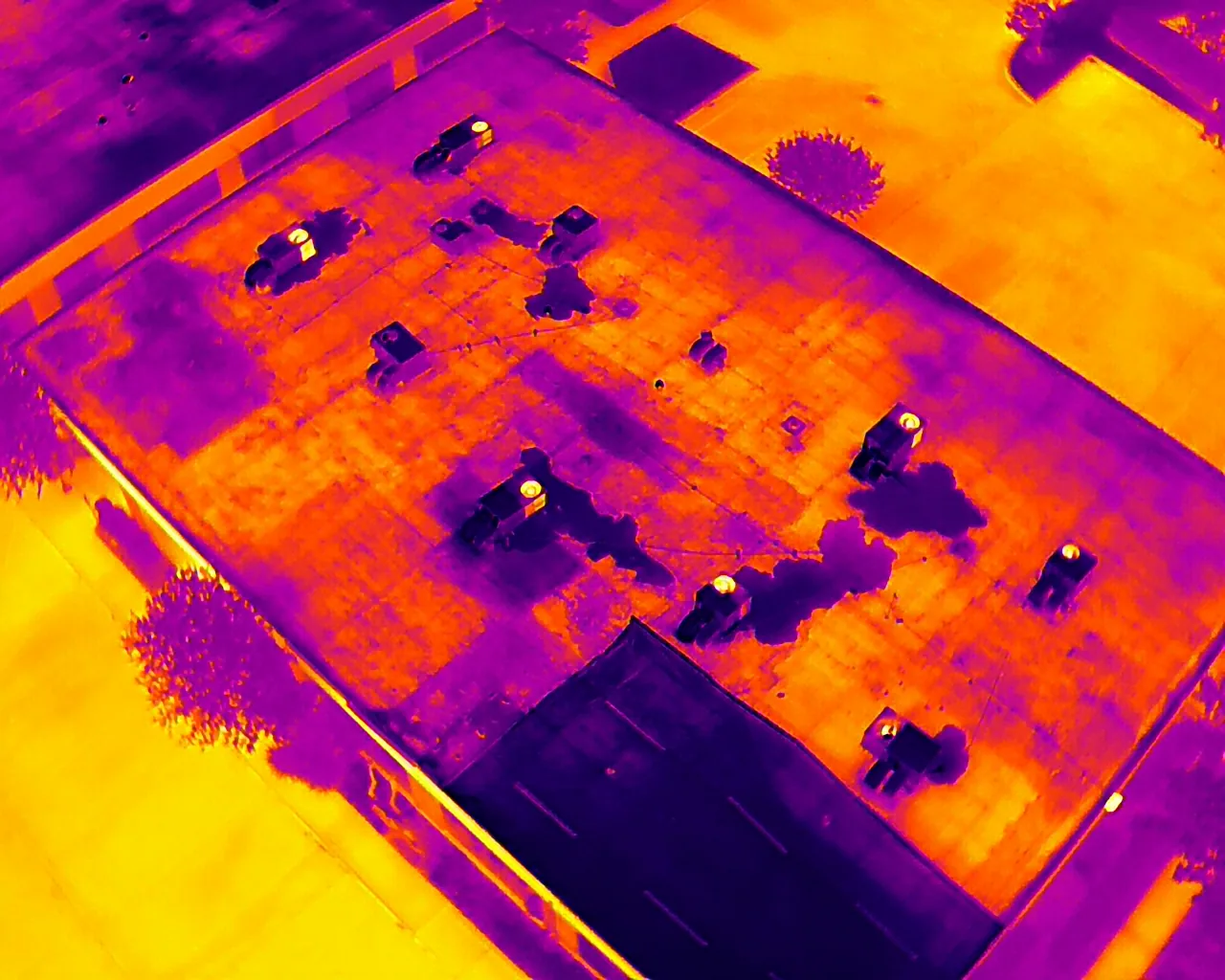
Where steeper sections or metal accents meet the flat roof, transitions deserve extra time. Skylight and penetration flashing over atriums and lobbies is a frequent leak source, and an infrared moisture survey shows wet insulation above guest floors before a stain forms. The report lists each room affected by a defect so housekeeping and front desk can plan.
Freeze-day exposure and storm records
A hotel roof here takes 37.54 inches of precipitation a year, temperatures at or below 32°F on 109.6 days, and monthly means of 29.8°F in January and 78.8°F in July. Freeze-thaw cycles work on seams and flashings, and small moisture paths widen through each winter. Meltwater from a snowfall can refreeze at edges and drains overnight, so those details are checked before the cold season starts.
Straight-line wind damage ran from Gardner into Olathe on May 19, 2024, with a survey estimate of 80 mph at the peak, while several brief tornadoes struck elsewhere in Johnson County. Hotels in or near that path deserve a documented check of rooftop equipment, edge metal and any lightweight sections. Severe thunderstorms in the metro can carry hail, and an inspection after a reported event shows whether damage is present.

Occupancy, noise and the room calendar
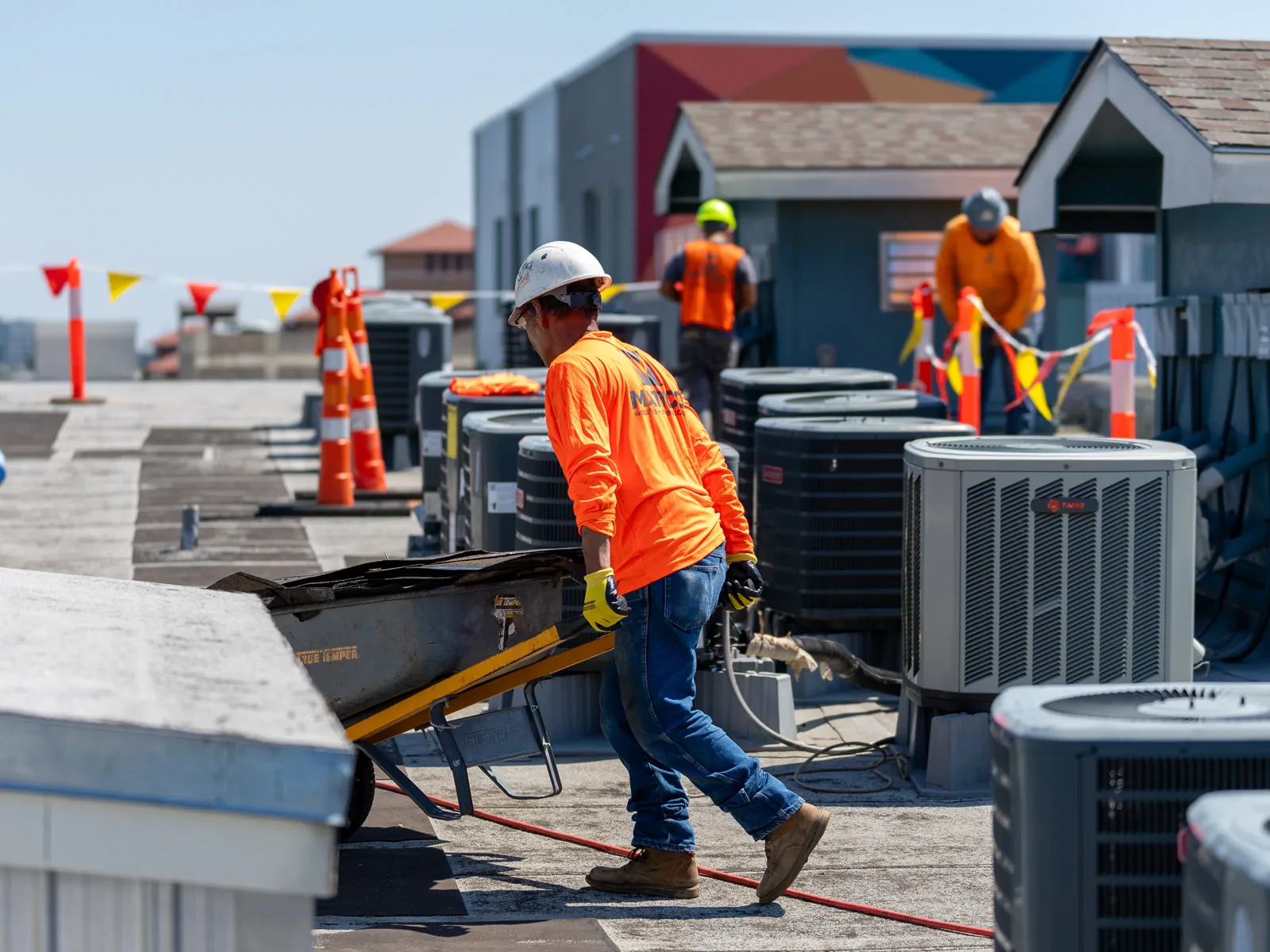
Guest comfort is the constraint. Tear-off noise, odor and dust cannot reach occupied rooms, so top-floor rooms under the active section are often taken out of inventory for the duration, and the general manager decides which. We plan work in phases, so only a few rooms are affected at a time, and we schedule loud tasks for hours when guests are usually out.
The scope version also covers entries, pool areas and parking. Hoisting is placed away from the lobby, and walkways stay clear. Insulation and reroofing review follows the 2018 code set Olathe adopted as of September 1, 2019, with amendments verified by the city. An occupied building reroofing plan carries all of these details.
Repair, recover or replace within a renovation cycle
If a brand renovation is two years away, the owner may prefer to repair known leaks and replace the roof as part of the renovation. If the roof has widespread moisture, that deferral costs more than it saves. The right choice comes from the moisture survey and the repair history, set against the date of the renovation.
Metal sections can be restored or replaced with standing seam metal, while the low-slope sections often take a single-ply membrane. Each option comes with a scope, a bid basis and a stated condition that would make the other option better. The owner sees them side by side.
More About Hotel Roofing in Olathe, KS
A summary for the owner, operator and lender
Hotels often split responsibility among an owner, a management company and a franchisor, and each reads the roof differently. The owner cares about the reserve, the operator about rooms in service, and the lender about collateral condition. One written summary can serve all three: it lists the roof sections by priority, ties each defect to the rooms below, states what happens if work is deferred and gives a recommended capital year.
The photographs and moisture results behind the summary are kept in the register, so the next owner or operator inherits a record, not a rumor. When the hotel is sold, the same file supports due diligence.
Roofs across a hotel portfolio
A hospitality group with hotels in several suburbs compares roofs across properties. A shared register records the age, condition and next inspection date for each, and the capital committee can see which hotel needs the first roof. Properties in Olathe and Overland Park can be inspected together.
Hotels often have a restaurant or lounge on site, and a restaurant roof section with grease exposure is tracked on its own line. Extended-stay properties with kitchens in each unit share traits with an apartment building, so the same plan can serve both. A warranty record keeps the coverage dates visible.
Records that speed up the first inspection
Bring the roof plan, a room map showing which rooms sit under each roof section, leak complaints from housekeeping and maintenance logs, past repair invoices and warranty documents. The chief engineer often knows exactly where water shows up first, and their notes save time. If the brand requires inspections, those reports can be useful too. Where no records exist, the first visit builds the register with dated photographs.
Housekeeping logs are an underrated source, since staff report ceiling stains and damp carpet long before a leak reaches a work order. A short list of room numbers with dates lets us match the interior pattern to the roof sections above and trace each leak path with fewer exploratory cuts.
Commercial Roofing Questions
Which guest rooms are affected during a hotel reroof?
That depends on the layout. Rooms under the active section are usually the only ones affected, and a phased plan keeps that group small. The general manager decides which rooms to hold out of inventory, and we provide the schedule in advance.
Can a hotel reroof happen during the slow season?
It is the preferred approach. Winter weather limits some materials, so the best window is usually a mild, low-occupancy period in spring or fall. We map those periods against the hotel's calendar before setting the schedule.
What causes recurring leaks near pool enclosures?
Humidity, chemical vapor and a mix of materials at the enclosure wall all stress flashing. We check wall tie-ins, sealants and drains, and note any condensation under the deck. A repair that ignores humidity tends to fail again.
Should a hotel roof be inspected after a wind event?
Yes, promptly. The May 2024 wind across Gardner and Olathe shows why. We photograph edge metal, rooftop equipment and lightweight sections, then give maintenance a work list and the owner evidence for an insurer.
Does a brand inspection affect roof planning?
It can raise the priority of known leaks, since staining and damaged ceilings appear on inspection reports. A dated roof record helps the owner show that a plan exists and is on schedule.
What does a hotel gain from a dated roof record?
It shows trends, supports insurance and warranty claims and gives the capital plan a factual basis. If a leak appears, the record shows whether the area was clean at the last visit, which shortens the search and supports a targeted repair.
Send the roof plan and room calendar
Share the roof plan, a map of rooms under each section, leak history, the renovation calendar and the chief engineer's contact. We will inspect, note the rooms under each defect and return a written plan that tells current repairs from capital assumptions.
