
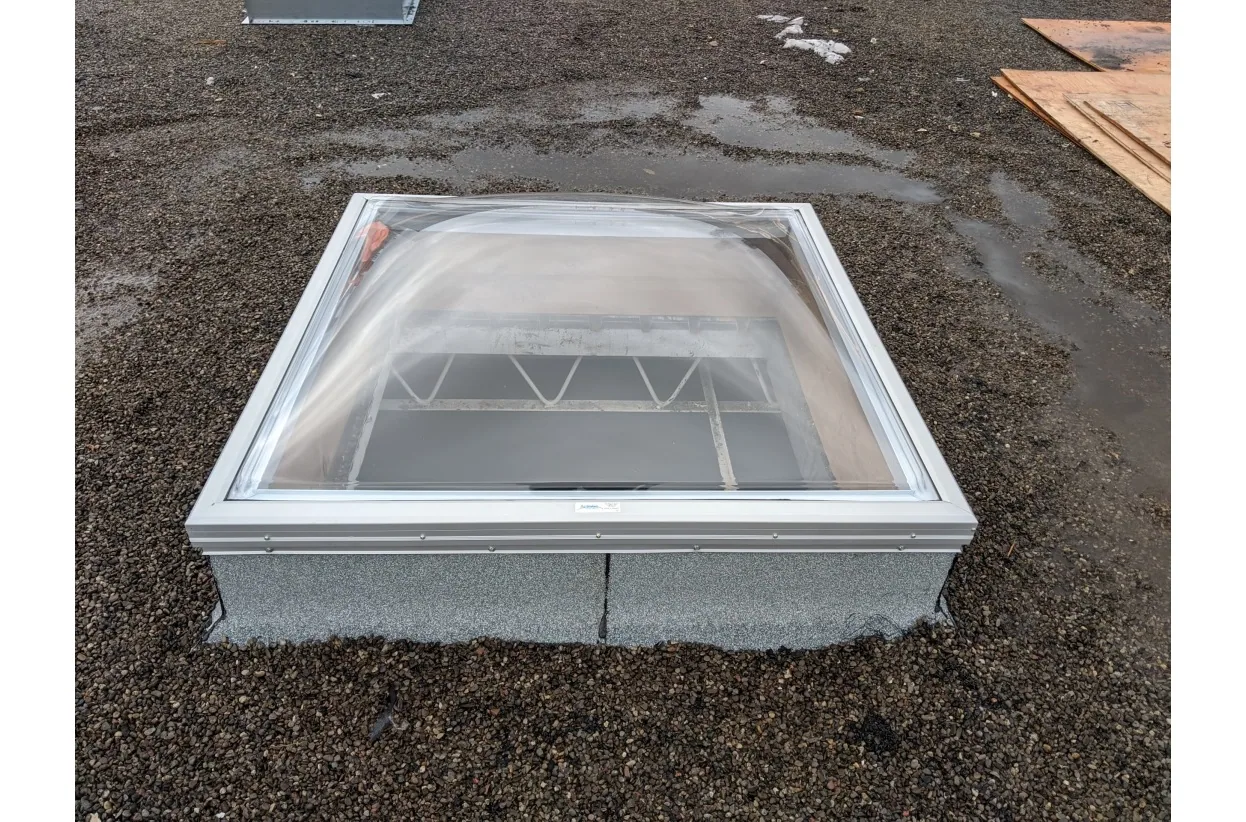
Commercial Skylight and Penetration Flashing in Olathe, KS
For an Olathe, KS portfolio, a skylight or curb leak can move the replacement window when an isolated roof detail becomes an interior repair line. The NWS documented a May 19, 2024 straight-line wind damage path extending from Gardner into Olathe, with an estimated 80-mph peak wind along the surveyed path. That dated event gives a facility in its path a reason to review curb caps, frame joints, and flashing returns before the next capital year. We record the observed condition and identify any opening or test needed before the owner selects a repair scope.
A commercial roof inspection can map each opening to its roof area and surrounding assembly. The scope distinguishes a frame joint from a curb transition or a membrane penetration, so a repair quantity addresses the observed condition instead of treating every ceiling mark as the same defect.
Set the Opening List and Work Window
Send the property list, roof-area register, decision date, available reports, and access contact. We can assess the skylights, curbs, and penetrations, separate confirmed repairs from items needing testing, and return a documented scope with the work limits and next review interval.
Separate the Opening from the Symptom
A ceiling stain below a skylight does not identify the entry point. Water can move along a frame, fastener, curb corner, or membrane lap before it appears indoors. On the roof, we check the glazing perimeter, curb height, counterflashing, termination, nearby seams, and any sign of ponding. The report labels the opening and the roof zone, then connects photographs to the drawing or roof-area register.
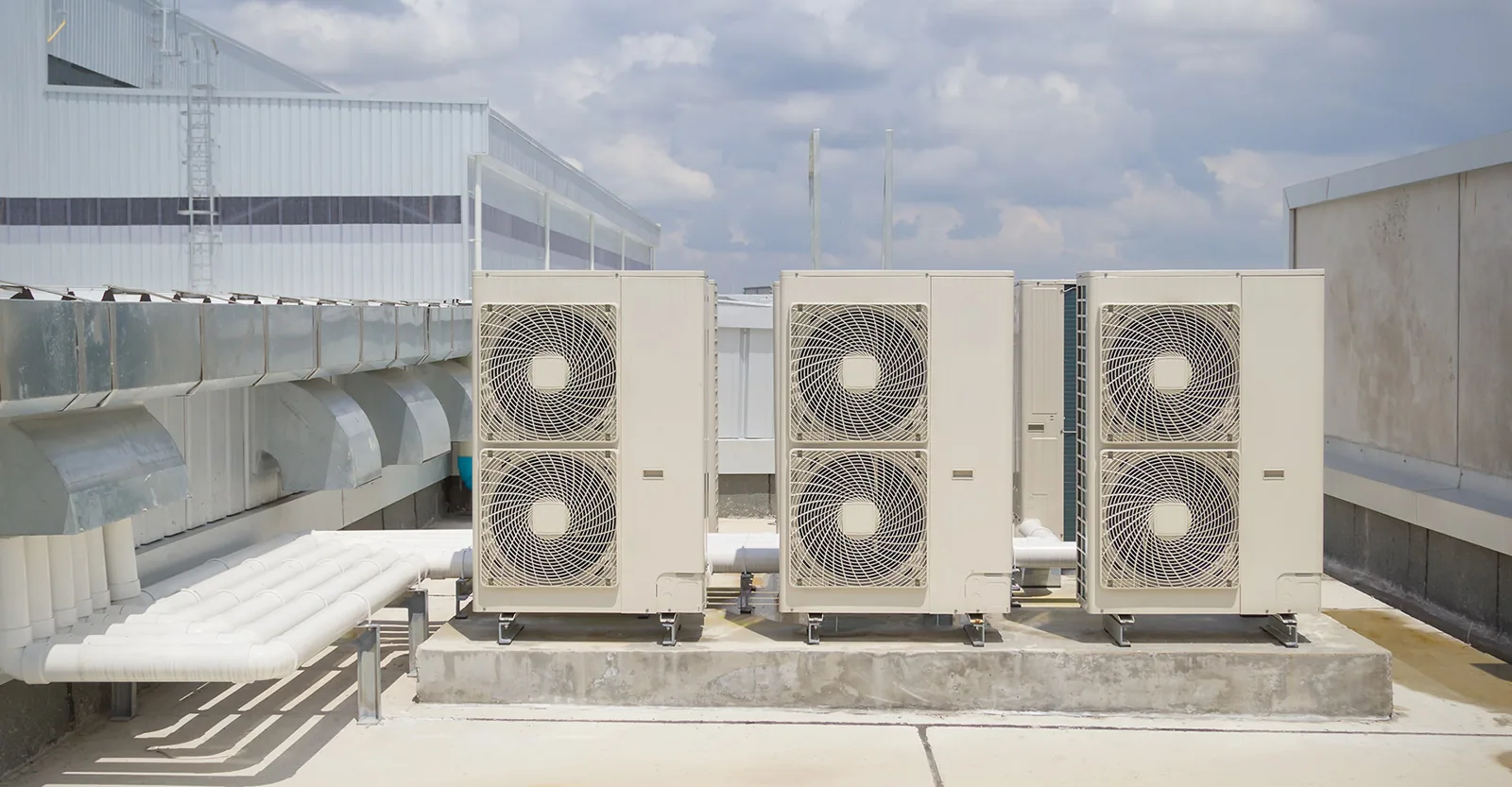
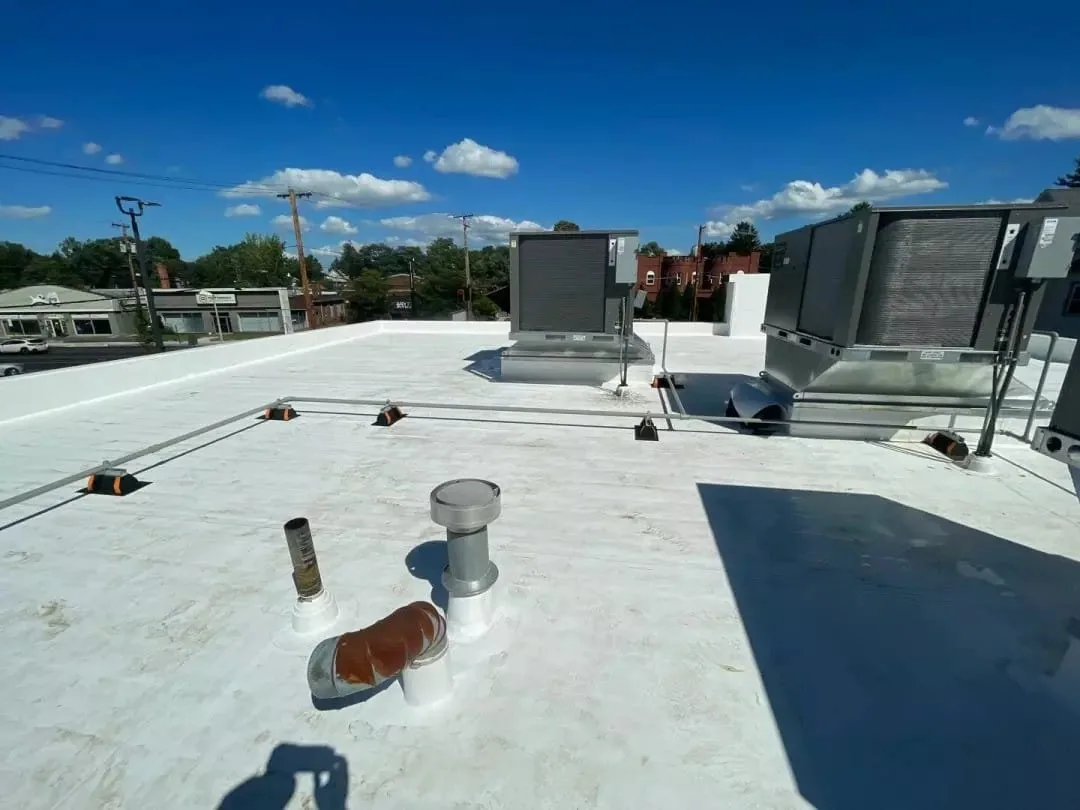
Mechanical supports, conduit, vents, and pipes create different transitions. A curb and equipment support review can help separate a roof penetration from a support detail carrying vibration or equipment loads. We note which parts are visible, where a test opening could clarify concealed layers, and whether the repair can proceed without disturbing a sound surrounding membrane.
Read Skylight Frames and Curb Layers
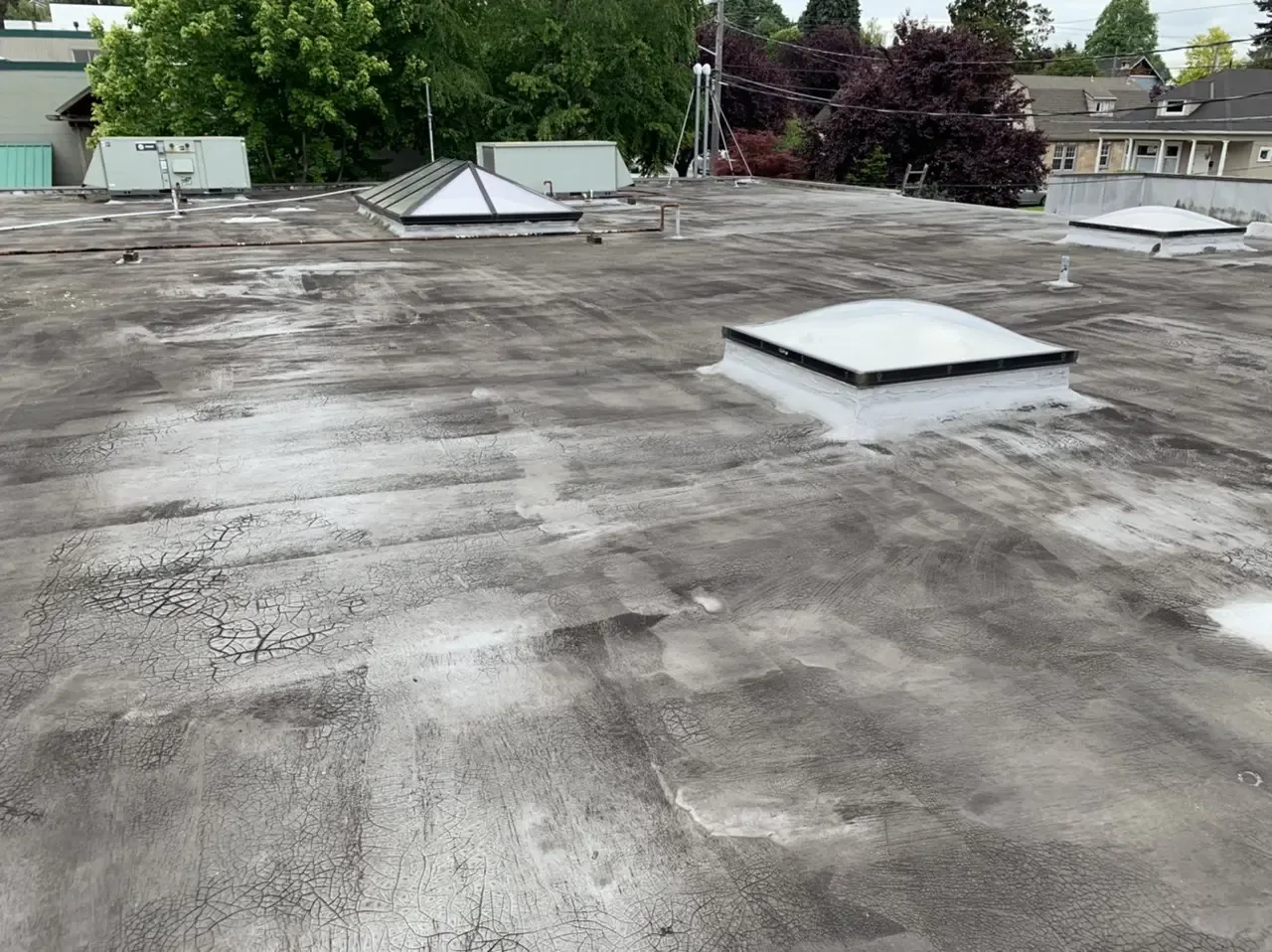
At a skylight, inspect the frame, glazing seals, fasteners, curb, and roof-side flashing as separate components. Cracked glazing or a loose frame joint calls for a different response from a split membrane corner. We record cracked or displaced material, open laps, corrosion, and interior evidence without assuming the oldest visible layer is the source. A flashing failure repair can address a confirmed transition defect while keeping unrelated frame work on a separate scope line.
Some openings have been raised, modified, or covered during prior roof work. The current height, attachment, and tie-in determine whether a patch is suitable or whether the surrounding assembly needs to be opened. A recover evaluation can account for additional roof layers and curb clearance before another membrane is added. The bid basis should identify assumed removal, replacement materials, temporary protection, and the condition that would change the quantity.

Connect Weather and Access to the Record
Olathe's code transition took effect September 1, 2019. A curb-height change or replacement opening can affect design and permit review, so the project team should confirm the current building and energy provisions, including local amendments, with the city. We can record proposed build-up and opening dimensions so the city can run that check.
KDOT describes a 16.5-mile K-10 route linking the Douglas/Johnson County line with I-435 and passing through De Soto, Lenexa, and Olathe. For a portfolio near that corridor, site access, tenant hours, and interior protection can vary from building to building. We keep those arrangements with each property record, rather than using a shared schedule that obscures a locked roof hatch, occupied production area, or sensitive room below the work.
After a wind inspection, we can place each curb or skylight in the roof-area register with a date, fastener or flashing observations, and photographs from the same viewpoints. That gives a later visit a specific comparison point and keeps the storm-related inspection separate from routine replacement assumptions.
Choose a Repair Line That Can Be Rechecked
A localized flashing repair can fit when the frame and curb remain sound, the membrane is dry and attached, and the transition can be rebuilt without trapping moisture. A larger opening may be more appropriate when corrosion, repeated movement, damaged glazing, or a curb-height conflict affects several layers. If interior materials are wet, we document the area and coordinate the opening needed to verify the roof-side condition before closing the repair scope.
The proposal identifies each skylight or penetration, the work area, tie-in limits, and access controls. It separates roofing work from glazing, electrical, or mechanical work that may require another trade. A commercial roof repair scope can carry the confirmed membrane or flashing line, while a TPO assembly review can clarify compatible membrane details where that system is present. We do not price an assumed assembly as though it had already been opened. For recurring openings, the comparison should also show repair history, temporary protection, and the labor needed for access on each visit. That makes a small current repair easier to weigh against repeated mobilization or a broader renewal scope, with dated photographs retained for the next review.
More About Commercial Skylight and Penetration Flashing in Olathe, KS
Carry Openings into the Capital Year
Repeated repairs at one curb can shift the replacement window even when the rest of a roof area remains serviceable. The condition report should preserve the date, opening identifier, repair performed, photographs, and any untested layer. An organized roof condition record lets an owner compare recurrence and remaining uncertainty with other repair needs. That comparison is more useful than merging every leak ticket into a single allowance.
For sites in Olathe, Lenexa, or De Soto, work can be sequenced by approved access windows while findings stay attached to the building where they were observed. We identify which rooms need protection, who can release roof access, and whether a tenant schedule limits noisy or interior work. A commercial roof assessment in Olathe can set the opening list, repair priorities, and next inspection interval from the property record.
Commercial Roofing Questions
Can a roof patch stop a skylight leak without replacing the frame?
The frame condition and the roof-side transition decide that scope. We inspect both, identify whether the glazing, fastener, curb, or membrane is open, and price a localized repair only when adjacent layers can accept a sound tie-in. If the source remains concealed, the proposal states the test opening needed to confirm it before final quantity.
What changes when a skylight curb is too low for another roof layer?
Curb height, drainage direction, frame clearance, and the planned membrane assembly need to be measured together. Added layers can reduce effective curb exposure or interfere with the opening. We record existing elevations and the proposed build-up, then identify whether the curb must be modified or the roof plan should use a different renewal scope.
How do you tell a pipe leak from a nearby skylight leak?
A roof-area map and close photographs help separate the two openings, but water can travel before it reaches the ceiling. We trace visible laps and transitions, record interior locations, and compare conditions after controlled testing when appropriate. The repair line remains specific to the opening and test result, with other possible paths noted for follow-up.
Can flashing work be scheduled while rooms below stay in use?
We identify the room, roof access point, protection area, and expected work window before setting the sequence. Most exterior tasks can be planned separately from any interior opening, while removal, testing, or wet-material replacement may need direct coordination. The tenant contact and property representative receive a scope that marks those limits and approval points.
What should the owner retain after a curb or penetration repair?
Keep the opening identifier, dated photographs, materials installed, work limits, and any testing result with the building's roof-area record. Note what was not opened or verified, along with the next inspection date. That file makes a future recurrence comparable to the original condition and keeps a repair history distinct from a replacement assumption.

Set the Opening List and Work Window
Send the property list, roof-area register, decision date, available reports, and access contact. We can assess the skylights, curbs, and penetrations, separate confirmed repairs from items needing testing, and return a documented scope with the work limits and next review interval.
