Wind Damage Roof Repair in Olathe, KS
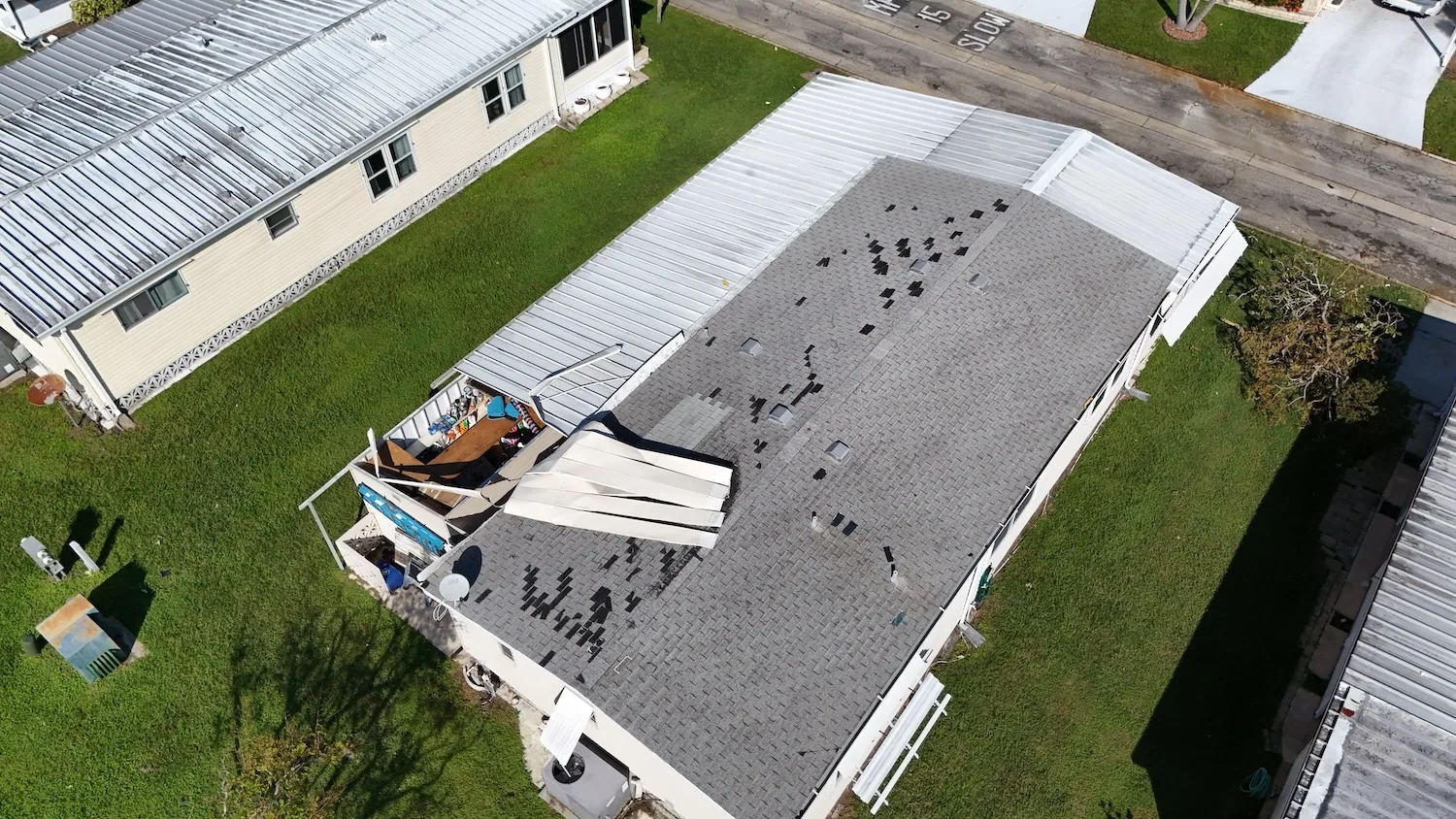
The squall line that crossed the Kansas City metro on May 19, 2024 left an estimated 80-mph peak-wind survey path from Gardner into Olathe, and that date now belongs in the file of any Olathe, KS property that was inside the reported corridor. A wind claim, a repair reserve and a replacement window all depend on the same question: what did the roof look like before the storm, and what does it look like now? We answer it on the roof itself, starting at perimeter metal, corners and penetrations, then working inward to the field seams, so the repair scope reflects displaced material rather than a general impression of a rough night. The owner receives a dated record that separates storm movement from older wear.
Send the storm date and the roof-area register
Share the property list, the roof-area register, any inspection reports from before and after May 2024, and an access contact. We will walk the affected roofs, separate storm repairs from older wear, and give you a scope you can set beside your capital year.
The 2024 squall line as a dated inspection trigger
Wind from that storm line was documented as straight-line damage, which matters for roof work because straight-line wind loads a building differently than a tornado vortex does. It pushes across the roof for a sustained interval, and every edge, parapet cap and rooftop unit becomes a place where air can get under a component. For a property with an address near the Gardner-to-Olathe path, a post-storm walk is a sensible use of the next inspection interval, and it should be recorded as a trigger tied to that date rather than as a typical-year assumption for every building in the portfolio.
Other brief tornadoes touched elsewhere in Johnson County (the separate tornado damage question) during the same storm line, so a property manager with sites in several municipalities can group the inspections by exposure, not by owner. Lenexa and De Soto sit along the K-10 corridor with Olathe, and a schedule that follows the corridor keeps the crew on the road less and the findings comparable from one roof to the next.
Where wind damage shows first on a low-slope roof
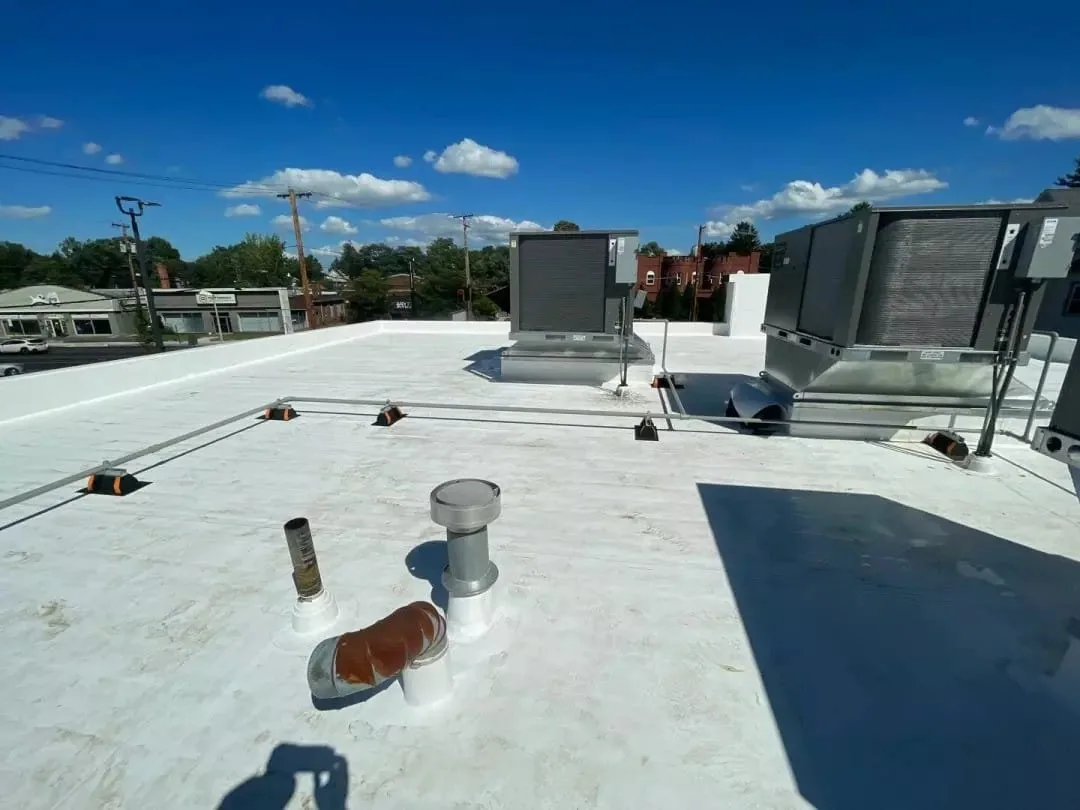
On a single-ply roof, the first signs are usually at the perimeter. Coping and edge metal that has lifted a fraction of an inch lets air under the membrane edge, and the membrane then flaps against fasteners or pulls free of its adhesive. We look for exposed insulation at a termination, bent drip edge, torn flashing at corners, and billowed membrane that no longer lies flat. On ballasted roofs we check for stone that has moved off the field toward the leeward edge, because bare patches change the uplift picture for the whole panel.
Metal roofs show it differently: loose ridge and trim pieces, panels with displaced clips, and sealant that has separated at laps. Rooftop equipment deserves its own look, since a unit that shifted on its curb can tear the flashing around it even when the field of the roof looks untouched.
Repair, re-secure or replace the damaged section
Most wind findings fall into three bands. The first is loose or missing edge metal and flashing, which we re-secure or replace with details that match the existing system. The second is membrane that has lifted or torn over a limited area, which can often be cut out and repaired where the underlying insulation and deck are dry and sound. The third is widespread fastener pull-out or a roof whose attachment was already marginal, where patching the visible tears treats a symptom and the next gust finds the same weakness.
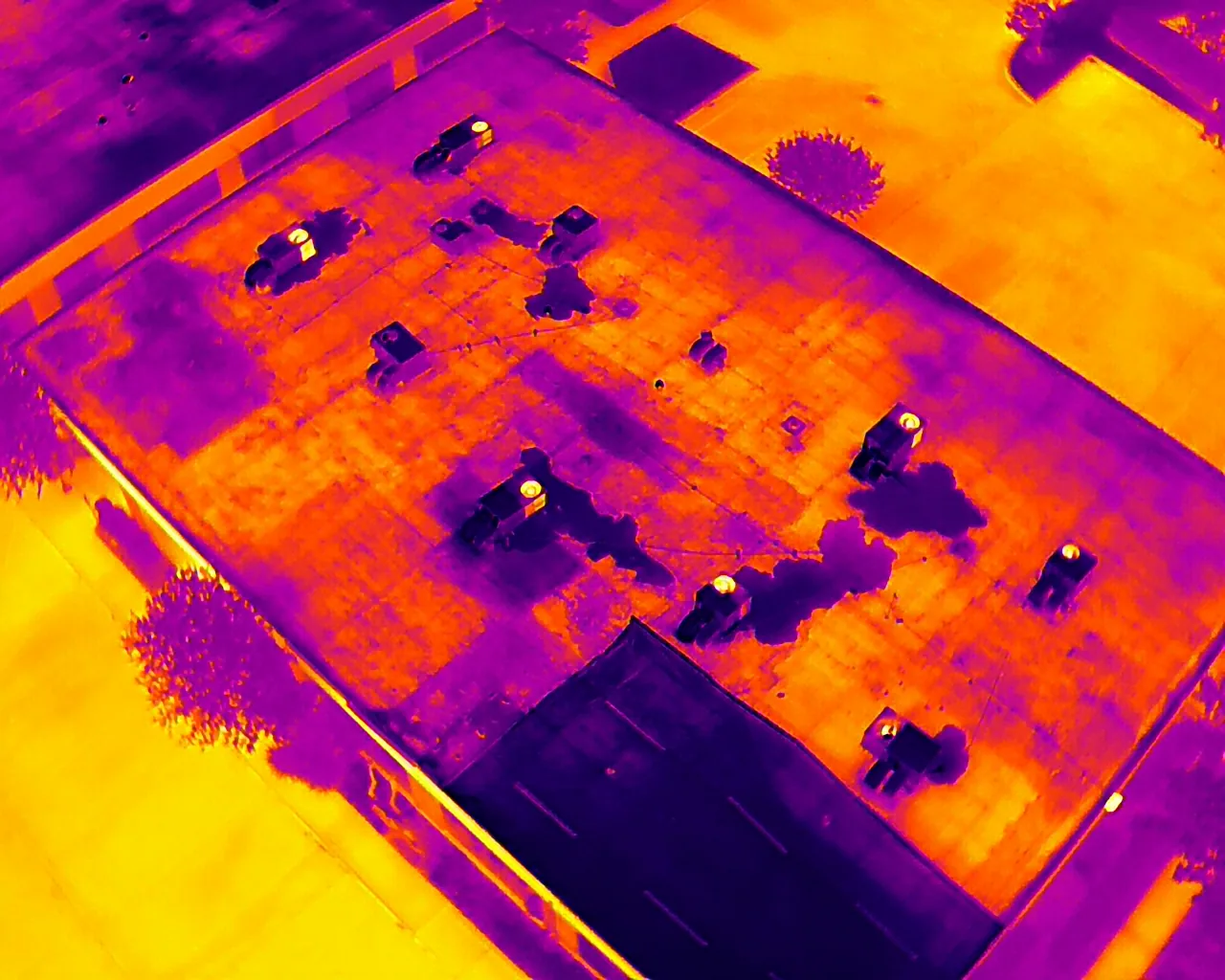
Moisture is the deciding variable between the second and third bands. When wind opens a roof, rain follows, and wet insulation under an apparently intact membrane is a common condition after a storm. An infrared moisture survey maps wet areas before they are covered, so the repair boundary follows the water and not just the visible tear.
Temporary protection and the permanent scope
When a membrane is open to weather, the first visit is about stopping water: tarping, temporary seals at torn flashing, and securing loose metal so it does not travel. That work is stabilization and should be written up as such, with photographs, because the permanent scope may need material that is not on the truck. Edge metal in particular often needs fabrication to match the profile already on the building.
For urgent conditions after hours, the dry-in itself is emergency roof repair, available at any hour. The lasting correction follows once the damage is mapped, access is arranged around tenants and loading activity, and the owner has seen a version of the scope that separates storm repairs from deferred maintenance. If an insurer is involved, the photographs and measurements carry weight, and claim documentation support keeps them organized.
More About Wind Damage Roof Repair in Olathe, KS
Wind repairs inside a capital plan
Industrial development in southern Olathe, where the city's own plan lists names such as Lineage Logistics, FedEx and the Lone Elm and 56 Commerce Centers, is a setting where a wind event can reach many buildings at once, and each inspection starts from the field condition of that building's own roof. Ask for the roof-area register, the last two inspection reports and any prior edge-metal work, and the wind findings can be placed against the replacement window already on the schedule.
A roof that lost edge metal and was ten months from a planned replacement may be better served by a temporary correction than a permanent one. A roof with a decade of useful life left deserves full restoration of its attachment. Either decision is stronger with a photo-backed condition report behind it.
Commercial Roofing Questions
How soon after a wind event should a commercial roof be walked?
Soon enough that rain has not yet entered the opened areas, which in practice means within days. Early inspection also keeps the damage record clean, since later weather and foot traffic blur which tears came from the storm. For properties inside the Gardner-to-Olathe wind path from May 2024, a retrospective walk still has value because lifted edge metal and loosened fasteners can remain open to later weather.
Does wind damage always require replacing the membrane?
Replacement is the answer when attachment has failed across a broad area or the insulation beneath is wet. Where the damage is confined to an edge, a corner or one equipment curb, a section repair with matched materials usually restores the roof. The field survey, moisture mapping and the roof's remaining service life together settle the question, and we put those findings in writing before any bid basis is set.
Why do edge and corner zones get the most attention?
Air moves faster and pulls harder where the roof surface ends, so perimeters and corners see higher uplift than the field. A small gap in coping or a loose termination bar gives wind a starting point, and the membrane can then peel inward. Repairs there are often the most cost-effective part of a wind scope because they protect the rest of the roof from progressive failure.
What records support an insurance claim for wind damage?
Dated photographs of each damaged component, a roof plan marking where the damage sits, moisture findings and a written scope that separates storm repairs from existing wear. Pre-storm inspection reports are valuable because they show condition before the event. We assemble that package so the adjuster and the owner are looking at the same set of facts.
Can the repair be phased if tenants cannot be disturbed?
Often yes. Edge metal and flashing work happens at the perimeter and usually has little effect on interior operations, while membrane and insulation work in a tenant's space can be scheduled around deliveries and quiet hours. We agree the roof access route, equipment clearances and weather holds with the property contact before the crew mobilizes.
Send the storm date and the roof-area register
Share the property list, the roof-area register, any inspection reports from before and after May 2024, and an access contact. We will walk the affected roofs, separate storm repairs from older wear, and give you a scope you can set beside your capital year.