
Commercial Roof Maintenance in Olathe, KS
A capital-year decision is stronger when the inspection interval follows the roof record rather than a calendar copied across every property. In Olathe, the Johnson County Airport normal set places January's mean temperature at 29.8°F and July's at 78.8°F, a seasonal spread that gives a facilities manager reason to compare seam movement, drainage, and repair history by roof area. We set maintenance visits around the assembly, recurring defects, tenant schedule, and planned replacement window, then leave a record the next budget review can use.
Put the next inspection on a useful schedule
Share the property list, roof-area register, decision date, prior reports, and access contact. We can document current condition, separate maintenance from corrective work, and set the next review around the risk that remains.
Set the interval from exposure and field condition
Seasonal temperature movement can change how a roof detail behaves, so the interval is set by the roof and not the date. We compare what the inspection shows with prior photographs, repair lines, drain condition, and known access limits. A seam that remains stable can stay on a routine watch list, while a recurring opening or wet-area concern may call for a closer revisit. The roof-area register should preserve the observation and the next review date so the maintenance reserve has a field basis.
Olathe properties along the K-10 corridor may include office, industrial, commercial, and education uses. That mix changes access windows and operating consequences even when several roofs share an owner. We keep the schedule by property and assembly, not by a corridor-wide assumption. A hands-on inspection can establish the baseline, while a photo-backed condition report keeps open items visible at the next capital review.
Keep routine work tied to roof areas
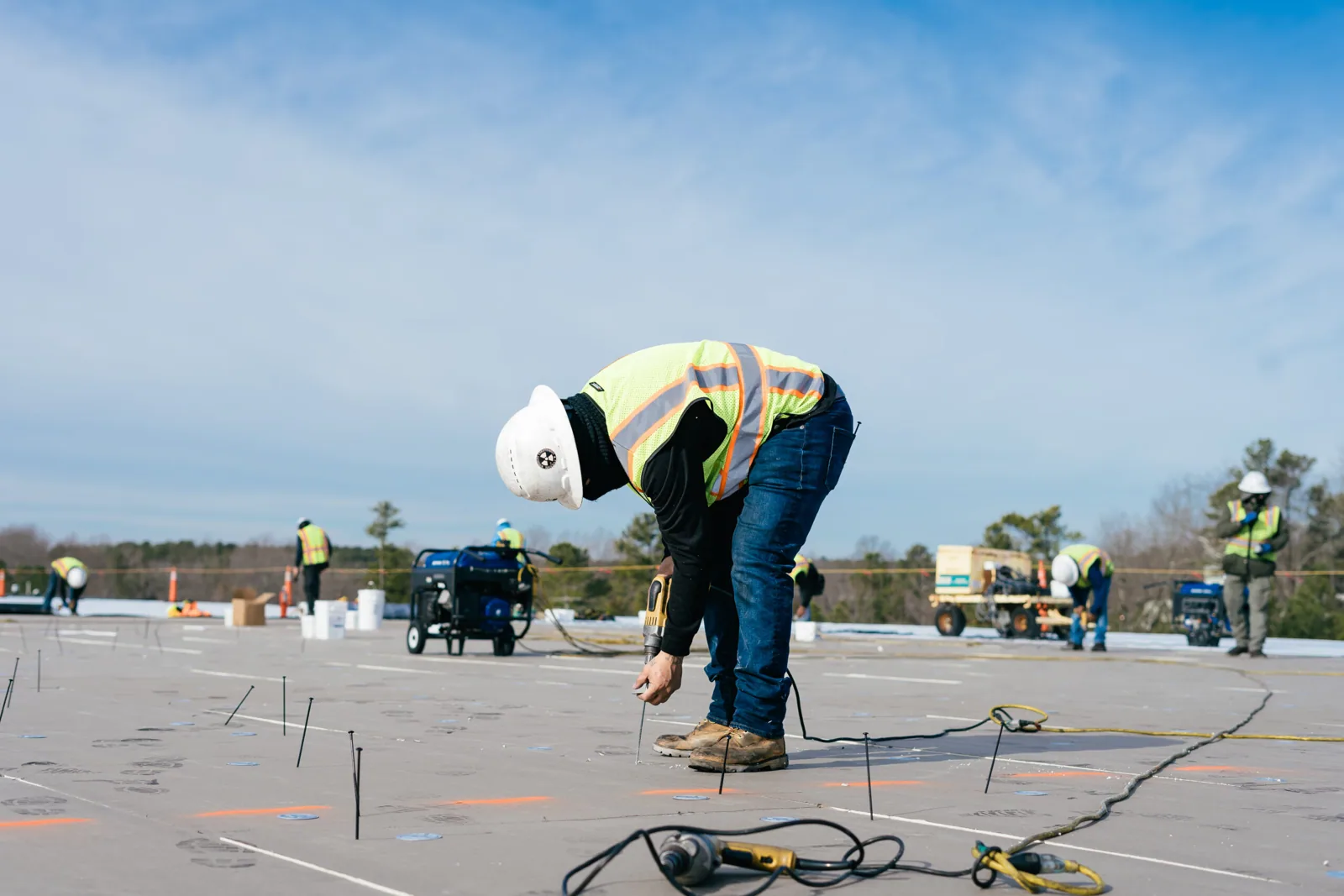
A useful maintenance visit records drains, scuppers, seams, flashings, edge metal, rooftop equipment transitions, and earlier repairs with enough detail to find each item again. The checklist should also identify conditions that could not be reached, debris that needs removal, or a repair that requires approval before work begins. We separate housekeeping from corrective work so the owner can see which items fit the scheduled visit and which need a separate scope version.
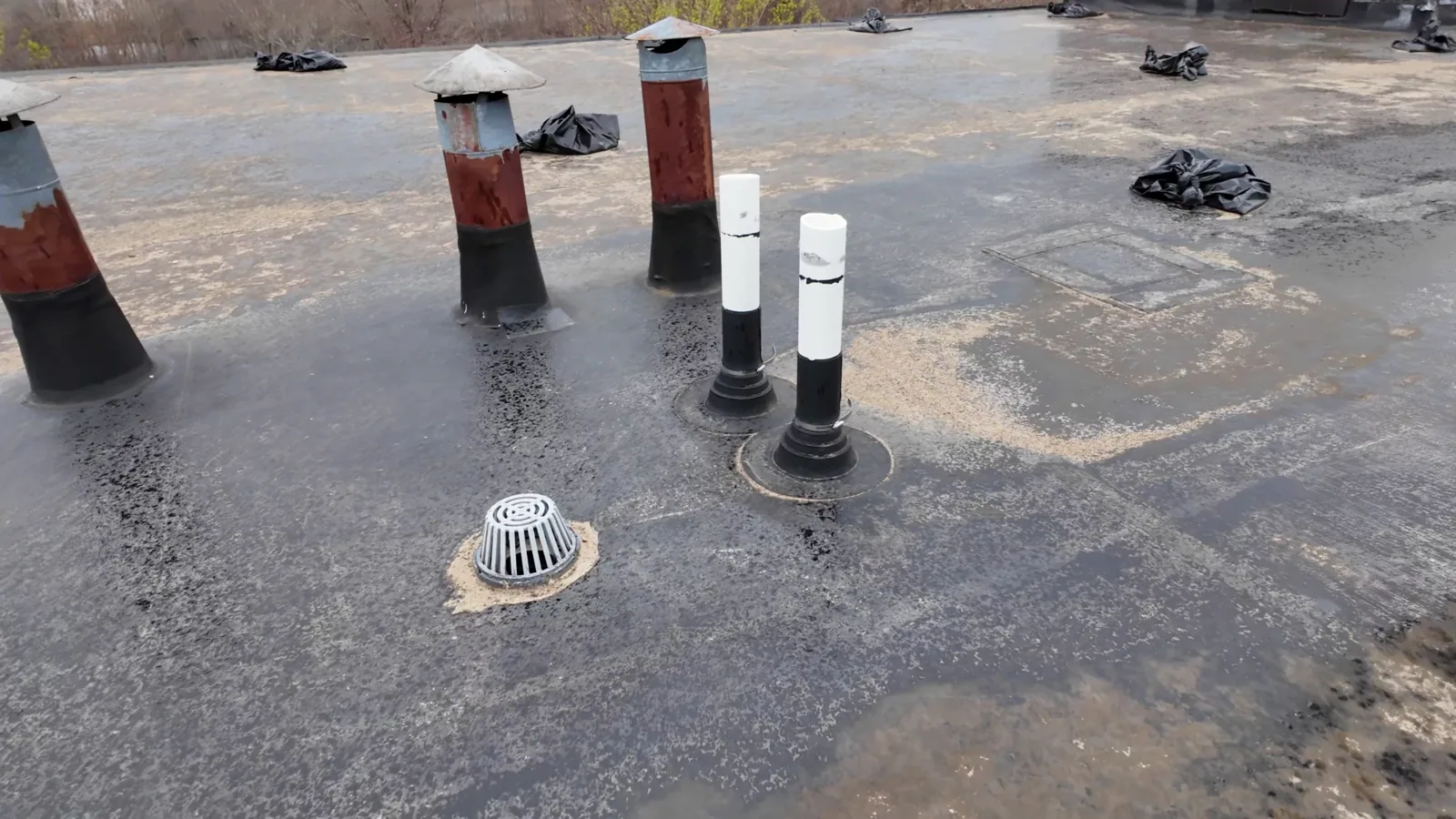
Where an outlet is slow or a low area is holding water, the report should note the location and surrounding drainage path rather than label the condition without review. A drain and scupper assessment can identify whether a correction belongs in maintenance or requires a broader scope. We also compare the current condition with the membrane assembly and its details, since material compatibility affects how a repair is prepared and closed. On thermoplastic and EPDM roofs, maintenance needs appropriate surface preparation and a compatible repair material. A patch placed over dirt, moisture, or loose coating can separate at the edge, while an unsuitable solvent or sealant can affect the membrane. We identify the assembly before selecting a method and note any applicable procedure in the building record.

Coordinate the sequence across properties
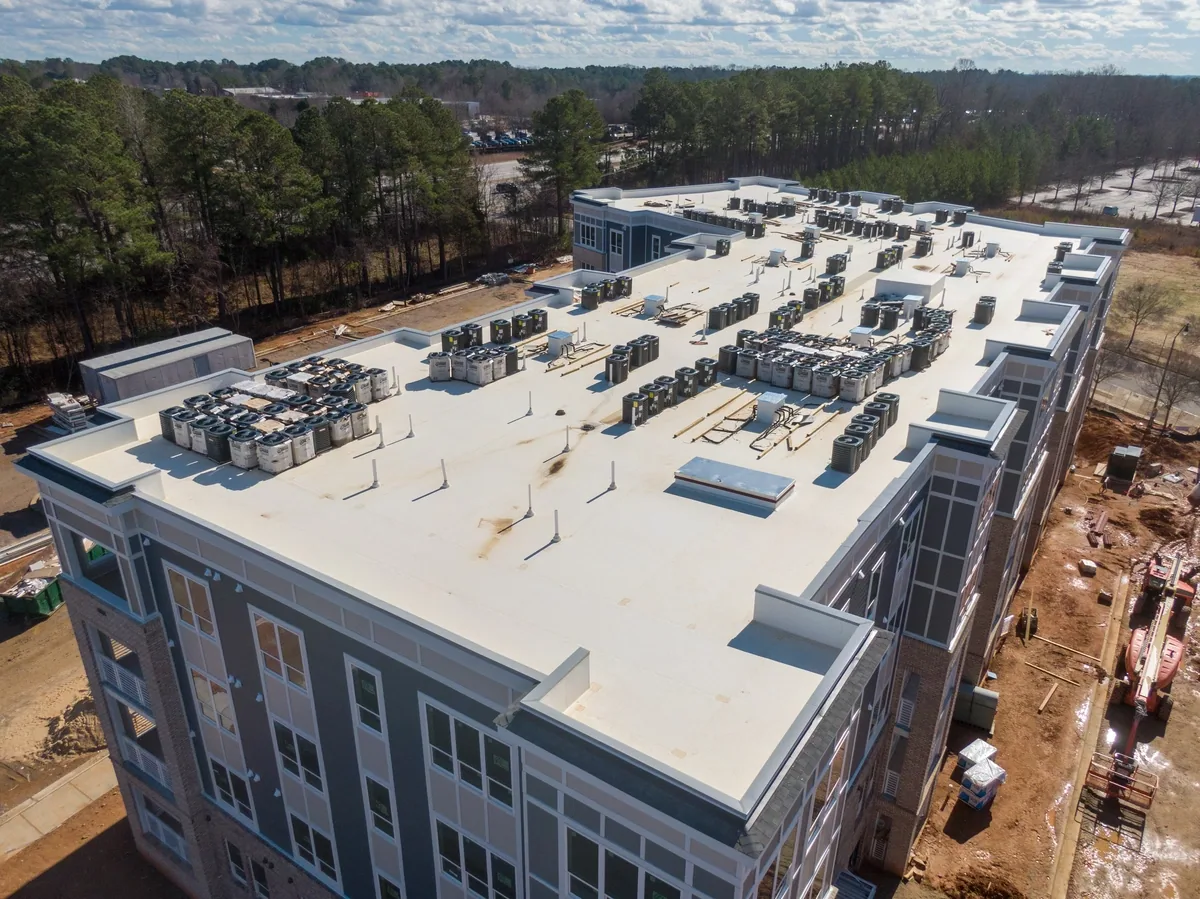
Portfolio scheduling works best when each property keeps its own access contact, roof plan, operating window, and decision date. A shared format makes the review easier, but it should not combine findings from Olathe, Lenexa, or De Soto into one condition statement. Buildings along K-10 each carry their own roof system and exposure. We retain a separate history for each roof area and flag work that could affect tenants, loading, equipment shutdowns, or interior protection.
The roof-area register can connect inspections, repair outcomes, and reserve questions without obscuring which building produced each finding. If one roof needs an immediate correction while another is approaching a replacement window, the portfolio sequence can show both decisions without forcing them into the same capital year. Visits across Olathe and neighboring municipalities can be coordinated, while each report stays specific to its property and approval path.
Separate maintenance from capital work
Maintenance can slow avoidable deterioration, but it cannot restore a membrane whose field condition no longer supports a durable repair. We mark an item as routine upkeep, corrective work, additional testing, or a replacement question and state what evidence would change that classification. If a leak remains active, a temporary dry-in and emergency response may need to precede the planned visit. When coating or recover options are considered, the condition record should show whether the existing assembly is suitable before the owner compares bids.
For roofs with insulation concerns, opening or direct testing may be needed before a repair allowance is set. We document the limits of a visual visit and connect the next step to the affected area rather than carrying a broad assumption into the reserve plan. The maintenance log then supports a renewal trigger: recurring repair cost, spreading defects, or a scope that has expanded beyond the original work order.
More About Commercial Roof Maintenance in Olathe, KS
Preserve the record through staff changes
Each visit should leave the date, weather observed, roof areas reached, photographs, materials used, repairs completed, and items deferred. Add the building contact and any access restriction that changed the inspection. If plans or earlier reports are unavailable, the first visit can establish a baseline; it should not invent a repair history. Later reviewers can compare recurrence and decide whether a line belongs in maintenance, a larger repair, or capital planning.
We confirm hatch access, escorts, equipment clearances, and tenant scheduling before arrival. A property can have roof sections that are not safe or available during the original window, so the report identifies those areas and the return needed. The owner can share the roof-area register, prior reports, decision date, and access contact to set a portfolio sequence that follows the actual field condition.
Commercial Roofing Questions
How should an owner set maintenance intervals for different roof areas?
Use condition, repeat defects, drainage history, assembly, and access limits to set the next review date. A stable area with a complete record may stay on its planned cycle, while a repaired seam or unresolved moisture question can warrant an earlier check. We record the reason for each interval so the schedule supports a reserve decision instead of becoming a date repeated without evidence.
Which items belong in a scheduled maintenance visit?
The scope can include drains, scuppers, flashings, seams, edge conditions, equipment transitions, and previously repaired areas. We note debris or conditions that need owner approval, then separate routine work from repairs that require a distinct price or testing. The report identifies roof area and completion status so a later reviewer can find the same item and compare its condition.
Can maintenance prevent a roof replacement?
Maintenance can address correctable conditions and improve the record used to time renewal, but it cannot make an unsuitable assembly viable. We identify what can be repaired, what needs testing, and what condition would trigger a replacement review. That distinction helps the owner compare current work with a capital allowance without carrying an unsupported remaining-life assumption.
How does the Olathe climate affect a roof maintenance plan?
The local NOAA normal set records seasonal temperature movement and 109.6 days each year with minimum temperatures at or below freezing. Those figures can frame inspection timing, while the roof itself determines whether a seam, drain, or flashing needs attention. We connect the observed condition to a roof area and the next visit rather than assigning a failure from climate context alone.
What records should a property manager provide before a visit?
Share available roof plans, prior condition reports, leak logs, repair invoices, access instructions, and the person who can approve added work. Include tenant or equipment windows that constrain roof entry. We use the material to compare the current visit with earlier findings, then identify missing information rather than treating an unavailable record as proof that no prior issue exists.


Put the next inspection on a useful schedule
Share the property list, roof-area register, decision date, prior reports, and access contact. We can document current condition, separate maintenance from corrective work, and set the next review around the risk that remains.
