Commercial Roofing in Spring Hill, KS
A Spring Hill, KS owner who wants a roof decision made before the next capital year should start with a dated roof-area register, because the commercial buildings of a small city take the same seasonal swing as the rest of Johnson County: 29.8°F in January, 78.8°F in July, and 109.6 days a year at or below freezing at the Olathe airport station. Spring Hill has a 2025 Census estimate of 10,777 residents, and its low-slope and metal roofs are repaired, recovered and replaced on the same engineering logic as roofs anywhere in the region. We walk the roof, record the field condition, and give the owner a written finding that stays separate from any reserve estimate, so the replacement window is set by what the membrane, seams and drains actually show.
Send the property list and the decision date
Share the roof plan, any earlier reports, leak locations, the access contact and the year you need a replacement decision. We will return a documented assessment that separates current repairs from capital planning assumptions for your Spring Hill buildings.
Freeze-day exposure and the replacement window
The Olathe figures are the nearest long-term record, and they give a fair picture of the temperature movement a Johnson County roof goes through. More than one hundred mornings a year begin at or below freezing, and every one of them gives trapped moisture in an insulation board, a lap or a flashing termination a chance to expand and loosen the material around it. Over time that cycle shows up as lifted seams, cracked sealant at penetrations, and edge metal worked away from its fasteners, and an owner who tracks those changes visit by visit can see a renewal trigger forming before a leak reaches a tenant's ceiling.
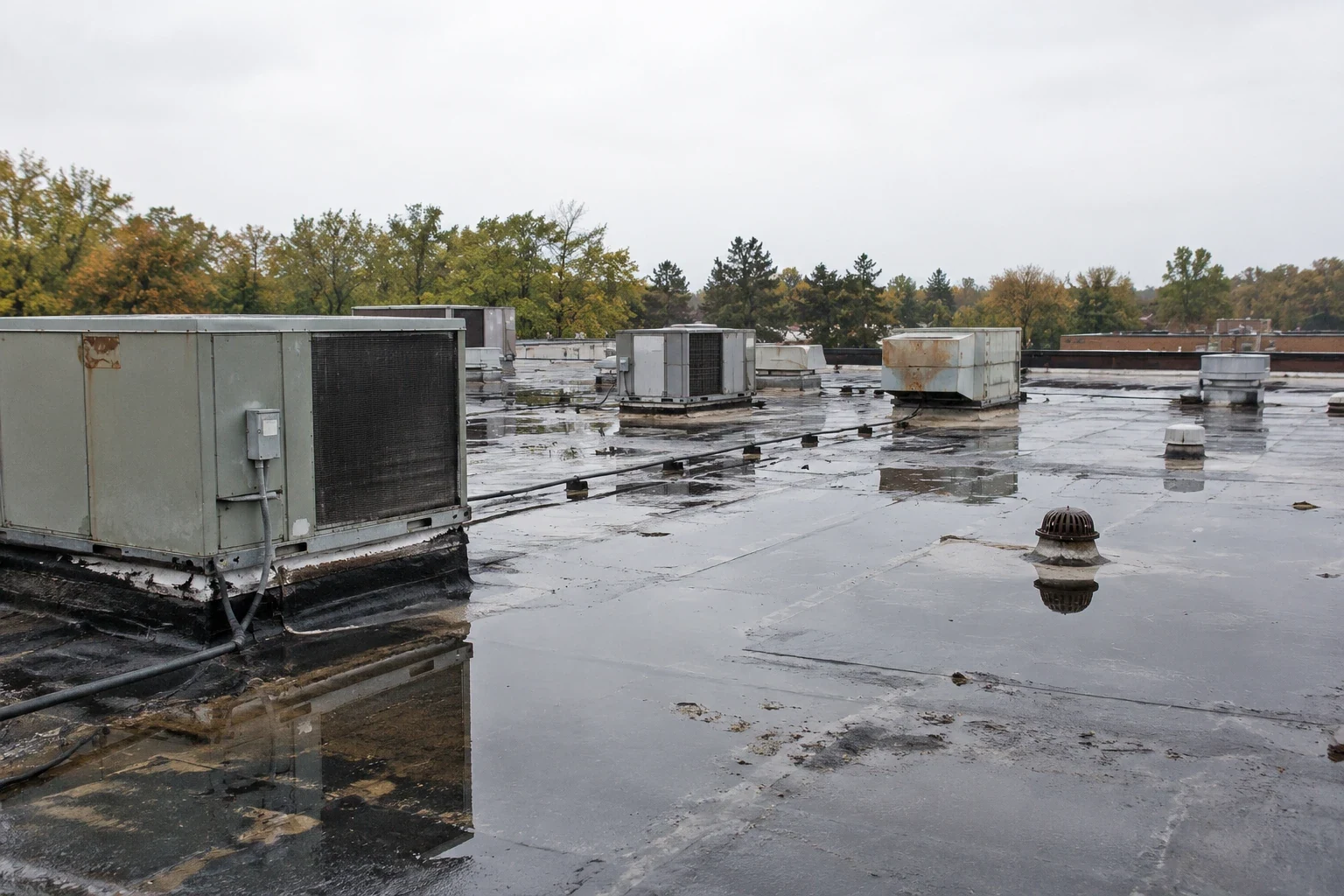
Annual precipitation in the Olathe normal set is 37.54 inches, which matters most where water does not leave the roof quickly. We look at whether drains and scuppers sit at the low points, whether a membrane holds water more than a day after rain, and whether ponding water repair would solve a drainage problem or only hide a structural one.
What the first walk records on a Spring Hill roof
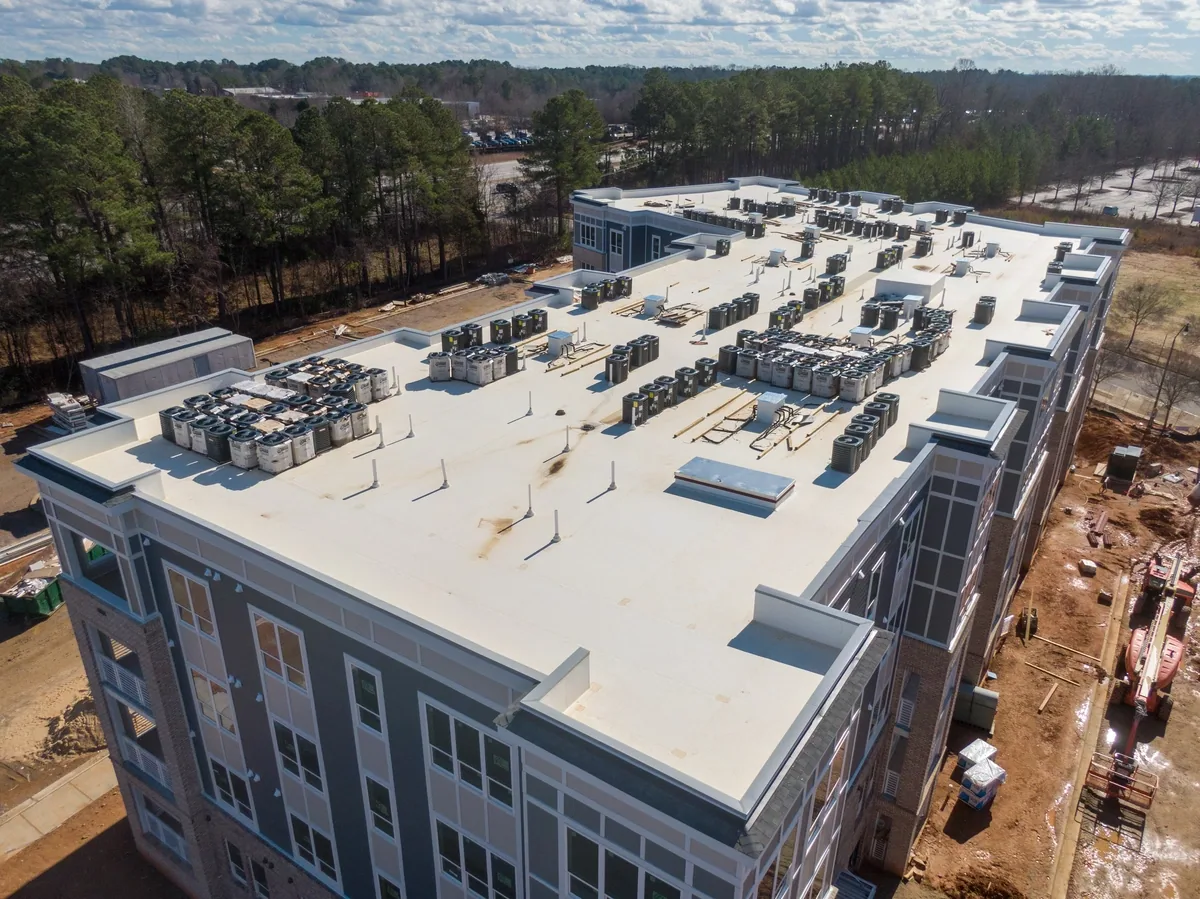
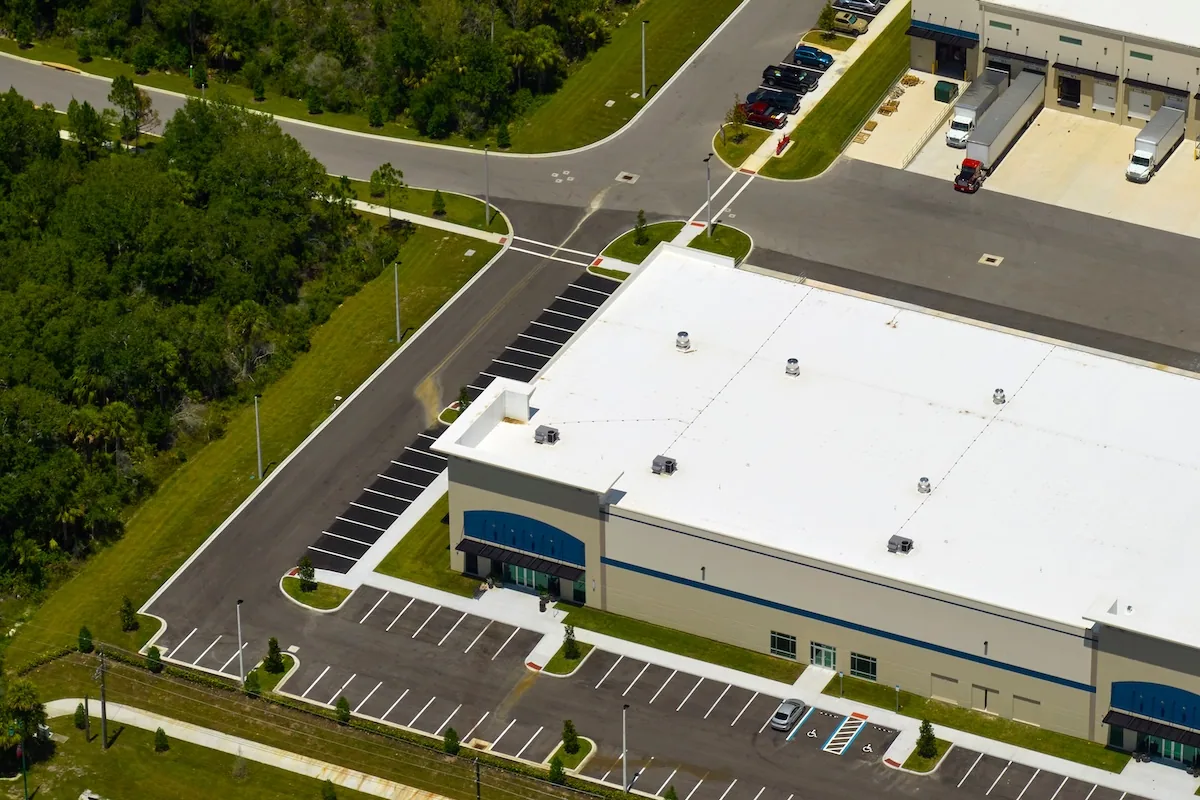
Whether a building is topped with TPO, a modified bitumen cap sheet, a built-up system or standing seam panels is settled on the first walk. We note the membrane or panel type, the attachment method where it can be seen, the insulation and cover board where a core sample or an exposed edge allows, and the age of any earlier patching.
From there the walk follows the water. We trace each slope to its drain, check the strainers and sumps, inspect the flashing at curbs and pipe penetrations, and photograph the perimeter edge metal, because wind finds the weakest edge first. A building within the reported path of the May 19, 2024 survey, which ran from Gardner to Olathe, warrants a closer look at coping, termination bars and fastener pull-out. Buildings outside the reported path are reviewed on their own observed condition, not on a storm label. Our commercial roof inspection produces photographs, locations and a ranked list for the drainage record.
Repair, recover or replace on a smaller building
When one section shows isolated seam splits or failed pipe boots and the rest of the membrane is dry and well attached, a targeted repair and a scheduled inspection interval keep capital in reserve. When moisture has spread into the insulation, repeated repairs in the same area become the clearest evidence that defect recurrence has overtaken the repair line in the budget.
A recover over a sound, dry existing roof can be an efficient option, since it avoids tear-off and shortens the time a tenant sees crews overhead. It only works when an infrared or core check confirms the insulation underneath is not wet and the deck is still sound; adding a new membrane over saturated board simply seals the problem in. Where those conditions fail, full replacement is the scope, and the choice between TPO, PVC, modified bitumen or a metal retrofit then turns on the building's equipment, foot traffic, drainage and the owner's expected holding period.
Records that shorten the scope conversation
The most useful file an owner can send is short. A roof plan or aerial image, any earlier inspection photographs, a list of leak locations with dates, and the names of tenants who report them. If a warranty exists, the document and any maintenance requirements attached to it matter, since an undocumented repair can complicate coverage later. Rooftop equipment changes belong in the file too, since new units leave behind curbs and penetrations.
With those records in hand we can split findings into three lines: items that are leaking now, items that will fail inside the next inspection interval, and items that belong in the longer roof capital planning horizon. Keeping the three lines apart is what lets a property manager approve urgent work without committing to a full replacement.
More About Commercial Roofing in Spring Hill, KS
Scope, access and the tenant schedule
Roof work on a working building is a scheduling exercise as much as a construction one. We confirm who controls roof access, where material can be staged, which doors and walkways need protection, and which areas hold equipment that cannot lose power or airflow while crews work above. Loud tear-off may need sequencing outside tenant peak hours, and dust near dock doors needs its own protection. Those constraints go into the scope version before work starts.
Spring weather in the Kansas City area includes severe thunderstorms with hail in its climatology, so open roof sections are limited to what a crew can dry in within the day. If a leak is active, emergency roof repair is available at any hour, including weekends and holidays, and the temporary dry-in is recorded separately from the permanent fix. Visits can be sequenced with an owner's other sites in Olathe and Gardner.
Commercial Roofing Questions
How should a Spring Hill owner time a roof replacement against a capital year?
Set the replacement window from the field condition, then check it against the budget calendar rather than the other way around. If the membrane is holding water, seams are opening, or insulation tests wet, the roof has told you its window, and a reserve plan that ignores it will move the cost into an emergency year. If the roof is dry and attached, a maintenance plan with a fixed inspection interval can push the window out with evidence behind it.
Does the May 2024 wind survey apply to a building in Spring Hill?
The survey documented straight-line wind damage running from Gardner into Olathe, so it names those two cities and not Spring Hill. We treat it as a trigger only for properties the owner believes sat in that reported path. For every other building, an inspection after any strong storm looks at edge metal, copings and membrane terminations and records what is actually visible.
What will a first roof visit produce that I can use in a reserve plan?
You receive a written condition report with dated photographs, a marked roof plan, drainage observations, and a ranked list of repairs separated from longer-term renewal items. Each line carries a scope and a timing note so a controller or asset manager can place it in the right year.
Can a recover save money on a small commercial roof?
A recover avoids tear-off and shortens disruption, but it is only sensible over a dry, sound roof. We confirm that with infrared imaging or core samples before quoting it. If the insulation is wet, the lower first cost turns into a repeat expense, and replacement is the better use of the capital year.
Who responds if a roof opens up outside business hours?
Emergency response runs around the clock, every day of the week. We stabilize the opening, document what was found and what was protected, and leave the permanent repair for conditions that allow a proper detail. The temporary work is logged apart from the permanent scope so the owner can see exactly what each stage cost.

Send the property list and the decision date
Share the roof plan, any earlier reports, leak locations, the access contact and the year you need a replacement decision. We will return a documented assessment that separates current repairs from capital planning assumptions for your Spring Hill buildings.