
Commercial Roof Insurance Claim Assistance in Olathe, KS
A claim file is easier to review when the storm date, roof-area register, and field condition stay connected. On May 19, 2024, the National Weather Service surveyed straight-line wind damage from Gardner into Olathe, including an estimated peak-wind path near 80 mph. That event is a reason to inspect any building where exposure was reported. We document the observed condition, temporary protection, and next owner decision.
For an Olathe property, the record can include the event report, interior observations, accessible roof details, and prior work. We keep a suspected cause separate from a visible defect unless evidence connects them. A commercial roof inspection maps the affected area and open questions.
Set the claim documentation review
Share the property list, roof-area register, event date, available reports, decision deadline, and access contact. We can document field conditions, separate temporary protection from repair, and prepare a scoped record for owner review.
Build the File from Dated Observations
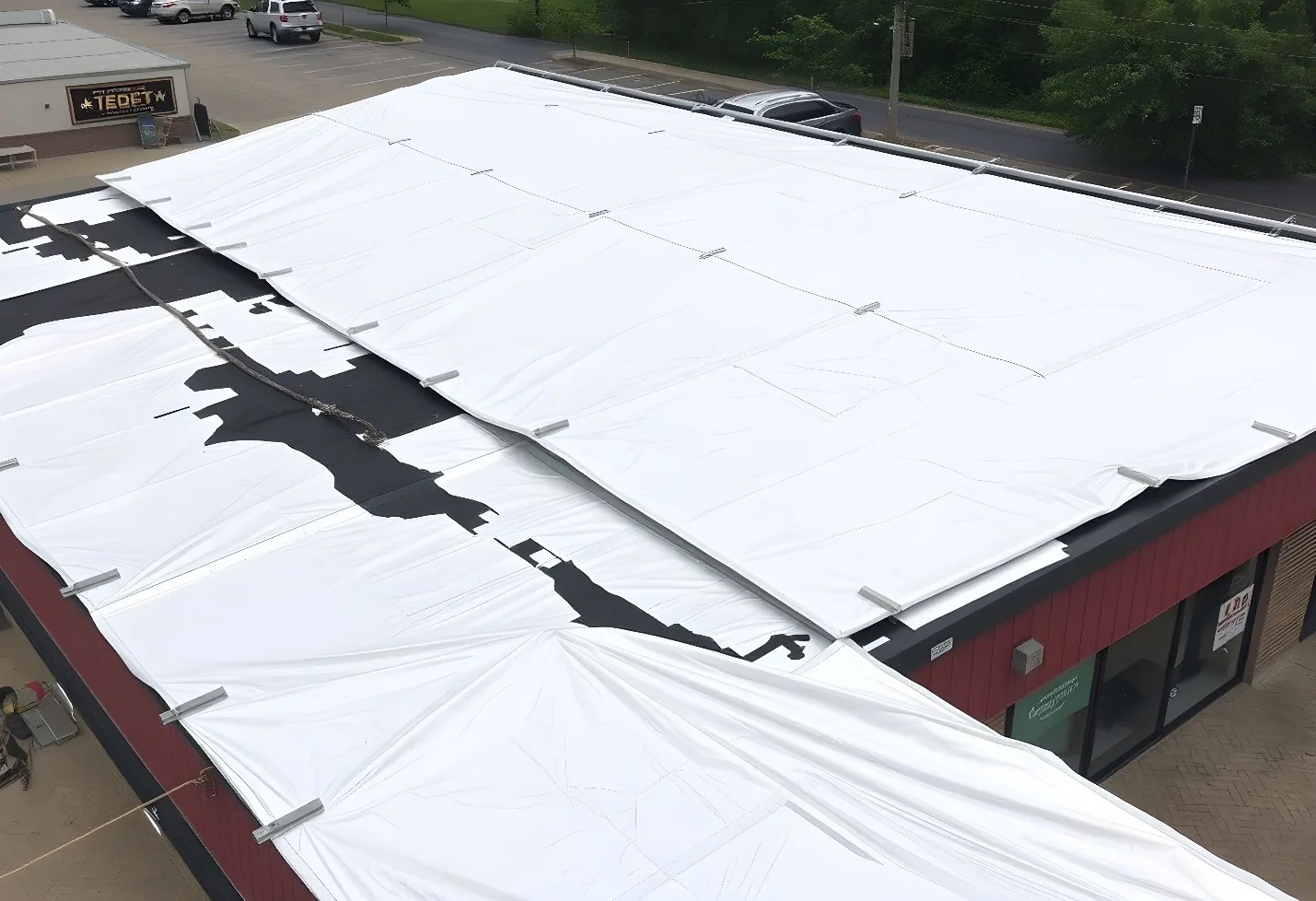
Gather the first notice, event date, time of discovery, roof plan, prior repair record, and photographs taken before temporary work. We note who reported the condition and which room was affected. Each roof image carries a location and date. A close view shows the seam, flashing, puncture, or displaced edge; the wider view places it on the roof-area register. Those labels keep the proposed repair attached to the right property section.
After the May 2024 storm line, the NWS documented wind damage from Gardner into Olathe and brief tornadoes elsewhere in Johnson County. We use that report as an inspection trigger, not a countywide diagnosis. The property location and field conditions determine what enters the file. A storm-damage assessment separates temporary protection from confirmed repair items.
Where water is active, a temporary stabilization visit may precede permanent work. We record the materials, covered area, access contact, and next check. That chronology lets an owner compare mitigation with later repair without treating the first response as completed corrective work.
Separate Event Evidence from Existing Condition
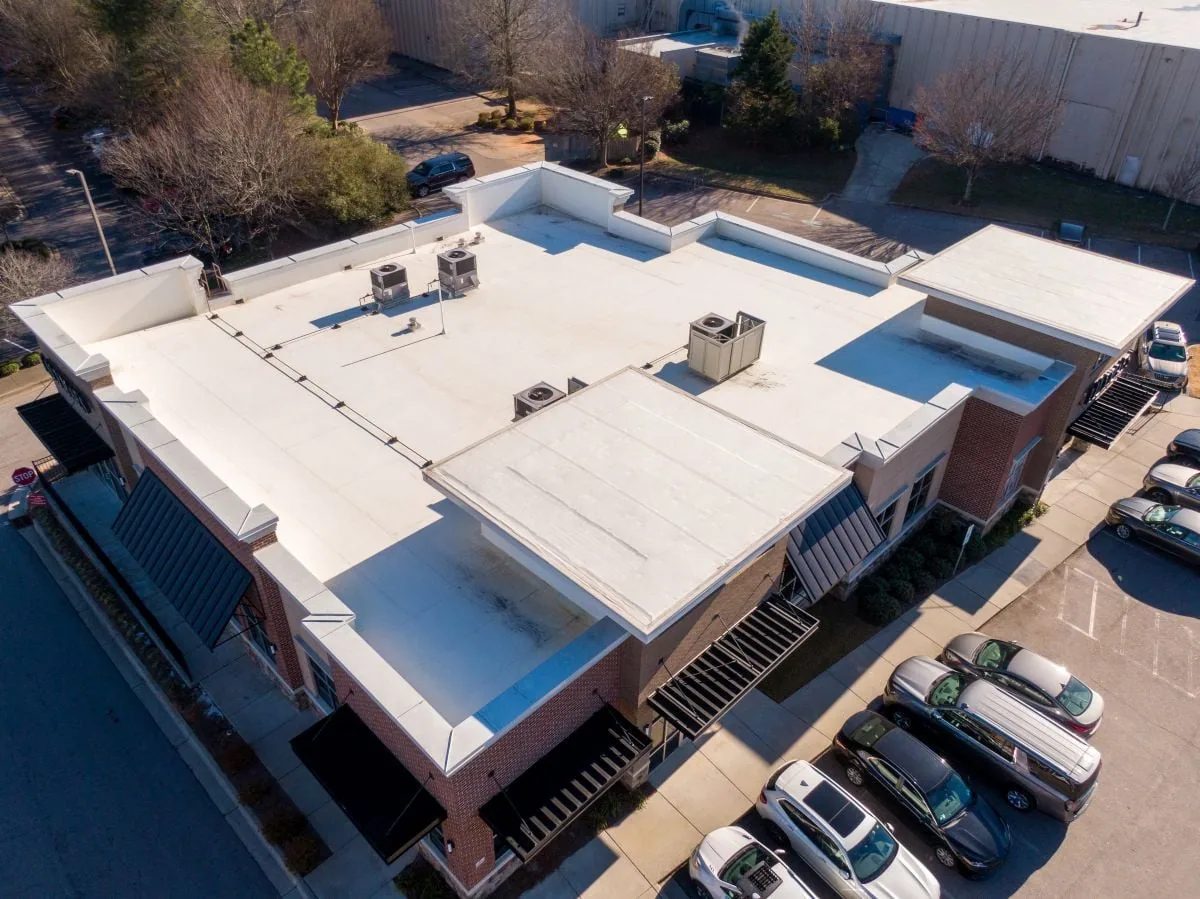
Wind can affect perimeter metal, flashing, membrane edges, equipment connections, and panel attachments. Hail may leave marks or fractures that need closer review. We photograph visible conditions, identify material where possible, and mark the affected boundary. A loose cap or open seam is an observation; its relation to an event depends on timing, location, earlier records, and any added examination.
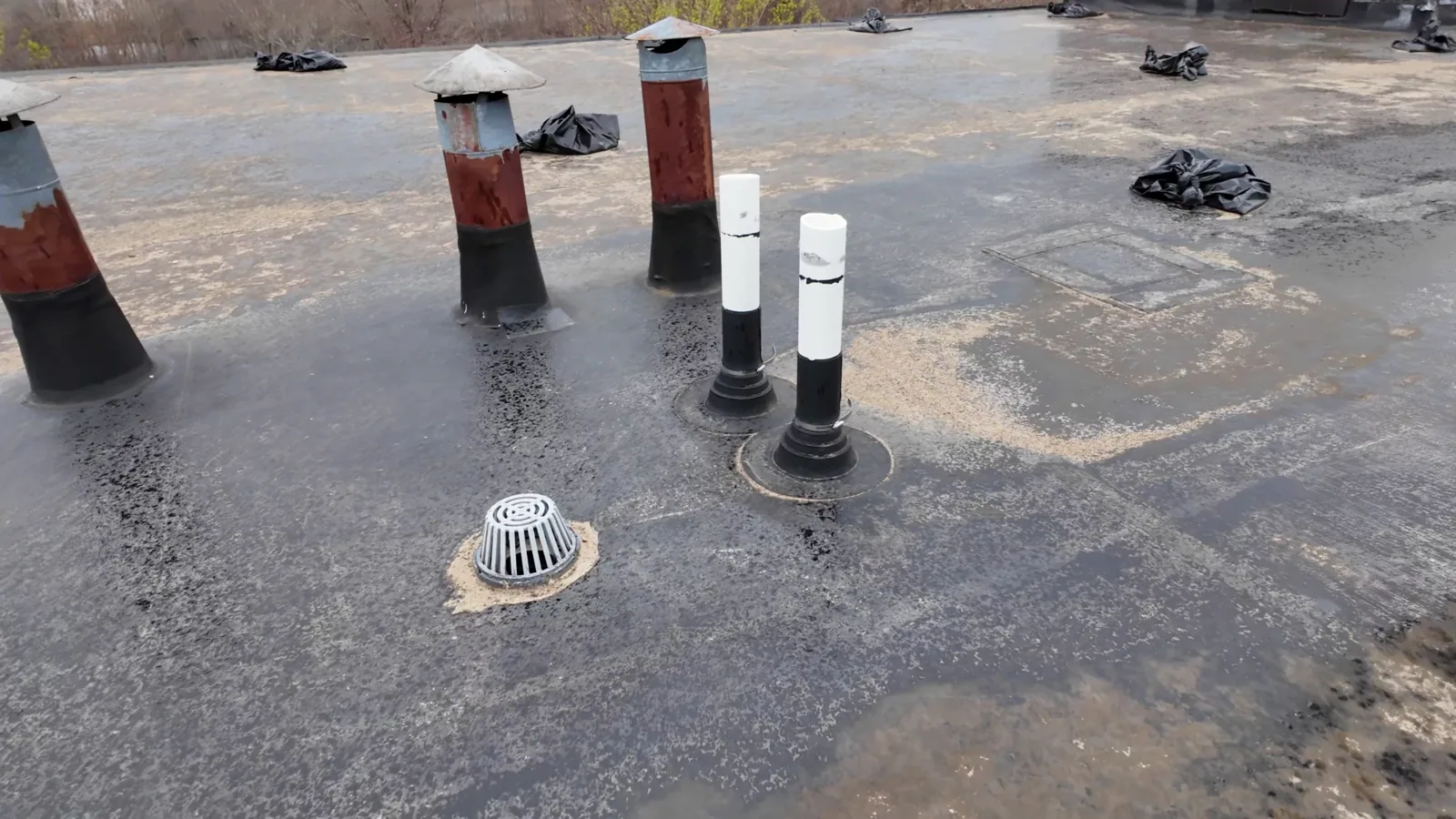
Olathe airport normals report 37.54 inches of annual precipitation and 109.6 freeze days. Those values frame drainage and seasonal planning. We check whether water remained at an outlet, whether a repair predates the event, and whether a transition appears newly displaced or recurrent. A drainage review can separate outlet correction from storm work.
Where several assemblies or patches are present, each condition gets its own line. We mark areas reached, concealed, and requiring a test opening. An infrared scan may help select verification areas when conditions support it; findings still need to be read with the assembly and field checks. The owner receives test limits and the next decision.
Price Mitigation and Permanent Work Separately
A repair proposal names preparation, material, boundary, access, and any discovery that could change quantity. Temporary dry-in, permanent correction, testing, and replacement remain separate scopes. If concealed deck or insulation conditions could change the bid, the allowance states what must be found and who approves added work.
A bounded repair scope may fit a localized opening with serviceable material around it. If defects recur across roof areas, compare it with a replacement alternative using the same register and access assumptions. Include tear-off, drainage, edge metal, equipment curbs, and occupied-area protection where applicable.
Our field record supports the owner’s claim discussion, but it does not decide coverage or claim value. We organize photographs, observed conditions, mitigation, repair documents, and open questions. If an opening changes the work, the new scope version records the finding, approval, and closeout image.
Keep Each Property on Its Own Record
An owner with properties near Olathe, Gardner, or the K-7 corridor can coordinate visits on one calendar. Claim evidence stays tied to each inspected address. KDOT's K-7 study covers a route that crosses several counties and counts Olathe among its participating communities. We keep the event report, access contact, and repair authorization distinct so a portfolio summary does not merge separate conditions.
Work in Olathe stays tied to the property and its permit path, and a Lenexa building gets its own file the same way. A Gardner visit receives its own date, photographs, and findings. If properties share an owner, we can use one schedule while keeping each roof-area register and approval record separate.
Before comparing estimates, reconcile the work boundary with the roof plan and insurer document. Check whether each includes the same areas, flashing details, and interior protection. List exclusions and untested conditions beside the price. Differences may reflect access, preparation, or quantities. Keep them visible before approving work.
More About Commercial Roof Insurance Claim Assistance in Olathe, KS
Close the Loop after the Repair
Closeout lists the date, materials, completed roof areas, approved changes, and finished-detail photographs. We note temporary protection removed and any condition left for follow-up. A test opening is identified with its location and restoration. The owner can compare final work with the original file and see what changed.
The next inspection interval follows remaining exposure, completed work, and the replacement window. Revisit a repaired transition after normal weather, especially where a condition recurred or stayed concealed. We use the same roof-area label. A capital-year review separates claim work from future reserve assumptions.
Send the event date, address, roof plan, photographs, reports, decision date, and access contact. We will document the observed condition and outline a scoped next step. Include any policy or approval deadline so inspection and bid review can be planned against it.
For a multi-location owner, one claim index can list each event date and property while every roof file retains its own photographs and repair record. We can identify missing plan pages or approval signatures before the bid package goes forward for review.
Commercial Roofing Questions
Does the 2024 wind survey apply to my Olathe building?
The survey documents a route from Gardner into Olathe, so a building in or near that route has a dated event to point to. We inspect the address and roof areas reported, record visible conditions, and identify any test still needed. That property record is what the claim review relies on.
What should a commercial roof claim file include?
A useful file includes the event date, roof plan, dated photographs, interior report, prior repairs, temporary work, and the current scope version. We label each observation by roof area and distinguish completed work from open questions. The owner can then compare documents without losing the condition that produced each line.
Do you decide whether insurance will cover a repair?
Coverage remains a policy decision for the insurer and owner. We document the assembly, observed conditions, mitigation, and repair scope, then provide records that can be reviewed with the claim. A field finding should not be worded as a coverage determination or a promised payment.
How should temporary dry-in appear in the estimate?
List temporary protection separately from the permanent repair, with its location, materials, date, and remaining review need. We identify who controls access and what condition must be checked before removing the protection. The owner can then see the immediate response and the lasting correction as different decisions.
What if the inspection finds a condition that predates the storm?
We note the evidence and timing that support the distinction, including earlier invoices or photographs where available. If the record cannot establish when the condition began, that uncertainty stays visible. The repair scope can still address the current defect while the owner reviews the separate claim question.

Set the claim documentation review
Share the property list, roof-area register, event date, available reports, decision deadline, and access contact. We can document field conditions, separate temporary protection from repair, and prepare a scoped record for owner review.