Commercial Roofing in De Soto, KS
A building owner on the K-10 corridor can set a roof decision against the calendar, and in De Soto, KS that calendar should include a dated look at every roof before the next budget is closed. De Soto is where owners meet K-10, KDOT's 16.5-mile corridor toward I-435, and the mix beside it runs from industrial and high-tech to office, commercial, education and residential. We inspect, repair, recover and replace low-slope and metal commercial roofs for De Soto owners, and we record each roof area's condition in a form that can sit beside a reserve plan without being confused with it.
Put the De Soto roofs on a documented schedule
Send the property list, roof-area register, decision date, available reports and access contact. We will return a documented assessment that separates current repairs from capital planning assumptions.
A corridor of mixed uses and mixed assemblies
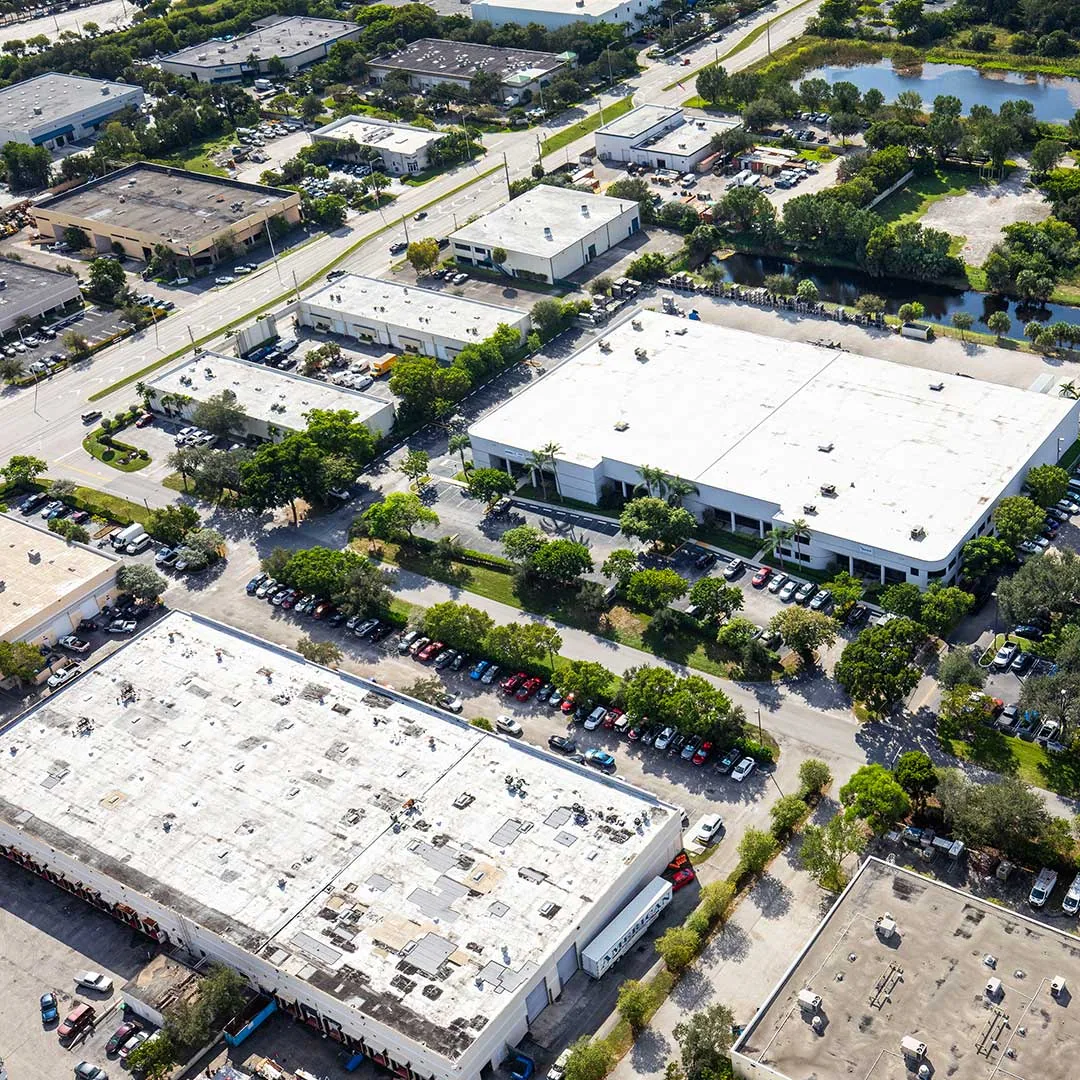
Buildings beside a corridor with that range of uses cannot share one roof specification. A flex or light-industrial building may carry a single-ply membrane over mechanically attached insulation, an office may have a ballasted or adhered system with heavy mechanical equipment, and a retail strip may combine a membrane roof with a metal fascia that takes the brunt of wind. We do not guess which applies to a De Soto address. We open the roof record, walk the surface, and let the field condition decide the next step.
De Soto had a 2025 Census estimate of 7,083 residents, and the same federal tables report 2022 retail sales of $39,008 thousand and accommodation and food-services sales of $7,057 thousand. Those numbers point to customer-facing buildings such as shops and restaurants, where a roof leak interrupts business as well as damaging finishes, and the first visit is a physical one.
Seams, edges and drains: the first three checks
Temperature movement is the steady stress in this region. The 1991-2020 normals from the Olathe airport put an average January near 29.8°F, an average July near 78.8°F, and freezing lows on 109.6 days of the year. A membrane that expands in July and contracts through a January freeze-thaw run is working at its seams and terminations every season. We look first at seams, because a lifted or probed-open lap is the earliest sign that a membrane is losing its bond. We look second at edges, where metal fasteners can back out and wind gets underneath. We look third at drains, because water left standing keeps weight, debris and ultraviolet exposure on the same patch of roof.
When any of those checks turns up a pattern rather than a single flaw, we mark it. A repeated split at the same type of detail across several roof areas points to a design or workmanship problem that patching will not cure, and the owner needs to know that before approving the fifth service call. A leak repair that finds the source, not just the stain, is the starting point for that record.
Annual precipitation in the same normal set is 37.54 inches, so every penetration, curb and wall termination sees years of wetting. Pipe boots crack, sealant at counterflashing dries out, and mechanical equipment pads shed water toward the roof instead of away from it. We photograph each of these details with a location marker, note which ones have been resealed before, and give the owner a short list of fixes that stops the most water for the least disruption. That list becomes the first page of the drainage record that later inspections update.
Sequencing De Soto roofs in a wider portfolio
Owners with buildings in De Soto often hold other properties in the metro, and the sensible question is which roof gets capital first. We rank roof areas by field condition, drainage record, defect recurrence and consequence of failure, then offer a portfolio sequence that an asset manager can compare against lease events and refinancing dates. A roof with modest wear and a clear inspection interval can wait a year if the one beside it is holding water over its seams.
For owners with several sites, our multi-site roof programs keep the records, photographs and scope versions in one structure, and our roof condition reports give each building a standalone finding. An owner with property in De Soto, Lenexa and Olathe, all on K-10, can place the roofs in one register.
Storm response and the work window
The storm line of May 19, 2024 was surveyed from Gardner into Olathe with a peak estimated at 80 mph, and De Soto is not named in that survey, so it is a trigger here only for a property an owner knows sat inside the reported path. Kansas City-area thunderstorm climatology also includes hail, and a building that has taken a storm gets inspected for the damage actually visible, from bruised membrane to dented metal flashing. A hail damage repair scope follows from that evidence.
Work windows matter because a replacement or recover leaves part of a roof open until the day's section is dried in. We plan sections small enough to close before weather arrives, protect occupied interiors, and keep access routes clear for deliveries and customers. If water is already coming in, emergency roof repair is available at all hours, and the temporary measures are logged apart from the permanent repair so the file stays clean.
Owners with buildings in De Soto may also want to settle one question before the first visit: who decides when a roof moves from repair to capital planning. Naming that person, and the spending level at which approval changes, keeps the report from stalling after delivery and lets the next step happen while the condition record is still fresh.
It also helps to say whether a lender, insurer or prospective buyer expects the roof report. When the audience is known in advance, the summary page can be written to answer that audience's questions directly, and the supporting photographs can be organized the way a reviewer will want to see them.
Finally, mention any plans for rooftop equipment or additions. A new unit, a solar array or a mezzanine below can change what the roof needs, and it is cheaper to flash a curb once during planned work than to reopen a finished membrane later.
More About Commercial Roofing in De Soto, KS
Commercial Roofing Questions
How do I decide whether a De Soto roof needs repair this year or capital next year?
Compare three things: whether water is reaching the interior now, whether the membrane holds moisture in its insulation, and whether the same repair keeps recurring. Active leaks with dry insulation usually justify repair and a scheduled inspection interval. Wet insulation or recurring failures at the same detail move the roof toward the capital year, and we show that in the written condition report.
The K-10 corridor has many building types. Does that change how you survey a roof?
It changes what we expect to find, not how carefully we look. A flex building, a retail unit and an office each get the same walk of seams, penetrations, drains and edges, but the likely roof type, equipment load and tenant sensitivity differ. We record those differences so the report matches the building instead of a generic checklist.
A restaurant or shop in De Soto cannot close for roof work. What are the options?
Phased work is the usual answer. We divide the roof into sections, schedule loud or dusty tasks outside trading hours where the occupant needs it, and keep entrances and loading paths protected. A recover over a dry roof reduces tear-off disruption, and an infrared check tells us whether that option is sound.
Do you work in De Soto on weekends or holidays if a roof fails?
Response is available around the clock, every day, holidays included. The first visit stabilizes the opening and documents what is exposed, and the permanent repair follows when conditions and materials allow a proper detail.
Which records should I send before an estimate?
Send a roof plan or aerial, prior reports, leak dates and locations, warranty paperwork if it exists, and the access contact. The more complete the drainage record, the more precisely we can separate current repairs from capital planning assumptions.

Put the De Soto roofs on a documented schedule
Send the property list, roof-area register, decision date, available reports and access contact. We will return a documented assessment that separates current repairs from capital planning assumptions.