
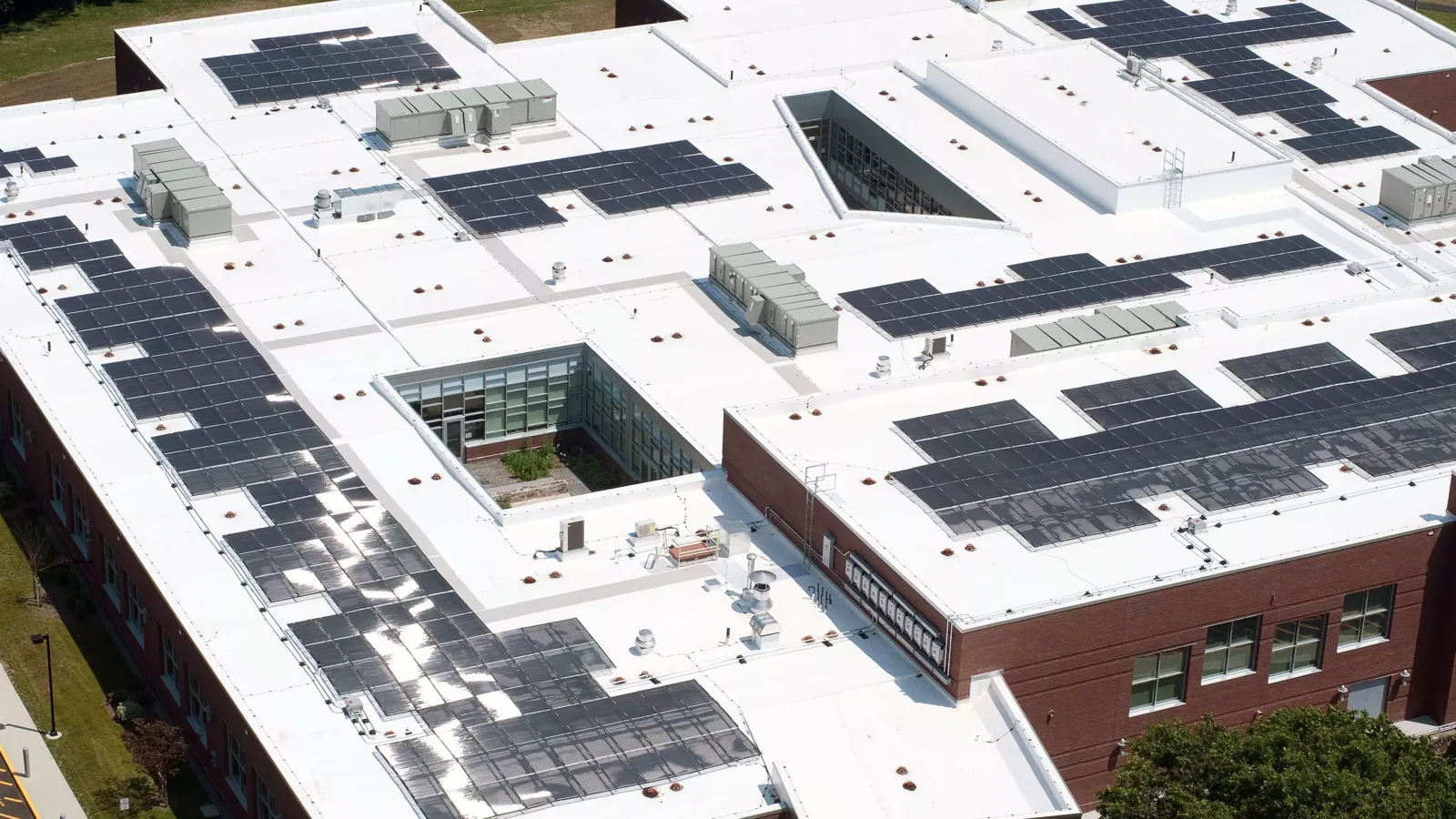
Sika Sarnafil Roofing Systems in Olathe, KS
Welded seams are the asset on a Sika Sarnafil roof, and the replacement window opens when the weld record says they have stopped being one. Olathe, KS tests that record with a winter mean of 29.8°F, a summer mean of 78.8°F and 109.6 freezing days, so a thermoplastic sheet is pulled tight in winter and relaxed in summer thousands of times over its life. Sika Sarnafil is a maker of heat-weldable thermoplastic roofing membranes, together with liquid-applied flashing resins, insulation and the attachment hardware that goes with them. Our inspection looks at what the owner actually has on the building: which membrane, how it is attached, how the seams were joined, and what the flashings look like at every penetration.
Hand over the seam history
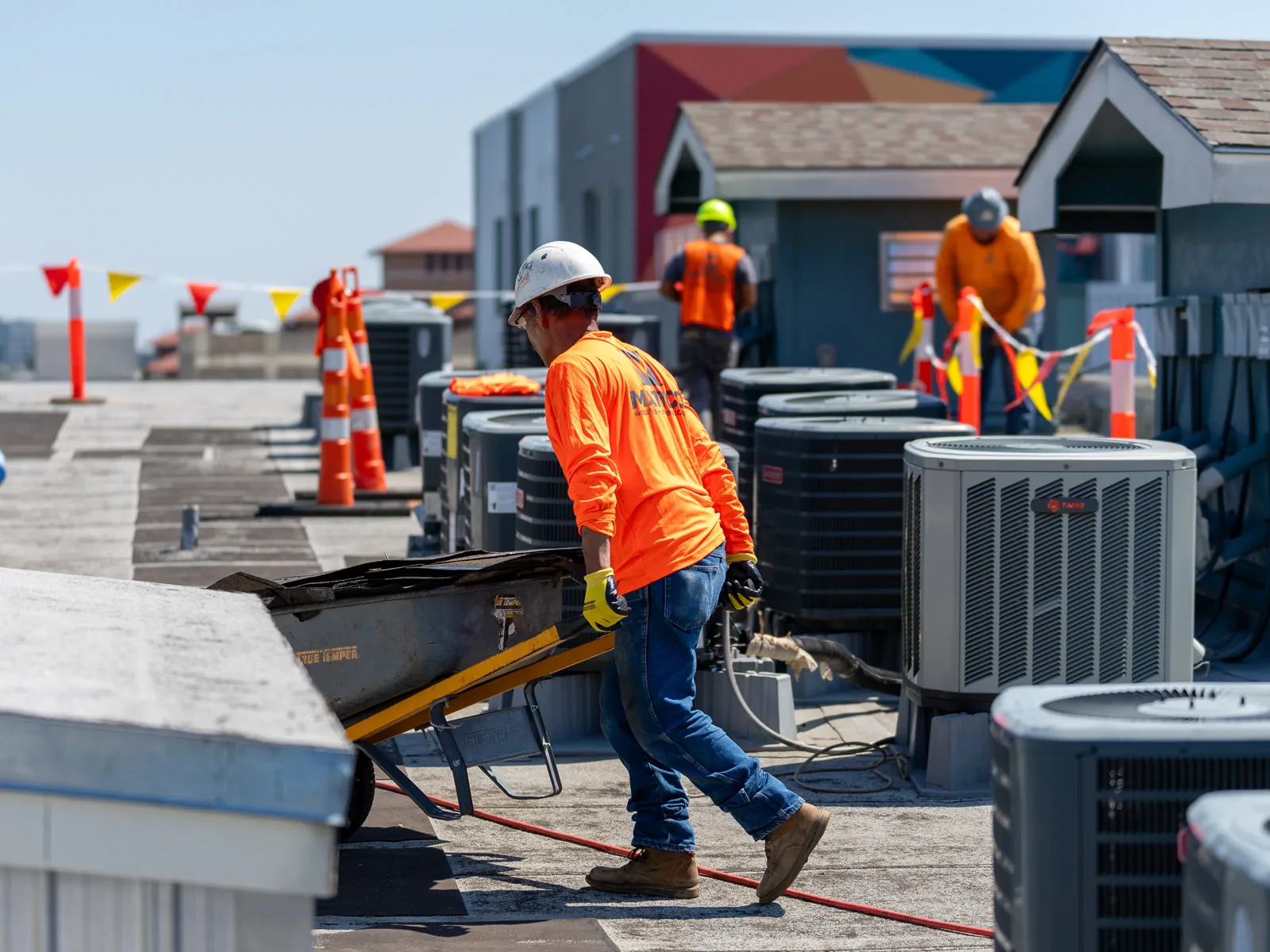
Send the property list, roof-area register, prior seam or flashing repair records and an access contact. We probe the welds, photograph the field condition and write an assessment that sets current repairs apart from capital planning assumptions.
Reading a hot-air weld the way a field tech does
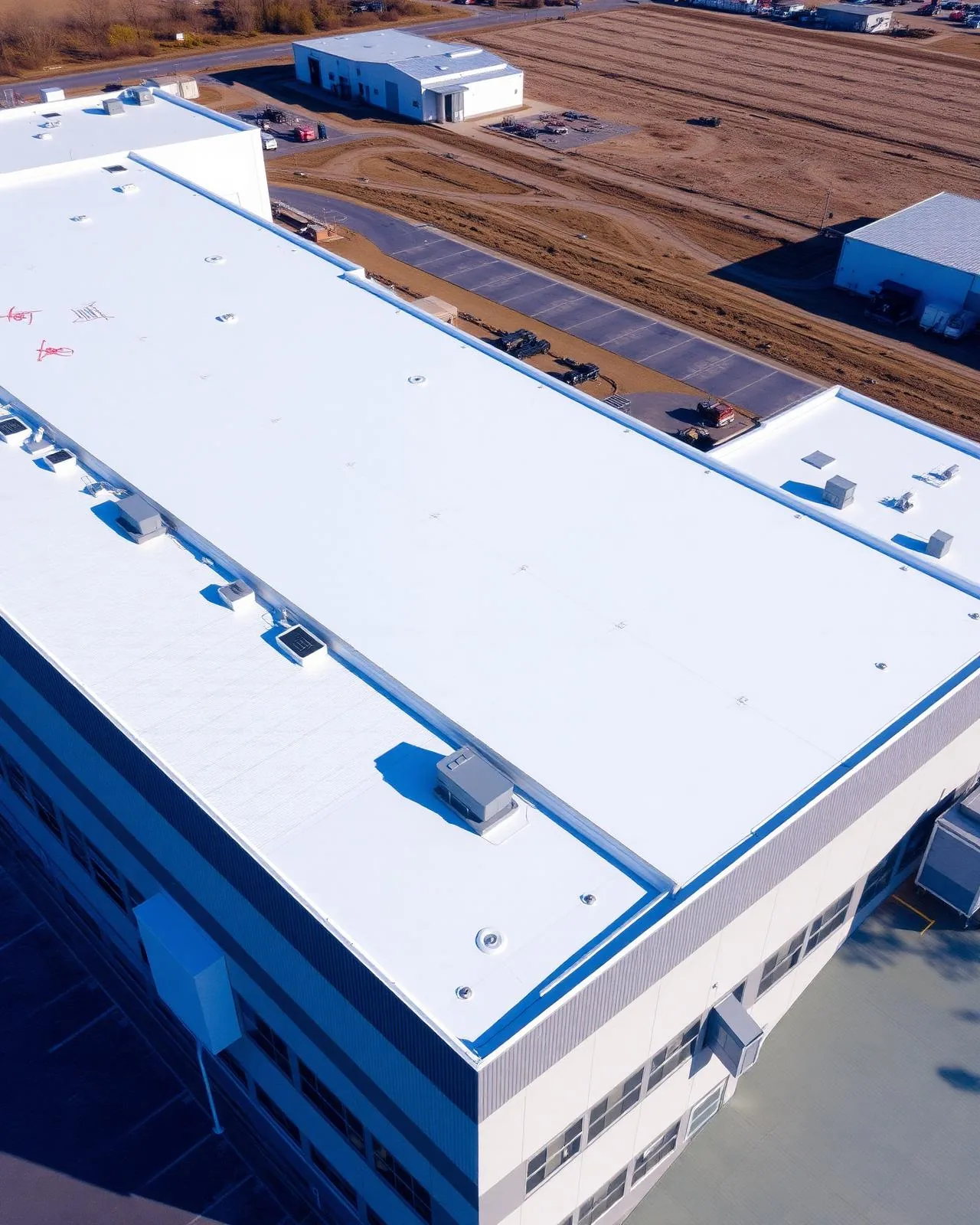
A good thermoplastic weld fuses two sheets into one piece with a continuous bead of slightly squeezed-out material at the edge. A weak one looks similar from a distance. Under a probe, it may lift, show voids, or reveal a cold edge where the sheet never reached welding temperature. Contamination from dirt, moisture or plasticizer migration can also keep a weld from bonding fully, and the defect only appears when the sheet moves in a freeze.
We probe seams along a sample line, mark any open length, and photograph it with a scale. The sample tells us whether defects are isolated or systemic. Isolated defects are repaired by cleaning and re-welding with new material, while a pattern across a roof area is a signal for the replacement discussion. Our work on PVC roofing follows the same logic.
Grease, exhaust and chemical exposure on the membrane
Thermoplastic membranes are often selected where roof surfaces see kitchen exhaust, oils or chemical residue, because many PVC formulations resist those exposures better than other single-ply materials. That choice matters on a restaurant, a food-processing building or a manufacturing plant, and it matters again at repair time, when the patch material must be compatible with the sheet in place.
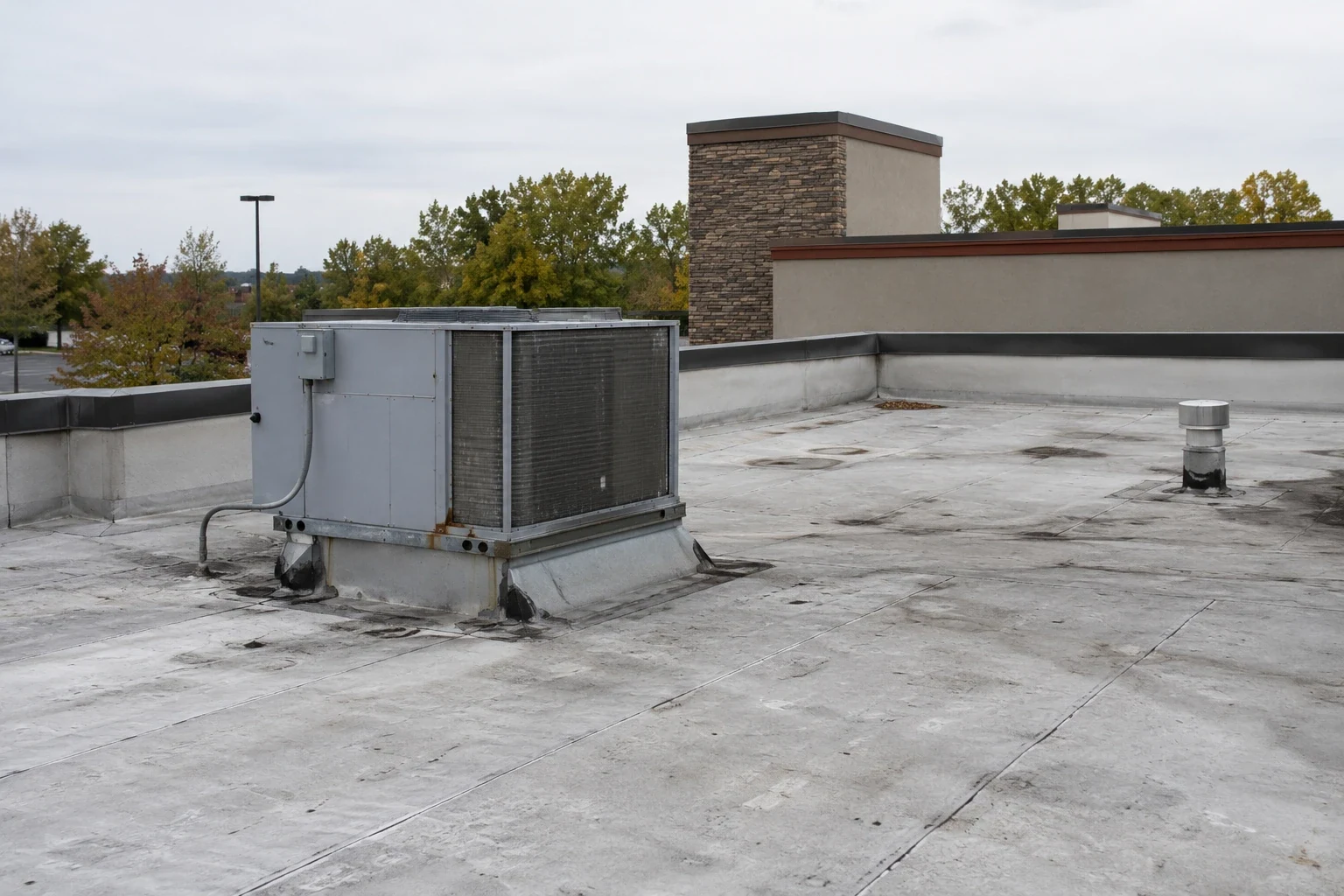
We check exhaust fan locations, grease collection points and drain bodies for staining and surface degradation. Where a sheet has been contaminated, a patch may not bond until the surface is cleaned with a method suited to the contaminant. Owners of a restaurant roof or a plant roof should keep the exhaust maintenance schedule in the same file as the roof record, since the two feed each other.

Liquid-applied resin at the details
Penetrations, curbs and irregular transitions are the hardest places to flash with cut sheet. A liquid-applied resin system lets a crew encapsulate pipes, support bases and odd corners in a continuous coat that bonds to the substrate. It also gives a repair path for flashings that have split, because a failed membrane flashing can be cleaned, primed and sealed with a reinforced resin layer without tearing out the surrounding sheet.
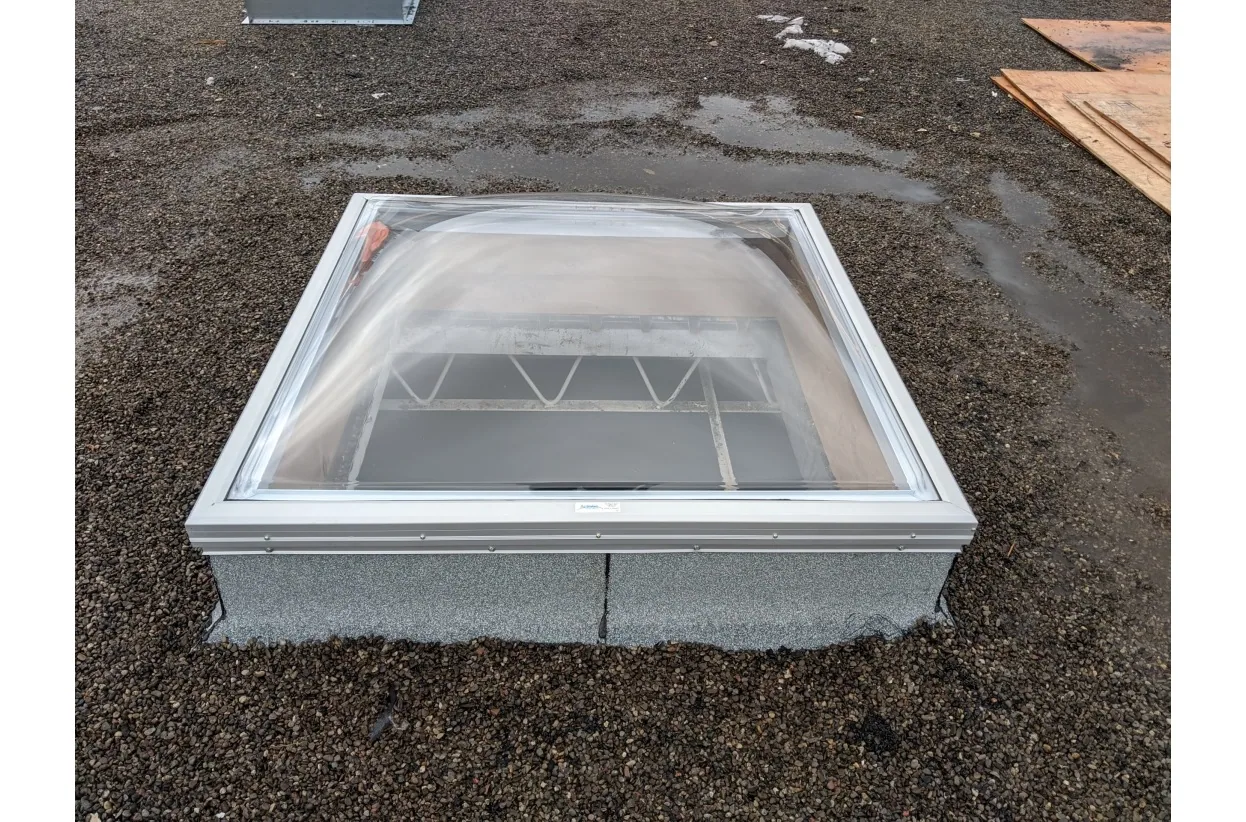
Resin work depends on dry weather, correct primer and the right cure time, so it is scheduled against the forecast. The work resembles a skylight and penetration flashing repair in sequence, and the record we keep shows the product type, coverage and cure conditions so the next visit can find it. A resin repair that was never logged is hard to inspect later, because it looks like an unexplained patch. Recording coverage, primer and the date also helps whoever services the roof next, since the compatibility of any later repair depends on knowing what was applied.
Protecting the occupied space during weld work
Hot-air welding produces no open flame, which suits buildings that cannot tolerate torch work above sensitive uses. Even so, repair days bring cutting, adhesive and traffic on the roof, and the space below needs a plan. We confirm where equipment will be staged, which interior zones sit under the work, and who at the property can approve a halt if conditions change. Drains are protected from debris, and temporary tie-ins at the end of each shift keep water out of an opened area.
Where the building runs a commercial kitchen, a clinic or a production line, the work window is set around its quiet hours. A written schedule goes to the property contact, and any change in scope or hidden condition is reported with photographs before the crew proceeds, so the occupied-building plan stays intact from the first shift to the last.
More About Sika Sarnafil Roofing Systems in Olathe, KS
The May 2024 wind line and hail season on a thermoplastic sheet
A dated wind survey from May 19, 2024, shows damage from Gardner into Olathe and an estimated 80-mph peak, with brief tornadoes touching down elsewhere in the county. Kansas City-area severe thunderstorm climatology also includes hail, which means a thermoplastic sheet should be checked after a storm for bruising, punctures and fractured insulation beneath the surface. Observed condition is what drives the repair.
Our post-storm walk covers perimeter attachment, loose debris marks, puncture sites and any scuffing along the field. When damage is found, hail damage repair and wind scope entries are kept separate, with photographs and measurements, so that a later review has a plain record.
Timing a membrane renewal against the capital year
The decision between continued repair and renewal rests on three lines in the register: weld integrity, insulation moisture and recurrence at flashings. If welds are sound and insulation is dry, a roof can often be kept on an inspection interval for several more seasons. If repair lines are multiplying and moisture is present, the reserve should move the roof into an earlier capital year. The capital planning process turns those lines into a sequence the finance team can use.
Owners with buildings in Olathe and Lenexa can track them together, and compare a thermoplastic roof against a Duro-Last or Versico alternative when a bid calls for it.
Commercial Roofing Questions
What does an open weld look like before it leaks?
Usually a lifted edge, a visible gap under the probe, or a tiny ridge where the sheet has pulled along the seam line. Staining from trapped dirt along the lap can also hint at movement. These show up most after a cold snap. We mark each one and weld it closed when conditions allow.
Why does the freeze record matter for a thermoplastic roof?
Thermoplastic sheet stiffens in cold weather and relaxes in heat, and Olathe's 109.6 days a year at or below freezing mean the cycle repeats often. Seams and flashings carry the stress. A roof that holds through several winters has shown its weak points, and that history is useful in the register.
Can liquid-applied flashing replace a damaged membrane flashing?
In many cases it can restore it, provided the substrate is sound and the surface can be cleaned and primed. A flashing that has lost its attachment to the wall or curb needs mechanical correction first. We assess adhesion and moisture before choosing resin over replacement.
What proof does an owner need after a hailstorm?
Dated photographs of the roof before and after, a written walk of the surface and the insulation core samples that show whether damage reaches below the sheet. Because hail is part of the regional storm climate, observed bruising, fractured board and puncture counts carry the decision on each roof.
When is replacement better than repeated re-welding?
When defects recur in the same area after a documented repair, or when welds fail across a large share of probed length. Each re-weld adds cost and does not restore a sheet that has become brittle. A side-by-side of repair history and replacement price shows when the crossover happens.
Hand over the seam history
Send the property list, roof-area register, prior seam or flashing repair records and an access contact. We probe the welds, photograph the field condition and write an assessment that sets current repairs apart from capital planning assumptions.