
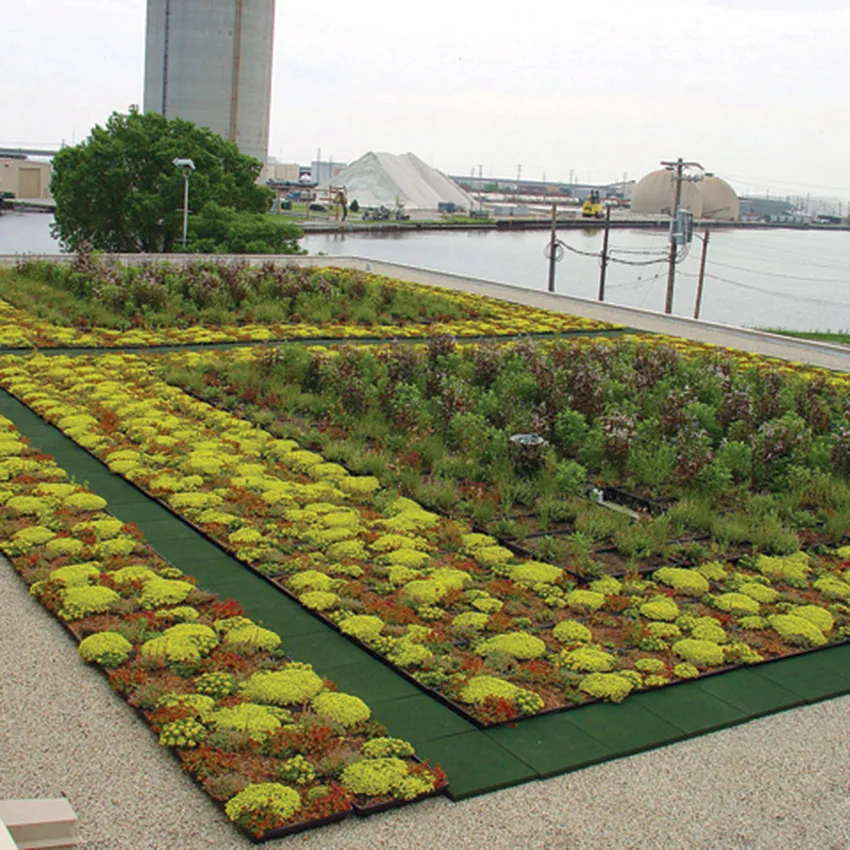
Versico Roofing Systems in Olathe, KS
A vacancy or lease event is a sound moment to look at a Versico roof, as long as the roof-area register is current. Versico is a single-ply brand within the Carlisle family of roofing makers, with TPO, EPDM and PVC membranes and the insulation, adhesive and flashing accessories that go with them. Olathe, KS puts those materials through 109.6 freezing days a year, with a July mean of 78.8°F at the other end, so the same sheet is stiff in January and soft in July. We treat the brand as a starting label and then read what is physically on the roof: sheet type, attachment, seam condition, flashing and drainage.
That reading gives the asset manager a baseline to compare against the next visit, a lease event, or a bid.
Open the register to the first bay
Send the property list, roof-area register, tenant bay map, prior repair notes and an access contact. We walk the roof, name the membrane family and its condition, and hand back a written scope that divides current repairs from capital planning assumptions.
Where the brand sits among single-ply makers
Because Versico belongs to the same corporate family as Carlisle SynTec, owners sometimes find both names in one set of papers. The practical consequence is that a spec may allow components from one line on a roof of the other, but the actual compatibility question is answered by materials and the written system requirements, not by corporate ties. Adhesives, primers and seam products are chemistry-specific.
We record what is on the roof by reading seam tape, adhesive residue, plate patterns and sheet thickness where a test cut allows, and we pair that with any warranty or closeout paper. When the record and the roof agree, repairs proceed with the matching material. When they disagree, we flag the difference before any patch is made.
TPO, EPDM and PVC under one brand name
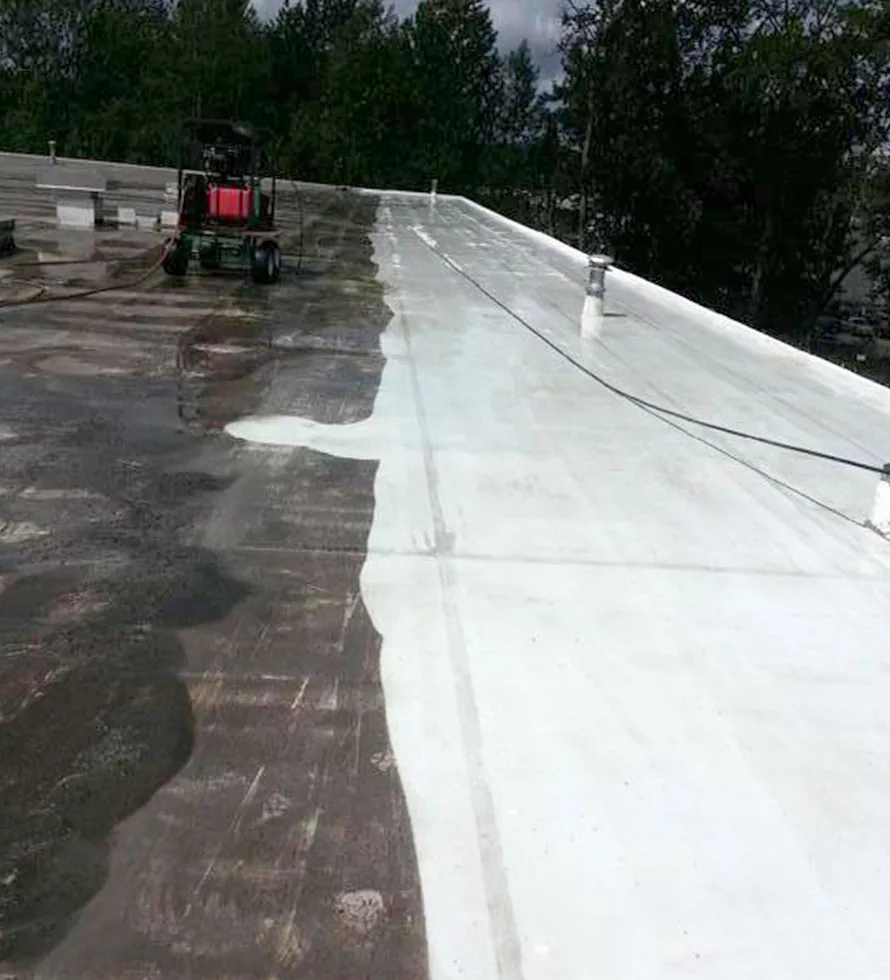
Each of the three membrane types fails with its own signature. A TPO sheet may show seam separation or surface crazing as it ages. An EPDM sheet may show shrinkage at flashings and splice tape that has lost its grip. A PVC sheet may stiffen and split at welds where plasticizer has migrated out. Describing a roof only as "single-ply" hides those differences, and the repair choice depends on them.
Seam repair on TPO is a cleaned, hot-air weld, while on EPDM it is a primed splice, and PVC behaves like TPO at the weld but tolerates grease and chemicals better. We write the family into the register on the first visit so that later repairs use a compatible method. A patch made with the wrong chemistry may look fine for a season and then peel at the first hard freeze, leaving the owner with a second repair on the same spot and a muddy record of what was done.

Retail strips and flex buildings in the Olathe corridors
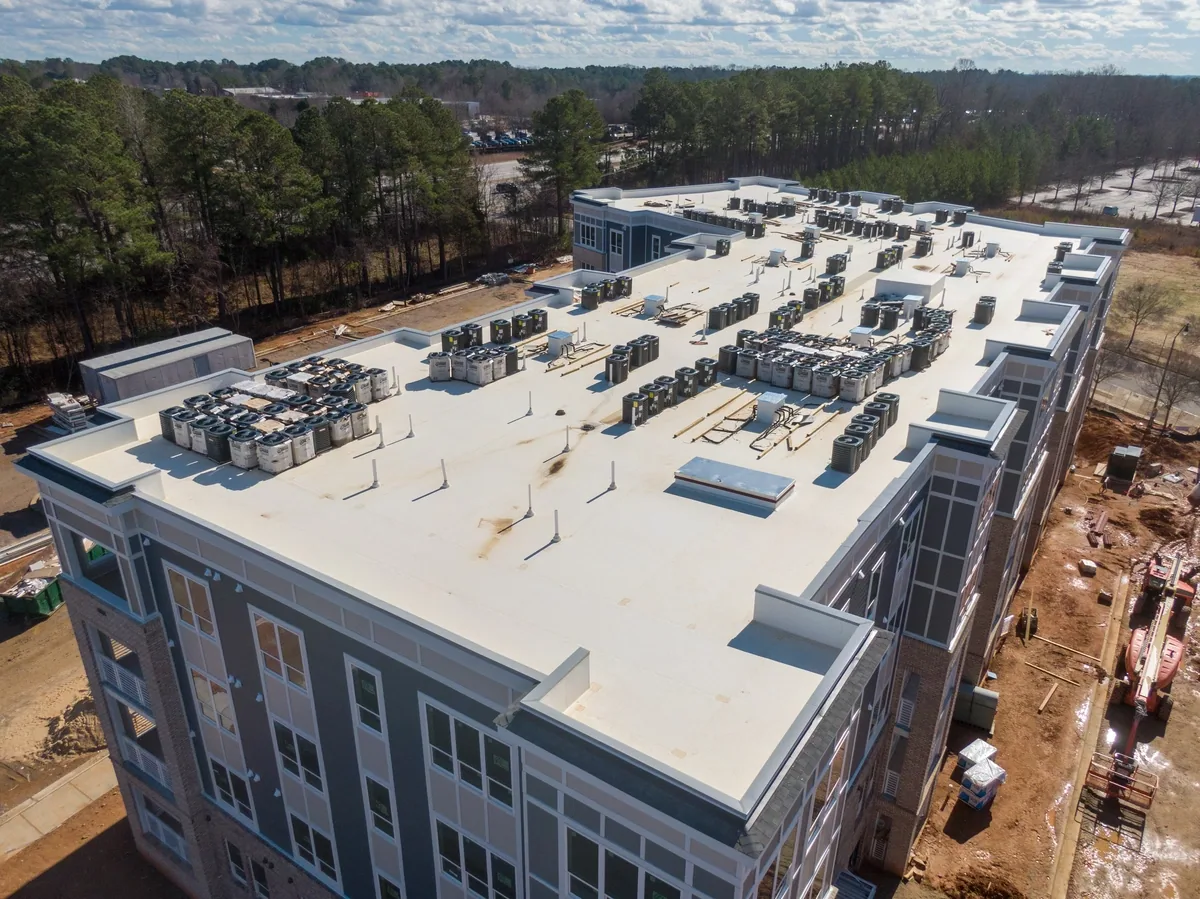
Olathe's economic development plan names corridor studies for Woodland, K-7, Cedar Creek and I-35/Santa Fe, and Census QuickFacts reports 2022 retail sales of $3.313 billion for the city. Where a property is a multi-tenant shopping center or a flex industrial building, the roof is usually divided by unit, and each unit may have a different repair history.
We map the roof by tenant bay when that helps the owner trace leaks to a lease, and we keep a separate line for shared drainage and common flashing. That makes it easier to allocate cost and to decide whether the whole roof or just a bay should be renewed.
Shared elements deserve their own treatment. A parapet wall, a rooftop unit that serves several tenants, or a drain that collects water from more than one bay can be the real source of a recurring complaint, and fixing the wrong bay wastes a repair budget. Following the water from the interior stain back through the deck and insulation to the roof opening, then recording the finding with photographs, is the step that turns a tenant complaint into a repair that holds.
Perimeter attachment after the 2024 squall line
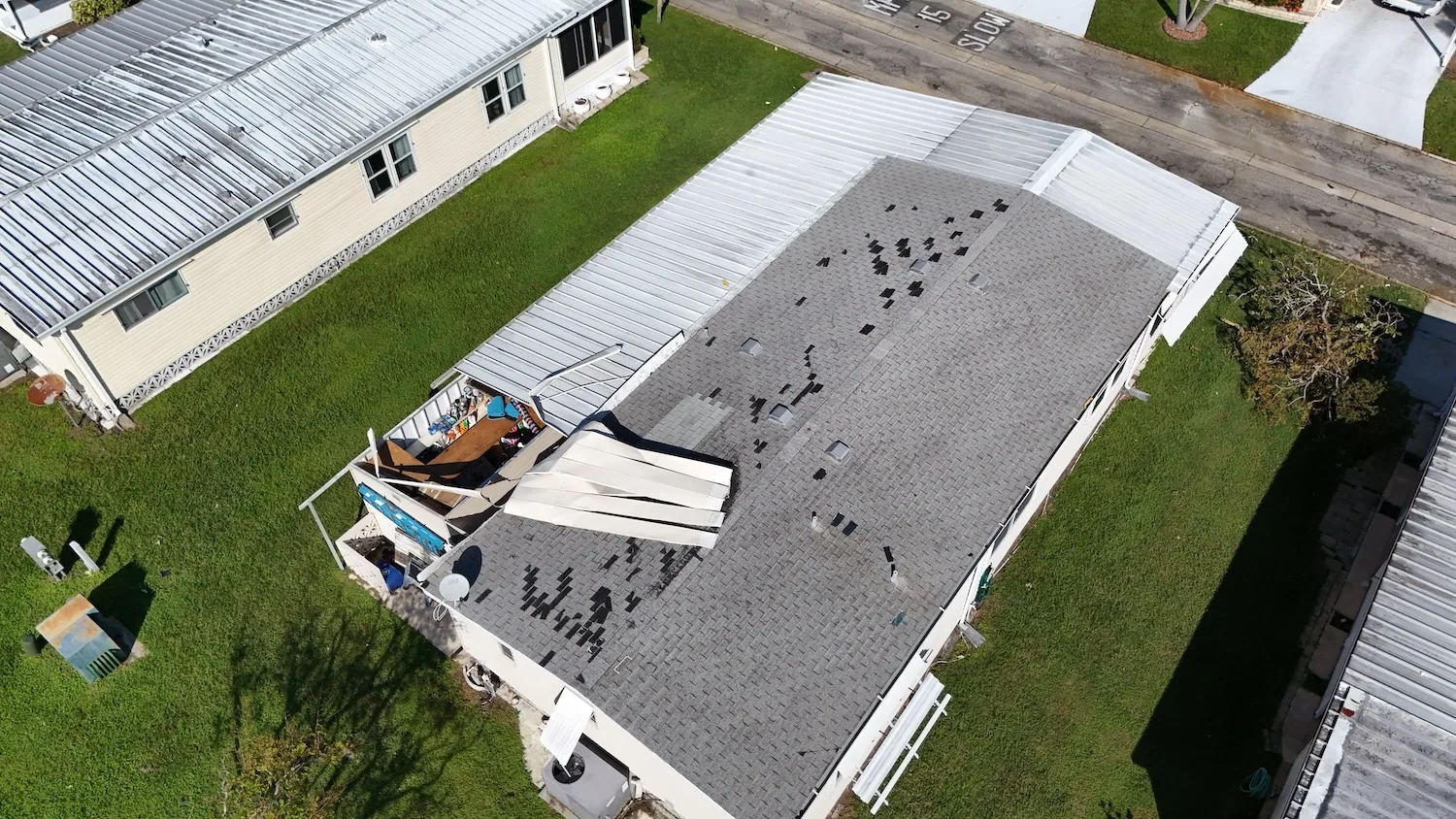
Forecasters surveying the May 19, 2024 storm line mapped straight-line wind damage between Gardner and Olathe, estimated at 80 mph, and logged brief tornadoes elsewhere in Johnson County. On a single-ply roof the perimeter is where pressure builds, so we check edge metal, termination bars, corners and any billowing in the sheet. Findings go on the register by date, which keeps storm items apart from wear.
If edge metal has lifted or fasteners have pulled, securing the edge comes first, and the permanent correction follows under a documented wind repair scope. A clean result is also worth logging, since it sets the post-storm baseline for the next event.
More About Versico Roofing Systems in Olathe, KS
Setting the line between repair and renewal
A TPO or EPDM roof that is dry underneath can often stay in service with periodic repairs, and the register shows the cost of that path over time. When repairs begin to cluster, or when a moisture scan reveals wet insulation, the economics change. Our commercial roof repair records track each defect, material and date, so the owner can see whether spending is rising or falling by roof area. A building whose repair spending climbs for three inspection intervals in a row is telling the asset manager something that a single leak call cannot.
For the renewal side, a recover over sound insulation is one option, a full tear-off another, and each has different effects on tenants, schedule and the capital year. We price them against the same scope version so the comparison holds. On an occupied building the tear-off option also needs a protection plan for the space below, and that cost belongs in the number.
Comparing against other makers in a bid
A bid that names Versico may invite alternates such as GAF or Duro-Last. Compare insulation, cover board, attachment, flashing detail, drainage correction and warranty terms in a single matrix. If the matrix shows different assemblies, the prices are not comparable. Buildings in Olathe and nearby Lenexa can follow one matrix so decisions stay consistent.
When a bid names a Versico system, ask that the proposal list the membrane family, thickness, attachment method and flashing accessories by roof area. Those details let the owner compare alternates fairly and give the register a precise label that later repairs can match, which is worth more than the brand name alone.
Commercial Roofing Questions
What shows that two single-ply components are compatible?
The written system requirements and a successful adhesion test on the actual surface. A matching color or a shared parent company does not establish it. We check primer, adhesive and seam product against the sheet in place, and we run a test patch where the record is thin.
Does tenant turnover change how a roof is inspected?
It adds a trigger. A vacancy gives interior access to check ceilings, deck underside and equipment supports, and a lease event is a natural time to update the roof-area register. We use that window to link interior findings with roof findings.
How should leaks be allocated across tenant bays?
By tracing each leak to a roof area, not just to a ceiling stain. Water travels along decks and insulation joints, so the stain can sit far from the opening. We map the likely path, confirm with a test, and assign cost to the area where the defect is located.
What decides whether PVC is worth specifying on a replacement?
Exposure. Roofs with kitchen exhaust, grease or chemical residue from the building below benefit from a membrane that tolerates those contaminants. Roofs without those exposures may be better served by a different single-ply. The decision turns on what the roof actually sees, plus the budget line.
Is a post-storm survey needed when no leaks appear?
Yes, targeted at the edges. Damage to perimeter metal and fasteners can exist long before water enters the building. A short documented walk after a storm like the May 2024 wind event costs little and establishes whether any item should be added to the register.

Open the register to the first bay
Send the property list, roof-area register, tenant bay map, prior repair notes and an access contact. We walk the roof, name the membrane family and its condition, and hand back a written scope that divides current repairs from capital planning assumptions.
