
Roofing Partner for General Contractors in Olathe, KS
A general contractor's schedule turns on the dry-in date, because mechanical, electrical, drywall and flooring cannot start until the roof keeps rain out, and a roofing scope that slips by two weeks moves every trade behind it. A normal Olathe, KS year means 37.54 inches of precipitation and 109.6 freezing-low days, so a project that lands its roof in the cold months has fewer workable days for adhesives, seam welding and sealants. We help a GC fix the roofing scope version early, price it on a stated bid basis and place the dry-in on the schedule with the weather risk written next to it.
Send the drawings and the dry-in date
Share the plans, roofing specification, schedule, existing-roof information and the site contact. The scope review we return flags gaps before bid and keeps field conditions apart from new work.
A scope that bids evenly
Roofing is bid by subcontractors who read the drawings differently, and the differences show up as change orders. A GC gets the cleanest numbers when the scope names the deck type, the insulation layers and thickness, the cover board, the membrane or metal system, the edge metal, the drains and the penetrations, along with warranty terms and access limits. We review drawings against those items and flag gaps before the bid goes out.
Where the drawings leave a choice open, we describe the options and what each does to cost and schedule, so the GC and the owner decide knowingly. Observed field conditions on additions and tie-ins are listed separately from new work, so the bid basis does not hide existing-roof surprises inside a lump sum. Allowances are named as allowances, with the unit basis stated, and any item that depends on a field test, such as the amount of wet insulation to be replaced, carries a unit price instead of a guess.
Weather windows on Olathe projects
Workable temperatures cover a long stretch of the year, but freezing lows on 109.6 days narrow the winter window for many adhesives and sealants, and spring brings the severe thunderstorms, hail among them, that Kansas City area climatology includes. A project in the path of the May 19, 2024 storm line, which tore from Gardner to Olathe near 80 mph, could lose an open roof section before dry-in.
Southern Olathe's large industrial developments, where the city's economic-development plan lists FedEx and Lineage Logistics beside the Lone Elm and 56 Commerce Centers, and the mixed uses along the K-10 corridor give a general contractor plenty of context for crane and laydown planning. We plan the roof sequence so each section is dried in the day it opens. Material delivery is scheduled with the GC's crane or lift plan, pallets are spread so deck loads stay within limits, and rolls and insulation are kept dry and off the deck overnight when rain is forecast.
Dry-in milestones and trade coordination
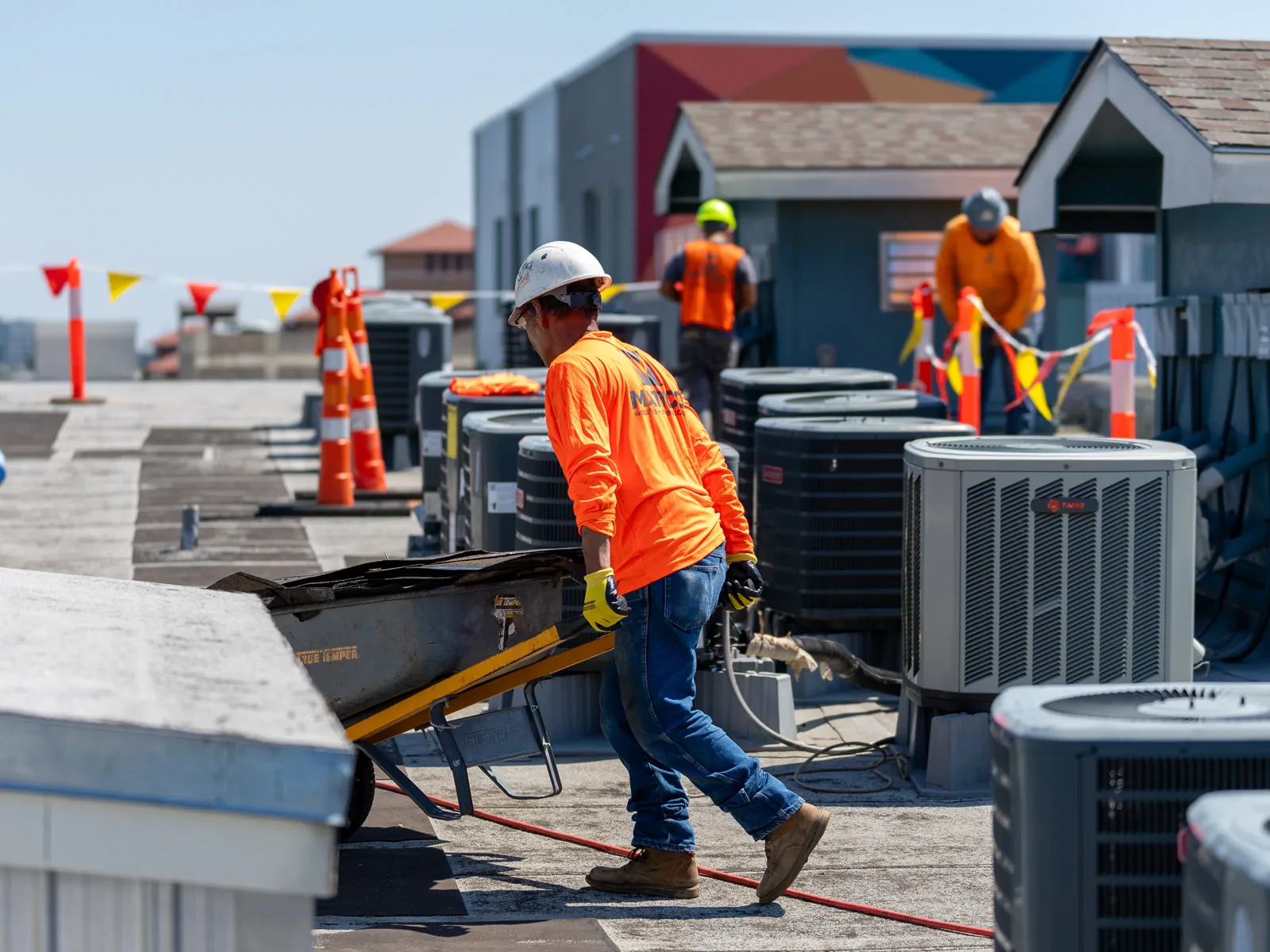
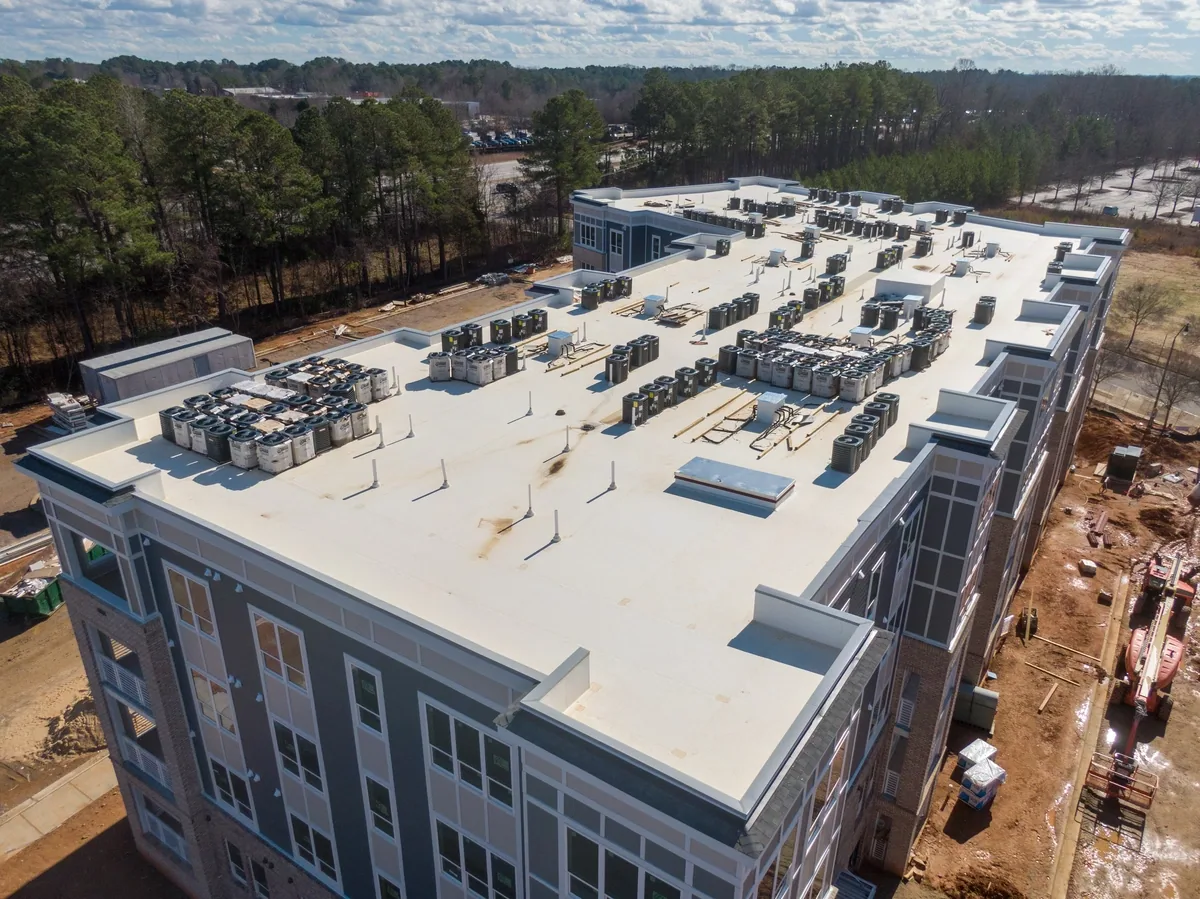
The roof touches nearly every trade. Mechanical contractors set curbs and units, electricians run conduit through the deck, plumbers set drains and sleeves, and the framing crew builds parapets. We coordinate the sequence so curbs are set before the membrane, drains are in before the insulation, and penetrations are flashed once. A roof plan marked with each trade's items prevents the cut-through that voids a fresh membrane. When a late change adds a unit or a vent, the revised location is flashed by the roofing crew and not by whichever trade made the hole, and the change is logged on the same plan so the closeout set matches the building.
Dry-in is written as a milestone with a date, a weather contingency and a temporary protection plan for the days between deck and membrane. For occupied additions, our occupied building reroofing method keeps the existing building tight while the new work proceeds. Emergency response is available around the clock, holidays included, which helps when a storm threatens an open section.
Existing roofs at additions and tie-ins
Additions and tenant improvements often touch an existing roof, and the GC inherits whatever condition it is in. Before the tie-in is priced, we survey the existing roof where the new work meets it: membrane condition, wet insulation, parapet flashing, drains and the roof's remaining life. A written roof condition report gives the GC and the owner a dated record of what was there on the first day.
That record protects everyone. If a leak appears later, the report shows whether it was at the new tie-in or in an older section, and it shows what warranty coverage the existing roof had. Where an infrared scan is useful, the result is attached to the file. If the owner plans to occupy the addition before the old section is renewed, the report also lists the repairs the existing roof needs to stay tight for the near term.
More About Roofing Partner for General Contractors in Olathe, KS
Choosing a system the owner can maintain
The GC often has to help an owner choose between systems. TPO roofing, PVC, EPDM, modified bitumen and standing seam metal each fit different buildings, and the right pick depends on slope, penetrations, foot traffic, the owner's maintenance staff and the warranty the owner wants. We lay out the tradeoffs without assuming a preference. Owners who will staff roof maintenance in house may favor a system with simple repairs, while an owner who expects little roof traffic may accept a system with a more delicate surface. Lead times for each material go on the same table, since a long lead item can decide the schedule more than its price.
Code matters as well. Permit review follows the 2018 IBC, IEBC and IECC that Olathe moved to in September 2019, and the building department confirms the edition and any amendments for each job, since insulation levels and wind uplift provisions change the roof assembly and its cost.
Submittals, warranty and closeout
A roofing subcontract is only finished when the paperwork is. Submittals for membrane, insulation and metal, a pre-installation meeting record, daily logs, test results where specified and the warranty documents all belong in the closeout package. We keep these organized as the work proceeds, so the GC is not collecting them after the crew leaves. Punch lists are walked with the GC and the owner's representative before final payment, and any open item is dated and assigned to a named person, so a minor flashing correction does not hold up occupancy.
For owners who hand the building to a property manager, the closeout includes a roof plan with drains and penetrations marked, a maintenance recommendation and the first inspection date. The same closeout set also serves real estate investors and property management companies who take over the building, and it travels with projects anywhere in Olathe and the cities around it.
Commercial Roofing Questions
What belongs in a roofing bid scope so bids compare evenly?
Deck type, insulation layers and thickness, cover board, the roof system, edge metal, drains, penetrations, warranty terms and access limits. Gaps in any of these produce different assumptions and later change orders.
How do you protect a new roof from other trades?
By marking each trade's penetrations on the roof plan, setting curbs and sleeves before the membrane, and limiting foot traffic with walkway protection after installation.
Who carries the risk if an existing roof leaks at a tie-in?
The dated condition report at the start of the work shows what existed before the new construction, which helps the GC and owner decide responsibility fairly.
How does winter affect a roofing schedule in Olathe?
Freezing lows on 109.6 days of a normal year rule out adhesives and sealants on some days. The scope names a system and method that fit the season, and the schedule carries weather days.

Send the drawings and the dry-in date
Share the plans, roofing specification, schedule, existing-roof information and the site contact. The scope review we return flags gaps before bid and keeps field conditions apart from new work.