Tornado Damage Roof Repair in Olathe, KS
On May 19, 2024, a squall line crossed the Kansas City metro and the National Weather Service recorded several brief tornadoes elsewhere in Johnson County, alongside straight-line wind damage that ran from Gardner into Olathe, KS. The record is a reminder that tornado-class damage in this county is a possibility the property file should be ready for. When a tornado does reach a commercial building, the roof is usually where the loss begins: open deck, torn membrane, impact holes and debris, and often damage to the walls and structure below that must be settled before any permanent roofing starts.
Send the storm report and the roof file
Share the property address, the roof-area register, structural reports if any, your insurer contact and an access contact. We will secure the roof, document the loss, and prepare a phased scope that separates storm repairs from planned capital work.
Making the building safe and dry
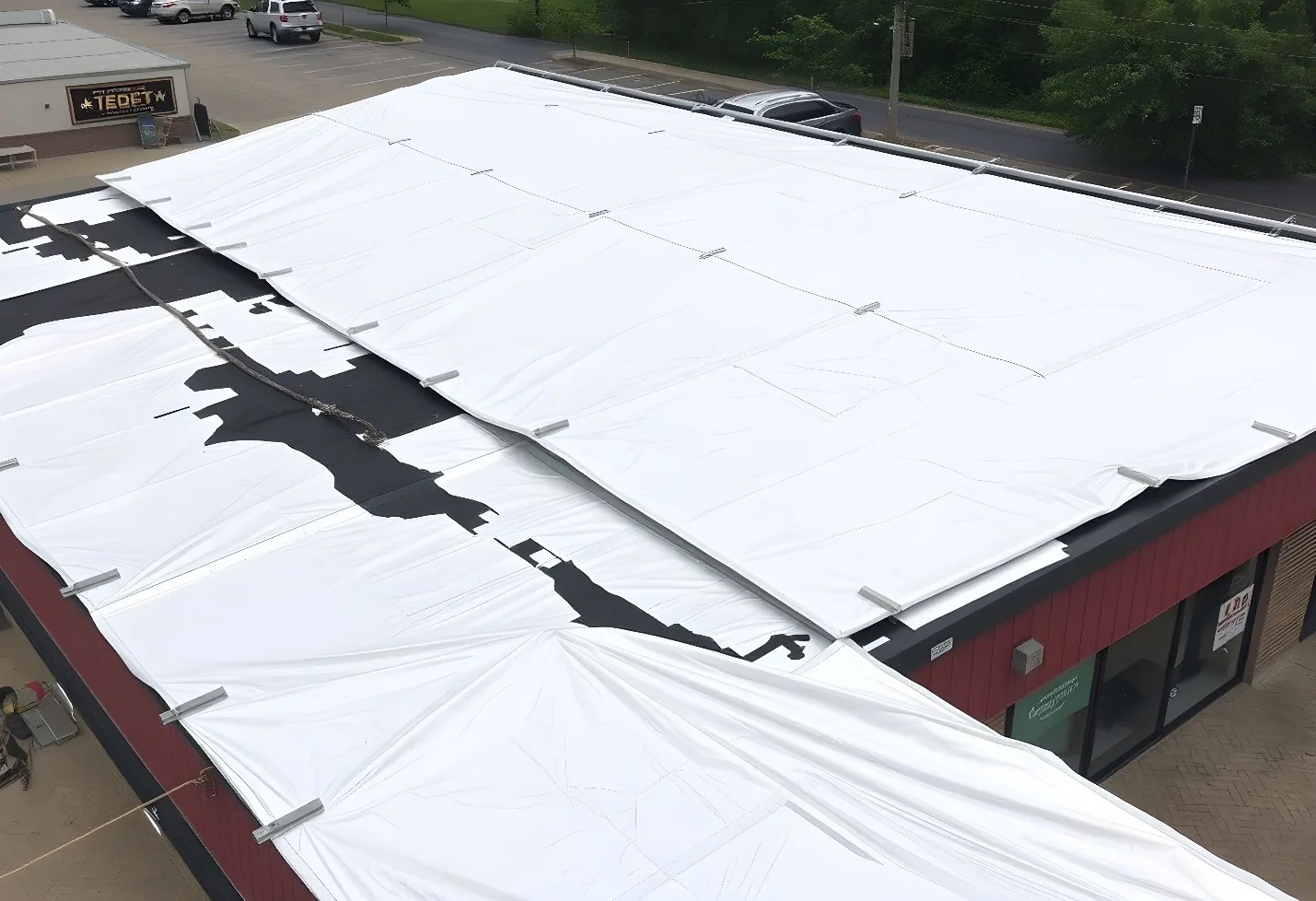
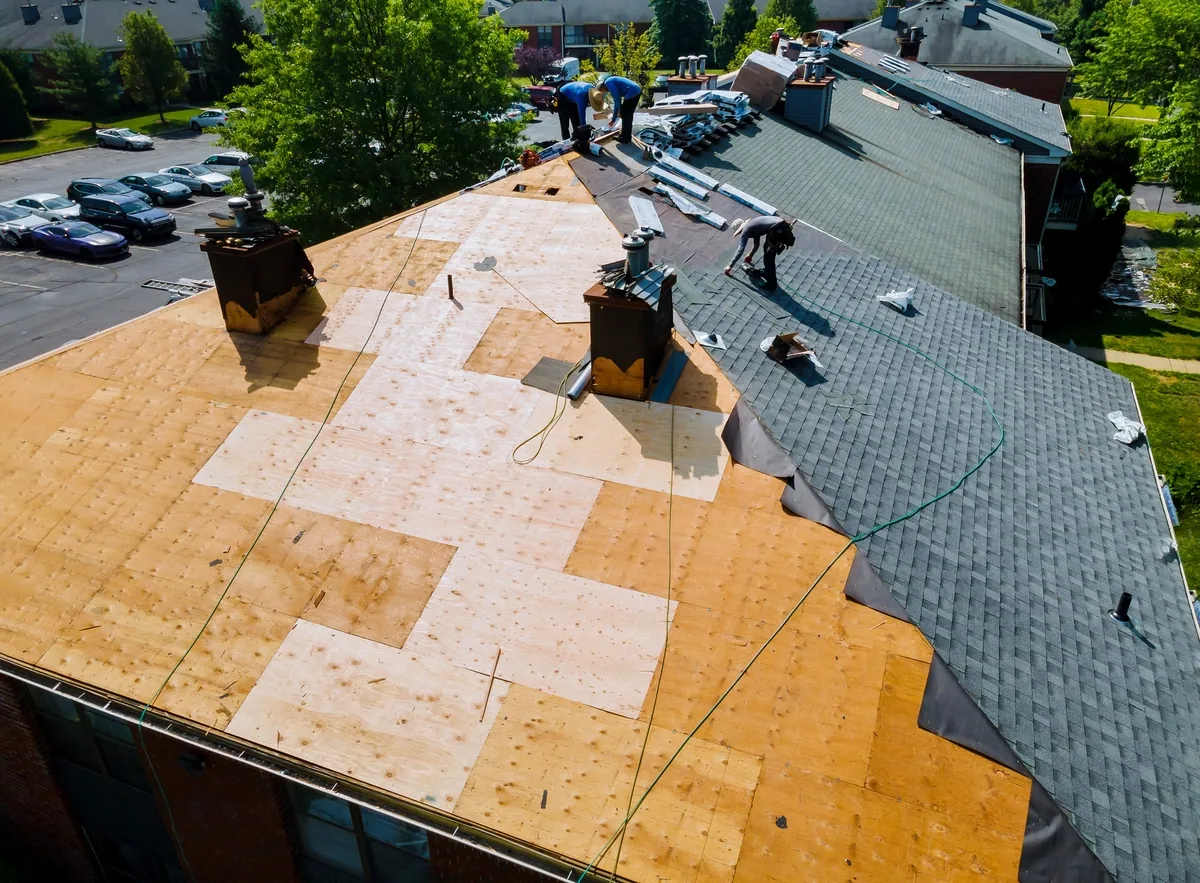
The first call after a tornado goes to the structural and life-safety professionals, and roofing follows their release. Once a crew can reach the roof, the work is about closing openings: tarps over torn areas, temporary membrane over exposed deck, and plywood or metal over larger holes, all secured against the next storm. Water entering a damaged building spreads the loss to interiors, equipment and inventory.
We provide emergency roof repair at any hour, including weekends and holidays. Each temporary measure is photographed and logged so the insurer can see the condition we found, what was done to protect the building and what remains open. Debris on the roof is removed carefully, since a pile of material may be hiding open deck or holding up a damaged section.
What a tornado-damaged roof needs checked
Tornado damage covers a wider range than wind alone. Beyond uplift of membrane and edge metal, the roof may have impact holes from flying debris, displaced rooftop units, torn parapets, damaged skylights and bent deck. Deck and support steel need an engineer's eyes before we assume they can carry new insulation and membrane, and any section where the deck has deformed or pulled from its supports is flagged for structural review.
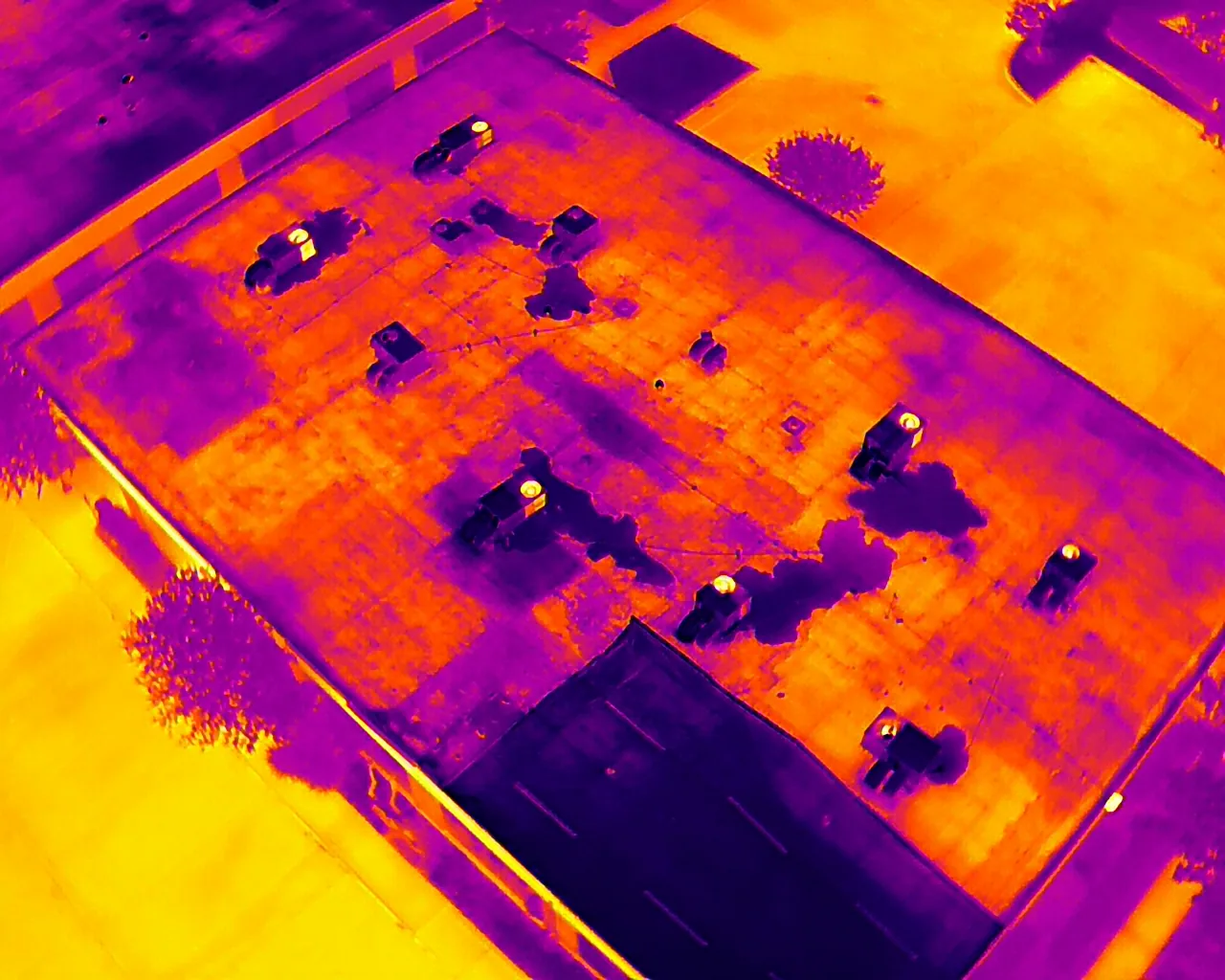
Moisture presents a second layer. A roof breached during rain is wet well beyond the visible hole, and insulation that looks dry on top may be saturated below. An infrared moisture survey helps us map the wet areas once the roof is dry-in. The result tells the owner how much insulation must be removed and replaced, and it supports the insurance scope with more than a visual guess.
Rooftop equipment deserves its own line in the report. A unit that shifted on its curb can have torn the curb flashing, broken refrigerant or condensate lines and exposed electrical connections, so the mechanical contractor and the roofer should walk it together before power is restored. Skylights, smoke hatches and roof hatches are also checked, since a cracked dome or a hatch that no longer seats becomes the next leak once the first dry-in is complete.
Partial rebuild or full replacement after a tornado
A tornado that tears away a defined area while leaving the rest of the roof tight can sometimes be repaired by replacing the deck, insulation and membrane in that area and tying into the existing system. The tie-in must work with the manufacturer's requirements, and the surviving roof must be sound enough to justify keeping it.
If uplift has loosened attachment broadly or debris has pierced the membrane in many places, a full replacement is usually the clearer path, especially if the roof was already approaching the end of its service life. When structural repairs require opening large sections of the building, building the roof back as a single coordinated project avoids having parts of old and new systems share one roof. Where a full replacement is needed, the specification should be checked against the adopted codes in effect, which for Olathe include the 2018 International Building Code and Existing Building Code adopted effective September 1, 2019, subject to local verification for the specific project.
Corridors and public buildings after a tornado
K-10 is the 16.5-mile corridor KDOT maps between the Douglas and Johnson County line and I-435, and the properties along it in De Soto, Lenexa and Olathe serve industrial, high-tech, office and commercial uses. A manager who oversees properties along it can group damage assessment by corridor segment after an event, sending crews to the most exposed buildings first.
An armory is a public building that Kansas law reserves for unit drills, meetings and other approved functions, and Olathe has one. Roof work on a building like that is scheduled around its use and its access rules, and a storm response goes faster when the owner already holds a current roof plan and photographs. Public and institutional owners across the county benefit from the same baseline, since an adjuster and a roofer both need to see what the roof looked like before the event.
More About Tornado Damage Roof Repair in Olathe, KS
Preparing the file before the storm season
The most useful preparation costs little. An owner who has a current roof plan, photographs of each section, a list of rooftop equipment, and a recent condition report can move through an insurance claim far faster than one reconstructing the roof from memory. Wind-rated edge metal, secure equipment tie-downs, and clear drains reduce the damage when a storm does arrive, and they are inexpensive to check at an annual walk. After the season ends, we compare the walk with the previous one, mark anything that moved, and update the register so the next storm response starts from a current record, not from the last time someone remembered to look.
For multi-site owners, a multi-site roof program keeps one record format across the portfolio, so a damage assessment after a storm in Overland Park, Lenexa or Olathe reads the same on every property. The related wind damage and hail damage reviews use the same file.
Afterward, the register earns its keep again. Updated with the repairs, the new assemblies and the lessons from the loss, it becomes the baseline for the next storm season. Owners who add a short list of what failed first, such as a rooftop unit tie-down or an edge metal run, can target the next round of preventive work where it will matter most.
Commercial Roofing Questions
What happens first when a tornado damages a commercial roof?
Safety clearance comes before roofing: fire officials, engineers and the owner must agree the roof can be approached. After that, we cover openings, photograph every condition, and remove loose debris. The permanent scope follows once structural findings and the insurer's inspection are complete.
Does the insurer need to see the damage before we cover it?
Temporary protection should not wait, since further water entry increases the loss. Photograph and log everything before covering it. Hold the permanent scope until the damage is documented and the insurer has responded; the policy language sets the details.
Can a roof survive a tornado without visible damage?
A roof near a tornado path can lose attachment strength without showing tears. Edge metal may be loosened, fasteners backed out or insulation boards displaced. An inspection after any nearby storm is worth the cost, and the report should state what was and was not examined.
Who coordinates the structural engineer and the roofer?
The owner or property manager typically engages the engineer, and we coordinate our schedule with the engineer's findings. Where deck repairs or shoring are needed, the engineer specifies them and we install the roofing after they are accepted. We keep a single scope version so changes are visible.
How long does a tornado repair take?
Emergency dry-in is a matter of days once the building is released, subject to weather and access. Permanent work depends on structural repairs, material lead times, permit review and insurance approvals, and it may extend over several months. We give a sequence with dependencies so the owner can plan tenants and operations.

Send the storm report and the roof file
Share the property address, the roof-area register, structural reports if any, your insurer contact and an access contact. We will secure the roof, document the loss, and prepare a phased scope that separates storm repairs from planned capital work.