Commercial Roofing in Parkville, MO
One building with one roof turns every capital decision into a bet on a single assembly, which is why small-property owners gain the most from a dated condition record. Parkville, MO had a 2025 population estimate of 9,093, reported about $114 million in 2022 retail sales and showed roughly $16 million in transportation-and-warehousing receipts. For an owner of one or a few commercial buildings in a city that size, the roof budget is a personal line item. Repair, replacement, recovery, coating and inspection of commercial roofs are our work, and for Parkville owners we keep the paper short, the findings specific and the options priced against each other.
Send the address and what you have seen
Share the property address, any reports or invoices, leak locations and the date a decision is due. We will return a documented assessment that separates current repairs from capital planning assumptions.
Decisions that fit a single-roof owner
A small owner usually has three questions: is the roof sound, what will it cost to keep it sound, and when will it need replacing. A good report answers all three in plain terms. It identifies the assembly, lists the defects with photographs, states which can wait and which cannot, and gives a realistic range of years before renewal is likely.
Owners also need to know what not to spend. If the membrane is sound and leaks come from two failed flashings, replacing the roof is not necessary. If the insulation is saturated, spending on repeated patches wastes money. The report draws that line using evidence from the roof itself, and it shows the owner how each option changes the next several years of cost.
Budgeting is easier when the options are laid out in years. A repair that costs little but buys two years sits beside a coating that buys several and a replacement that resets the clock. We put each on a simple timeline with the work and the likely cost range, so the owner sees what each year of waiting would mean and what each path asks in cash and in disruption.
A first walk on a small commercial roof
On a smaller building the walk can cover every detail. We check the membrane or metal surface, laps and seams, each penetration, each wall termination, edge metal, drains or scuppers and the equipment curb. We photograph each issue with a location mark and list it in order of urgency, so the owner holds a one-page punch list and a longer record for the file.
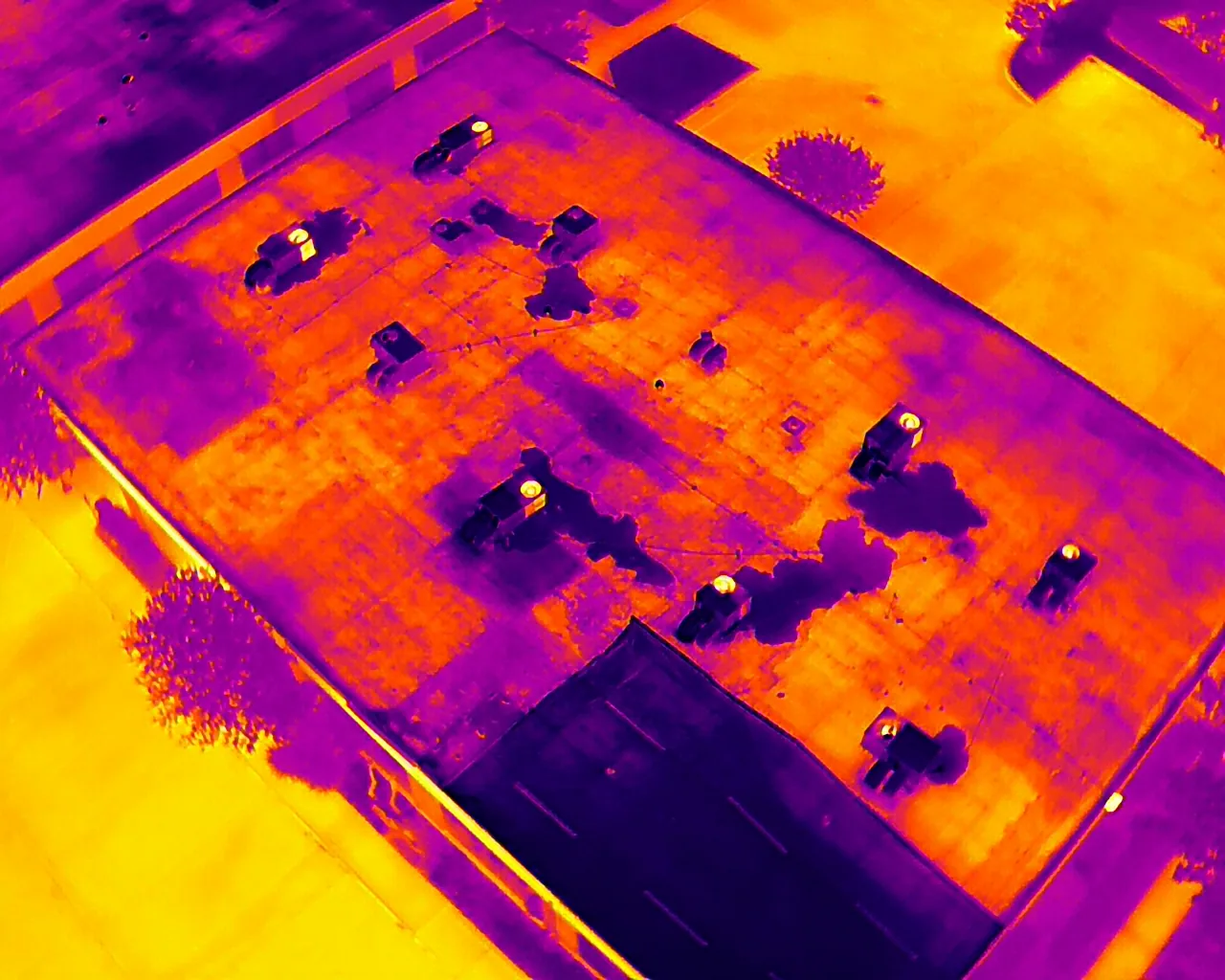
When moisture is suspected but not visible, an infrared moisture survey can map wet insulation without opening the roof, and a few cores confirm. The result is a repair scope that touches only the areas that need it. Our commercial roof inspection is written for an owner who will read every line.
Photographs are taken with something in the frame for scale and from a consistent direction, so a later visit can show change in the same spot. That habit turns a one-time report into a record the owner can use for years, even if a new manager takes over.
Coatings as a middle path
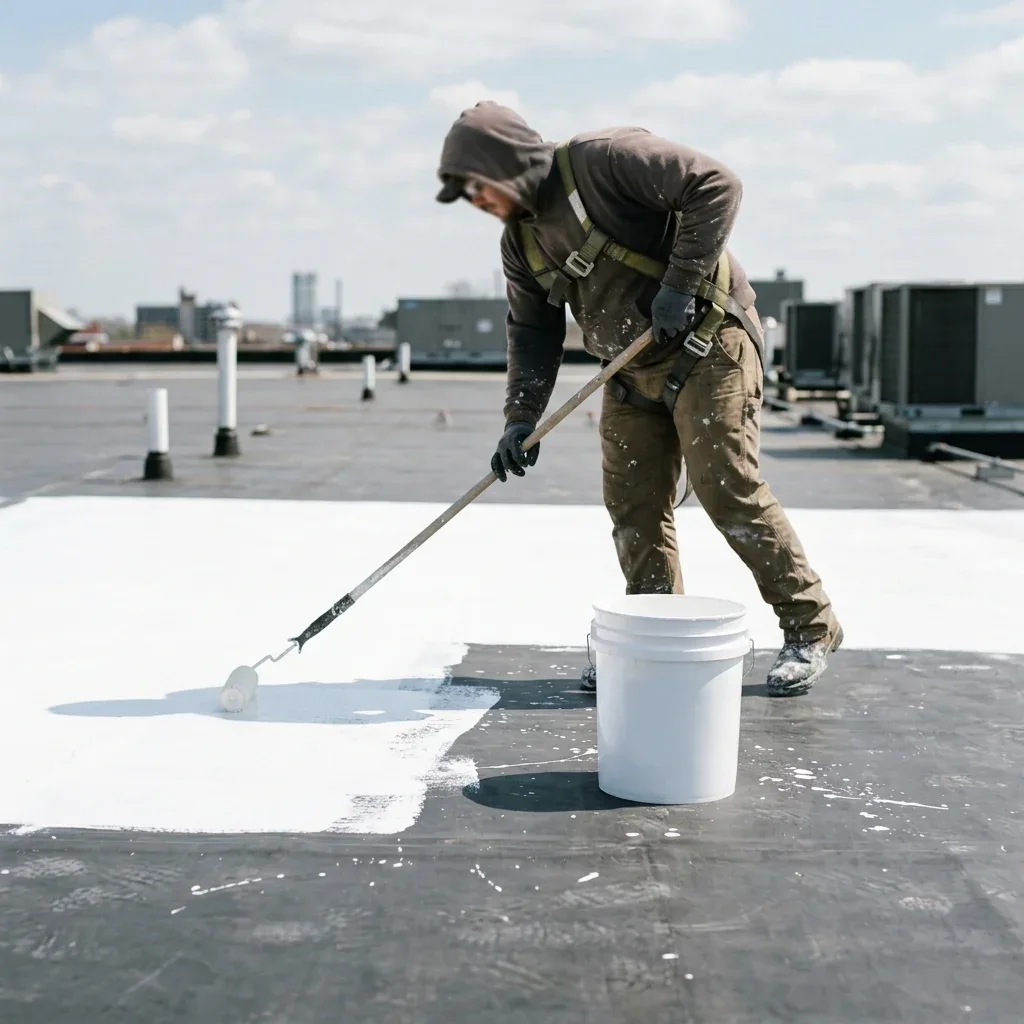
For a small roof with a weathered but dry membrane, a liquid-applied coating can extend service at a lower cost than replacement. Acrylic roof coatings are common on low-slope roofs where water does not pond for long, while silicone tolerates standing water better. Both need a clean, repaired surface, and both depend on a moisture test that shows the insulation is dry.
A coating also changes the roof surface for later work. It adds a layer that must be considered if a recover or replacement follows, and its warranty depends on correct preparation. We explain these trade-offs, then let the owner choose between a coating, a repair or a planned replacement with the numbers in front of them.
Seasonal temperature range and small-roof details
The Olathe station normals give a January mean of 29.8 degrees F, a July mean of 78.8 degrees F and 109.6 days a year at or below freezing. We use them as the metro reference for roofs in Parkville. Small buildings have short runs of flashing, and each corner, parapet and penetration has to move with the seasons. When sealant fails at one of those joints, water gets in quickly.
A spring and fall check of those joints costs little and heads off most small leaks. We list them in the report as a short maintenance checklist the owner or a handyman can follow, with a note on which items need a roofer. That division of labor keeps routine costs down and calls us only when the job requires it.
More About Commercial Roofing in Parkville, MO
Timing a small replacement
A small roof can often be replaced in a few days, and weather is the main risk. We watch the forecast, order material ahead and begin when a dry stretch is likely. Because the building is small, the entire roof can sometimes be dried in the same day it is opened, which reduces exposure and removes most of the staging worry.
The owner should confirm tenant hours, parking and access before the crew arrives. We also check overhead utility lines, nearby trees and the route for materials. Those details are quick to settle on a small site and save time on the day of the work.
If the roof carries rooftop units, the owner should confirm with the heating and cooling contractor whether a unit must be lifted or disconnected, and when. Aligning those trades before work starts avoids days of waiting on a roof that is already open.
Starting with a short walk
Send the address, any past reports or invoices and a short account of leaks you have seen. We will visit, walk the roof and return a written report with photographs and a ranked scope. Owners with another building in Liberty or Gladstone can include it so both are reviewed in one visit plan.
A small owner also benefits from a basic roof-area register: one page that lists the roof areas, the assembly, the last visit and the open items. We start it on the first walk and update it after every visit, so the next decision starts from facts the owner already has.
Commercial Roofing Questions
What should a small Parkville building owner expect in a roof report?
A short summary, a roof sketch with areas lettered, photographs tied to those letters, a list of defects ranked by urgency, and a clear statement of which repairs can wait. The report ends with the options and their effect on the next several years of cost, so the owner can decide without a second visit.
When does it make sense to coat instead of replace?
When the membrane is weathered but intact, the insulation tests dry and the deck is sound, a coating over repaired details can extend life at lower cost and with less disruption. If any of those conditions fails, the coating will not hold. The moisture test and the surface preparation decide the question, and the results are given to the owner.
Can I handle some of the roof upkeep myself?
Some of it, yes. Clearing leaves and debris from drains, checking for obvious damage after storms and keeping foot traffic off the roof are reasonable owner tasks. Anything involving sealants, flashing or membrane repair should be done by a roofer so it does not damage the material or create a warranty issue.
How fast can a leak call be handled on a small roof?
Emergency response runs all hours and on holidays. A crew can usually find the opening quickly on a small building, then tarp or patch it to stop the water. A written repair follows when the roof is dry, with photographs and a note of what to watch over the next heavy rain.

Send the address and what you have seen
Share the property address, any reports or invoices, leak locations and the date a decision is due. We will return a documented assessment that separates current repairs from capital planning assumptions.