Commercial Roofing in Liberty, MO
The next inspection interval is the cheapest line in a roof budget and the one most often pushed back a year. Liberty, MO had a 2025 population estimate of 31,319, 2022 retail sales near $567 million and about $69 million in transportation-and-warehousing receipts, so owners there may hold storefront roofs, roofs over buildings that move goods, or both. From repair and replacement to recovery, coating and inspection, we work on commercial roofs of many kinds, and for Liberty owners we set the interval from what the roof shows, not from the calendar alone, so the maintenance dollar lands where defects are actually recurring.
Start the defect history and the interval
Send the property list, repair records, leak locations, available reports and an access contact. We will return a documented assessment that separates current repairs from capital planning assumptions.
Building the interval from a defect history
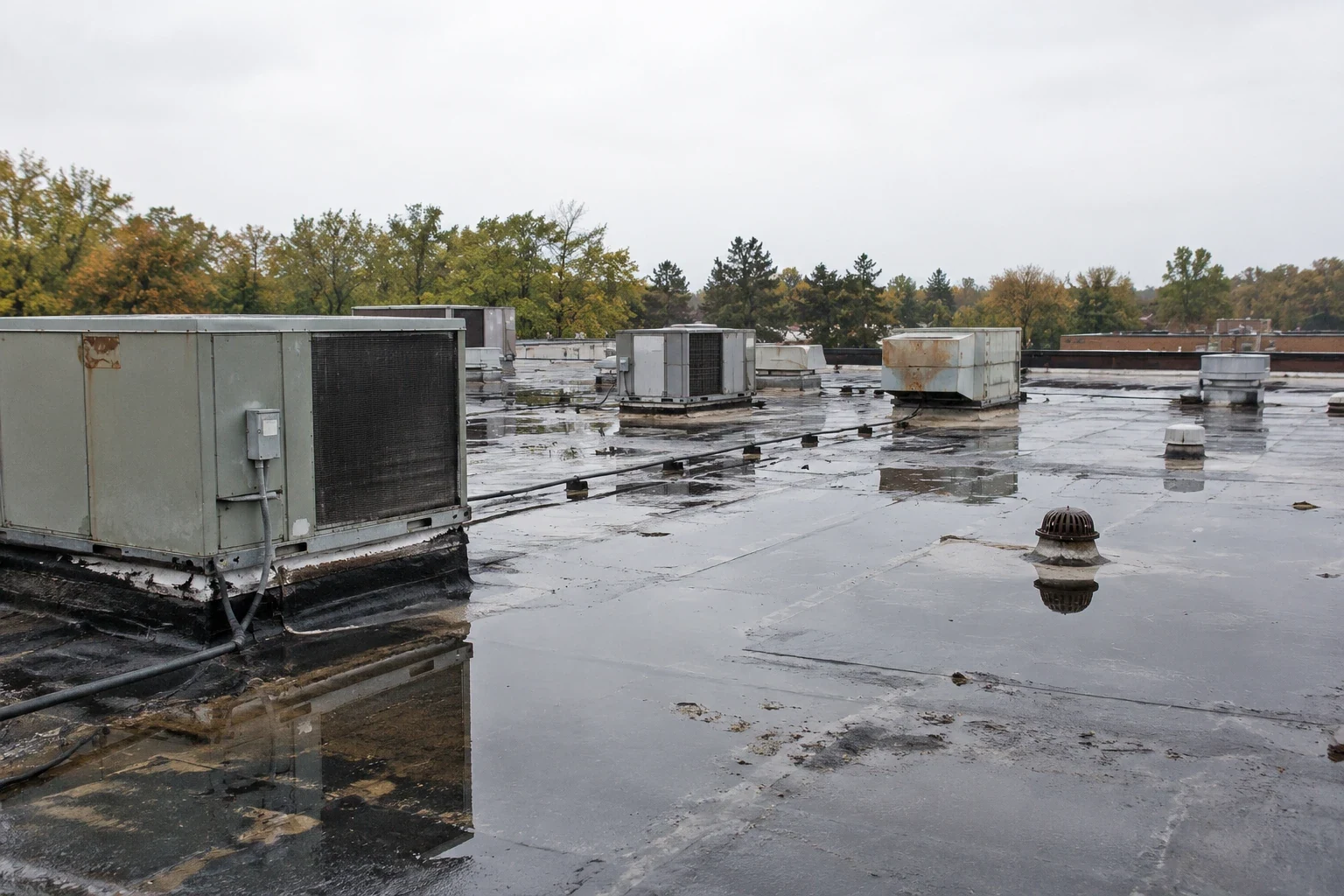
A defect history records where leaks, repairs and failed details have appeared and how often. Two leaks at the same curb in separate years say more about a roof than a clean report with no history behind it. We ask for repair invoices, work orders and tenant complaints, then plot them on the roof-area sketch. Clusters show up fast: a run of seams along one wall, drains that clog every autumn, a penetration group that keeps cracking.
With the clusters mapped, the interval can differ by area. A well-performing field might be reviewed once a year while a troublesome corner is reviewed after every heavy rain. That is the working core of preventive roof maintenance, and it spends labor where defects recur instead of spreading it evenly over a roof that does not need it.
Where records are missing, the first season doubles as the data-gathering period. We photograph every area, note the assembly, and set a baseline that later visits are compared against, so a young file still becomes useful within a year.
Freeze exposure and the spring walk
At the Olathe station, an average year brings 109.6 freezing days and 37.54 inches of precipitation, the nearest published reference for the metro. Those figures explain why a walk after winter is the highest-value visit of the year: freeze and thaw open laps and cracks, snow loads can push loose metal out of line, and drains can be blocked by debris that melt water would otherwise carry off.
A fall visit has a different purpose, which is to clear drains, tighten loose terminations and fix small items before the first hard freeze. Doing both walks gives a Liberty owner a before-and-after pair that shows what the winter did, and it keeps routine drain debris from turning into ponding water that ages the membrane.
What each maintenance visit records
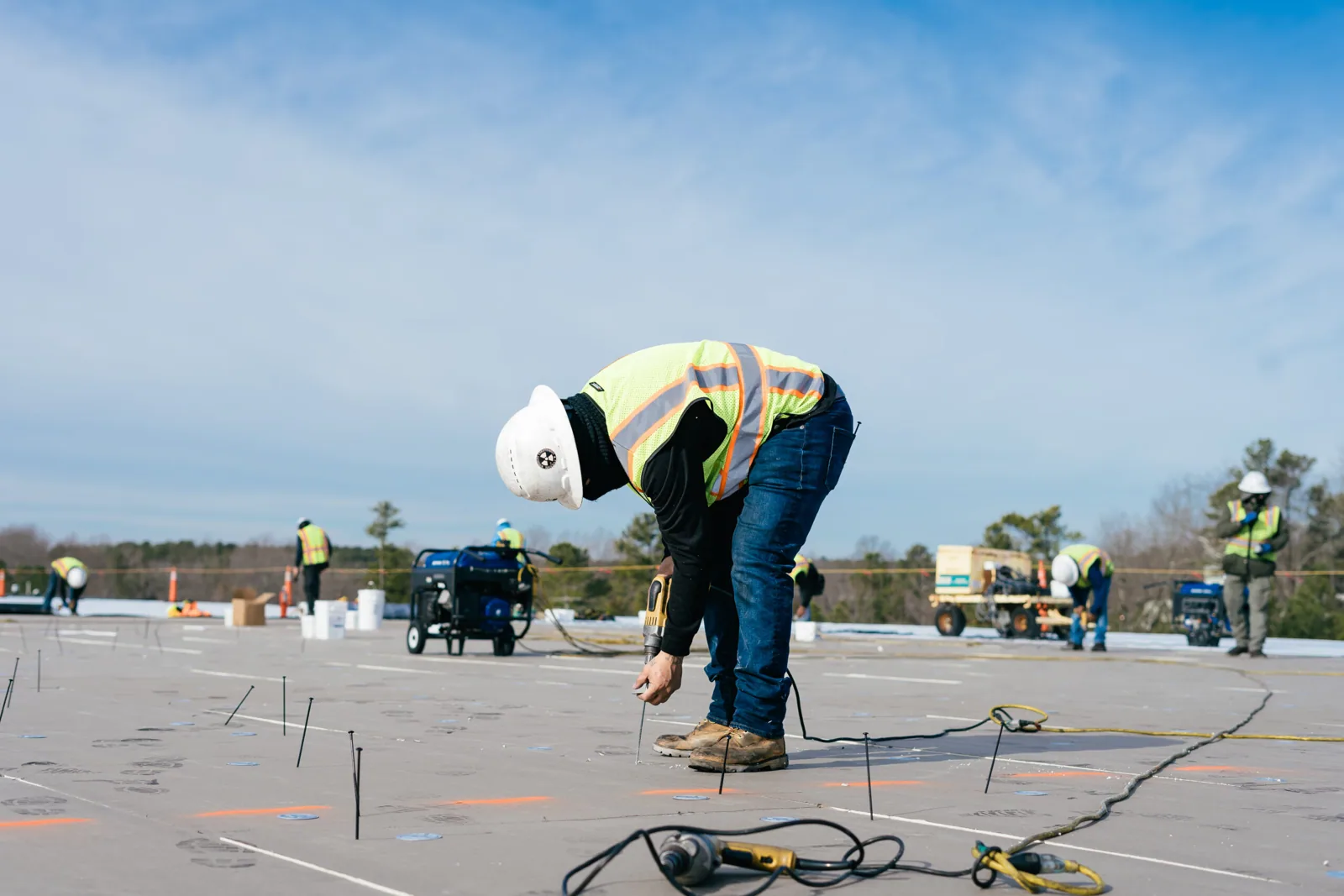
Each visit starts with the previous report in hand. We confirm repaired details are holding, check drains and gutters, walk seams and flashings, look at rooftop equipment connections, and photograph anything that changed. New findings get a rating and a location, and old findings get a status: closed, monitored or open.
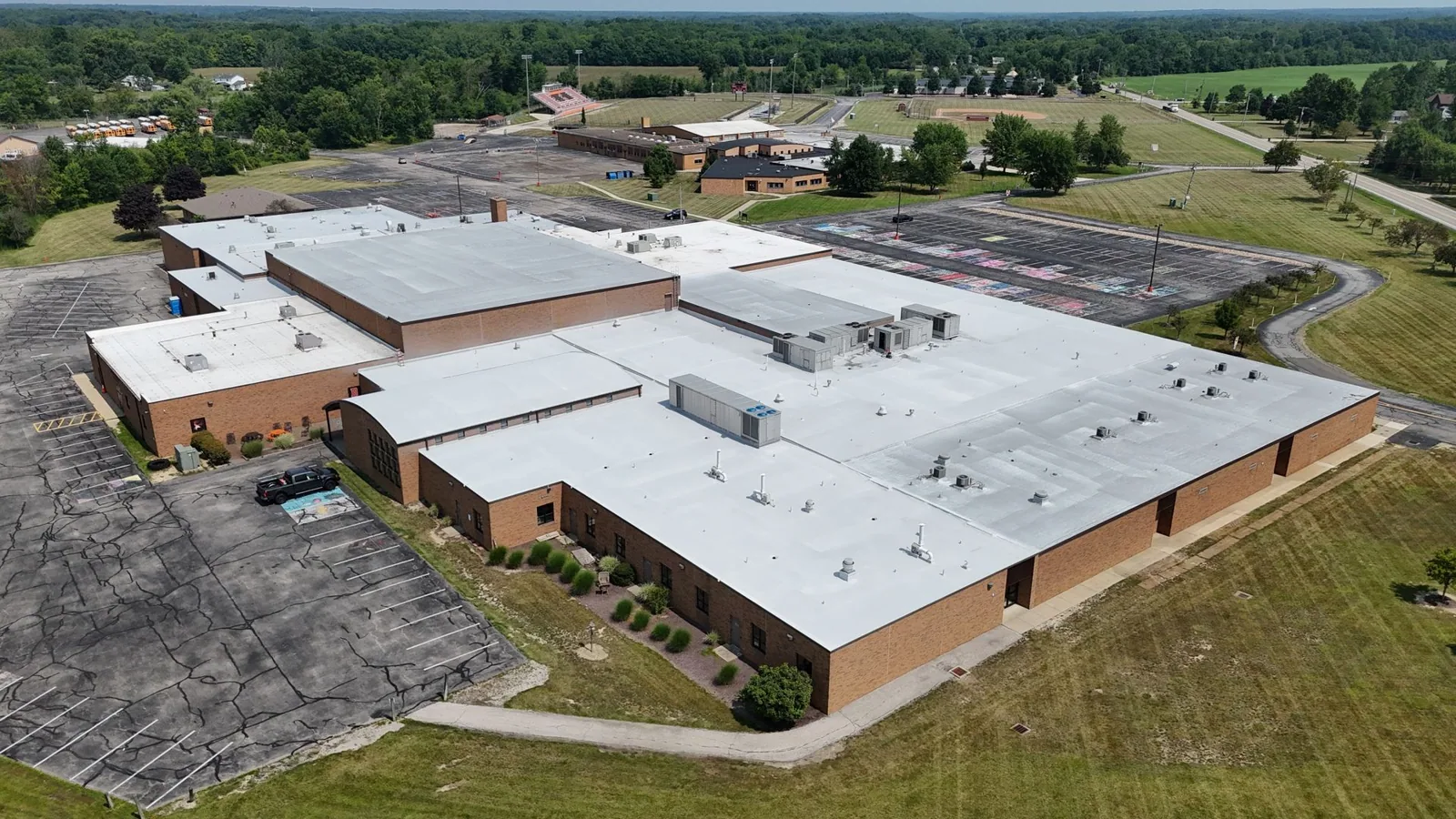
The cumulative report is more useful than any one visit. It lets a manager see whether a roof is stable or sliding, and it tells the owner when a pattern of repeat repairs has reached the point where renewal is cheaper than another year of service. Where a roof is large or access is awkward, a commercial roof inspection with drone support speeds the survey without skipping the hands-on checks that matter at seams and fasteners.
A short written summary leads each report, followed by the detailed findings by roof area, so a regional manager can read the first page and a facilities lead can work from the rest.
Knowing when upkeep stops paying
Maintenance has a ceiling. Once insulation is wet across a significant area, seams fail in long runs or the membrane has hardened and cracks under foot traffic, more service visits buy less time. The signal is a rising repair line on the same area year after year.
At that point the owner compares the remaining cost of upkeep with the cost of renewal over the same horizon. A restoration coating sits between the two when the roof is dry, and full replacement ends the question where it is not. We lay out each option with the evidence from the defect history so the choice rests on measured performance.
More About Commercial Roofing in Liberty, MO
Phasing work around storefront and warehouse use
Liberty reports both retail and transportation-and-warehousing activity, and the two kinds of roof ask different things of a work plan. A storefront roof wants quiet hours, protected entrances and clean staging near customers. A roof over stored goods wants fast dry-in, controlled openings and attention to forklift traffic below. We plan phases by area so that only the section being worked is open to weather at any one time.
For owners with several buildings, the same logic applies at portfolio scale. A multi-site roof program sets the order of buildings by condition and consequence, then fits each phase into the season best suited to its materials.
Getting a Liberty maintenance plan started
Send the property list, roof ages where known, any inspection history, repair records and the access contact. We will build the first defect map from a site walk and propose an interval for each area. Neighboring owners in Gladstone can share the same program format if they hold properties across both places.
Crews work out of Olathe and cover the metro on both sides of the state line. Tell us about any rooftop equipment that must stay in service during a visit, any tenant with restricted hours, and whether the property carries a manufacturer warranty that requires logged maintenance, since that changes what each visit must record.
A short checklist keeps each visit consistent: confirm access and the tenant contact, review the last report, walk drains and low areas first, then seams and flashings, then equipment connections, and finish with photographs from the same positions as before. Because the order never changes, a gap in the record is easy to spot, and a new inspector can pick up the pattern without a briefing.
Commercial Roofing Questions
How often should a Liberty roof be walked once a defect history exists?
The history sets it. Areas with recurring repairs or poor drainage justify more frequent visits, sometimes after each heavy rain, while stable fields can wait for a yearly spring and fall pair. We write the interval by area in the report and change it as the findings change, so the schedule follows the roof and not a standard template.
What does a maintenance visit fix on the spot?
Minor items that take minutes: clearing drains, resealing a small joint, tightening a loose termination bar, replacing a cracked pipe boot, securing a flashing. Anything larger gets photographed, rated and quoted separately. Small repairs made on the visit usually prevent the leaks that would otherwise trigger an emergency call.
Are two leaks at the same spot a sign of failure?
They are a sign the first repair did not address the cause. Water may be entering elsewhere, travelling along the deck, or the repaired detail may be subject to movement that breaks it again. We trace the path, test the neighboring details and reopen the repair if needed, then log the location so a third event shows up quickly.
Can maintenance extend a roof into its next capital year?
Often it can, provided the insulation is dry and the membrane is serviceable. Regular drain clearing, prompt sealing and early repair of seams slow the decline and make the replacement date more predictable. The report shows which assumptions support the extended date, so the reserve plan reflects evidence.
What happens if a leak starts at night?
Call the emergency line. A crew can arrive after hours, find the opening, tarp or patch it and clear drains to stop interior water. A permanent repair follows in daylight once the roof can be examined and photographed fully, and the incident is added to the defect history.

Start the defect history and the interval
Send the property list, repair records, leak locations, available reports and an access contact. We will return a documented assessment that separates current repairs from capital planning assumptions.